The traditional MBA is dead. Its replacement is a high-stakes digital arena where the only grade that matters is market survival. A modern business simulation game isn’t just a distraction; it’s a crucible for the next generation of studio leads. You’ve likely felt the disconnect. Reading 400-page textbooks on resource management feels hollow when you’re actually staring at a dwindling production budget. Theoretical models often crumble the moment they meet the chaos of a live project.
We’re changing that narrative. This guide shows you how to bridge the gap between play and professional mastery in the competitive world of game development. You’ll learn to leverage these tools to build a strategic portfolio and master the founder’s journey without the $50,000 risk of a real-world failure. We’re breaking down the mechanics of entrepreneurship in 2026, from core loop design to the final showdown of market scaling.
Key Takeaways
- Understand how a modern business simulation game transforms complex market mechanics into a competitive arena for professional growth.
- Master the high-stakes cycle of fundraising, capital allocation, and product launches to navigate the intense pressure of a real-world startup.
- Explore why physical tabletop simulations offer a superior edge in retention and the critical social engineering skills needed for face-to-face negotiations.
- Learn to build a strategic portfolio by mastering financial literacy concepts like burn rates and ROI through immersive gameplay.
- Discover Studio Showdown, the high-octane simulation where your creative vision meets the brutal reality of market dominance.
What is a Business Simulation Game? Beyond the High Score
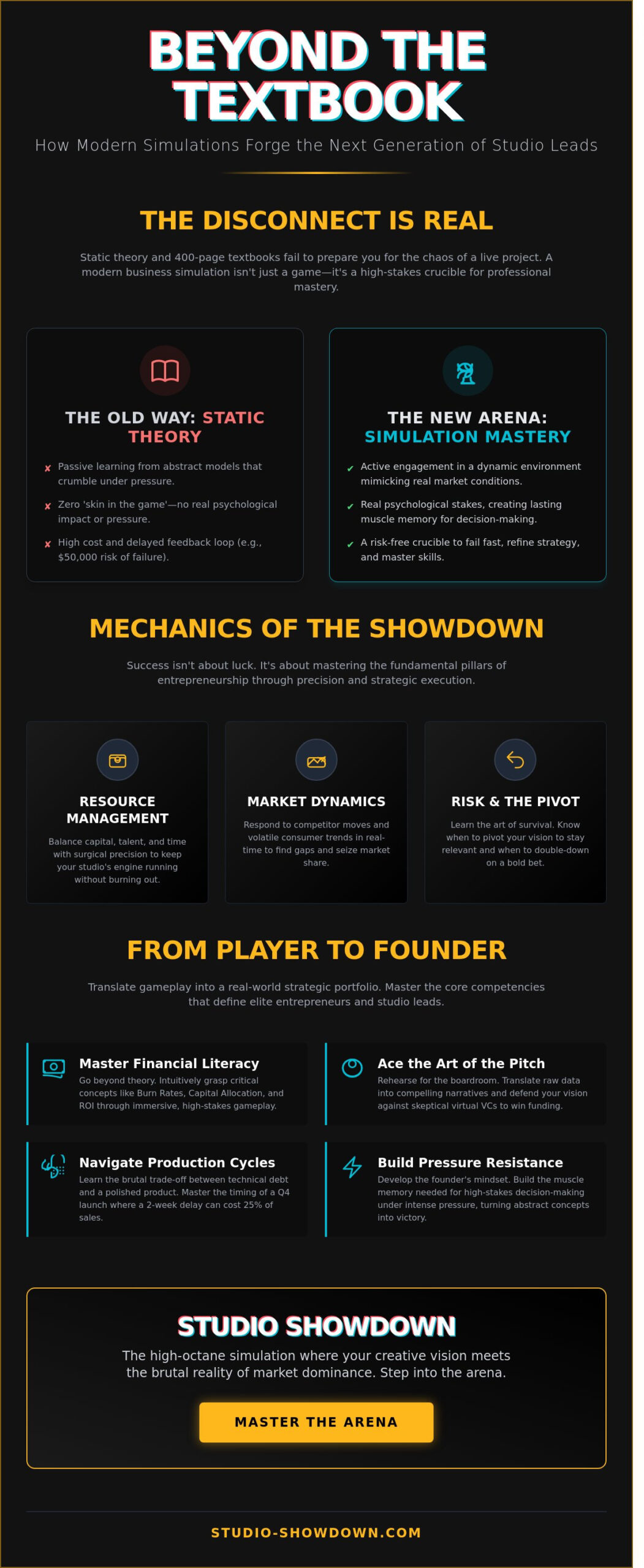
A business simulation game is a high-octane training tool. It mimics real-market conditions to forge elite skills in strategy, finance, and operations. Forget the dry lectures. This is a digital crucible where vision meets execution. The evolution of the genre is a story of technical triumph. We’ve moved from clunky 1980s spreadsheets to immersive, industry-specific experiences that feel like high-end film productions. These aren’t just games; they are professional-grade simulators for the modern entrepreneur.
2026 will be the year of the creator economy simulation. With the global creator market projected to hit $480 billion by 2027, the demand for specialized training is exploding. Modern simulations now focus on mastering the founder’s mindset. They allow you to test your creative courage in a risk-free environment. You get to win the showdown before you ever step into a real boardroom. It’s about building the muscle memory needed for high-stakes decision-making without the threat of actual bankruptcy.
The Core Elements of a Strategic Simulation
Mastering the digital arena requires more than luck. You need a grip on three fundamental pillars:
- Resource management: You must balance capital, talent, and time with surgical precision to keep the engine running.
- Market dynamics: Success depends on responding to aggressive competitor moves and volatile consumer trends in real-time.
- Risk assessment: These tools teach you exactly when to pivot your vision and when to double down on a bold bet.
Why Theory Fails Where Simulations Succeed
Textbooks are static. Markets are alive. Simulations win because they introduce ‘skin in the game’ mechanics. The psychological impact of a digital loss is real, creating a lasting imprint on how you handle pressure. This iterative learning allows you to fail fast and refine your strategy in real-time. It bridges the gap between a flat business plan and the high-speed reality of business execution. You don’t just learn the theory; you live the production. It turns abstract concepts into a visual victory that sticks.
Mechanics of the Showdown: How Strategy Drives the Game
Success in a high-stakes business simulation game isn’t about luck. It’s about precision. It’s about the cold, hard math of survival. You start with a vision. You end with a legacy. Between those points lies the grind of capital allocation. Fundraising is the fuel for your creative engine. You don’t just spend money; you deploy it. Every dollar directed toward R&D or talent acquisition is a bet on your future market position. If you miscalculate the burn rate, the game ends before the first trailer drops.
Product development cycles introduce the pressure of the “crunch.” Simulations replicate the high-octane environment of a Q4 launch window where timing is everything. Missing a release date by even two weeks can result in a 25% drop in initial sales volume. You’re constantly Building Real-World Business Acumen by learning to balance technical debt with the need for a polished final product. It’s a brutal trade-off. You either ship a masterpiece or you ship on time. Finding the middle ground is where the true strategy lives.
The modern simulation doesn’t stop at spreadsheets. It demands the art of the pitch. You’re forced to negotiate with virtual VCs and skeptical partners. You translate raw data into a compelling narrative. This isn’t just play; it’s a rehearsal for the boardroom. You learn to defend your creative concept against aggressive questioning. You fight for your equity. You win the room.
Mastering the Art of the Pivot
Markets are volatile. A trend that dominated in 2024 can become a relic by 2025. The pivot is a survival mechanism where a studio shifts its entire production focus to stay relevant in a changing landscape. It requires a ruthless assessment of your current assets. You must decide which parts of your vision are worth saving and which are dead weight. Balancing long-term goals with the immediate need for cash flow is the ultimate test of a founder’s resolve. You don’t just change direction; you accelerate.
Competitive Intelligence and Market Share
You aren’t operating in a vacuum. The arena is crowded. You need to analyze competitor data to find the gaps they’ve overlooked. If a rival studio is flooding the market with low-budget RPGs, you pivot to a premium, narrative-driven experience. Timing is your sharpest weapon. Launching a hit project seconds before a trend peaks ensures maximum impact. Many top-tier executives use strategy board games to sharpen the critical thinking required for these maneuvers. It’s about seeing the board three moves ahead of everyone else.
Winning the market share battle requires more than just a good product. It requires a visual victory that cuts through the noise. If you’re ready to elevate your project’s impact, a creative partnership can transform your strategic vision into a market-dominating reality.
Analog vs. Digital: Why Tabletop Simulations Win in 2026
Digital fatigue is a productivity killer. By 2026, the average professional spends 41% of their workday managing notifications and screen-based interruptions. Tabletop simulations break this cycle. They force presence. They demand focus. A physical business simulation game offers something a screen cannot: weight. When you move a physical piece, you’re not just clicking a button. You’re committing to a move. This tactile feedback is essential for information retention.
Research from the National Training Laboratories suggests that “learning by doing” leads to a 75% retention rate. In an analog environment, this is amplified. Touching components triggers muscle memory. It anchors complex strategy into the physical world. You don’t just see the data; you manipulate it. This makes the lessons of resource management and risk assessment stick long after the session ends.
The Social Dynamics of the Boardroom
Negotiation is a full-body sport. You can’t read a micro-expression over a lagging Zoom call. In a live setting, the ‘Showdown’ effect takes over. Your competitive drive spikes when you sit across the table from a rival. You learn to spot a bluff. You master the art of the pivot. Integrating screen-free activities into professional training builds the emotional intelligence that digital tools strip away. It’s about the energy in the room. It’s about the handshake after the deal.
Accessibility and Implementation
Analog wins on reliability. There are no server crashes in a board game. No software updates interrupt your flow. You create a ‘war room’ atmosphere instantly. This setup fosters a level of collaborative problem solving that feels urgent and real. It’s a premium experience that respects the participants’ time and intelligence.
- Zero technical barriers: Everyone starts on equal footing. No login required.
- Infinite shelf life: The mechanics don’t become obsolete with the next OS update.
- High-impact visuals: Physical components reflect the high stakes of a real-world production.
A physical business simulation game turns a standard workshop into a high-octane creative collision. It’s where leaders are tested. It’s where strategies are forged through friction and direct contact. Forget the pixels. Focus on the people across from you. That’s where the real victory happens.
From Player to Founder: Building Real-World Business Acumen
A high-quality business simulation game acts as a digital crucible. It’s where theory meets the brutal reality of the market. You don’t just learn concepts; you execute them. Professional acumen isn’t born in a textbook. It’s forged through trial, error, and eventual victory. This is the arena where a creative vision becomes a viable enterprise.
Strategic portfolio building is the first major win. In 2024, industry data showed that 64% of hiring managers in tech sectors prioritize candidates who can demonstrate concrete decision-making processes over those with static resumes. Simulation results provide that proof. They show you can navigate a burn rate of $50,000 a month while maintaining a 20% profit margin. You aren’t just talking about ROI. You’re proving you can generate it under pressure.
- Financial Literacy: Master the flow of capital. Balance the books or watch the studio collapse. You learn to respect the margin.
- Project Management: Coordinate talent, technology, and timelines. Missed deadlines in a simulation can cost 15% more in overhead, mirroring real-world penalties.
- Resilience: Face a total market crash. Rebuild from zero. This “fail-fast” mentality is what separates founders from dreamers.
The Game Development Business Model
The economics of a studio are unique and volatile. You move from initial seed fundraising to aggressive global marketing. It’s a full lifecycle experience. Mastering a simple easy money game isn’t enough for true mastery. You need to understand the 360-degree view of production. This includes everything from backend infrastructure to front-facing brand impact. It’s about a visual victory that scales with your ambition.
Educational Impact for Students and Educators
STEM and business curricula are evolving rapidly. By 2025, an estimated 80% of top-tier US business schools will integrate advanced simulations into their core modules. Educators use these tools to measure growth through real-time data instead of static exams. It prepares students for the US market by forcing them to make 50+ critical decisions per session. This isn’t just study. It’s professional training for the next generation of industry leaders who refuse to settle for mediocrity.
Ready to prove your vision has what it takes to dominate the market? Start your creative production journey and step into the winner’s circle.
Studio Showdown: The Ultimate Game Development Simulation
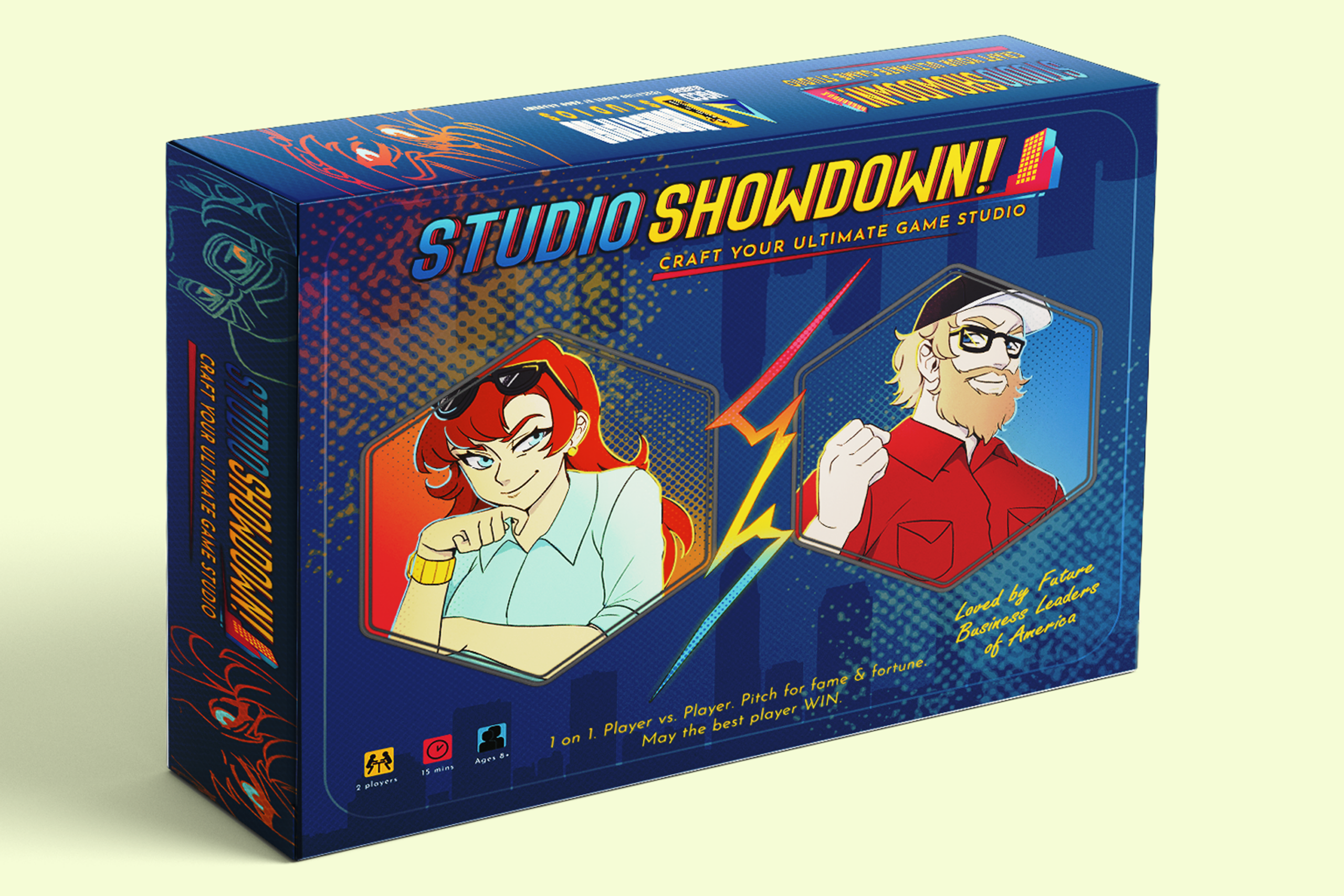
Studio Showdown isn’t a pastime. It’s a high-stakes battle for market dominance. This immersive experience forces you to step into the shoes of a studio head. It mirrors the exact challenges faced by VGCD Academy studios every day. You aren’t just playing; you’re performing under pressure. The stakes? Total industry leadership. This business simulation game strips away the fluff and focuses on the core of the creative industry: survival, strategy, and success. It’s where artistic courage meets corporate grit.
Vision is nothing without execution. Success in the game requires more than just a creative spark. You need capital. You need a pitch that sticks. Studio Showdown demands strategic fundraising and sharp negotiation. Outsmarting rival developers becomes your primary objective. Every move you make reflects a real-world decision. We’ve transformed a traditional business board game into a professional launchpad for the next generation of creative leaders. It’s a premium experience designed for those who refuse to settle for mediocrity.
- Fundraising: Secure the backing you need to fuel your high-end production.
- Pitching: Sell your creative concept to the toughest critics in the room.
- Market Dominance: Outmaneuver rivals to claim your spot at the top of the charts.
- Resource Management: Balance your budget while maintaining peak creative output.
Join the Showdown
The box contains more than just cards and tokens. Every component is designed for professional-grade strategy. You get high-quality assets that feel like premium studio tools. For instructors, the Educator Edition provides specific frameworks to ensure classroom success. It’s a turnkey solution for teaching entrepreneurship in a focused 90-minute session. You can also grab the physical product through our direct-to-consumer channel. No middlemen. Just pure, unadulterated competition delivered to your door. It’s time to bring the heat to your creative workspace or lecture hall.
Your Path to Studio Dominance
Start your first session by defining your studio’s creative identity. Lead your team through the fire of rapid development cycles and sudden market shifts. Victory isn’t handed to you; it’s earned through calculated risks and bold moves. Beyond the board, you’re joining a global community of aspiring developers and industry veterans. Share tactics. Compare results. Level up your professional network. This is where your career begins. Ready to prove your business acumen? The market is waiting for its next titan. Take control. Start the showdown.
Own the Arena and Build Your Legacy
The market doesn’t wait for the ready. In 2026, the gap between a dreamer and a founder is closed by tactical experience. A business simulation game offers the perfect battlefield to test your vision without the risk of total ruin. You’ve seen how strategy drives the game and why tabletop mechanics offer a premium edge in a digital world. Now, it’s about the execution. It’s about winning the showdown before the first real contract is even signed. Every choice you make on the board translates to a sharper instinct in the boardroom.
Studio Showdown stands at the intersection of education and industry. Developed by the experts at VGCD Academy and DEMYSTIFIED Studios, this platform is already a staple for educators building professional student portfolios. It’s designed for high-stakes learning where every move matters and every decision builds your brand. Don’t settle for mediocre results when you can master the art of production today. Your studio’s first victory starts with a single tactical choice. The board is set, and the industry is watching. Step up and claim your place among the elite.
Ready to launch your studio? Get Studio Showdown today.
Frequently Asked Questions
What exactly is a business simulation game?
A business simulation game is a strategic sandbox where players manage resources, navigate risks, and compete for market dominance. These platforms replicate real-world economic conditions without the financial peril of a failed startup. The first modern version appeared in 1956 when the American Management Association launched their Top Management Decision Simulation. Today, these games bridge the gap between theory and execution. They force you to make high-stakes decisions under pressure. It’s about testing your vision in a controlled, competitive arena.
Can playing a board game really help me start a business?
Playing a board game builds the mental muscle required for risk assessment and resource allocation. It provides a safe environment to fail, pivot, and refine your strategy before you invest real capital. A 1990 study by Gentry found that 75% of participants showed measurable improvements in strategic thinking after engaging in simulations. You’ll learn to anticipate competitor moves and manage cash flow cycles. It’s a dress rehearsal for your first real-world launch. You gain the confidence to lead before the stakes become permanent.
What are the benefits of analog business games over digital ones?
Analog games foster direct human interaction and high-stakes negotiation that digital screens can’t replicate. You see the sweat, the hesitation, and the body language of your rivals across the table. Experts at UCLA suggest that 90% of non-verbal communication is lost in digital-only environments. Physical components make the abstract concepts of inventory and assets tangible. It’s about the raw energy of the room. You can’t hide behind an avatar here. Every handshake and every deal happens in real-time, face-to-face.
How do business simulation games teach financial literacy?
These games force you to balance P&L statements and manage cash reserves in real-time. You’ll track ROI and EBITDA while making split-second investment choices. The 2023 Global Financial Literacy Survey highlights that active learning increases retention by 30% compared to reading textbooks. You aren’t just looking at numbers; you’re feeling the impact of every dollar spent. Every decision has a direct consequence on your bottom line. It makes finance visceral and high-octane. You’ll master the flow of capital by actually moving it.
Is Studio Showdown suitable for high school or college students?
Studio Showdown is perfect for students aged 14 and up who want to master the creative economy. It fits seamlessly into university business modules or high school entrepreneurship clubs. The game challenges players to think like producers, balancing artistic vision with commercial reality. Students gain a 360-degree view of the production cycle. It transforms a dry classroom into a high-stakes studio environment. It’s where academic theory meets the grit of the industry. It prepares the next generation of creators for the professional stage.
What skills do I need to win a business simulation game?
You need a mix of analytical precision and creative intuition to secure a win. Success depends on your ability to read the market and pivot when your initial plan fails. A 2022 LinkedIn report identified adaptability and negotiation as the top 2 skills for modern leaders. You must manage your team, allocate budget, and outmaneuver rivals. Winning isn’t just about the numbers. It’s about having the vision to see opportunities before others do. It’s a test of your leadership and your tactical execution.
How can educators use these games in the classroom?
Educators use a business simulation game as a capstone project to apply the 70-20-10 learning model. This model suggests 70% of knowledge comes from experience. The game replaces static lectures with dynamic, hands-on production cycles. You can run a tournament over a 4-week period to track student progress and strategic growth. This approach increases student engagement by 40% compared to traditional methods. It creates a memorable, competitive atmosphere where students learn by doing. It turns the instructor into a mentor.
Why is the video game industry a good focus for business simulations?
The video game industry is a perfect focus because it’s a 184 billion dollar market according to the 2023 Newzoo report. It perfectly blends high-tech development with creative storytelling and aggressive marketing. This sector demands a balance of artistic risk and financial discipline. You’ll learn to manage diverse talent pools from programmers to artists. The rapid product cycles provide instant feedback on your strategy. It’s the ultimate arena for testing your business instincts. You’re not just selling a product; you’re building an entire universe.