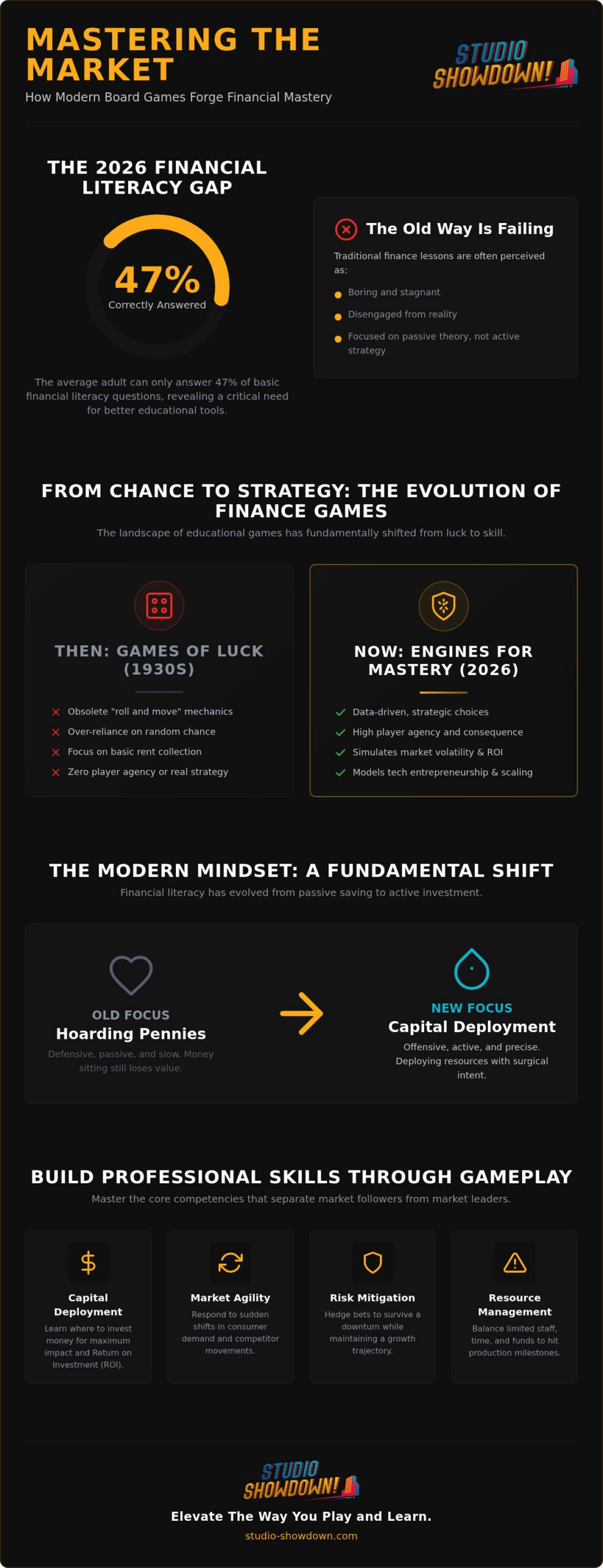
In 2026, the average adult can only answer 47% of basic financial literacy questions correctly. It’s a staggering gap. Most students find traditional finance lessons boring, stagnant, and completely disengaged from reality. You know the feeling. Sitting through a lecture about interest rates feels like watching paint dry. Relying on Monopoly means waiting for a lucky roll that never comes. We need better tools. Modern board games that teach economics have evolved into high-performance simulations. They aren’t just toys. They’re professional-grade engines for mastering the market. They turn abstract numbers into a high-stakes, competitive thrill.
You want to see real growth. You’re looking for a way to bridge the divide between classroom math and actual business strategy. This article reveals the best strategy games designed to master fundraising, ROI, and competitive investment. We’ll break down the elite titles that cut through the visual noise and deliver a premium learning experience. From classroom-ready solutions like the Studio Showdown: Educator Edition to deep-strategy classics, you’ll find everything you need to build professional skills without a screen in sight. Let’s elevate the way you play and learn.
Key Takeaways
- Move beyond basic budgeting and master the art of capital allocation. Learn why 21st-century finance is about strategic investment rather than just saving pennies.
- Identify high-performance board games that teach economics by forcing players to calculate ROI and manage limited resources under intense competitive pressure.
- Turn gameplay into a professional asset by integrating business simulations into STEM curricula. See how these tools help students build portfolios that actually impress recruiters.
- Transition from founder to market leader with Studio Showdown. Master the complex mechanics of fundraising and investor relations through an immersive industry simulation.
- Scale financial literacy across entire institutions with the Classroom Bundle. Discover how to bridge the gap between classroom theory and real-world business strategy.
What is Financial Literacy in the Modern Era?
Forget the piggy bank. That’s a relic of a slower, less competitive era. Modern financial literacy isn’t about hoarding pennies in a ceramic jar. It’s about flow. It’s about the precision of capital allocation. In 2026, the market doesn’t reward those who simply save; it rewards those who deploy resources with surgical intent. This shift from passive saving to active investment strategy is the heartbeat of modern business education. It’s a move from the defensive to the offensive. You don’t just manage money. You command it.
Passive learning is a ghost in the machine. You can’t learn to swim by reading a manual, and you certainly can’t learn to lead a market by watching a slideshow. Game-based immersion succeeds where traditional methods fail because it forces you to own your mistakes. Every decision has a consequence. Every move is a calculated risk. This is where risk management becomes instinctual rather than theoretical. Board games that teach economics provide the perfect sandbox for this evolution. They strip away the boredom of a spreadsheet and replace it with the adrenaline of a boardroom showdown. It’s about building a professional intuition that sticks.
Beyond the tabletop, this intuition is vital for navigating modern digital finance. To learn more about digital transaction simulation systems, professionals can explore the specialized software developed by SQR400 Flash Fund.
The Evolution of Money Games
The landscape has shifted dramatically. In the 1930s, games focused on real estate and basic rent collection. It was a reflection of the industrial age. Today, the focus is tech entrepreneurship, studio management, and global scaling. Old-school “roll and move” mechanics are obsolete. They rely too heavily on luck and offer zero agency. Modern strategy board games that teach economics replace dice with data-driven choices. They simulate real-world market volatility. They force you to pivot when the industry shifts. You aren’t just moving a plastic token. You’re managing a production pipeline, fighting for market share, and navigating the visual noise of a crowded marketplace.
Why Strategy Beats Luck for Learning
Agency is the ultimate teacher. When a player chooses to reinvest profits into R&D instead of taking a safe payout, they’re learning retention through action. High-stakes games allow you to fail fast. You lose a million virtual dollars, and you learn exactly why. You adjust your tactics. You go again. This cycle builds a resilient mindset. Strategic financial literacy is the definitive core skill for 2026, separating those who follow the market from those who build it. It’s about mastering the high-stakes strategy of entrepreneurship.
- Capital Deployment: Learning exactly where to put money for maximum impact and ROI.
- Market Agility: Responding to sudden shifts in consumer demand and competitor moves.
- Risk Mitigation: Hedging bets to survive a downturn while maintaining a growth trajectory.
- Resource Management: Balancing limited staff, time, and funds to hit production milestones.
Key Features of Effective Financial Board Games
Most people think financial games are about making change at a cash register. They’re wrong. That’s basic arithmetic, not economics. True board games that teach economics focus on the friction of growth. They simulate the tension between holding cash and seizing a fleeting opportunity. If you aren’t feeling the pressure of a limited budget against a massive expansion goal, you aren’t learning business strategy. You’re just playing with a calculator. Effective games prioritize the decision-making process over the simple act of counting.
The best simulations force you to manage more than just a pile of bills. You’re managing time, talent, and physical assets. Every choice carries an opportunity cost. If you invest in a new production line, you might not have the capital for a critical marketing push next turn. This trade-off is the soul of entrepreneurship. It teaches you to calculate the Return on Investment (ROI) of every move. You learn to ask a vital question: “How many turns until this investment pays for itself?”
Resource Management and Capital Flow
Net worth looks impressive on a scoreboard, but cash flow keeps you in the race. You need to understand the rhythm of money. High-performance games teach players to reinvest profits into income-generating assets rather than hoarding “dead” cash. It’s a fundamental shift in mindset. You learn that money sitting still is money losing value. To understand how these mechanics translate into winning strategies, read our full breakdown in Mastering the Board: The 2026 Guide to Strategy Board Games.
Market Dynamics and Competition
Markets aren’t static. They breathe. They react. A great economic game simulates supply and demand through direct player interaction. If every player rushes for the same resource, the price should spike. If a rival studio launches a competing product, your margins should shrink. Market intelligence becomes your most valuable currency. You have to watch your opponents’ boards as closely as your own to stay ahead. Replayability comes from these variable markets. No two sessions feel the same because no two player-driven economies are identical. This is where you learn to pivot. If you’re ready to test these skills in a professional simulation, exploring the mechanics of Studio Showdown is the next logical step. It’s about mastering the high-stakes strategy of the industry, not just surviving the round.
- Negotiation: Business is social. You must pitch alliances and trade resources to win.
- Scalability: The game should offer layers of complexity that unfold as your skills sharpen.
- Risk Mitigation: Learning to hedge bets against market volatility.
Evaluating the 2026 Finance Game Landscape
The 2026 gaming market is saturated. Every shelf is packed with boxes claiming to build “wealth-building skills.” Most of them are noise. If you’re looking for board games that teach economics, you have to look past the bright colors and paper bills. You need to evaluate the core mechanics. Does the game reward luck, or does it reward a calculated strategy? The gap between a casual “Easy Money” game and a professional-grade business simulation is massive. For a teenager aiming for the boardroom, the wrong game can actually build bad habits. It can teach them that success is a matter of chance rather than a result of relentless execution.
Classics vs. Modern Simulations
Monopoly and Life are icons. They’re also relics of a bygone era. They teach the basics of rent and insurance, but they fail to capture the complexity of modern entrepreneurship. You don’t win in 2026 by rolling a six and landing on Boardwalk. You win by securing seed funding. You win by pitching your vision to a table of skeptical investors. Modern board games that teach economics have moved past these “roll and move” relics. They replace luck with resource drafting and worker placement. They force you to think like a founder. If a game doesn’t require you to manage a burn rate or negotiate a partnership, it’s just educational fluff. Real learning happens when the stakes feel personal. To understand why this shift is happening now, explore our analysis in Beyond the Easy Money Game: Why Strategy Wins in 2026.
The Role of Industry Immersion
Context is everything. Learning economics in a vacuum is a recipe for boredom. Industry-specific simulations, like those focused on tech startups or game development, provide a narrative hook that keeps players engaged. When you’re managing a video game studio, the financial hard skills become tools for creative success. You’re learning to allocate capital to hiring artists or upgrading server tech. You’re building a professional portfolio in your mind. These games teach the “soft” side of finance: the art of the pitch and the psychology of the market. They prepare you for the friction of real-world competition. You aren’t just playing a game. You’re practicing for your first studio launch.
- Strategic Depth: Look for games where player choices, not dice, determine the winner.
- Narrative Context: Industry-specific themes make financial concepts more relatable and memorable.
- Soft Skill Integration: Effective games require negotiation, pitching, and teamwork to succeed.
Implementing Financial Games in Education
Screens are everywhere. Gen Z and Gen Alpha are drowning in digital noise. Traditional textbooks are static; they don’t react when you make a mistake. In a classroom setting, board games that teach economics serve as live-fire exercises. You don’t just read about supply and demand. You feel the price surge when a classmate corners the market. This visceral connection to data is what makes the knowledge stick. Screen-free learning isn’t just a break from the glow of a monitor; it’s a competitive advantage. It forces students to engage with the physical friction of business. For families and teachers looking to reclaim focus, exploring Screen-Free Activities for Teens and Families: The 2026 Strategy Guide provides a roadmap for this transition.
Integrating these tools into a STEM or business curriculum transforms the classroom into a production studio. It’s not about “game day.” It’s about lab work. When students manage a virtual burn rate or negotiate for seed funding, they’re practicing high-level capital allocation. This is where professional-grade skills are forged. These sessions demand face-to-face negotiation and immediate responses to market shifts. It’s a high-stakes environment that digital apps simply cannot replicate. You’re building a professional intuition that works in the real world.
Classroom Integration Strategies
It’s not about playing; it’s about practicing. Treat game sessions like studio workshops. Aligning these sessions with financial literacy standards ensures the fun has a functional purpose. The Studio Showdown: Educator Edition is built for this exact scenario. It provides the structured lesson planning needed to guide students through complex concepts without losing the competitive thrill. Post-game debriefs are the most critical part of the process. Facilitate a discussion on why a fundraising round failed or how a specific ROI calculation saved a studio. This reflection turns a win into a lasting lesson.
Measuring Success and Growth
Success isn’t measured by a high score. It’s measured by the ability to articulate a market strategy. Tracking student progress in pitching and fundraising provides tangible data for their development. These board games that teach economics foster a culture of healthy competition and collaborative problem-solving. Students learn to build alliances when the numbers make sense. This is portfolio building in action. By documenting their strategic pivots, students can add “Business Simulation” experience to their early resumes. Studio Showdown acts as a bridge to professional game design and entrepreneurship. If you’re ready to scale this experience for your entire institution, the Studio Showdown Classroom Bundle is the definitive tool for visual success.
- Active Debriefing: Solidify learning by analyzing strategic failures immediately after play.
- Portfolio Evidence: Use game outcomes as proof of financial and strategic competency.
- Soft Skill Development: Focus on the negotiation and interpersonal dynamics required to win.
Studio Showdown: The Ultimate Business Board Game
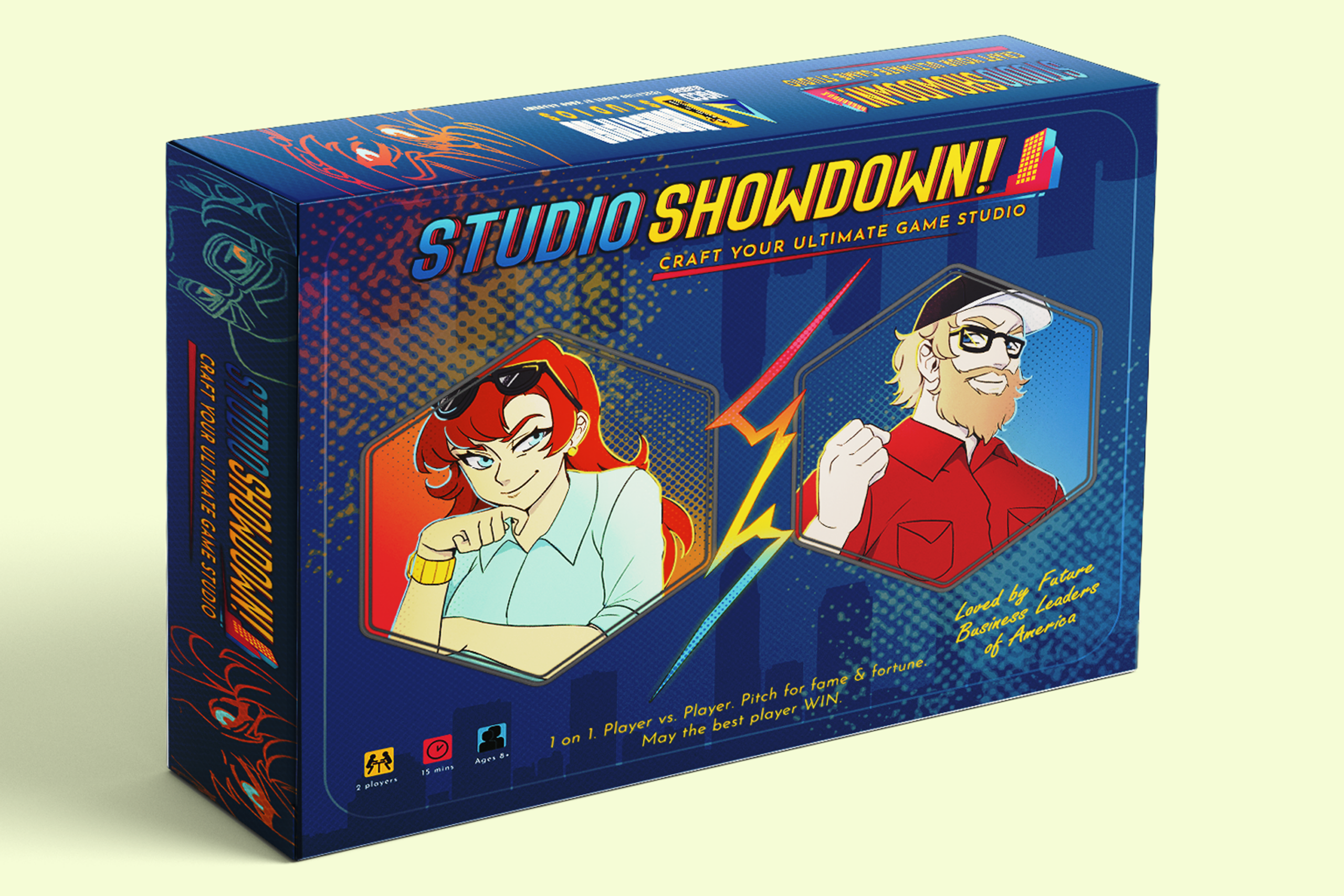
Most educational tools stop at the basics. They don’t prepare you for the grind of a real launch. Studio Showdown is the exception. It’s built for those who want to lead, not just participate. This is the peak of board games that teach economics. It moves beyond abstract theory. It puts you in the hot seat of a tech founder. You aren’t just managing a budget. You’re managing a legacy. Every turn is a test of your ability to cut through the visual noise and deliver a premium product to a crowded market.
Success in this simulation requires more than a lucky roll. It requires a vision. You have to navigate the transition from a solo founder to a market leader. This means mastering the art of fundraising. You have to convince the table that your studio is the best investment. It’s a high-stakes environment where strategy beats dice every time. To see how this game redefines the genre, explore The Ultimate Business Board Game: Master Entrepreneurship in 2026. This isn’t just play. It’s a professional rehearsal for the real world.
The Founder’s Journey
The journey begins with a single idea. In Studio Showdown, you experience the grit of the video game industry firsthand. You must allocate resources with surgical precision. Hiring the right talent, timing your marketing blitz, and managing development cycles are all part of the struggle. The game forces you to pitch. You don’t just take money from a bank. You win over investors. You prove your ROI. This immersion builds a professional mindset that sticks long after the box is closed. It’s about developing the creative courage to outmaneuver your rivals.
Bundles for Schools and Families
Scaling financial literacy shouldn’t be a struggle. We designed the Studio Showdown: Educator Edition to bridge the gap between classroom theory and industry reality. It’s a structured tool for teachers who refuse to settle for mediocre results. For larger institutions, our Classroom Bundle provides a turnkey solution for group learning. It allows dozens of students to engage in the same high-stakes economy simultaneously. Developed by VGCD Academy and DEMYSTIFIED Studios, these editions focus on professional portfolio building. Getting started is simple. Set the board. Choose your strategy. Start your first Showdown. The market is waiting for its next leader.
- Strategic Resource Allocation: Balance staff, time, and capital to hit your milestones.
- Investor Relations: Master the pitch to secure the funding your studio needs.
- Competitive Edge: Use market intelligence to block rival maneuvers and dominate the industry.
Dominate the Economy of Tomorrow
The market rewards the bold. You’ve discovered that modern financial literacy is about surgical capital allocation and high-stakes strategy. Traditional lessons fail because they lack the friction of real competition. Board games that teach economics have evolved into professional-grade simulations that prepare you for real-world studio competition. They turn abstract concepts into visceral, memorable victories. It’s time to move beyond counting change and start commanding capital; to master these concepts in the world of digital assets, visit Cryptora Institute for expert-led cryptocurrency education.
Developed by experts at VGCD Academy, Studio Showdown offers immersive business simulation mechanics that turn every session into a portfolio-building exercise. Educators can scale this impact through specialized Classroom Bundles, ensuring every student masters the nuances of fundraising and ROI. It’s time to cut through the visual noise. Choose the tools that demand excellence and deliver results. Your first studio launch is just one move away. Lead the showdown and build your legacy.
Order your Studio Showdown Board Game and start building your empire today!
Frequently Asked Questions
Do financial literacy board games actually work for teens?
Yes, because high-performance board games provide a sandbox for teens to test real-world financial strategies without the risk of real-world debt. Traditional lectures often fail because they lack immediate feedback. By forcing players to own their choices, these games build a resilient, professional mindset. Strategic thinking becomes a habit through repetition and face-to-face competition.
What is the best board game for teaching entrepreneurship?
Studio Showdown is the definitive choice for teaching modern entrepreneurship. Unlike generic money games, it immerses players in the specific challenges of the tech and gaming industry. It forces you to think like a founder. You manage talent, time, and capital to build a successful studio from the ground up. It’s a simulation that demands creative courage.
How does Studio Showdown differ from Monopoly?
Monopoly is built on luck and basic rent collection; Studio Showdown is built on agency and strategic execution. You won’t win by rolling high numbers. You win by outmaneuvering rivals through better fundraising and smarter resource management. It’s a professional-grade simulation that replaces chance with calculated decision-making. Every move has a clear ROI.
Can these games be used in a middle school classroom?
Yes, these tools are highly effective in middle school settings. The Studio Showdown: Educator Edition provides the structure teachers need to align gameplay with state-level financial literacy standards. It turns a standard classroom into a dynamic business lab where students learn through action. It’s about bridging the gap between math and real-world strategy.
What financial skills are most important for game designers?
Game designers must master burn rate management, ROI calculation, and capital allocation to survive. It’s about knowing exactly when to reinvest profits into new features versus saving for a marketing blitz. Mastering these board games that teach economics helps designers build the financial intuition needed to lead a successful production. Success requires balancing creative vision with fiscal reality.
Are there board games that teach venture capital and fundraising?
Modern strategy board games that teach economics now incorporate complex fundraising mechanics. In Studio Showdown, players must pitch their projects to investors at the table to secure the capital needed for growth. This teaches the soft skills of persuasion alongside the hard numbers of venture capital. You learn to win over the market with data and vision.
How can I reduce my child’s screen time with strategy games?
Strategy games offer the same competitive thrill as digital titles without the eye strain. They replace the isolation of a screen with the social friction of a boardroom showdown. It’s a premium, tactile experience that keeps Gen Z and Gen Alpha engaged in high-level problem-solving. You get the adrenaline of a video game in a face-to-face format.
Where can I buy a classroom bundle for my school?
The Classroom Bundle is available directly through the official Studio Showdown website. It’s the most efficient way to bring business simulation to an entire group. This bundle includes everything needed to scale the experience across multiple teams. It’s a turnkey solution for any educational institution looking to elevate their business or STEM curriculum.