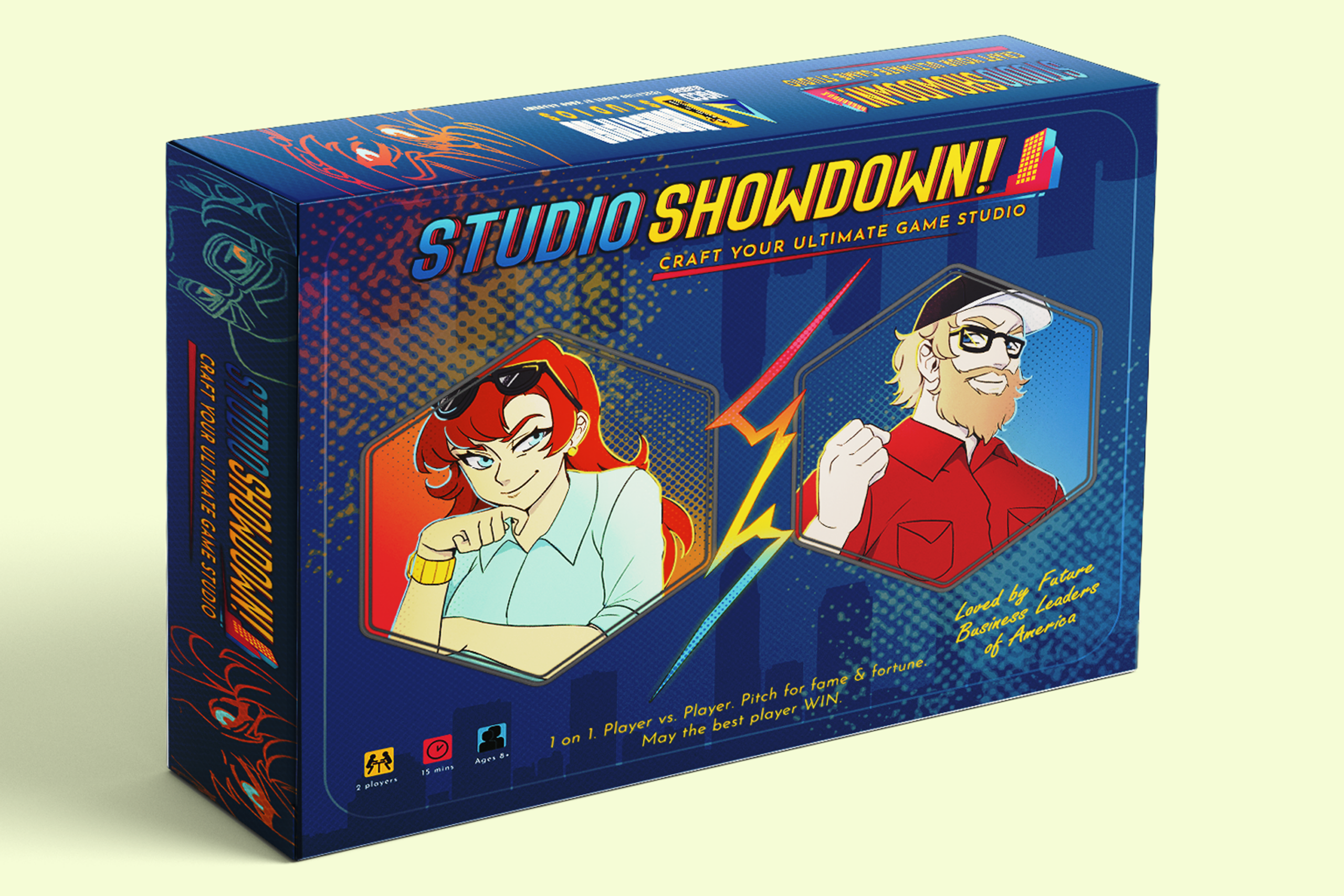
Most board games ask you to roll dice to move. Studio Showdown asks you to pitch like your studio’s survival depends on it; because it does. If you’ve been staring at the manual and feeling more like a confused intern than a visionary CEO, you aren’t alone. Mastering the Studio Showdown rules shouldn’t feel like reading a tax audit. It’s about weaponizing your budget, outmaneuvering rivals, and securing the bag. This isn’t just a game. It’s a high-stakes creative battle where financial literacy is your primary weapon.
We know the struggle of complex strategy mechanics. You want to build a portfolio, not get lost in a sea of dry text. You’re here to win, to scale, and to see your vision rise above the noise. This guide is your tactical blueprint. It cuts through the fluff to give you the exact mechanics you need to dominate the market. No more uncertainty. No more hesitation.
You’ll learn the turn structure perfectly. We’ll show you how to use cards to crush your competition and master the fundraising mechanics that define the industry. From the initial budget to the final pitch, this is how you turn a small indie outfit into a market leader. Let’s build something legendary.
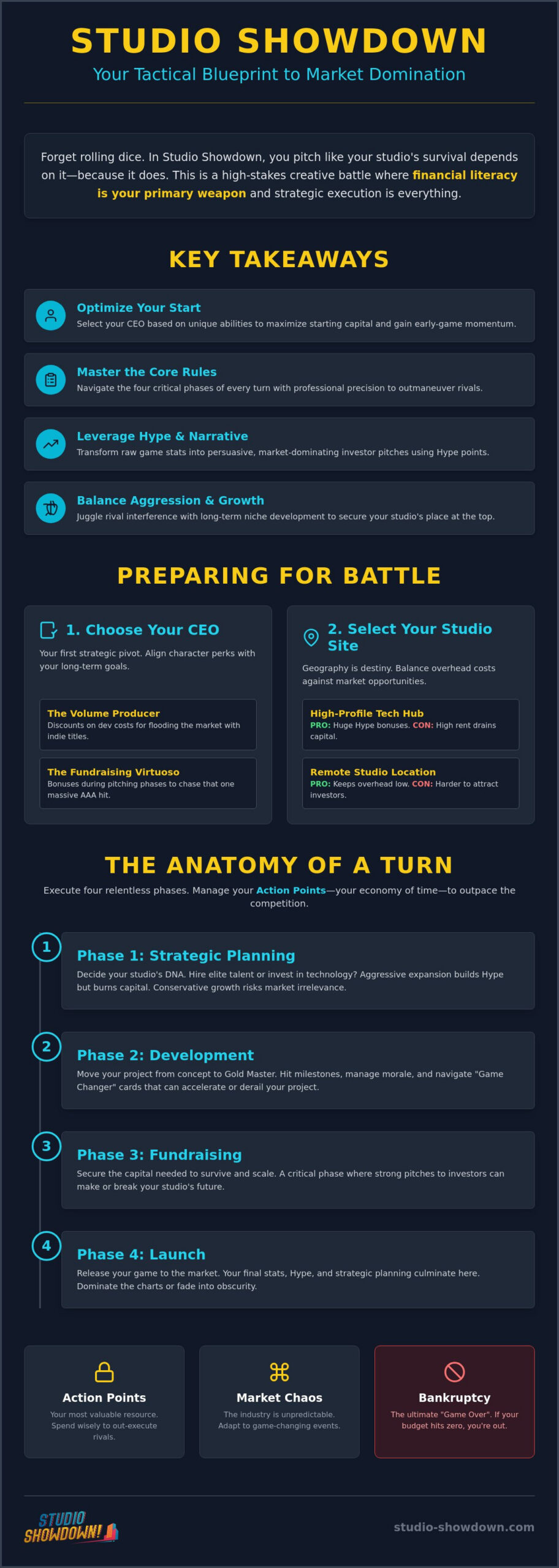
Key Takeaways
- Select your CEO based on unique character abilities to optimize your starting capital and early-game momentum.
- Master the core Studio Showdown rules to navigate the four critical phases of every turn with professional precision.
- Leverage Hype points and narrative flair to transform raw game stats into persuasive, market-dominating investor pitches.
- Balance aggressive rival interference with long-term niche development to secure your studio’s place at the top of the industry.
- Utilize the Educator Edition to bridge the gap between classroom theory and real-world business acumen through high-stakes simulation.
Mastering the Setup: Preparing Your Studio for Battle
Victory in the indie scene isn’t a product of luck. It’s a result of calculated preparation. Before the first card hits the table, you’re already making choices that will determine your studio’s trajectory. The Studio Showdown rules demand a setup phase that is as strategic as the gameplay itself. You aren’t just unboxing a game; you’re assembling a professional production environment. The Standard Edition components, from the budget trackers to the CEO identity cards, are designed to simulate the high-pressure world of game development with surgical precision.
Setting the board isn’t a chore. It’s the first move in a high-stakes creative battle. You’ll distribute starting capital, initialize your budget trackers, and begin the critical deck-building phase that defines your core team. This is where your vision starts to take a physical form. Every component serves a purpose in your quest for market dominance.
Character Selection and Starting Edges
Your CEO choice is your first major strategic pivot. Each character archetype comes with unique perks that dictate how you interact with the game’s economy. Some CEOs provide a discount on development costs, while others grant a bonus during the high-stakes pitching phase. You need to align your character choice with your long-term goals. If you plan to flood the market with smaller indie titles, choose an archetype that rewards high-volume production. If you’re chasing one massive AAA hit, select a leader with superior fundraising capabilities. Managing your budget tracker with real-time accuracy is essential. In this game, a single miscalculated action point can lead to a studio-closing deficit.
The Studio Site Selection Process
Geography is destiny. Studio Showdown sits firmly within the tradition of business simulation games where your physical location provides distinct market modifiers. Choosing where to plant your flag is a balance between overhead and opportunity. A high-profile tech hub might offer incredible networking advantages and Hype point bonuses, but the rent will bleed your capital dry. Conversely, a remote studio location keeps your costs low but makes it harder to attract top-tier investors during the launch phase. You’re building a balanced competitive environment from the ground up. Finalize your board layout with intent. Your location isn’t just a spot on the map; it’s a strategic asset that must be leveraged to outmaneuver your rivals.
The Anatomy of a Turn: From Fundraising to Game Launch
Every turn in this simulation is a high-stakes sprint. You don’t just play; you execute. The Studio Showdown rules organize your path to market dominance through four relentless phases: Planning, Development, Fundraising, and Launch. Central to this flow is your Action Point pool. This is your economy of time. Spend it poorly on low-impact tasks, and you’ll watch your rivals scale while you’re stuck in pre-production. Action Point management separates the industry visionaries from the bankrupt.
Success isn’t guaranteed by a good idea alone. You must navigate the Market Chaos deck, a collection of cards that simulate the industry’s inherent unpredictability. One draw might grant you a viral marketing boost; another could trigger a sudden talent exodus. You must stay agile. If your budget hits zero and your fundraising fails, you face the ultimate “Game Over” condition. Bankruptcy is the only exit for the unprepared. To avoid this fate, you must master the internal rhythm of the studio lifecycle.
Phase 1: Strategic Planning and Resource Allocation
The Planning Phase is the foundation of studio success. This is where you decide your studio’s DNA. Do you hire elite talent to boost your game’s quality, or do you invest in scalable technology to reduce long-term costs? It’s a brutal risk-reward calculation. Aggressive expansion burns through your starting capital but builds early Hype. Conservative growth keeps your burn rate low but risks market irrelevance. Much like the curriculum in a Game Development minor, this phase forces you to bridge the gap between creative vision and business reality. Every decision here echoes into your final launch stats.
Phase 2: Development and Milestone Tracking
Development is where the heavy lifting happens. You’ll move your project from a raw concept to a Gold Master by hitting specific milestones. This isn’t a linear path. You’ll encounter “Game Changers,” powerful cards that can either accelerate your timeline or introduce devastating technical debt. Managing studio morale is just as vital as managing code. If your team burns out, your development speed craters. You must balance the push for perfection with the reality of your deadline. If you’re ready to test your leadership under pressure, it’s time to pick up the Studio Showdown Board Game and start your first build. Precision here leads to a smoother transition into the fundraising and pitching rounds.
Pitching and Selling: The Competitive Edge
The Pitching Phase is where your studio’s vision meets the cold reality of the market. In this stage, numbers are just the script; the pitch is the performance. According to the Studio Showdown rules, your success isn’t just about how many tech points you’ve accumulated during development. You must transform those raw stats into a persuasive narrative that captures investor interest. This is the moment you step out of the dev room and into the boardroom. You aren’t just selling a product. You’re selling a future.
Hype points act as your primary social currency. These points influence investor decisions and act as multipliers for your final score. High Hype can make a mediocre project look like a market disruptor, while low Hype can sink a technical masterpiece. Mastering the Studio Showdown rules means knowing how to build this momentum early. Converting a successful pitch into venture capital isn’t just about winning a round; it’s about securing the market share necessary to crush your rivals in the long game.
Crafting the Perfect Elevator Pitch
Investors respond to specifics. Your pitch must align your game’s unique attributes Art, Tech, and Quality with current market demands. Roleplaying isn’t just an optional extra; it’s a core mechanic. A confident delivery can sometimes bridge the gap if your stats are lagging. However, stay alert. Rival studios aren’t passive observers. They can play Market Friction cards to sabotage your moment. A sudden “Bad Press” or “Technical Glitch” card can turn a winning pitch into a damage control session. You must anticipate these disruptions and have a counter-strategy ready.
Fundraising and Capital Management
Not all money is equal. In this simulation, you’ll choose between angel investors and venture capital. Angel investors offer quick cash with fewer strings, but venture capital provides the massive influx needed for AAA titles. The catch? Giving up equity can cost you dearly in the final scoring. Taking on debt keeps you in control but increases your turn-by-turn burn rate. Mastering the business board game mindset means knowing when to take the risk and when to hold back. You’re building a professional portfolio. Manage your capital like a CEO, or prepare to watch your studio fade into irrelevance. Every dollar spent must be a step toward total market dominance.
Strategic Market Dominance: Advanced Tactics for CEOs
Market dominance isn’t a gift. It’s a seizure. Once you’ve mastered the basic Studio Showdown rules, the real game begins. You move from surviving to dominating. This is where advanced CEOs separate themselves from the amateurs. You aren’t just managing a studio; you’re orchestrating a takeover. The “Cutthroat” approach isn’t just an option. It’s a necessity in a saturated market. You must decide: do you chase the white whale of a single AAA blockbuster, or do you build a resilient empire of indie gems? Diversification provides a safety net during “Dry Season” market events, but a niche focus can catapult you to the top of the leaderboard with a single launch.
Optimizing cash flow is your lifeline. During market downturns, those who overextended on talent without a reserve fund will collapse. You need to leverage your anime-inspired character abilities for maximum impact at the exact moment of market shifts. These abilities aren’t just flavor. They are game-breaking tools designed to be deployed with surgical timing. A visionary CEO knows when to play it safe and when to burn the entire budget for a chance at total industry control.
Competitive Analysis and Rival Sabotage
Monitoring rival budgets is your first priority. If a competitor is low on cash, that’s your window to strike. Use “Headhunter” cards to poach their lead designers just as they hit a critical milestone. This isn’t just about your growth. It’s about their stagnation. Developing your strategy board games skills requires this level of predatory observation. You need to know their burn rate as well as you know your own. Don’t just watch the market. Shape it by removing your competition from the board. Every stolen designer is a project delayed for them and a milestone reached for you.
The Endgame: Market Dominance and Fame
The final round is a ruthless calculation of studio value, total hits, and liquid capital. Calculating final Victory Points requires a clear head and a precise tally of your creative achievements. The “Bragging Rights” bonus isn’t just fluff. It’s the final seal on a win that your rivals won’t forget. But the real victory happens after the board is packed away. Post-game analysis allows you to turn these tabletop lessons into real-world development skills. You’ve simulated the grind. You’ve felt the pressure. Now, apply that same intensity to your professional portfolio. If you’re ready to test your strategic limits, pre-order the Studio Showdown Board Game and start your ascent to the top of the industry.
Elevating Your Game Night with Studio Showdown
Strategy isn’t confined to the boardroom. It belongs at the center of your table. Studio Showdown transforms a standard evening into a high-stakes creative arena. It’s a premier choice for screen-free activities, providing tactical depth that digital simulations often lack. You aren’t just moving pieces; you’re building a legacy. This isn’t a passive experience. It’s an active engagement with the mechanics of success. The Studio Showdown rules ensure every player stays locked into the rhythm of the market. You’ll feel the tension of every budget cut and the rush of every successful launch.
Scaling the experience is easy. For larger groups or academic settings, the Classroom Bundle is the standard. You can host a “Showdown Tournament” by running simultaneous games and tracking studio valuations across the board. This format tests leadership under extreme pressure. It’s the perfect transition for those moving beyond a basic easy money game into something truly complex. You’re no longer just collecting cash. You’re managing technical debt, negotiating equity, and outmaneuvering rivals. This is the professional evolution of game night.
Educational Implementation and Portfolio Building
Financial literacy is a weapon. Entrepreneurship is the battlefield. The Studio Showdown: Educator Edition integrates directly into business and STEM curricula to bridge the gap between theory and practice. Students don’t just read about business plans; they execute them. They can use their in-game studio stats and milestone achievements to build real-world portfolios. Game-based learning builds the professional intuition that traditional textbooks miss. It turns abstract concepts into concrete results. It’s about professional development through high-stakes simulation. You learn to pivot, to scale, and to survive.
Joining the Studio Showdown Community
You aren’t playing in a vacuum. The VGCD Academy network is a collective of “Game Changers” pushing the boundaries of the industry. Stay ahead of the curve. Access exclusive dev updates and insider drops by joining the newsletter. Connecting with other visionaries allows you to refine your tactics and share market insights. This is more than a game; it’s a gateway to a professional network. Don’t settle for mediocre entertainment. Master the Studio Showdown rules and start your ascent today. Your studio is waiting. The market is ready. It’s time to show them what you’ve built.
Seize the Market: Your Studio Journey Starts Now
Mastering the Studio Showdown rules is just the beginning of your professional evolution. You’ve learned how to optimize your starting capital, navigate the relentless four-phase turn structure, and deliver pitches that silence the competition. This isn’t just about winning a board game. It’s about building the financial literacy and entrepreneurial intuition required to thrive in the real-world creative industry. Developed by industry experts at VGCD Academy, this simulation bridges the gap between artistic vision and market dominance. With its striking anime-inspired graphic novel art style, it’s a visual and strategic masterpiece already used in schools for high-impact financial literacy training.
The dev room is ready. Your rivals are already planning their first move. Don’t let your vision stay on the drawing board. It’s time to execute. Launch your studio and order the Studio Showdown Board Game today. Take control of your career, outmaneuver the noise, and rise above the competition. The industry is waiting for its next visionary CEO. We’ll see you at the top of the leaderboard. Your legacy starts with the first card played.
Frequently Asked Questions
What is the minimum number of players for Studio Showdown?
Studio Showdown requires a minimum of 2 players to initiate a creative clash. The game is specifically balanced for 2 to 4 players, ensuring that every session remains competitive and fast-paced. Whether you’re engaging in a tight 1v1 duel or a four-way studio battle, the mechanics scale perfectly to keep the pressure high. It’s about outmaneuvering the person across the table.
How long does a typical game of Studio Showdown last?
A typical session lasts between 30 and 45 minutes. This timeframe is designed to reflect the rapid-fire nature of the indie development world. You’ll move from initial setup to a final market launch without the drag of traditional, slow-moving board games. It’s built for efficiency. Every minute counts when you’re racing to beat a rival’s release date.
Can I play Studio Showdown if I have no experience in game development?
You don’t need any prior industry knowledge to dominate. The game acts as a bridge, teaching you the fundamentals of entrepreneurship and studio management as you play. You’ll pick up the nuances of fundraising and team building through experience. It’s an intuitive system that rewards strategic thinking over technical coding skills. You provide the vision; the game provides the framework.
What makes the Educator Edition different from the standard board game?
The Educator Edition is built for the classroom. While it follows the core Studio Showdown rules, it includes specialized tools for teachers to track student progress and build professional portfolios. It shifts the focus toward long-term financial literacy and STEM applications. It’s the ultimate resource for institutions looking to gamify professional development. Students learn to pivot, to scale, and to survive.
How does the “Market Chaos” deck affect gameplay?
The Market Chaos deck introduces high-stakes volatility to your strategy. These cards simulate real-world industry shifts, such as sudden tech trends or viral marketing surges. You can’t just follow a static plan. You must be ready to pivot your entire production at a moment’s notice. It turns a predictable game into a relentless fight for survival. Chaos is your opportunity to seize market share.
Is Studio Showdown suitable for middle school students?
Yes, the game is rated for ages 13 and up. It’s an excellent tool for middle school students to explore entrepreneurship and business logic. The anime-inspired art style keeps them engaged, while the strategic depth challenges their critical thinking. It’s a professional-grade simulation that remains accessible to younger visionaries. It builds the confidence needed to lead in a competitive environment.
What happens if my studio runs out of cash mid-turn?
If your studio’s capital hits zero, you face a potential “Game Over” scenario. The Studio Showdown rules dictate that you must manage your burn rate with surgical precision to avoid bankruptcy. You might have to sacrifice equity or take on high-interest debt to stay afloat. Running out of cash mid-turn is a high-pressure test of your fundraising and survival skills. You must negotiate or fail.
Are there expansion packs available for Studio Showdown in 2026?
As of July 2026, the focus remains on the Standard Edition and the Educator Edition. There are currently no confirmed expansion packs shipping this year. The base game is designed with enough depth and variability to provide hundreds of unique studio trajectories. You’ll find plenty of challenge in the core mechanics without needing additional modules. The battle for dominance is already complete.