Your creative vision is a masterpiece, but in a 2026 market projected to hit $268 billion, “masterpiece” isn’t a business plan. Most founders pour years of sweat and soul into mechanics that players won’t actually pay for. It’s a brutal, unnecessary waste. You’re likely struggling to balance that raw artistic fire with the cold reality of platform fees and investor expectations. Making the right key business decisions in game development is no longer about gut feeling. It’s about tactical precision.
We know the fear of watching a passion project vanish into the visual noise of crowded digital storefronts. This playbook changes that narrative. You’ll master the data-driven strategies needed to validate your concept before you commit to full-scale production. We’re providing a clear framework for market validation, investor-ready pitching, and the strategic maneuvers that separate dominant studios from those that simply fade away. Let’s turn your vision into a market-leading reality.
Key Takeaways
- Stop wasting years on projects that won’t sell. Learn to align your creative passion with the high-stakes reality of the 2026 market.
- Navigate the “Blue Ocean” strategy to find underserved player niches. It’s about making key business decisions in game development that protect your art while securing your studio’s future.
- Master cost-effective methodologies for deep market analysis. Use data from Steam and direct player feedback to validate your concept before you write a single line of code.
- Build investor confidence with data-backed development strategies. Turn player preferences into winning mechanics and justify your fundraising goals with cold, hard facts.
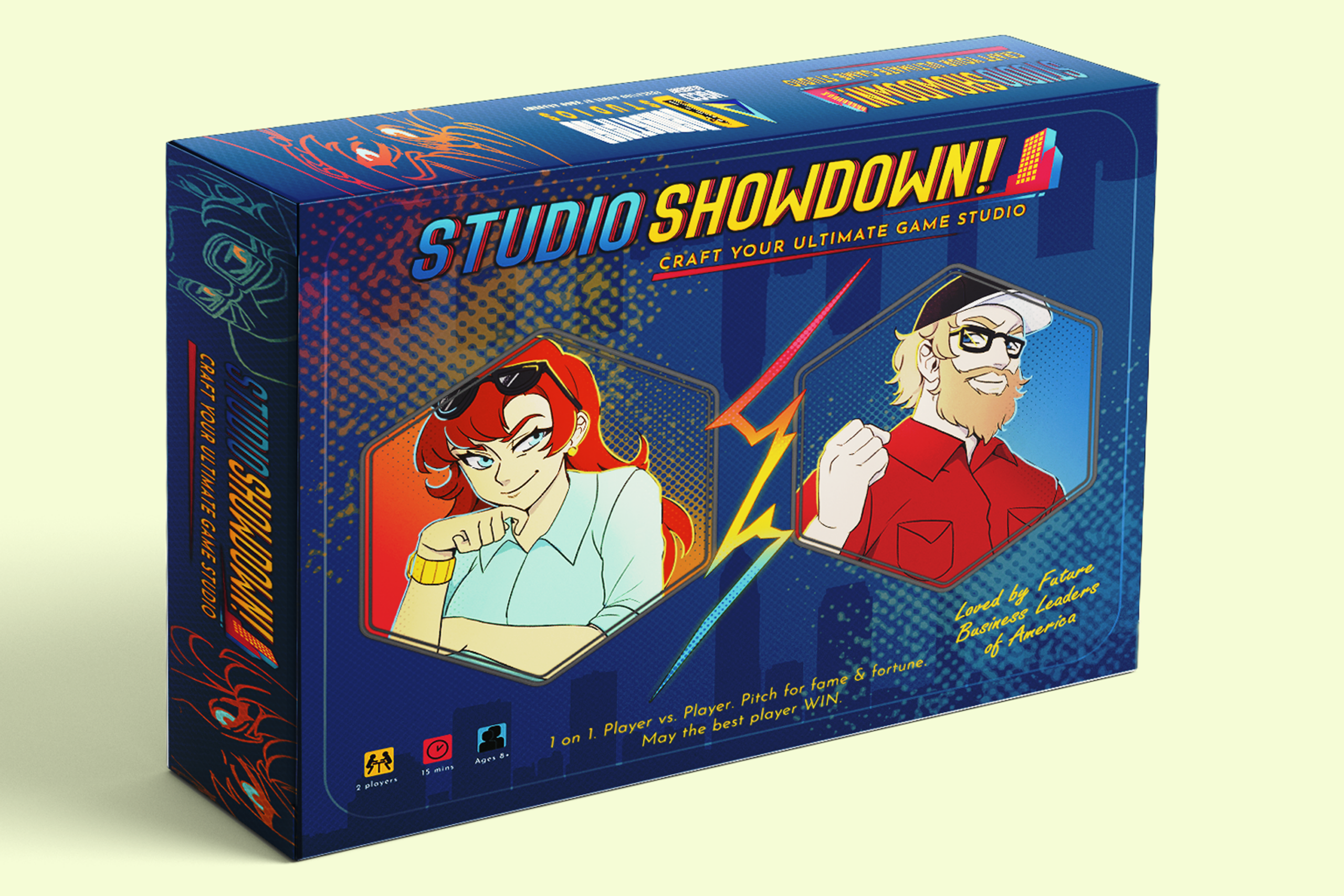
- Sharpen your founder instincts with Studio Showdown. Experience the thrill of pitching and studio management through a high-octane board game designed for industry leaders.
Why Market Research is the Survival Foundation for New Games
Market research isn’t a corporate chore. It’s a survival instinct. In a global market projected to reach $268 billion in 2026, launching on “vibes” is a fast track to bankruptcy. You need to align player demand with your creative spark before you burn through your runway. This strategic alignment defines the most critical key business decisions in game development for any new studio. It’s the bridge between an expensive hobby and a dominant market presence.
The video game development process is notoriously brutal. With 3.49 billion active players globally, the competition for attention is absolute. Validation isn’t about killing your art. It’s about ensuring your art actually finds an audience. Shifting from gut feeling to data-backed confidence is what separates a hobbyist from a founder. You must know your players better than they know themselves.
Investors in 2026 are looking for more than a pretty pitch deck. They want proof of concept. They want to see that you’ve analyzed the competition, identified a gap, and built a strategy to fill it. Research is the steel in your spine when you walk into a high-stakes pitch. It transforms a desperate plea for funding into a professional business proposal. Beyond the pitch, establishing a sophisticated financial infrastructure can further demonstrate your studio’s maturity; to explore Gemba’s whitelabel banking solutions, click here. Key business decisions in game development must be rooted in reality, not just imagination.
De-risking the Development Lifecycle
Stop coding. Start questioning. Identifying concept “red flags” before a single line of code is written saves thousands in wasted production hours. Every art asset costs money. Every mechanic takes time. Data tells you which features are essential and which are just noise. This is the psychological shift you must make. You’re no longer just a developer; you’re a studio founder responsible for a commercial entity. Protect your resources. Validate your mechanics early. Kill your darlings if the data says they won’t sell.
Understanding the 2026 Gaming Landscape
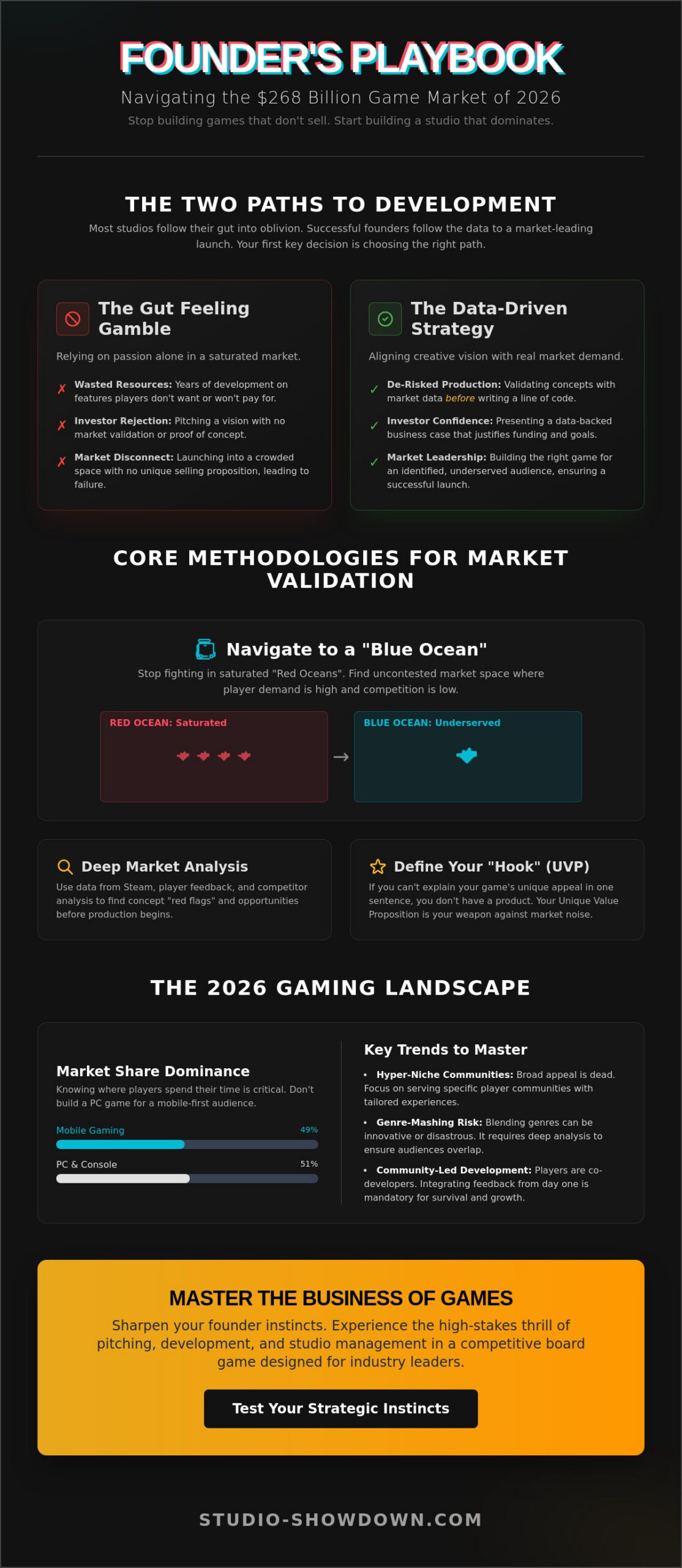
The market is fragmenting. Hyper-niche communities are the new battleground. Community-led development is no longer optional; it’s a requirement for survival. If you’re blending genres, you’re taking a massive risk. Traditional category clones are safe but boring. Genre-mashing requires deep analysis to see if those two player bases actually want to meet. With mobile holding 49% of the market and PC growing fast, you must find exactly where your target audience spends their time. Don’t guess. Know.
The Indie Dilemma: Balancing Creative Vision with Market Reality
Many developers fear that data is the poison of creativity. They believe that spreadsheets kill the soul of a project. This is a dangerous lie. Data doesn’t replace art; it protects it. By analyzing the market, you aren’t sacrificing your vision. You’re ensuring it survives the brutal reality of the 2026 landscape. The most successful key business decisions in game development involve identifying exactly where your passion meets a hungry, underserved audience. Art without an audience is just an expensive secret.
Look for the “Blue Ocean.” This strategy is about finding the gaps where players are starving for content but the competition is thin. Don’t build another generic shooter in a saturated market. Look at how studios achieve dominance by listening to early signals. They pivot when the data shows a mechanic isn’t landing. They treat market reality as a canvas, not a cage. They understand that a game which fails to sell cannot fund the next creative breakthrough.
Successful founders listen before they build. They use player psychology to refine their mechanics. If you want to sharpen your ability to make these calls under pressure, you can test your strategic instincts in a simulated environment before risking your actual capital. This proactive approach turns uncertainty into a calculated advantage.
Defining Your Unique Value Proposition (UVP)
Standing out in a library of over 150,000 titles requires more than luck. You need a “Hook.” If you can’t explain your game’s appeal in a single, punchy sentence, you don’t have a product yet. Analyze competitor weaknesses. If their players complain about clunky UI or lack of depth, make those your studio’s core strengths. Your UVP is your weapon. Use it to cut through the noise and capture the player’s imagination instantly.
The Founder’s Mindset: Strategic Outmaneuvering
Stop seeing rival studios as just enemies. See them as free data sources. Every failure they experience is a lesson you don’t have to pay for. Market dominance starts with a deep understanding of what drives player behavior. You must outmaneuver the competition by seeing the board more clearly than they do. The Founder’s Dilemma is the constant tension between artistic ego and commercial viability. Resolving that tension is the ultimate test of your key business decisions in game development.
Core Methodologies for Modern Game Market Analysis
Data isn’t a luxury reserved for AAA giants with million-dollar research budgets. For a founder in 2026, the most effective tools are often free. You just need to know where to look. Mastering these methodologies ensures that your key business decisions in game development are based on objective reality rather than optimistic projections. You aren’t guessing. You’re calculating.
Effective analysis starts with a competitor audit. Identify the top 10 games in your target genre. Don’t just play them. Deconstruct them. Look at their update frequency, their DLC strategy, and their community size. Then, dive into sentiment analysis. Read the “Most Helpful” negative reviews on Steam. Scour Discord servers. Players will tell you exactly what’s missing from their favorite games. That gap is your entry point. It’s the visual noise you’re going to rise above.
Secondary Data: Mining the Giants
SteamDB is your most powerful ally. Use it to estimate revenue and track player retention for titles similar to yours. If a game has a massive launch but player counts drop by 90% in a week, find out why. Was it a technical failure or a lack of depth? Look at Kickstarter failures too. These are case studies in market misalignment. They show you exactly what the audience didn’t want to fund. By tracking these genre trends over a 3-year period, you can predict what the market will crave by 2027. You’re looking for the trajectory, not just the current position.
Primary Data: Direct Player Engagement
Stop waiting for a finished build to talk to players. Build a Minimum Viable Community (MVC) now. This is a small, dedicated group of players who provide early feedback loops. Use social media polls as low-friction validation tools to test specific features. When you conduct surveys, avoid leading questions. Don’t ask if they “like” an idea; people are generally too polite to be honest. Ask questions that reveal buying intent. Ask what they paid for their last three games and why. This direct engagement ensures your key business decisions in game development reflect the actual desires of your future customers. You’re building a relationship, not just a product.
Turning Data into Development Strategy: From Pitch to Launch
Raw data is useless until you weaponize it. You’ve gathered the intel; now you must translate those player preferences into the core mechanics of your game. If your research shows a surge in demand for cooperative survival but a fatigue with “hunger meters,” your design must reflect that shift immediately. This translation process represents the most impactful key business decisions in game development you’ll make. It’s where your studio’s identity is forged in the fire of market reality.
Budgeting for success requires a cold, analytical lens. Don’t pull fundraising goals out of thin air. Use your market analysis to justify every dollar you request. If you can prove a specific sub-genre has a high player-to-title ratio, you have a logical basis for your production costs. This evidence-based approach turns a risky gamble into a calculated investment. It gives you the authority to lead your team with confidence, knowing the runway is built on solid ground.
The Business of Game Design
Creative genius isn’t enough to keep the lights on. You must integrate financial literacy into your daily workflow. Understand your “Burn Rate” and how market timing affects your production runway. If you launch during a major platform sale or alongside a AAA titan, your visibility will vanish. Learning how business simulation games teach real-world skills can bridge the gap between creative passion and the hard numbers of studio management. It prepares you for the friction of the real industry.
Production isn’t a straight line. It’s an iterative battle. You must update your research as the market shifts during your development cycle. If a new regulation hits, like the 2026 PEGI updates for loot boxes, your monetization strategy needs to pivot instantly. Stay agile. Stay informed. Don’t let your key business decisions in game development grow stale while you’re still in the trenches.
Pitching with Authority
Stop telling investors your game is “fun.” Fun is subjective and impossible to measure. Telling a stakeholder that “data shows a 20% gap in the tactical RPG market” wins the room. You aren’t just selling a game; you’re selling a market opportunity. Visualizing your data makes the win feel inevitable to stakeholders. A pitch is a story where data is the protagonist. When you speak with this level of precision, you move from being a dreamer to a dominant founder. Ready to sharpen your edge? Secure your copy of Studio Showdown and master the art of the high-stakes pitch.
Mastering the Business of Games with Studio Showdown
Theory is a start, but execution is everything. You’ve analyzed the 2026 market and identified your UVP. Now you need to test your instincts in a high-pressure environment. The real world doesn’t offer a “restart” button when a project fails. Studio Showdown provides that safety net. It’s a hands-on business simulator that puts you in the founder’s seat before you risk your first dollar. You’ll face the same pressure, the same aggressive rivals, and the same high-stakes choices that define a studio’s lifecycle. It’s the ultimate tactical prep for the visual noise of the modern market.
This isn’t just a game. It’s a training ground for market dominance. Making key business decisions in game development requires a blend of cold logic and creative intuition. Studio Showdown mimics the intensity of fundraising rounds and investor pitches with startling accuracy. You’ll learn to read the board, anticipate rival maneuvers, and pivot your strategy. These are the key business decisions in game development that separate market leaders from those who simply fade away. Analog simulation is the fastest way to build professional acumen. It strips away the digital noise and focuses on the core mechanics of success.
Hands-On Entrepreneurship Training
Experience the friction of the industry without the financial ruin. In Studio Showdown, you practice strategic maneuvers against rival studios in a focused, screen-free environment. You’ll manage your burn rate, justify your production costs, and battle for market share. It’s about learning the financial risks of development while building the confidence to lead. For a deeper look at how these mechanics translate to victory, check out our strategy board games guide. Don’t just watch the market. Shape it.
Building a Professional Portfolio
The gap between a student and a professional is often a lack of proven strategy. Use the skills you sharpen in Studio Showdown to enhance your game design resume. Show potential employers or investors that you understand the business side of the craft. You aren’t just an artist; you’re a tactician ready for the fight. Educators are already using the game to teach STEM and business curricula simultaneously, proving its value as a serious professional tool for the next generation. It’s time to move beyond the portfolio and start your journey as a founder. Master the competitive world of game development with Studio Showdown and secure your studio’s future today.
Dominate the 2026 Game Market
Survival in this industry isn’t about luck. It’s about grounding your creative fire in a data-driven reality. You now have the framework to de-risk your development cycle and validate your concepts before the first line of code is ever written. These key business decisions in game development separate sustainable, profit-making studios from forgotten prototypes. You’ve learned to listen to the market, identify underserved niches, and translate player data into winning mechanics.
Don’t leave your studio’s future to chance. Developed by VGCD Academy and DEMYSTIFIED Studios, Studio Showdown offers immersive strategy gameplay that mirrors real-world studio challenges. It’s why educators trust this simulator to build professional business acumen in a high-stakes environment. You can practice fundraising, outmaneuver rivals, and sharpen your founder instincts without risking your actual capital. The board is set, and the competition is already moving. It’s time to claim your market dominance.
Start your journey as a studio founder with Studio Showdown. Your vision deserves a legacy. Go build it.
Frequently Asked Questions
What is the first step in market research for a new video game?
The first step is competitive deconstruction. You must identify your core genre and find the top ten titles currently dominating that space. Analyze their “hook” and their player retention rates before you commit to your own design. This initial analysis prevents you from building a product for a market that doesn’t exist or is already over-saturated.
Can I do market research for my game without a budget?
You don’t need a massive budget to gather high-quality data. Use free tools like SteamDB to track player counts and Google Trends to monitor genre interest. Social media polls and Discord communities are perfect for low-friction validation. Most indie success stories start with these zero-cost methodologies rather than expensive agency reports or corporate focus groups.
How do I identify my game’s target audience in 2026?
Look beyond broad demographics and focus on player behavior. In 2026, the market is defined by hyper-niche communities and genre-blenders. Identify the specific problems players have with current titles by reading negative reviews on Steam. Your target audience is the group of people whose needs are currently being ignored by the industry giants.
Is market research necessary for indie game developers?
Market research is mandatory for survival. Indie developers have limited resources, so every hour of production must count toward a commercial goal. Research ensures you aren’t wasting years on a concept that has zero market demand. It’s the only way to protect your creative vision from the brutal reality of a saturated digital storefront.
What tools are best for tracking video game market trends?
SteamDB is the gold standard for PC market data and player retention. For mobile trends, use the free tiers of Sensor Tower or AppMagic to see what’s climbing the charts. Don’t overlook Kickstarter; it’s a live laboratory for what players are willing to fund. These tools provide a clear view of the trajectory of the industry.
How does market research help with video game fundraising?
Research transforms a desperate plea for money into a professional business proposal. It provides the data-backed evidence needed to justify key business decisions in game development to skeptical investors. By demonstrating a clear market gap or high retention in similar titles, you prove that your studio is a calculated investment rather than a blind gamble.
What is the difference between primary and secondary research in gaming?
Secondary research involves analyzing data that already exists, like platform fees or global sales statistics from industry reports. Primary research is about direct engagement with your specific future players through surveys or focus groups. You need both to succeed. Secondary data shows what’s happening; primary data tells you if players want your game.
How can a board game teach me about video game market research?
Board games like Studio Showdown simulate the high-pressure environment of a real studio. They force you to make key business decisions in game development against aggressive rivals without risking real capital. This hands-on simulation builds tactical instincts and financial literacy faster than any textbook. It’s about practicing the win before you enter the market.