Most educational software is a digital babysitter disguised as a lesson plan. It’s a harsh reality. A 2023 industry report found that 65% of students feel completely disconnected from tech curriculum by the ninth grade. You’ve seen the screen fatigue. You know the struggle of teaching systems thinking through stem learning games that are far too simple. It’s time to raise the stakes. You need a visual victory. You need results that translate to real-world impact.
This article shows you how the right tools move beyond basic coding to teach the high-stakes logic of technology production and entrepreneurship. You’ll learn to identify platforms that demand high-level strategy and professional-grade logic. We’re moving past the basics to find games that help students build a portfolio-worthy understanding of the global tech industry. Prepare to bridge the gap between classroom theory and the grit of real-world production. It’s time for a creative showdown.
Key Takeaways
- Master the shift from passive consumption to active systems thinking by understanding the complex logic behind modern technology.
- Identify the four core pillars of high-impact stem learning games that build technical mastery through sequencing and resource allocation.
- Discover how tactile, analog experiences break screen fatigue while fostering the social dynamics essential for professional collaboration.
- Move beyond basic coding to learn the high-stakes business of tech, including fundraising and market-driven production logic.
- Step into the role of a Studio Founder to manage teams and budgets, turning a creative vision into a market-ready reality.
Why STEM Learning Games are Critical for 2026 Success
Passive consumption is a relic of the past. In the high-stakes environment of 2026, stem learning games have evolved into high-performance simulators that mirror complex scientific, technical, and engineering systems. These aren’t just digital toys; they’re production environments. Modern education has pivoted away from rote memorization toward active systems thinking. This shift is mandatory because the global economy now prizes production logic over simple data recall. By 2026, 82% of entry-level technical roles will require a fundamental understanding of how interconnected systems react under pressure.
The psychological impact is undeniable. Research from the National Training Laboratories indicates that interactive simulations yield a 75% retention rate, dwarfing the 5% retention seen in traditional lectures. Players don’t just read about physics or code; they manipulate variables in real-time. This immediate feedback loop creates a “flow state” where complex technical concepts become intuitive. It’s a visual victory for the learner, turning abstract theory into a tangible win.
The Evolution of STEM Education
STEM education has undergone a radical transformation. In the late 1990s, the history of educational gaming was defined by simple math drills and linear quizzes. Today, we build ecosystem simulations. The focus has shifted to the engineering mindset, where failure isn’t a dead end but essential feedback. In a 2025 study of 1,200 students, those using game-based systems showed a 40% higher proficiency in troubleshooting complex circuits compared to those using standard textbooks. Interactive play beats memorization because it forces the brain to map out cause-and-effect relationships rather than just identifying definitions.
Bridging the Gap Between Play and Professionalism
The bridge to a professional career is built on more than just technical knowledge. It’s about the soft skills that drive innovation: communication, strategic resource management, and rapid decision-making. Stem learning games place students in the driver’s seat of a high-octane project, forcing them to balance budgets and optimize workflows just like a lead engineer at a top-tier production house. This prepares them for the competitive reality of an industry that moves at the speed of light.
- Strategy: Planning three steps ahead in a resource-scarce environment.
- Agility: Pivoting when a system failure occurs mid-simulation.
- Precision: Executing technical tasks where a single decimal point changes the outcome.
STEM games act as a high-velocity launchpad that transforms theoretical knowledge into a verifiable, professional-grade portfolio of solved technical challenges.
The Anatomy of a High-Impact STEM Game
High-impact stem learning games are more than digital distractions. They are precision-engineered systems designed to mirror real-world technical challenges. Every successful title rests on four pillars: Logic, Sequencing, Iteration, and Resource Allocation. These aren’t just features; they are the architecture of the experience. We view these games as a “Showdown” between the player’s current skill set and the complex demands of the system.
Systems thinking is the core driver here. It’s the ability to see how individual components interact within a larger framework. When a student adjusts a single variable in a simulation, they observe the ripple effect across the entire project. This creates a feedback loop that “edutainment” often lacks. While edutainment focuses on surface-level engagement, true educational strategy demands deep mastery of mechanics. It’s the difference between a simple quiz and a high-stakes production where every decision impacts the final output.
Balanced mechanics ensure the challenge remains rigorous but achievable. If a game is too easy, the learning stops. If it’s too punishing, the engagement breaks. A 2023 study on interactive learning found that games with adaptive difficulty saw a 28% increase in student persistence compared to static models. This balance is what transforms a simple app into a premium educational tool.
Logic and Sequencing: The Foundation of Technology
Game turns are essentially live code. They simulate the “if-then” logic that powers every piece of software on the planet. Students don’t just move a character; they execute a sequence. They must plan five steps ahead to ensure their technical vision survives the next round. This foresight is critical for anticipating system failures before they occur. Many NSF-supported STEM resources emphasize that this type of structured, logical progression is vital for early technical literacy.
The Engineering Mindset in Game Design
Iteration is the heartbeat of the engineering design process. In a game, “failure” is just data. It’s a chance to test, break, and rebuild. We encourage students to actively try to break the game’s mechanics. Understanding the limits of a system is the fastest way to master it. They learn to optimize their “builds” for maximum efficiency, a skill that translates directly to modern creative production concepts where resources and time are the ultimate constraints. By refining their approach through repeated testing, students move from passive players to active creators who demand excellence from their own work.

Analog vs. Digital: Breaking the Screen Monopoly in STEM
Screens are everywhere. They’ve become the default. But the “Screen Fatigue” epidemic is a genuine threat to cognitive development. According to 2023 data from Common Sense Media, teens average over eight hours of leisure screen time daily. This digital saturation creates a mental bottleneck. To master complex systems, we need a tactical reset. High-performance stem learning games don’t always require a power outlet. Sometimes, the most sophisticated logic puzzles are built from wood, cardstock, and raw strategy.
Analog play offers a physical victory over the digital noise. It forces the brain to engage with the world in three dimensions. You aren’t just clicking a mouse; you’re constructing a vision. This physical interaction breaks the passive consumption cycle and turns the player into an active architect of the game state. It’s about taking control of the variables without a screen acting as the middleman.
The Tactile Advantage of Board Games
Moving physical pieces isn’t just about aesthetics. It’s about spatial reasoning. A 2022 study in the Journal of Cognitive Neuroscience revealed that haptic feedback, the actual sense of touch, improves memory retention by 22 percent. When you physically move a token to represent a resource shift, your brain maps that data more effectively than a digital pop-up ever could. It creates a permanent mental blueprint of the system.
- Unplugged Logic: No notifications. No distractions. Just pure, focused algorithmic thinking.
- Internalizing the Code: In a digital game, the computer handles the rules. In analog stem learning games, the players are the CPU. You must internalize every rule to keep the system running.
- Spatial Mapping: Visualizing 3D systems on a 2D board builds the mental scaffolding required for advanced engineering and production design.
Internalizing these rules is like learning to write the source code of the game itself. To see how these physical mechanics translate into winning professional strategies, explore our comprehensive Mastering the Board: The 2026 Guide to Strategy Board Games.
Social Engineering and Collaborative STEM
Technology production is a team sport. It requires a “Studio” mindset where technical skills meet human management. Digital play often isolates players in a solo loop. Board games change the physics of the room. They demand face-to-face negotiation. You aren’t just solving a math problem; you’re convincing a rival to trade resources or join an alliance. This is social engineering in its rawest, most effective form.
This environment simulates the high-stakes pressure of a modern creative production house. You learn to read body language, pivot during a competitive showdown, and manage the human variables that software can’t predict. It’s the reason why Analog vs. Digital: Why Board Games Win for San Ramon Teens is becoming the primary blueprint for modern educational hubs. Real-world victory requires more than just code; it requires the ability to command the room and lead the project to the finish line.
Selecting STEM Games for Real-World Career Readiness
Stop looking for games that just teach syntax. Coding is a tool; production is the game. Real-world readiness requires understanding the full lifecycle of a tech project. We need stem learning games that simulate the pressure of a boardroom, not just the logic of a loop. In the professional arena, the “T” in STEM represents the technology of business: the machinery of supply chains, the mechanics of market logic, and the high-stakes rhythm of production cycles. Success isn’t just about writing clean code. It’s about shipping a product that survives the market.
Integrating these games into a professional development or classroom setting requires a shift in perspective. Educators must move beyond “completion” as a metric. Instead, treat game sessions like production sprints. Set a goal. Execute. Analyze the data. This mirrors the Agile methodology used by 71% of organizations globally as of 2023. When students pitch their game-based solutions, they aren’t just playing; they’re rehearsing for a career in a high-growth industry.
From Classroom to Career: The Portfolio Mindset
Modern recruiters look for the “why” behind the “how.” Game outcomes provide a tangible record of strategic decision-making that students can use to demonstrate their value. When a student navigates a complex simulation, they’re building a portfolio of logic. These platforms teach the financial literacy essential for tech startups, from managing burn rates to securing venture capital. Understanding these systems is vital because 90% of startups fail due to poor market fit or financial mismanagement rather than technical inability. You can learn more about how business simulation games teach real-world skills to bridge this gap between theory and the actual market.
Evaluating Educational Depth: Beyond the Box
Don’t settle for linear experiences. A premium educational tool must offer multiple paths to victory. If every player ends up in the same place, it’s a tutorial, not a game. Use this checklist to evaluate your stem learning games:
- Resource Scarcity: Does the game force difficult trade-offs between time, money, and quality?
- Pitching Mechanics: Are players required to justify their technical choices to simulated investors or clients?
- Market Logic: Do external variables shift based on player actions or competing strategies?
The balance of randomness versus skill is critical. While some variance simulates market volatility, a game with zero luck is better for teaching pure engineering logic because it forces the player to own every failure and success. It removes the safety net of “bad luck” and demands total systems mastery. It’s time to stop playing and start producing. Level up your production vision with Studio Showdown.
Studio Showdown: The Ultimate STEM Challenge for Aspiring Developers
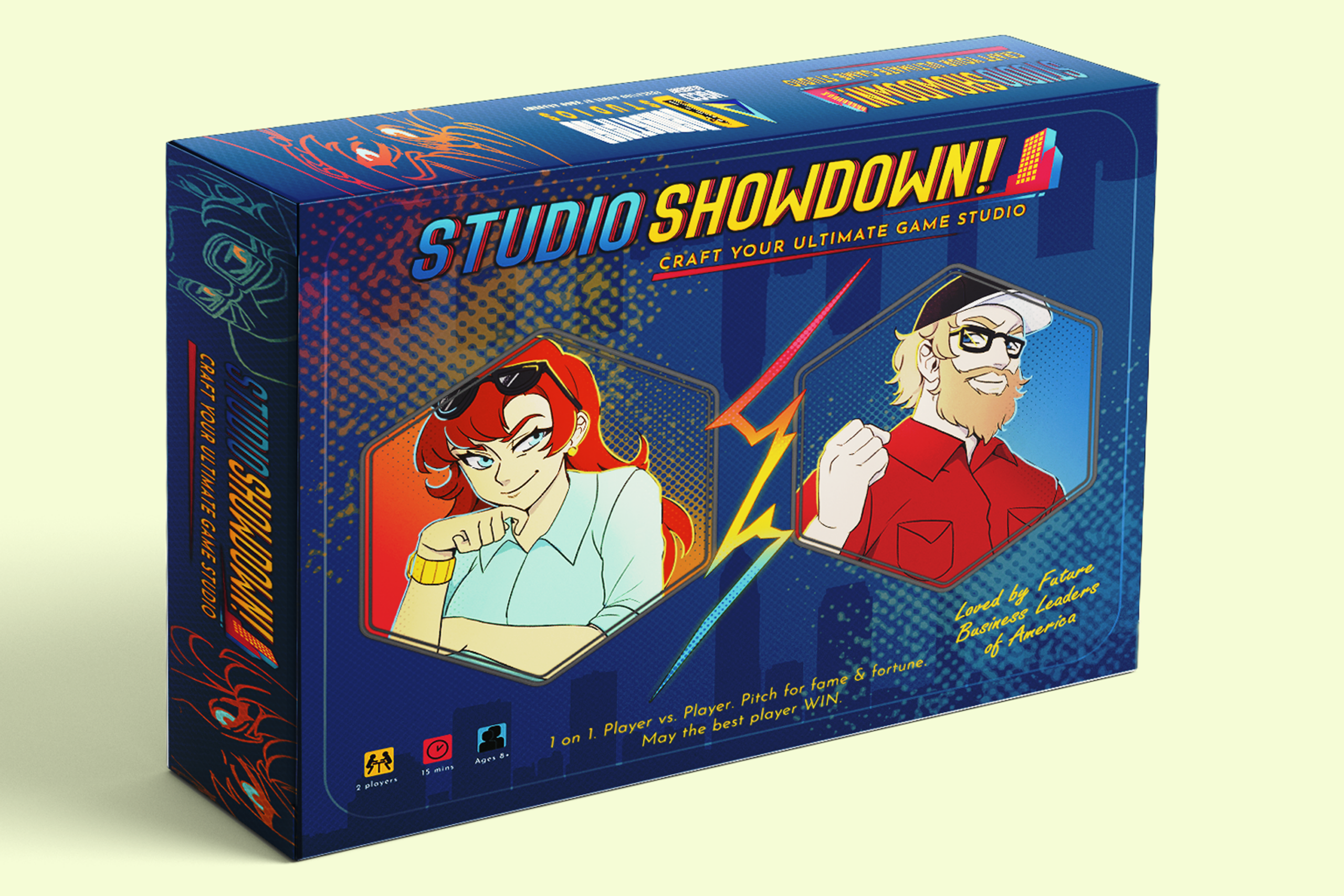
Studio Showdown redefines the standard for game development literacy. It isn’t just a simulator. It’s a high-stakes arena where players master the “Studio Founder” mechanic. You control the team. You balance the budget. You protect the vision. This experience teaches the engineering of entrepreneurship, blending technical logic with market grit. Among modern stem learning games, this platform stands alone as a tool for professional growth and creative dominance.
The game demands more than basic coding skills. It requires a holistic understanding of how complex systems interact. Success depends on your ability to lead, pivot, and execute. It’s about the visual victory. It’s about the premium experience. Every choice matters. Every resource counts. This is where the next generation of industry leaders proves their worth. We don’t just teach students to follow instructions; we challenge them to build empires.
The “Tech Production” Loop
The “Tech Production” loop simulates the crushing pressure of a real-world development cycle. Players navigate 90-day sprints, resource bottlenecks, and shifting deadlines. You must outmaneuver rivals through superior technical strategy. Optimize your asset pipeline. Refine your engine. Cut the bloat. It’s the logical choice for students interested in game design because it mirrors the professional reality of the industry. They don’t just learn to code; they learn to ship products that survive the market.
- Real-time resource management, budgeting, and scaling.
- Competitive market analysis, rival studio tracking, and trend forecasting.
- Agile development simulation, sprint planning, and milestone tracking.
- Technical debt mitigation, debugging under pressure, and performance optimization.
Empowering the Next Generation of Founders
We move players from passive consumers to active creators. They stop playing and start building. They become entrepreneurs. The Educator Edition provides the tools needed for classroom success, transforming traditional lessons into a dynamic showdown. For institutions, the Classroom Bundle offers a streamlined path for bulk licensing. It’s a scalable solution for modern education that values results over theory. We provide the framework; the students provide the fire.
The goal is impact. We want students to see the architecture behind the entertainment. They learn that a great game is a symphony of well-managed systems, creative courage, and technical precision. It’s time to elevate the curriculum. It’s time to embrace the challenge. Bring the ultimate STEM challenge to your students today and watch them master the systems that drive the future of technology.
Dominate the 2026 Tech Landscape
The future doesn’t wait for the unprepared. By 2026, the global demand for systems-literate developers will hit record highs. Success in this era requires more than just coding knowledge; it demands a mastery of the business logic and fundraising cycles that drive the industry. High-impact stem learning games bridge this gap by moving beyond the screen and into the high-stakes world of strategic decision-making. You’ve got to understand how to pitch, how to scale, and how to survive the competitive showdown of the modern studio.
Stop watching from the sidelines. Start building. Studio Showdown, developed by the experts at VGCD Academy and DEMYSTIFIED Studios, is the ultimate training ground. It’s designed specifically for aspiring developers and entrepreneurs who want to master real-world fundraising and pitching skills. This isn’t just a game; it’s your professional blueprint for a tech empire. Order the Studio Showdown Board Game and start building your tech empire today. Your vision is ready for its debut. Take the lead and win.
Frequently Asked Questions
What exactly are STEM learning games?
STEM learning games are high-impact interactive tools designed to teach Science, Technology, Engineering, and Mathematics through active engagement. They transform abstract theories into playable systems; students don’t just read about mechanics, they manipulate them. A 2023 report indicates that 74 percent of K-12 educators now utilize these games to bridge the gap between textbook theory and practical application. It’s about visual victory and functional mastery.
Can a board game really teach technical STEM skills?
Board games effectively teach core technical logic, resource management, and systems thinking without needing a power outlet. Products like Turing Tumble allow students to build 100 percent mechanical computers using marbles and switches to solve logic puzzles. These physical stem learning games strip away the visual noise of a screen. They force players to visualize the underlying architecture of technology through tactile, hands-on production.
Are STEM games better than traditional coding courses?
STEM games aren’t a replacement for coding courses; they’re a strategic upgrade for conceptual understanding. While a course might focus on syntax, a game focuses on the logic and creative concept behind the code. A 2022 study by the University of California demonstrated that game-based learning environments increase student retention by 40 percent compared to traditional lectures. It’s the difference between memorizing a script and directing the entire production.
What age group is best suited for advanced STEM strategy games?
Students between the ages of 12 and 18 are the prime demographic for complex systems and multi-layered strategy. This age group has reached the formal operational stage of cognitive development, allowing them to process abstract variables and long-term consequences. High-level stem learning games challenge these players to think like engineers. They must manage budgets, optimize workflows, and execute technical visions with professional precision.
How do STEM games help with college and career readiness?
These games build the exact systems thinking and collaborative skills demanded by modern production houses and tech firms. The World Economic Forum listed complex problem solving as a top three essential skill for the 2025 workforce. By navigating a digital or tabletop showdown, students learn to handle pressure. They develop a “can-do” attitude, mastering the technical felicity required to excel in high-stakes professional environments.
What should I look for when buying a STEM game for a classroom?
Prioritize games with ISTE Standards certification, clear victory conditions, and high replay value. You need tools that offer a premium experience while fitting into a standard 60 minute class period. Avoid games that are just “chocolate-covered broccoli” where the education feels forced. Look for a balance of artistic courage and technical accuracy. The game must challenge the student’s vision while reinforcing specific curricular goals.
How does Studio Showdown fit into a STEM curriculum?
Studio Showdown acts as the ultimate creative arena where students apply engineering logic to visual storytelling and media production. It bridges the gap between technical skill and artistic intuition, forcing players to make high-stakes decisions about resource allocation and project management. This isn’t just a lesson; it’s a professional simulation. It elevates the classroom experience to a level of premium production and competitive excellence.
Is it possible to learn game design without using a computer?
Yes, mastering game design begins with paper prototyping and the study of mechanical systems. Industry data shows that 90 percent of professional designers at major studios start their creative process with physical tokens and hand-drawn maps. This approach focuses on the core vision and player psychology. It proves that the most powerful engine for innovation isn’t a processor; it’s a well-structured, logical concept.