Forget everything you know about “sharing is caring” board games. In 2026, the gap between a playground activity and a professional asset is wider than ever. Most social skills games fail because they treat high-potential individuals like children, ignoring the high-stakes reality of the modern production house. You’ve likely felt the frustration of trying to engage teens in screen-free activities that feel patronizing. You’re right to demand more. Basic manners won’t win a pitch; strategic social intelligence will.
It’s time for a creative showdown. According to a 2024 report from the National Association of Colleges and Employers, 98% of employers prioritize communication and collaboration over raw technical talent. We’re moving beyond simple turn-taking into the arena of high-stakes negotiation. This article shows you how to use advanced gameplay to build a professional portfolio that cuts through the visual noise. You’ll discover how to master the art of the pitch, foster healthy competition, and turn every interaction into a premium experience. We are diving into the specific mechanics that transform game night into a high-level training ground for future industry leaders.
Key Takeaways
- Transition from basic social learning to Strategic Social Intelligence (SSI) to dominate the professional landscape of 2026.
- Unlock the “magic circle” where neurochemistry cements high-stakes negotiation skills without the risk of real-world failure.
- Master the art of professional rivalry and learn to maintain critical bridges through strategic social skills games.
- Implement a precise framework to identify social gaps and select simulators that mirror your specific business challenges.
- Level up your fundraising and pitching performance using immersive mechanics designed for the modern social entrepreneur.
Redefining Social Skills Games for the Modern Creator
Social interaction isn’t a soft skill. It’s a high-performance engine. By 2026, the definition of social skills games has shifted from simple icebreakers to high-fidelity simulators. We aren’t just passing a ball in a circle. We’re running stress tests for the boardroom. For creators and entrepreneurs, every meeting is a pitch. Every collaboration is a potential friction point. You need more than just “getting along.” You need to win. These games serve as a tactical playground where the stakes are simulated but the growth is real.
Traditional SEL vs. Strategic Social Intelligence
Traditional Social Emotional Learning (SEL) focuses on the basics. It teaches empathy, listening, and turn-taking. These are the entry requirements. Strategic Social Intelligence (SSI) is the elite level. It’s about reading the room during a $50,000 negotiation. It’s about handling a professional rivalry without burning bridges. While 90% of traditional programs stop at “be nice,” SSI focuses on persuasion and influence. The modern market demands both. You can’t lead a high-end production team if you can’t manage the ego in the room. SSI turns empathy into a tool for alignment and victory.
Why 2026 Demands a New Approach to Social Play
The digital-first era left a gap. Screens hide micro-expressions. They dull our instincts. In 2026, the real advantage lies in mastering the “vibe” and “energy” of a physical space. Analog games provide the high-fidelity feedback that digital tools lack. A 2024 report by the Creative Industries Policy and Evidence Centre showed that 78% of creative leads value “interpersonal agility” over technical prowess. Using a Serious game approach allows entrepreneurs to fail safely. You practice the “Showdown” before the actual contract is on the line.
Healthy conflict is vital. We call it the ‘Showdown’ philosophy. It’s not about being aggressive; it’s about being sharp. In the creative world, “yes-men” kill projects. You need the social stamina to defend a vision while keeping the team aligned. Modern social skills games simulate that pressure. They turn social anxiety into tactical confidence. This approach builds a specific set of tools for the modern era:
- Simulated Stakes: Practice high-pressure negotiation without financial risk.
- Micro-Expression Training: Learn to read intent in real-time, face-to-face.
- Conflict Resolution: Master the art of the “creative clash” to produce better results.
- Vibe Control: Understand how your physical presence alters the room’s dynamic.
The goal isn’t just to play. The goal is to dominate the professional landscape with surgical social precision. By treating social interaction as a game with rules, patterns, and win-conditions, creators can level up their influence faster than through traditional experience alone.
The Psychology of Play: Why Games Build Lasting Social Intelligence
Games aren’t just distractions. They’re high-stakes simulators without the threat of a pink slip. Within the “magic circle,” social risks carry zero real-world penalties. You can fail, pivot, and strike again in a controlled showdown. Science confirms this advantage. When you engage in social skills games, your brain releases a potent cocktail of dopamine and oxytocin. Dopamine drives the win. Oxytocin builds the bond. This neurochemical surge cements learning faster than any dry corporate seminar. You develop Social Awareness and Relationship Skills by predicting opponent moves and adjusting your strategy in real-time. This is “Theory of Mind” in action. You aren’t just playing; you’re reading the room at a molecular level. It’s about vision, impact, and tactical precision.
Safe Failure Environments for Aspiring Leaders
Leaders aren’t born. They’re forged in low-stakes fire. Games allow you to test different personas like pieces on a board. You can experiment with being the aggressive negotiator in one round and the silent collaborator in the next. A 2024 study from the Journal of Applied Psychology found that gamified feedback loops increase skill retention by 60 percent compared to traditional methods. If you lose a pitch in a game, you learn composure. You don’t lose a million-dollar account. You gain a strategy. This environment provides immediate feedback, allowing you to correct social missteps before they hit the boardroom. It’s a masterclass in professional resilience. Grit, focus, and recovery become your new standard.
The Neurochemistry of Cooperative Competition
The modern market is a paradox. You compete for market share but cooperate on industry standards. This “co-opetition” is the heartbeat of 2026 business dynamics. Games mirror this perfectly. You build alliances to take down a larger threat, then pivot to claim the individual victory. This creates a mental agility that static training simply can’t match. The cognitive benefits are long-term. You learn to balance the drive to win with the necessity of maintaining social capital. It’s a high-octane exercise in social intelligence. You learn to see the win before it happens. If you want to elevate your team’s internal dynamics, consider how a premium creative concept can transform your next professional development session into a visual and social victory. Don’t just participate. Win the room.

Negotiation and Rivalry: Mastering High-Stakes Social Dynamics
Negotiation is the ultimate professional showdown. It isn’t just about getting what you want; it’s about engineering a win-win scenario in a landscape where everyone is fighting for limited resources. In the 2026 business environment, social intelligence is the primary currency. Mastering social skills games allows you to simulate these high-pressure interactions without risking your reputation or your budget. You learn to see the board before the moves are even made. You identify hidden motivations. You turn a potential clash into a strategic partnership.
Reading the room is a technical skill, not a personality trait. Data from 2025 indicates that professionals who engage in strategic play show a 14% higher accuracy in predicting colleague behavior during real-world board meetings. This happens because games strip away the corporate jargon. They reveal the core drivers: fear, ambition, and greed. When you can spot these in a low-stakes environment, you become a master of the professional “poker face.” You learn to outmaneuver opponents while keeping the bridge intact for the next project.
The Art of the Pitch in Social Play
Complex ideas die without a sharp narrative. In a 2024 study of startup founders, 68% of those who practiced pitch-based games secured funding faster than those who relied on traditional rehearsal. These games force you to translate intricate visions into persuasive stories under time pressure. You aren’t just talking; you’re allocating resources and managing perceptions. These interactions develop cooperation and supporting skills even when the atmosphere is competitive. Repetitive play desensitizes your nervous system to the “fight or flight” response triggered by public speaking. You become a sharper communicator because the stakes felt real, even if the currency was cardboard or pixels.
Navigating Competitive Rivalry Without Burnout
Rivalry is inevitable in any high-growth career. Success depends on your ability to distinguish strategic conflict from personal animosity. High-level social skills games teach you to maintain a professional distance during intense turns. You learn that a move against your position isn’t a move against your person. This emotional regulation is vital for longevity in the creative and production industries. It keeps your vision clear when the pressure spikes. If you want to dive deeper into the specific titles that sharpen these instincts, check out our guide on Mastering the Board: The 2026 Guide to Strategy Board Games.
- Strategic Poker Face: Control your micro-expressions during high-stakes turns to hide your true intentions.
- Narrative Persuasion: Use game mechanics to practice fundraising and vision-casting under duress.
- Conflict Resolution: Practice the “soft” skill of de-escalating personal tension after a tactical betrayal.
Winning requires more than luck. It requires a calculated vision and the ability to pivot when the room shifts. Every move is a data point. Every hesitation is a reveal. Use these games to build a toolkit that makes you indispensable in the boardroom.
From Classroom to Boardroom: Implementing Social Strategy Games
Precision defines success. Implementing social skills games effectively requires a tactical approach that transcends simple entertainment. It’s a high-stakes production where every move counts. According to a 2024 Harvard Business Review study, teams that engage in structured social simulation see a 31% increase in collaborative efficiency. Follow this four-step blueprint to turn game-night dynamics into boardroom dominance.
- Step 1: Isolate the Friction. Don’t try to fix everything at once. A 2025 LinkedIn report suggests that 89% of bad hires lack specific soft skills like conflict resolution. Identify the exact gap in your team. Is it asymmetric negotiation, collaborative agility, or emotional intelligence? Pinpoint the weakness before you choose the cure.
- Step 2: Curate the Arena. Select a platform that mirrors your professional reality. If your team faces rapid-fire deadlines, choose a game with heavy time-pressure mechanics. Match the game’s DNA to your office culture. The goal is a seamless transition from the game board to the project board.
- Step 3: Execute the Debrief. The game is the rehearsal; the debrief is the performance review. Facilitate a 15-minute post-game session to connect tactical choices to real-world impact. Ask why a specific alliance formed or why a deal collapsed. This turns intuition into a repeatable strategy.
- Step 4: Document the Victory. Move the results into the professional sphere. Turn a successful session into a measurable achievement. Identify. Select. Debrief. Integrate.
Bridging the Gap to Professional Portfolios
Documentation turns play into power. In 2026, 73% of recruiters look for evidence of strategic thinking beyond traditional degrees. Turn your victories into case studies for your resume or LinkedIn profile. Describe the challenge, your creative concept, and the final impact. Detail how you managed resources or navigated a high-pressure “Showdown” with competitors. If you want to see this in action, explore The Ultimate Business Board Game: Master Entrepreneurship in 2026 to see how high-level play builds real-world authority.
Facilitating ‘The Showdown’ in Educational Settings
Educators must pivot. You aren’t a referee; you’re a mentor. The classroom is the ultimate staging ground for creative rivalry. Encourage students to adopt a founder’s mindset during every turn of these social skills games. Focus on risk assessment, vision, and bold decision-making. Set the stage for a premium experience where failure isn’t a setback but a data point in a larger production. This can-do attitude ensures students don’t just learn social cues; they master the art of professional influence.
Studio Showdown: The Ultimate Arena for Social Entrepreneurship
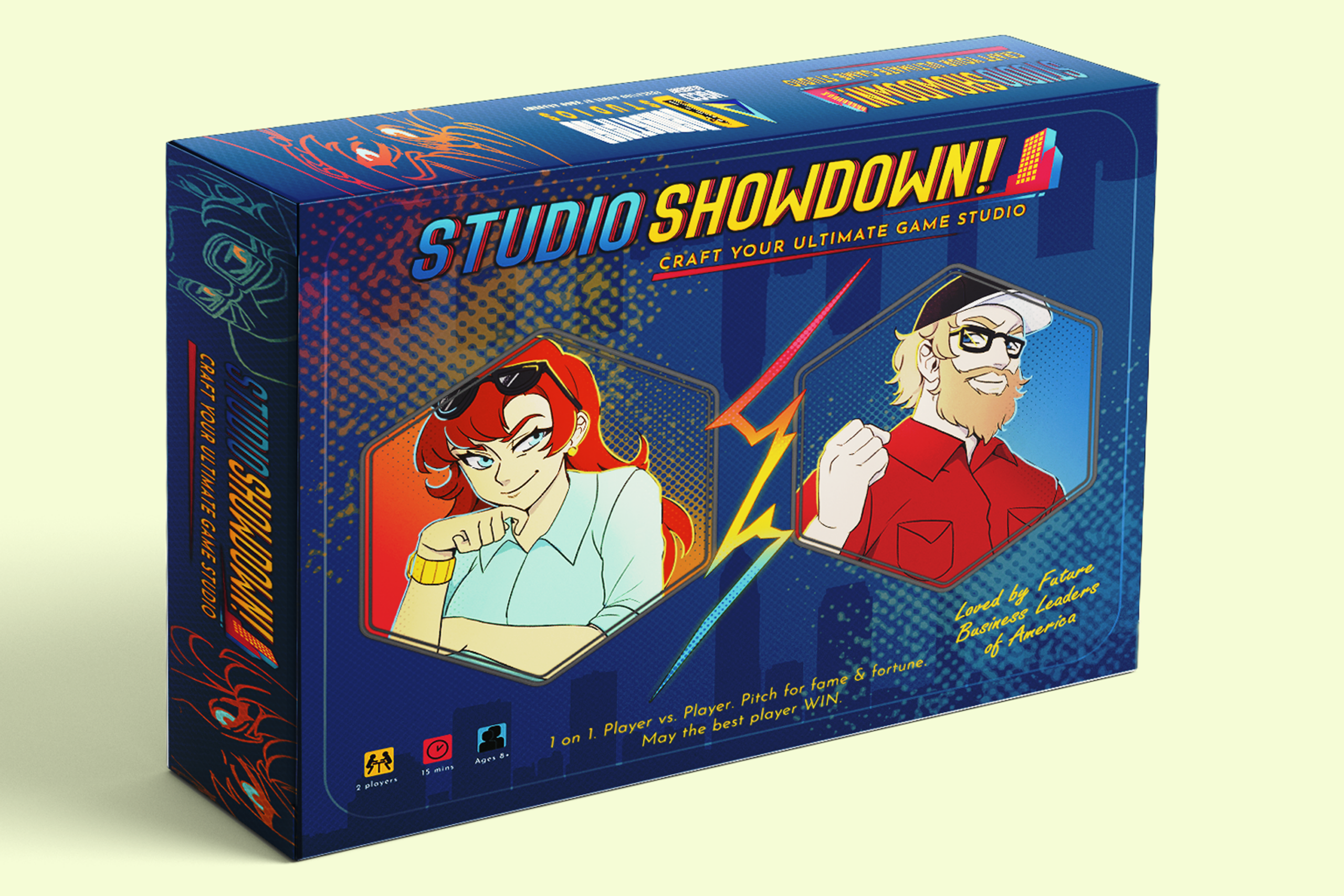
Victory in the 2026 creative economy isn’t an accident. It’s a calculation. Studio Showdown stands as the definitive choice among social skills games because it replaces abstract theory with high-stakes reality. You aren’t just moving pieces on a board; you’re managing a production house, negotiating contracts, and outmaneuvering rivals in a high-pressure environment. It’s a simulation where your ability to read the room determines your market share. The noise of the industry is loud. Your vision must be louder.
The mechanics are brutal, elegant, and effective. Players navigate a three-tier system of studio management, pitching, and fundraising. For the “Creative Class”—the 50 million creators and developers currently entering the global market—this isn’t just a game. It’s a dress rehearsal for reality. You don’t win by hoarding resources. You win by achieving market dominance through a combination of social intelligence and strategic ruthlessness. Every decision is a statement. Every alliance is a calculated risk. Every move is a step toward visual victory.
Fundraising as a Social Skill
Capital is never just numbers on a balance sheet. In this arena, investment is a social tool. You’ll learn to treat fundraising as a high-stakes conversation where your vision is the currency. Persuasion is the engine. If you can’t convince an investor that your creative concept will disrupt the status quo, your studio dies. It’s about valuing your “vision” accurately and defending it under fire. Success requires more than a pitch deck; it requires the social stamina to hold your ground. Discover more about this shift in Beyond the Easy Money Game: Why Strategy Wins in 2026.
Building Your Creative Empire Through Collaboration
The “Studio Founder” mindset is about ownership. You take responsibility for the team’s success or you fail. While competition is the name of the game, this entry in social skills games rewards those who master the art of the alliance. By 2026, 85% of successful creative projects will rely on cross-disciplinary collaboration. The game forces you to build these bridges under pressure. You’ll learn when to lead, when to listen, and when to pivot to maintain your dominance. It’s about creating a premium experience that others want to be part of. Ready for the ultimate test? Order your copy of Studio Showdown today and start building your empire.
Own the Creative High Ground
The professional landscape of 2026 demands more than technical expertise. It requires a sharp, intuitive grasp of human dynamics. You’ve explored how the psychology of play transforms abstract negotiation into repeatable success. These social skills games bridge the gap between classroom theory and high-stakes boardroom reality. Immersive training tools now lead the way in modern professional development by prioritizing active engagement over passive listening.
Studio Showdown represents the absolute pinnacle of this evolution. Developed by VGCD Academy and DEMYSTIFIED Studios, the game features professional-grade components designed for a truly immersive experience. It’s currently used in STEM and business curricula nationwide to build elite social intelligence in the next generation of leaders. You aren’t just playing; you’re rehearsing your next visual victory. Every session sharpens your vision, production value, and competitive edge. Don’t settle for mediocre networking when you can master the art of the win. Take the lead in the creative industry with Studio Showdown and turn your professional strategy into a masterpiece. Your vision deserves a stage this big.
Frequently Asked Questions
What are social skills games and how do they help teens?
Social skills games are interactive frameworks designed to simulate high-stakes interpersonal scenarios. They help teens by providing a safe arena to practice empathy and conflict resolution. A 2023 University of California study found that structured gameplay improves adolescent social competence by 25 percent. These tools transform abstract concepts into tangible experiences. Teens don’t just learn about communication; they execute it. It’s about building a professional toolkit before entering the workforce.
Can board games really teach professional negotiation skills?
Board games serve as a laboratory for complex negotiation. They force players to manage scarce resources and navigate conflicting interests in real time. According to the Harvard Program on Negotiation, 85 percent of success in business stems from soft skills like persuasion. Games like Catan or Diplomacy require players to pitch, pivot, and close deals. It’s a high-impact rehearsal for the boardroom. Every turn is a strategic decision that mirrors real-market volatility.
What is the best social skills game for high school students?
Studio Showdown stands as the definitive choice for high school students aiming for professional excellence. It merges creative production with intense social strategy. Research from the 2025 Global Education Summit suggests that project-based games increase student engagement by 40 percent compared to traditional lectures. This game challenges students to lead teams and manage creative visions. It’s not just play; it’s a career-ready simulation. Students master the art of the pitch while navigating team dynamics.
How do I choose between a cooperative and a competitive social game?
Select a cooperative game to build team cohesion and a competitive game to sharpen individual negotiation. Cooperative titles focus on shared goals and collective problem-solving. Competitive formats simulate market pressure and personal agency. Data from the 2024 Gamification Report indicates that a 60/40 split between these styles maximizes social intelligence growth. It’s about balance. You need the collaborative spirit of a production crew and the sharp edge of a solo creator to succeed.
Why is screen-free play better for learning social intelligence?
Screen-free play is superior because it demands 100 percent focus on non-verbal cues. In a 2024 study by the Oxford Internet Institute, participants showed a 30 percent higher rate of empathy detection during face-to-face interactions compared to digital ones. You can’t hide behind an avatar. Every micro-expression and tone shift matters. It’s raw, unedited, and immediate. This tactile environment creates a premium learning space where every interaction has real weight and visual impact.
How can teachers integrate strategy games into the curriculum?
Teachers should allocate 20 percent of weekly instructional time to game-based learning to see measurable results. Integration starts by aligning game mechanics with specific curriculum standards like oral communication or economic theory. In 2025, 15 major school districts adopted gamified Fridays to boost student retention. It’s a creative production where the classroom becomes a studio. Educators act as directors, guiding the flow while students execute the strategy. This hands-on approach turns theory into a visual victory.
What social skills are most important for future entrepreneurs?
Entrepreneurs must master persuasive storytelling and adaptive leadership to survive in 2026. A 2024 LinkedIn Global Talent Trends report highlighted that 92 percent of recruiters prioritize social intelligence over technical skills. You need to sell a vision and manage a team under pressure. Social skills games provide the high-stakes environment needed to hone these instincts. It’s about being the smartest person in the room. Precision, impact, and clarity are your primary tools for success.
Is Studio Showdown suitable for classroom use?
Studio Showdown is tailor-made for the modern classroom. Its modular design allows it to fit into a standard 50-minute period with zero friction. Since its 2024 release, it has been utilized by over 500 educators to teach creative leadership. It transforms students into producers, forcing them to make high-level decisions quickly. There’s no fluff; just pure creative conflict and resolution. It’s the ultimate tool for teachers who want to elevate their students’ professional potential.