In a market where 14,000 games fight for air on Steam every year, your creative spark is just the entry fee. True victory belongs to the leader who can turn a $326.47 billion industry into their personal playground. You don’t need to be a master coder to win this showdown, but you do need the specific skills needed to be a game producer to command a $123,552 average salary. You might feel the pressure to be “technical” or worry that your management skills are invisible on paper. It’s a common anxiety. You want to lead, but the line between a project manager and a producer often feels blurry.
This guide will help you master the high-stakes blend of business logic and artistic guts required to ship hits. We’re providing a definitive skills checklist, methods to practice production without a $100M budget, and the secrets to pitching projects that get funded in 2026. It’s time to stop managing tasks and start producing victories. We’ll show you how to bridge the gap between a raw concept and a premium, market-ready production. Let’s build your roadmap to the top of the credits.
Key Takeaways
- Define your dual identity as the “Shield” and the “Engine” to protect creative vision while driving relentless project milestones.
- Master technical production frameworks like Agile and Scrum to manage studio burn rates without ever needing to touch a line of code.
- Navigate high-stakes conflicts between artistic ambition and technical limits using psychological insights and direct, authoritative communication.
- Identify the essential business acumen and skills needed to be a game producer to successfully pitch and fund projects in the 2026 market.
- Build a professional management portfolio through analog simulations and strategic board games to prove your leadership before entering a studio.
What is a Game Producer? Defining the Engine of the Studio
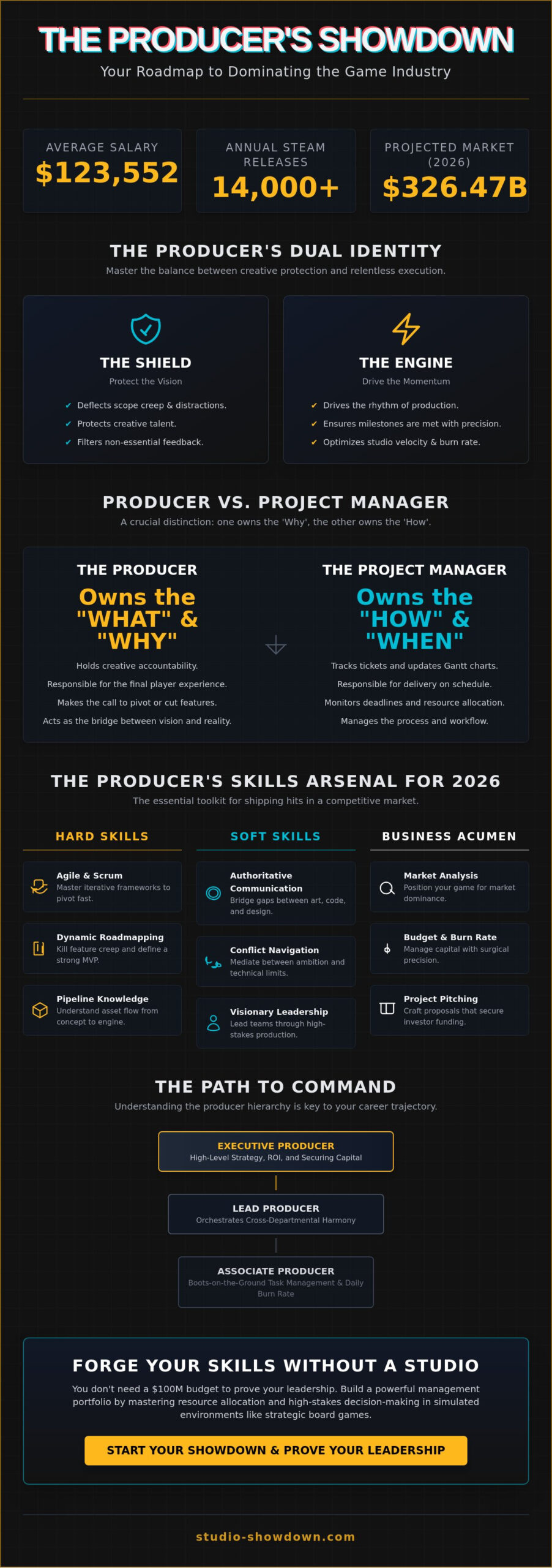
A Video game producer is the visionary who transforms a chaotic creative concept into a polished, profitable reality. They aren’t just administrators; they’re the architects of momentum. In a 2026 market projected to hit $326.47 billion, the producer acts as both the “Shield” and the “Engine” of the studio. As the Shield, you protect your creative talent from the visual noise of scope creep and external distractions. As the Engine, you drive the rhythm of production, ensuring every milestone is met with surgical precision. Mastering the skills needed to be a game producer means learning how to balance this protective instinct with a relentless drive for results.
The modern studio hierarchy reflects this complexity. Associate Producers handle the boots-on-the-ground task management, ensuring the daily “burn rate” doesn’t incinerate the budget. Lead Producers orchestrate cross-departmental harmony between artists and developers. At the top, Executive Producers focus on high-level strategy, ROI, and securing the capital necessary to survive in an industry where 14,000 games launch on Steam annually. You must understand the aesthetic soul of the project while speaking the language of investors and venture capitalists.
Producer vs. Project Manager: The Crucial Difference
Project Managers focus on the “how” and the “when.” They track tickets, update Gantt charts, and monitor deadlines. Producers own the “what” and the “why.” You hold creative accountability for the final experience. If a mechanic isn’t fun, the producer makes the call to cut or pivot, even if it’s on schedule. You’re responsible for the impact, not just the delivery. The Producer is the ultimate bridge between the board room and the dev floor.
The “Showdown” Mindset: Why Every Project is a High-Stakes Battle
In the creative industry, every project is a showdown. You’re fighting for limited resources, player attention, and market dominance. A producer navigates the constant conflict between creative ambition and commercial reality. When a project hits a crisis point, decisive leadership separates the victors from the forgotten. You don’t just manage a team; you lead them through a high-stakes battle where the prize is a premium player experience. This mindset requires a “can-do” attitude that blends technical awareness with raw artistic intuition. You don’t need to code the game, but you must know how to lead the people who do.
The Hard Skills: Technical Mastery Without the Code
Technical prowess for a producer isn’t about writing shaders or debugging C++ scripts. It’s about mastering the architecture of the workflow. You must understand how a 3D asset moves from a $235 monthly Autodesk Maya subscription through the rigging pipeline and into the engine. This technical awareness is one of the most critical skills needed to be a game producer in 2026. Without it, you can’t estimate timelines or spot the “red flags” that signal a pending production disaster. You need to manage the “burn rate” with surgical precision, ensuring the studio’s capital fuels innovation rather than filling the gaps of a broken pipeline.
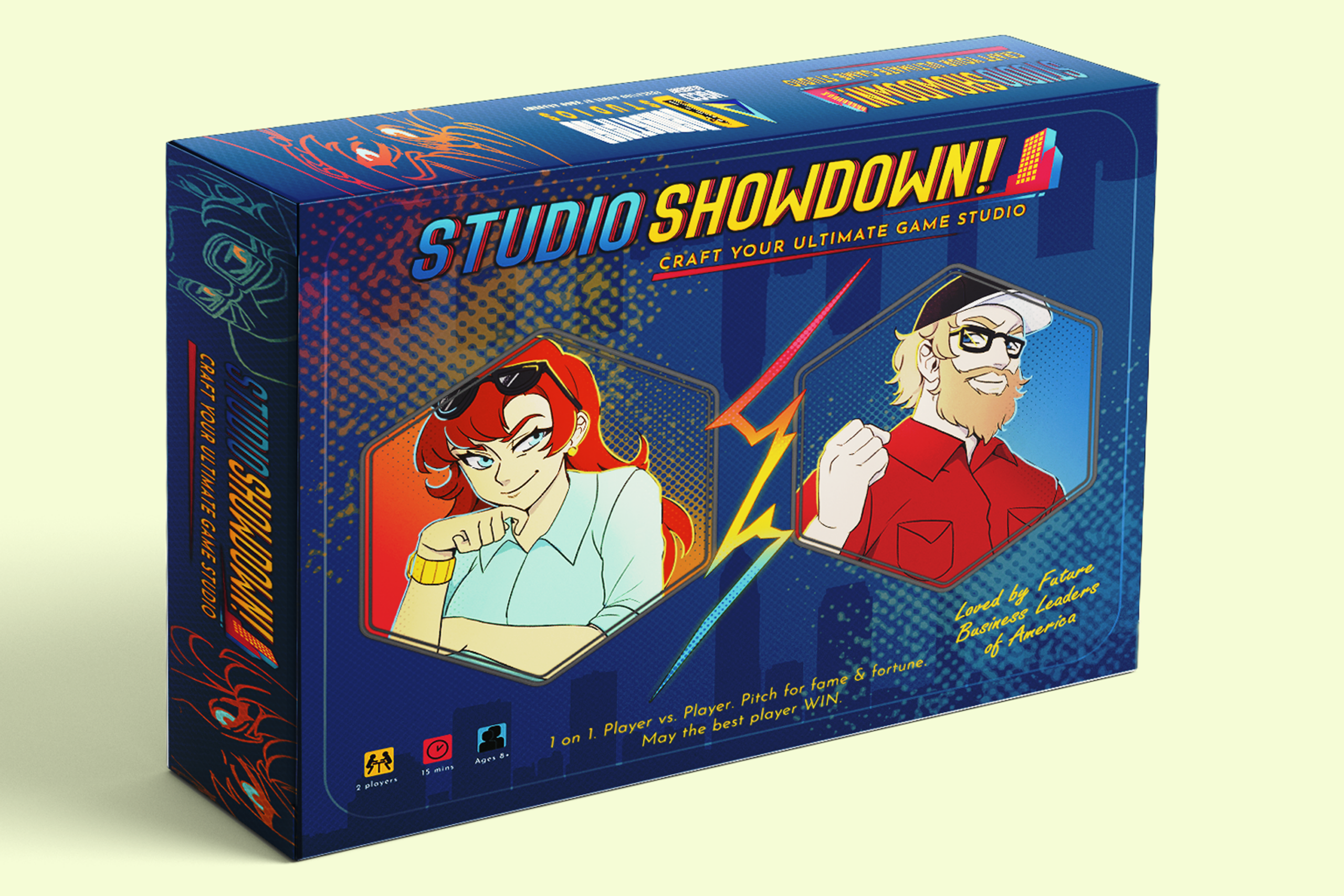
Agile and Scrum methodologies are your primary weapons. These aren’t just buzzwords; they’re iterative frameworks that allow your team to pivot when a mechanic fails the “fun test.” Effective producers use these cycles to maintain momentum and transparency. You aren’t just tracking tasks; you’re optimizing the velocity of the entire studio. This includes managing risk by identifying bottlenecks in the QA process or recognizing when a specific art asset will exceed its resource allocation. If you want to sharpen these management instincts in a low-risk environment, you can practice resource allocation with the Studio Showdown Board Game to master the logic of high-stakes production.
Scheduling and Roadmapping for 2026
Static Gantt charts are relics of the past. Modern production requires dynamic, data-driven milestones that account for the 14,000 games flooding the market annually. Your Game Design Document (GDD) serves as the blueprint, but your roadmap is the living pulse of the project. You must kill “feature creep” before it destroys team morale. This requires a firm hand and a clear vision of the Minimum Viable Product (MVP) that will actually resonate with the 3.6 billion gamers worldwide.
QA and Release Management
According to the Games producer job profile, understanding the lifecycle of a bug is non-negotiable. You need to prioritize fixes based on impact rather than volume. Coordinating a multi-platform launch involves more than just hitting “upload.” You’re managing relationships with platform holders, ensuring compliance with submission guidelines, and orchestrating the logistics of digital distribution. In an era of platform convergence, your release strategy must be as polished as the game itself. Precision here determines whether your launch is a visual victory or a technical failure.
Soft Skills: The Psychology of High-Performance Teams
Soft skills are often dismissed as vague or intuitive. In a high-pressure studio, they’re anything but. They are tactical psychological tools used to maintain momentum when the mid-project slump hits. Developing the soft skills needed to be a game producer requires you to become a linguistic chameleon. You must translate the abstract vision of an art director into the logical constraints of a lead programmer. This isn’t just about talking. It’s about ensuring every department is pulling toward the same visual victory without losing their creative soul.
Conflict is inevitable. Clashes between creative ambition and technical limits are the forge where great games are made. Your job isn’t to avoid these fights. It’s to win them. You must navigate these showdowns with high emotional intelligence, recognizing when a team member is burning out or when a departmental rivalry is stalling production. Mastering the “Art of the No” is perhaps your most lethal weapon. With over 14,000 games launched on Steam annually, you don’t have the luxury of scope creep. You must cut features that don’t serve the core loop while keeping the team’s buy-in. It’s about selling the cut as a service to the final quality, not a failure of imagination.
Stakeholder Management and Influence
Managing up is as critical as managing the dev floor. You are the diplomat between studio owners, investors, and the creators. According to the Game Producer Career Profile, building relationships is a core pillar of the role. You build trust through transparency. If a milestone is at risk, you don’t hide it. You present the problem alongside a decisive solution. This consistent delivery creates the political capital you need to protect the team when external pressures mount. You aren’t just a messenger; you’re the guardian of the project’s premium outcome.
Leadership Under Pressure
True leadership emerges during a project pivot or a crunch period. You must maintain a can-do attitude that isn’t delusional but grounded in technical reality. Developing the skills needed to be a game producer means creating decision-making frameworks for when there’s no perfect answer. You pick the path that preserves the core player experience. You foster a culture of accountability where every developer feels like an owner. Creative bravery only exists when the producer provides the safety net of a clear, unwavering direction. You lead the charge, ensuring the studio stays focused on the win.
Business Acumen: Mastering the Entrepreneurial Side
Producers are the entrepreneurs of the studio. You aren’t just managing a budget; you’re managing a $326.47 billion opportunity. In 2026, the industry has shifted significantly. Investors no longer fund “cool ideas” based on gut feelings alone. They fund de-risked business models with clear paths to engagement. Mastering the skills needed to be a game producer requires a deep understanding of ROI and market positioning. You must identify where your project fits in a landscape where 14,000 games launch on Steam annually. It’s a battle for visibility. You need to know if your game should follow the $92.6 billion mobile trend or lean into the fast-growing subscription model. Your job is to ensure the creative vision results in a visual victory that pays the bills.
Market analysis is your reconnaissance. You identify trends before they peak, ensuring your studio isn’t chasing yesterday’s hits. Positioning your game for success involves more than just good art; it requires a monetization strategy that respects the player while ensuring sustainable revenue. Whether you are implementing live service updates or hybrid subscription models, you must balance the “Business of Play” with the integrity of the experience. Decisive leadership here prevents the project from becoming a financial casualty in a crowded digital storefront.
The Producer as a Founder
Every producer is essentially a founder. You must understand the competitive landscape to lead effectively. This means recognizing how to allocate resources like a studio owner would. To sharpen these instincts, you can explore The Ultimate Business Board Game to see how these concepts are simulated in a high-stakes environment. Thinking like an owner allows you to make decisions that protect both the art and the bottom line. You aren’t just a cog in the machine; you’re the one steering it toward market dominance.
Pitching and Negotiation
Pitching is where the showdown begins. You aren’t just selling a game; you’re selling a vision of success. You need to negotiate contracts with vendors for tools like Autodesk Maya or Houdini Indie without draining the project’s burn rate. Your professional portfolio should showcase business wins, not just game assets. Document how you reduced scope to save costs or how you negotiated a platform-exclusive deal that secured the project’s future. If you want to lead a studio to victory, start your journey with Studio Showdown and master the art of the pitch.
How to Practice Production Skills (Without a Studio)
Practice is where theory meets reality. You don’t need a massive AAA budget or a hundred-person team to refine the skills needed to be a game producer. In fact, waiting for a studio job to start practicing is a losing strategy. In 2026, the most successful producers are those who have already mastered resource management and crisis resolution through analog simulations. Board games provide a high-stakes environment where every decision has a visible, immediate impact on the outcome. You learn to manage the “burn rate” of your resources and pivot when a strategy fails, all without the risk of burning through real venture capital. This is the ultimate sandbox for testing your decisive leadership.
Building a “Producer Portfolio” is your next tactical move. Most candidates show off art assets or code snippets. You show off results. Document the small projects you’ve managed, focusing on the “Showdowns” you navigated. Did you cut a feature to hit a deadline? Did you resolve a clash between an artist and a developer? Use concrete data. Instead of saying you “managed a team,” state that you “delivered a functional prototype 15% under budget by optimizing the art pipeline.” This specificity signals to employers that you understand the ROI-driven nature of a market where 14,000 games launch on Steam annually. These are the business wins that prove you have the grit to lead a studio to victory.
Studio Showdown: The Producer’s Training Ground
The Studio Showdown Board Game isn’t just entertainment; it’s a professional training ground. It mimics the high-pressure world of real-world fundraising, pitching, and studio management. You face the same trade-offs as a lead producer: do you invest in premium talent or focus on speed to market? By Mastering Strategy Board Games, you build the real-world business acumen needed to survive the visual noise of the digital marketplace. It’s a low-risk way to sharpen the skills needed to be a game producer before you ever step onto a dev floor. You learn to think like a founder while the stakes are still manageable.
Next Steps for Your Career
Transitioning from analog strategy to digital production is about scaling your mindset. Set up a “mini-studio” with friends or classmates to tackle a small project. Use the same Agile frameworks and decisive leadership styles discussed in previous sections to drive the rhythm of production. Networking in 2026 is about finding collaborators who share your vision for premium production. Join communities where developers discuss the “Business of Play” and share post-mortems of their own projects. This transparency builds the collective intelligence you’ll need when your own project hits a crisis. If you’re ready to elevate your career and lead your first creative battle, start your production journey with Studio Showdown today. The win is waiting for those who prepare for the fight.
Command Your Studio’s Future
Winning in the 2026 gaming market requires more than just passion. It demands a surgical balance of technical roadmap management and high-stakes business intuition. You’ve learned that the skills needed to be a game producer aren’t locked behind a coding terminal; they’re built through decisive action and strategic resource allocation. Whether you’re shielding your team from scope creep or pitching to venture capitalists, your value lies in delivering a premium, profitable vision that cuts through the noise of 14,000 annual releases.
You can bridge the gap between amateur and professional right now. Master the business of games with Studio Showdown, an immersive strategy experience developed by VGCD Academy and DEMYSTIFIED Studios. It’s the same tool educators use to help students build professional portfolios that stand out in a $326.47 billion industry. Aspiring studio founders use it to simulate the high-pressure choices of a real production cycle without the financial risk. Don’t wait for a job offer to start leading. Step into the arena, master the board, and claim your victory. Your first hit game starts with the courage to produce it.
Frequently Asked Questions
Do I need to know how to code to be a game producer?
No, you don’t need to be a programmer to master the skills needed to be a game producer. Your role is to understand the technical architecture and pipeline requirements, not to write the scripts yourself. You must develop enough technical awareness to estimate timelines and recognize when a $235 monthly Maya subscription is being underutilized in your art department’s workflow.
What is the average salary for a game producer in 2026?
The average game producer salary in the United States is $123,552 per year as of May 2026. According to data from ZipRecruiter, the majority of professional salaries currently range between $124,000 and $126,000. This premium compensation reflects the high-stakes nature of leading teams within a global market that has grown to $326.47 billion.
How is a game producer different from a game director?
A game director owns the creative vision and artistic “soul” of the project, while the producer owns the execution, budget, and business strategy. Think of the director as the architect and the producer as the site manager and financier. The producer ensures the creative vision survives the “showdown” of market competition without incinerating the studio’s capital.
Can I become a game producer with a business degree?
Yes, a business degree is an excellent foundation for the entrepreneurial side of game production. In a market where over 14,000 games launch on Steam annually, studios desperately need leaders who understand ROI, fundraising, and market positioning. Your background in business logic helps de-risk the creative process and ensures the project achieves a visual victory.
What tools do game producers use daily?
Producers rely on a stack of project management and version control tools to drive the studio’s rhythm. Daily software includes Jira for task tracking, Notion for documentation, and Anchorpoint for asset management. You must also understand the costs of tools like Houdini Indie, priced at $269 per year, to effectively manage resource allocation and the studio’s burn rate.
How do I build a portfolio if I haven’t shipped a game yet?
You build a management portfolio by documenting the logic and results of small projects, game jams, or analog simulations. Showcasing your ability to manage a “mini-studio” or lead a team through a crisis proves you have the skills needed to be a game producer. Focus on demonstrating business wins, such as how you reduced scope to meet a deadline or managed a limited resource pool.
Is game production a high-stress job?
Yes, it’s a high-pressure role that requires a “can-do” attitude and decisive leadership under fire. As the “Shield” of the studio, you absorb the stress of budget constraints and stakeholder demands to keep your creators focused. Success in this field belongs to those who view every project as a noble struggle and thrive during high-stakes showdown moments.
What are the most common mistakes new producers make?
The most frequent errors are allowing feature creep and failing to develop technical empathy with the development team. New producers often struggle to say “no” to creative ideas that threaten the schedule or the budget. You must learn to balance artistic ambition with ruthless business logic to ensure the project actually reaches the 3.6 billion gamers waiting for it.