High school students in project-based learning AP courses are 30% more likely to pass their exams than their peers in traditional settings. You’ve seen the alternative; it’s the glazed-over look during a lecture on the 3.5% PCE inflation rate or the 2025 National Content Standards updates. It’s a challenge to find resources for 11th and 12th graders that feel rigorous, professional, and authentic to the high-stakes world of May 2026 finance.
This guide shows you how to use project based learning for high school economics to transform abstract theory into a visual victory. You’ll learn to build portfolio-ready simulations where students navigate the 2.0% GDP growth rate and 6.37% mortgage rates with the precision of a market strategist. We’re moving past the “boredom” statistics to create a classroom showdown that demands critical thinking, financial literacy, and creative grit. We will explore how to turn dry curriculum into high-impact artifacts that prove your students are ready for the real-world stage. It’s time to stop teaching economics and start producing experts.
Key Takeaways
- Ditch the posters. Learn to build active, inquiry-driven challenges that mirror the high-stakes 2026 economic landscape.
- Master the art of the “Driving Question” to force strategic decision-making instead of simple Google searches.
- Upgrade your framework by replacing tired bake sale simulations with high-octane venture capital models using project based learning for high school economics.
- Execute a professional production cycle that moves students from initial market inquiry to portfolio-ready artifacts.
- Transform your classroom into a production house with “Lab in a Box” tools designed for market dominance and real-world impact.
Reimagining High School Economics through Project-Based Learning
Economics in 2026 isn’t a spectator sport. It’s a high-stakes arena where students confront 3.5% year-over-year inflation and 6.37% mortgage rates in real time. Traditional models treat the subject like a museum exhibit. Project-based learning (PBL) treats it like a professional production house. This isn’t about “doing a project” at the end of a unit. True project based learning for high school economics is an immersive, student-driven inquiry where the curriculum is the engine, not the destination. We are replacing the passive lecture with a dynamic, creative showdown.
Forget the static posters of the past. Many educational resources rely on “reproducible workbooks” that feel like artifacts from a bygone era. Real PBL involves navigating the 2.0% GDP growth rate through active, strategic survival. It’s the difference between drawing a supply curve and managing a supply chain in a volatile market. In a Gold Standard PBL environment, students aren’t just completing tasks. They are answering a driving question that demands a deep dive into the 3.2% core PCE index. They are building, failing, and iterating. Students move from memorizing definitions to mastering the 2025 CEE National Content Standards through direct, creative action.
The 2026 Economic Literacy Gap
Standard lectures fail to prepare 12th graders for a modern economy where 21st-century skills determine professional survival. Students don’t just need to know what a debt-to-GDP ratio is. They need to master risk assessment, fundraising, and the art of the pitch. PBL serves as a high-octane vehicle for professional portfolio development that bridges the gap between dry theory and the 0.9% rise in employment costs. It’s about creating artifacts that prove they can operate under pressure. We don’t just teach economics; we build economic strategists who can navigate visual noise and market complexity.
Why High Schoolers Crave High Stakes
High schoolers respond to tension. They thrive in “Showdown” scenarios where every decision has a visible consequence. When you introduce strategic resource management, the 40% drop in behavioral referrals seen in some PBL models makes perfect sense. It’s a shift from “Easy Money” concepts to a gritty, competitive reality. Complex microeconomic concepts stick when they are part of a winning strategy. We aren’t just teaching them to pass. We’re teaching them to dominate the market through critical thinking and creative grit. Every lesson is a chance to level up their financial literacy through a premium, hands-on experience.
The Anatomy of a High-Impact Economics Project
High school seniors don’t want hypothetical bake sales. They want the rush of a real market. High-impact project based learning for high school economics demands a shift from classroom “activities” to industry-standard productions. You aren’t just teaching a unit; you’re launching a venture. This requires four pillars: a high-stakes driving question, authentic roles, radical agency, and a public showdown. It’s about moving beyond the “Food Truck” model into a space that feels like a venture capital firm.
Authentic application means connecting every task to a real-world role. Students shouldn’t be “group members.” They should be Founders, CFOs, and Lead Strategists. When they analyze the 0.9% rise in employment costs from the first quarter of 2026, they do it because it affects their bottom line. This level of realism transforms the classroom into a lab where failure is a data point, not a disaster. They need the power to pivot when a strategy collapses under the weight of a 6.37% mortgage rate. That agency is where the deepest learning happens.
Crafting the Driving Question
A weak question is a Google search in disguise. “What are the types of market competition?” is a dead end. A strong question is a gauntlet. Try this instead: “How can our production house maintain a 15% profit margin while the core PCE index sits at 3.2%?” This forces students to grapple with scarcity and opportunity cost under pressure. It doesn’t have one right answer. It has strategic victories and expensive mistakes. The question must lead to multiple viable solutions that demand critical thinking and creative grit.
Building Professional Portfolios
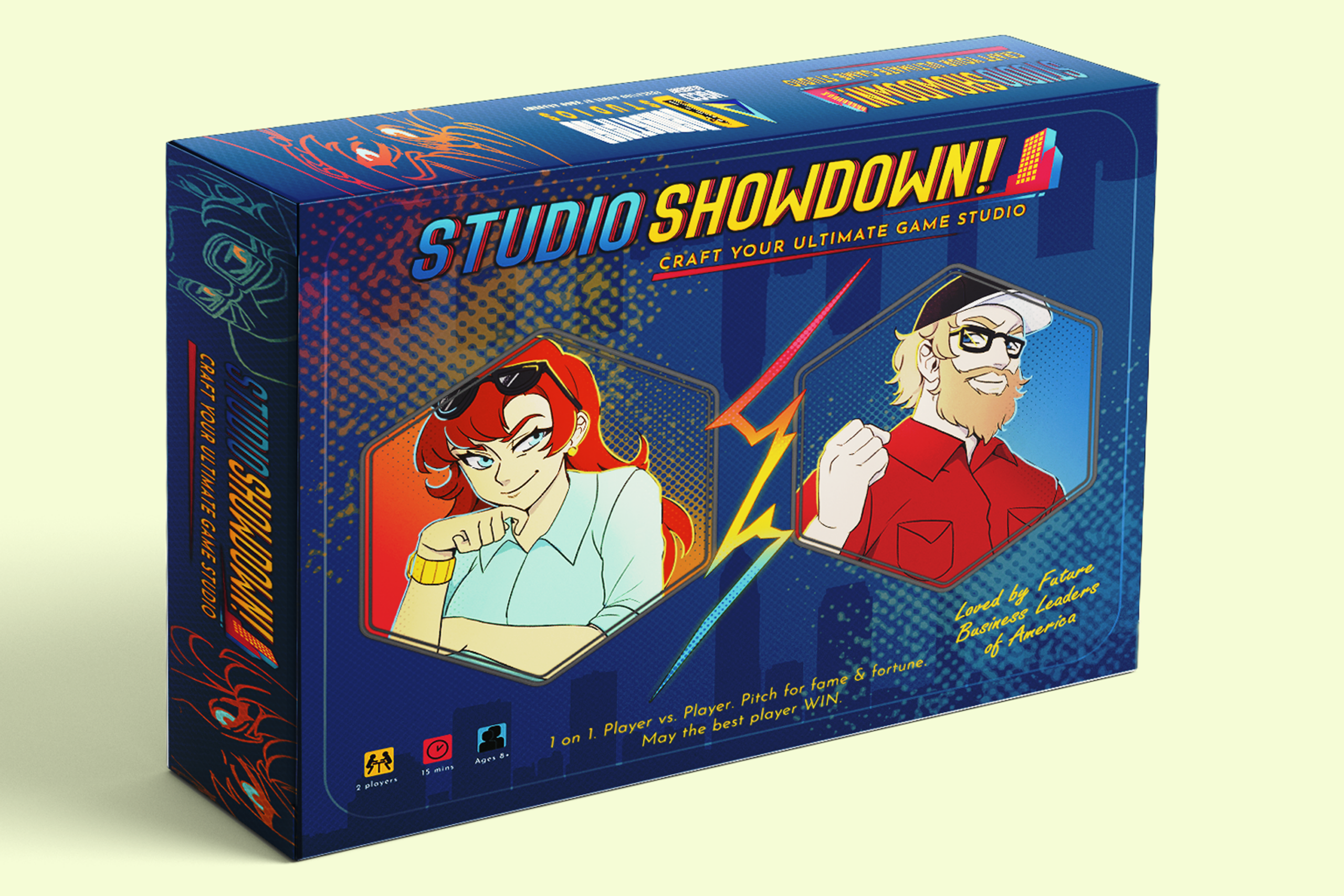
The final product shouldn’t live in a recycling bin after the bell rings. It should live in a digital portfolio or a college application. When students document their “pivot” during a simulated market crash, they demonstrate the high-level reasoning that 88% of teachers say traditional curricula miss. Use analog tools for rapid prototyping and digital decks for the final pitch. This multi-modal approach turns a simple grade into a professional artifact. If you’re looking for a framework that bridges this gap, the Studio Showdown: Educator Edition provides the exact high-stakes environment 12th graders crave.
The cycle ends with a public product. Move past the poster board. Organize a pitch session where local entrepreneurs or school board members act as investors. The stakes are high. The feedback is real. When students have to defend their strategy against a 2.0% GDP growth rate, they aren’t just reciting facts. They are proving they can survive the showdown.

Traditional Simulations vs. Dynamic Strategy: Choosing Your Framework
Most economics simulations are stuck in the past. They offer “Market Day” templates that feel like child’s play to a seventeen year old. In 2026, we demand a higher production value. We move from the bake sale model to the venture capital model. This is where project based learning for high school economics hits its stride. It’s not about selling cookies. It’s about market dominance. When students operate as “Rival Studios,” they don’t just read about monopolistic competition; they survive it. They experience the tension of a price war and the strategic weight of an acquisition. This competitive grit is exactly why students in these environments are 50% less likely to report being bored at school.
Market dominance serves as the ultimate motivator. It’s a visual victory. In this framework, students aren’t just checking boxes to earn a grade. They are fighting for survival in a simulated market that mirrors our current 2.0% GDP growth rate. They have to account for the 3.5% year-over-year PCE inflation rate when setting their prices. This isn’t a drill. It’s a showdown where financial acumen determines who stays in the game. By treating the classroom as a high-stakes arena, we foster the 21st-century skills that lead to a 20% increase in assessment scores.
Beyond the Easy Money Game
Many classroom games are shallow “get rich” loops. They lack the economic depth required for 12th grade rigor. Real entrepreneurship involves complex mechanics like fundraising, pitching, and navigating a 6.37% mortgage rate. We need frameworks that force students to grapple with these realities. You can’t just stumble into success; you have to engineer it. For a deeper look at why complex mechanics beat simple loops, check out Beyond the Easy Money Game: Why Strategy Wins in 2026. Strategy is the only way to rise above the noise.
The Analog Advantage in 2026
Digital simulations often lead to “tab-switching” and passive engagement. In 2026, screen-free activities are making a massive comeback in high-end educational settings. The analog board game offers something digital can’t: face-to-face negotiation. There is no algorithm for a handshake or a high-stakes trade. This social-emotional component is vital for professional development. To understand how to leverage these tools, see our guide on Mastering the Board: The 2026 Guide to Strategy Board Games. It’s time to bring the showdown back to the table.
Implementing PBL: From Driving Questions to Portfolio-Ready Results
Implementing project based learning for high school economics is about building a workflow, not just a lesson plan. You are shifting from a linear syllabus to a high-stakes production cycle. This process moves through four distinct phases that mirror the professional world. It’s a transition from passive consumption to active creation. Stop lecturing. Start producing.
- Phase 1: Launch and Inquiry. Hook your students with a scenario that demands immediate action. Don’t start with a definition of inflation. Start with a market crash or a sudden spike in the 3.2% core PCE index. Force them to ask how their “studio” will survive.
- Phase 2: Investigation and Strategy. This is the gritty work of developing a business model. Students must analyze the 0.9% rise in employment costs and the 6.37% mortgage rates to build a viable fundraising strategy. They are researchers, not just students.
- Phase 3: The Showdown. The final presentation is a high-pressure pitch. Students defend their economic choices against real-world data like the 2.0% GDP growth rate. They don’t just show a poster; they present a vision.
- Phase 4: Reflection and Debrief. Connect the experience back to the 2025 CEE National Content Standards. This is where you solidify the “why” behind their strategic victories or market failures.
Managing the Classroom “Chaos”
Facilitating multiple “studios” simultaneously feels like directing a multi-cam live show. You are the Executive Producer. Your job isn’t to provide the answers but to ensure the production stays on schedule. Use ten-minute stand-up meetings to check economic benchmarks. This keeps teams focused on the 21st-century skills that 88% of teachers believe are missing from traditional curricula. If you need a turnkey system to manage this energy, the Classroom Bundle provides the exact framework you need to launch immediately.
Assessment and Grading Strategies
Assessment must be as professional as the project itself. Rubrics should reward strategic thinking and the ability to pivot under pressure. Balance team success with individual mastery by requiring personal reflection logs that cite specific economic indicators. Pitch Decks serve as the primary assessment tool because they are visual, data-driven, and professional. They prove a student can translate complex macro theory into a viable strategy. This creates a portfolio-ready artifact that stands out in a college application or an internship interview. You aren’t just grading a project; you are certifying a strategist.
Studio Showdown: The Ultimate Economics PBL Experience
Economics isn’t found in a textbook. It’s found in the heat of a market battle. Studio Showdown functions as a “Lab in a Box” for project based learning for high school economics. We’ve stripped away the fluff of traditional simulations. No more bake sales. No more imaginary stock portfolios that don’t impact the student’s immediate reality. Instead, we provide a premium production experience where students act as founders of rival creative studios. They must secure funding, manage talent, and achieve market dominance in an environment that mirrors the 2.0% GDP growth rate of early 2026. This is where theory meets the grind.
Our framework bridges the gap between classroom requirements and professional game development. While some competitors focus on niche research, we focus on collaborative, team-based survival. Students must navigate the 3.5% PCE inflation rate and the 6.37% mortgage rates while trying to outmaneuver their peers. It’s a visual victory. The Educator Edition and Classroom Bundles are designed for institutional use, ensuring that every student has a seat at the table. You aren’t just teaching a course; you are running a production house.
Mastering Entrepreneurship and Finance
In Studio Showdown, players are founders. They face real financial risks. They have to decide whether to pivot their strategy or double down on a failing concept. This mirrors the high-stakes world of modern entrepreneurship. To see how these mechanics translate into real-world skill sets, explore The Ultimate Business Board Game: Master Entrepreneurship in 2026. The “Pitch” mechanic is the heart of the game. It forces students to sell their vision to “investors” using data-driven arguments. They aren’t just playing; they are negotiating for their studio’s life.
Bring the Showdown to Your Classroom
The Classroom Bundle is built for scale. It includes multi-unit pricing and comprehensive teacher guides that align with the 2025 CEE National Content Standards. We don’t just send you a box and leave you to figure it out. We offer professional development workshops to help you integrate the game into STEM and Business curricula seamlessly. This is about more than just a game; it’s about a “can-do” attitude that combines technical prep with artistic intuition. Don’t settle for mediocre simulations. It’s time to Equip your classroom with the Studio Showdown Educator Edition and elevate your students’ economic literacy to a premium level. Every session is a production. Every student is a strategist. The showdown starts now.
Master the Economic Showdown
The shift toward project based learning for high school economics isn’t just a trend; it’s a necessity for the 2026 professional landscape. We’ve moved beyond the era of passive memorization into a world where strategy and financial acumen determine survival. By implementing high-stakes driving questions and professional “Pitch Decks,” you transform your classroom into a high-octane lab. Students stop being spectators and start becoming strategists who can navigate market volatility with creative grit.
This framework, developed by VGCD Academy and DEMYSTIFIED Studios, is designed specifically for high school rigor and professional portfolio building. It’s a system trusted by educators for hands-on entrepreneurship training that cuts through the visual noise. You have the tools to turn dry theory into a visual victory. Stop lecturing and start producing the next generation of market leaders. Upgrade your curriculum with the Studio Showdown Classroom Bundle and lead your students to their own visual victory. The market is waiting for them.
Frequently Asked Questions
What are the 7 essential elements of Project Based Learning in economics?
The Gold Standard framework requires a challenging problem, sustained inquiry, authenticity, student voice, reflection, critique, and a public product. In an economics context, this means moving beyond worksheets to solve a real market crisis. Students must have the agency to pivot their strategies based on shifting data. The process culminates in a high-stakes showdown where they defend their financial decisions to an external audience of professionals.
How does project-based learning meet high school economics standards?
Effective project based learning for high school economics aligns directly with the 2025 CEE National Content Standards by embedding core concepts into the inquiry process. Instead of memorizing definitions, students apply principles of monetary policy and international trade to maintain their studio’s profit margins. This approach ensures that every strategic move in the simulation maps back to required graduation competencies while fostering deeper conceptual mastery than traditional rote learning.
Is PBL more effective than traditional lectures for financial literacy?
Data from 2026 confirms that PBL students are 30% more likely to pass AP economics exams compared to those in lecture-based classrooms. Engagement levels skyrocket because the theory has immediate consequences in a simulated market. Students in these environments score 20% higher on assessments of 21st-century skills like collaboration and risk assessment. It’s a shift from passive listening to active, strategic survival that sticks for the long term.
How do I grade a project-based learning unit fairly?
Fair assessment relies on a multi-layered rubric that evaluates both the final production and the individual journey. Use Pitch Decks as a primary tool to measure how well students apply economic theory to their business strategy. Balance team success with individual reflection logs where students must cite specific indicators like the 3.2% core PCE index. This ensures that a student’s grade reflects their personal mastery of the curriculum, not just the team’s market dominance.
What is the difference between a project and project-based learning?
A project is often the “dessert” served at the end of a unit; project-based learning is the “main course” that drives the entire instructional cycle. In a traditional project, the teacher lectures first and the students build a poster later. In PBL, the project is the vehicle for learning the content itself. Students encounter economic challenges in real time and must research the theory to survive the next phase of the production.
Can I use board games for project-based learning in high school?
Strategy board games are ideal for PBL because they provide a concrete, analog framework for complex negotiation and trade. Unlike digital simulations that can lead to passive “tab-switching,” board games force face-to-face interaction and immediate tactical pivots. They serve as a physical lab where students can test microeconomic theories in a controlled, high-stakes environment. This analog advantage builds the social-emotional grit that 88% of teachers find missing in digital-only curricula.
How long does a typical economics PBL unit take to implement?
A comprehensive unit usually spans three to six weeks depending on the depth of the inquiry. The first week focuses on the launch and initial market research. Middle weeks are dedicated to the investigation and strategy phase where students build their models. The final week is reserved for the showdown presentations and the critical debrief. This timeline allows for the deep, sustained inquiry necessary for project based learning for high school economics to be effective.
How does Studio Showdown support high school economics curriculum?
Studio Showdown acts as a turnkey “Lab in a Box” that covers fundraising, entrepreneurship, and market dominance. It provides the Educator Edition and Classroom Bundles specifically designed to meet high school rigor without the need for extensive prep time. The game forces students to navigate real-world financial risks, such as the 6.37% mortgage rates seen in April 2026. It’s a bridge between abstract theory and the professional reality of running a creative production house.