Your creative vision is a masterpiece, but in the boardroom, it’s just a variable in a high-stakes equation. Pitching a video game idea to investors isn’t a presentation; it’s a strategic showdown where business logic acts as the shield for your art. You’ve likely felt the sting of uncertainty while staring at a blank slide, wondering how to translate your passion into the financial language venture capitalists demand. It’s a common fear. Many brilliant developers lose momentum because they can’t bridge the gap between a vertical slice and a viable market strategy.
We’re here to change that narrative. You’ll learn how to master the art of the high-stakes pitch by transforming your vision into a business case that’s impossible to ignore. We’re diving deep into the 2026 landscape, covering everything from the impact of the One Big Beautiful Bill Act on your R&D deductions to the specific metrics needed for a successful GDC 2026 appearance. This is your roadmap to the investor mindset. Let’s turn your concept into a visual victory.
Key Takeaways
- Stop selling concepts and start selling potential by prioritizing execution strategy over creative sparks.
- Build a bulletproof deck that identifies your game’s unique X-Factor and the specific market gap it dominates.
- Master the financial language of ROI and burn rates to succeed when pitching a video game idea to investors.
- Develop the “Showdown” mindset to confidently navigate high-pressure objections and kill-shot questions in the boardroom.
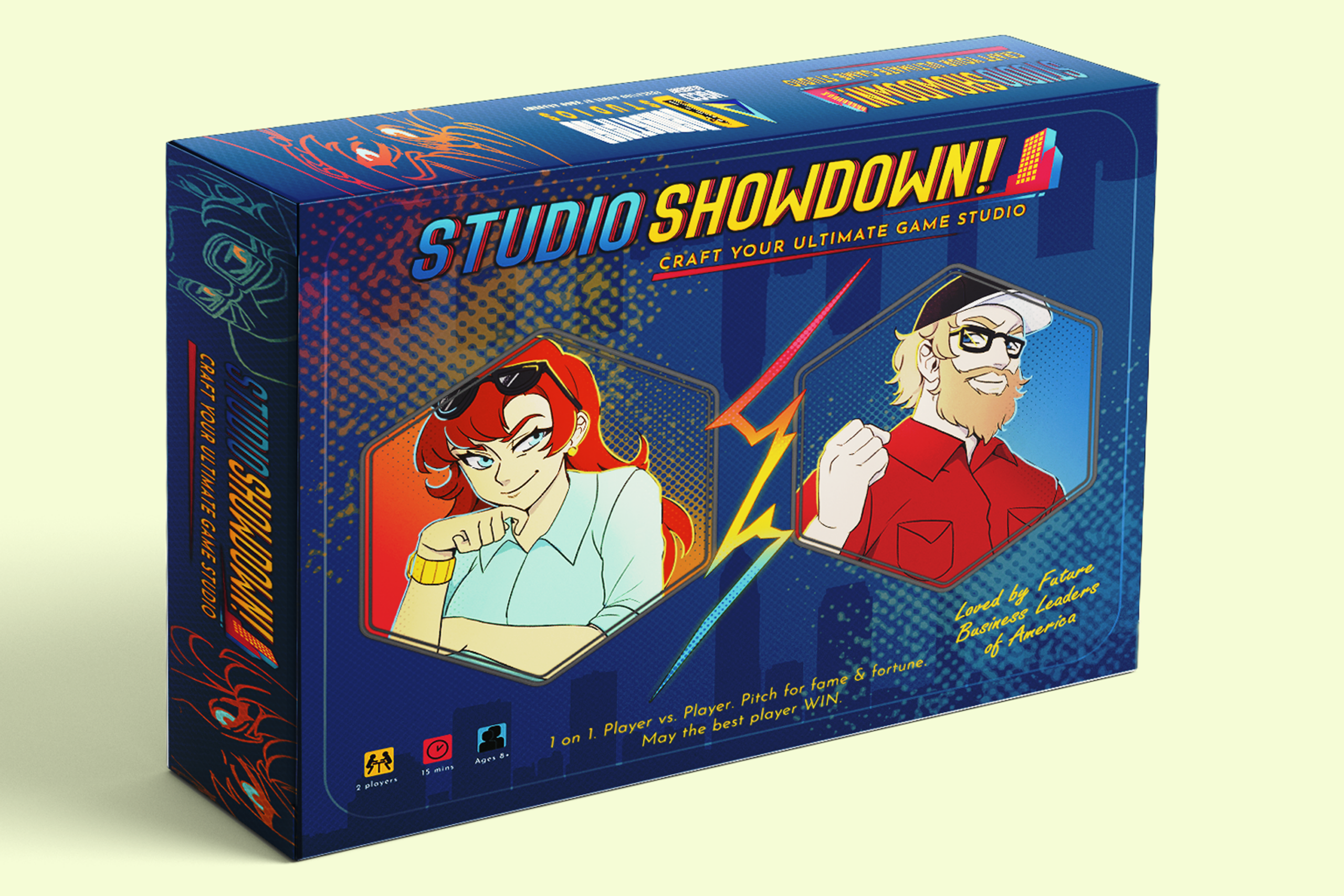
- Level up your professional instincts through analog simulation with the Studio Showdown board game.
The High-Stakes Reality: Why Ideas Alone Never Get Funded
Ideas are currency, but execution is the vault. In the 2026 landscape, the industry is a visual noise machine. Investors see thousands of “revolutionary” concepts every cycle. They aren’t looking for a dream. They’re looking for the engine that builds it. When you’re pitching a video game idea to investors, you aren’t just showing a mood board. You’re presenting a bulletproof business case. Creativity is your entry fee. Strategy is your winning hand.
Every pitch is a showdown. Think of it as a cinematic climax where every slide is a tactical maneuver. Your goal isn’t to entertain; it’s to eliminate doubt. Investors don’t buy games. They invest in a studio’s potential to deliver. They need to see that you’ve mastered understanding the development lifecycle before you ask for seven figures. If you can’t prove you can ship, your art doesn’t matter.
The rise of mid-tier publishers has shifted the goalposts. These players are agile, hungry, and highly selective. They look for “investable” ecosystems. They want projects that can scale, pivot, and survive a volatile market. In this environment, being “good” is the baseline. Being professional, prepared, and business-literate is what gets the check signed.
The Difference Between a Pitch and a Presentation
Presentations inform. Pitches persuade. If your slides are passive, your momentum dies in the first three minutes. In 2026, investors have the attention span of a high-speed edit. You need a one-sentence hook that sticks in 30 seconds. Don’t get bogged down in the lore of your fantasy world. Explain why the market needs this game right now. Every slide must demand an action and lead the investor toward a “yes.”
What Investors Actually Risk
Capital is finite. Every “yes” an investor gives to a studio is a “no” to five others. This is the brutal reality of opportunity cost. They’re hunting for unicorns in the indie space. They fear missing the next breakout hit, but they fear wasting capital on a team that can’t manage a burn rate even more. They’re looking for a partner, not a charity case.
Investor ROI in game development is the calculated return on risk that transforms a studio’s creative output into a sustainable, scalable, and profitable financial asset.
The Anatomy of a Bulletproof Game Pitch Deck
Your pitch deck isn’t a document. It’s a high-performance engine designed to drive an investor from curiosity to commitment. Every slide must be a precise cut, removing layers of risk until only the vision remains. When you’re pitching a video game idea to investors, your deck acts as the visual proof that you aren’t just dreaming. You’re building. Successfully pitching a video game idea to investors requires more than a clever mechanic; it demands a visual narrative that proves market dominance.
- Step 1: The Hook. Define your X-Factor in the first ten seconds. This is the unique mechanical or narrative twist that makes your game stand out in a market releasing over 1,200 indie titles a month on Steam.
- Step 2: The Problem/Solution. Identify the specific hunger in the market. Whether it’s a lack of innovation in the tactical RPG space or a need for shorter, premium experiences, show how your game fills that void.
- Step 3: The Vertical Slice. Don’t just tell; show. Present evidence of visual fidelity and playability that proves your concept works in a live environment.
- Step 4: The Team. Investors bet on people. Highlight your collective experience, technical mastery, and previous wins to show you have the stamina to cross the finish line.
- Step 5: The Ask. Precision is your friend. State exactly how much capital you need, how you’ll spend it, and what the milestones look like for the next eighteen months.
Success in the boardroom often comes down to how well you integrate professional tips for pitching your game into your narrative arc. If you want to sharpen these instincts before the real meeting, playing a round of the Studio Showdown Board Game can reveal the hidden gaps in your strategy.
Visual Storytelling in Your Deck
Your deck must look as polished as the final product. Premium aesthetics aren’t optional; they’re a signal of quality. In 2026, the trend has shifted toward interactive pitch decks. Use high-fidelity concept art to sell the vision before the code is finished. A playable PDF with embedded gameplay clips creates a tactile experience that static slides can’t match. It’s about creating a visual victory before the first meeting ends.
The Vertical Slice: Proof of Life
A five-minute loop that’s actually fun beats a two-hour demo that’s buggy and boring. Investors want to feel the click of your core mechanics immediately. Proving technical feasibility through a vertical slice mitigates investor anxiety and shows you can handle the engine’s complexities. The core loop is the heartbeat of your project, proving that the basic interaction is addictive enough to sustain a commercial product.

Mastering the Business Logic: ROI, Burn Rates, and Market Fit
Creativity sparks the fire, but business logic keeps the studio lights on. When you’re pitching a video game idea to investors, you’re asking them to trust your financial stewardship as much as your artistic vision. Financial literacy is your competitive advantage. If you can’t explain your burn rate or how you’ll manage a twelve-month runway, the most beautiful concept art won’t save you. Investors look for founders who understand that every dollar spent must be a strategic move toward market dominance. They want to see that you’ve moved past the “dreamer” phase and into the “operator” mindset.
Market validation is your combat data. In 2026, “I think people will like it” is a death sentence in the boardroom. You need cold, hard metrics. Achieving a benchmark like 10,000 Steam wishlists or demonstrating high engagement on social platforms proves there’s a hungry audience waiting for your release. This evidence transforms your pitch from a gamble into a calculated opportunity. Following professional pitching your game to investors and publishers means focusing on the business case just as much as the core loop.
Investors also need to see the endgame. Whether it’s a long-tail sales strategy on PC or a potential M&A acquisition by a mid-tier publisher, you must define the exit. They aren’t just giving you money; they’re buying a future return. Show them how their capital scales your production and where the profit realization happens. Clear financial projections show you respect their risk.
Calculating the Real Cost of Development
Underestimating your budget is the ultimate red flag. It signals a lack of professional experience. A 2026 global launch demands more than just coding. You must factor in intensive QA testing, localization for Tier-1 markets, and a marketing budget that accounts for a $2.50 to $4.00 cost per install in the competitive mobile space. Understanding these complexities is vital for survival. If you want to practice these high-stakes decisions without the real-world risk, check out the ultimate business board game to simulate the pressures of studio management.
Finding Your Market Gap
Don’t enter a crowded room. Find the Blue Ocean. Analyze your rival studios and identify exactly what they’re missing. While 90% of developers are now using AI to speed up production, the real winners use it to create experiences that were previously impossible. In 2026, AI-focused gaming startups are seeing valuations 2.5 times higher than traditional studios because they offer a unique technical edge. Position your game in an emerging genre trend rather than fighting for scraps in an oversaturated market. Strategy is about choosing where to fight as much as how to win.
The Pitch Showdown: Handling the Boardroom Heat
The boardroom is a pressure cooker. When you’re pitching a video game idea to investors, the atmosphere shifts the second you stop presenting and start defending. This is the showdown. It’s the moment where your technical realism meets their financial skepticism. You aren’t just selling a game loop; you’re selling your ability to lead a studio through a multi-year production cycle without breaking. Professional dominance is the goal. It isn’t about arrogance. It’s about a quiet, unshakeable certainty that you’ve mapped the terrain better than anyone else in the room.
Investors hunt for “Kill Shot” questions. They want to find the one variable that sinks your ship. They might ask why a AAA giant won’t just clone your mechanic or how you’ll handle the expanding COPPA regulations in April 2026 regarding biometric data. If you flinch, you lose. Anticipate these objections before you step into the light. Have your data ready. If they challenge your user acquisition strategy, point to the current $2.50 to $4.00 CPI for Tier-1 countries and explain exactly how your unique hook lowers that cost. Don’t just survive the questions. Use them to prove your depth.
The art of the pivot is your greatest weapon. If a conversation drifts into a weakness, acknowledge it quickly and steer back to your strengths. If they doubt your marketing reach, remind them of your 10,000 wishlists or your community engagement metrics. If they doubt your tech, highlight the efficiency gains you’ve unlocked in Unreal Engine 5.5. To sharpen these high-stakes negotiation skills before you face the suits, you should get the Studio Showdown board game and master the art of the studio struggle in a safe, competitive environment.
Psychological Preparation and Presence
Your body language speaks louder than your slides. Vocal authority comes from knowing your numbers, not just your lore. Maintain a “can-do” attitude that’s grounded in the reality of modern development. You’re a founder who understands that a project is a series of solved problems. Managing the adrenaline of a high-stakes negotiation requires tactical calm. If you can’t handle the heat of a ten-minute Q&A, they won’t trust you with $500,000 of their capital. Stand tall, speak clearly, and own the space.
Handling Objections Like a Pro
Use the “Yes, And” technique. When an investor critiques your scope, don’t get defensive. Acknowledge the point and build on it. This proves you’re coachable. Investors love founders who can take a punch and stay standing. It shows you’re a partner, not just a dreamer.
A startup founder’s coachability is the strategic ability to integrate expert feedback into their vision without compromising the core integrity of the project.
Post-pitch etiquette is just as vital as the meeting itself. A “no” today is often a “maybe” for the next project. Handle rejection with the same professional grace you’d show a victory. Keep the relationship alive. The industry is smaller than you think, and your reputation as a founder is your most valuable asset.
Training for Victory: Level Up with Studio Showdown
Mastering the boardroom requires more than just a polished deck. It demands a level of professional intuition that only comes from repetition. Most developers wait until they’re in front of a venture capitalist to test their business logic. This is a dangerous gamble. By then, the stakes are too high and the margin for error is zero. Studio Showdown provides a low-stakes environment to practice pitching a video game idea to investors before your actual capital is on the line. It’s a high-fidelity simulation of the industry’s brutal reality. Resource management, talent acquisition, and strategic pivots determine who thrives and who folds.
This analog simulation forces you to see the board from every angle. While digital tools are essential for production, strategy board games sharpen the critical thinking skills needed to outmaneuver rivals in real time. In the Studio Showdown experience, you aren’t just playing. You’re training. You’ll learn to manage burn rates, negotiate with publishers, and handle the unexpected market shifts that define the 2026 landscape. This is why the Classroom Bundle and Educator Edition are becoming staples in professional workshops. They transform abstract business concepts into tangible, competitive victories. You’ll build a mental portfolio of strategic moves that translate directly to your next pitch.
From Tabletop to Boardroom
The transition from a tabletop victory to a boardroom success is shorter than you think. Studio Showdown simulates the “Showdown” mindset. It rewards calculated risks and punishes hesitation. You’ll learn how to allocate resources when your runway is shrinking and how to pivot when a rival studio launches a competing title. This isn’t just theory. It’s a tactile exercise in studio survival. By the time you’re pitching a video game idea to investors in a real-world setting, you’ll have already faced these scenarios dozens of times. Your confidence will be backed by experience, not just hope.
The Founder’s Edge
Top founders don’t rely on luck. They rely on systems and preparation. Mastering the art of the pitch is about understanding the underlying mechanics of the gaming industry. You need to move beyond the easy money game and dive into the complex logic of sustainable studio growth. Studio Showdown acts as your tactical training ground. It allows you to fail, iterate, and win in a safe setting so that when you step into the light of a high-stakes negotiation, your victory feels inevitable. The visual story you’ve crafted in your deck needs a founder who can back it up with raw business acumen. It’s time to level up your professional instincts. Grab your copy of Studio Showdown and start your journey today.
Claim Your Victory in the Boardroom
Success isn’t found in the beauty of your concept art alone. It’s earned through the precision of your business case and the strength of your psychological presence. Mastering the art of pitching a video game idea to investors requires you to move past the role of a creator and step into the role of a founder. You’ve seen how a bulletproof deck, clear financial logic, and a “Showdown” mindset can transform a high-stakes meeting into a signed term sheet. The 2026 landscape is competitive, but for those who speak the language of ROI and burn rates, the opportunities are limitless.
Don’t leave your studio’s future to chance. Developed by VGCD Academy and DEMYSTIFIED Studios, our tabletop simulation allows you to master real-world fundraising and studio management without risking your actual capital. It’s the same tool used by educators to help developers build professional portfolios that command respect. Master the business of games, order Studio Showdown today. Your vision deserves a business strategy that’s just as bold as your art. Step into the arena, handle the heat, and secure your visual victory.
Frequently Asked Questions
How do I protect my game idea from being stolen during a pitch?
Focus on your execution strategy rather than secrecy. Professional investors and publishers rarely sign NDAs for initial meetings because they see thousands of concepts every year. Your best protection is being the only team with the specific talent, technical pipeline, and vision capable of shipping this project. They’re investing in your studio’s unique ability to win, not just an abstract concept that anyone could copy.
What is the most important slide in a video game pitch deck?
The Team slide is often the deciding factor in any high-stakes negotiation. While a brilliant hook grabs attention, the team slide proves you have the professional stamina to survive a multi-year production cycle. Investors need to see a balanced mix of technical mastery, creative leadership, and business acumen. They’re betting on the players as much as the game itself.
Do I need a lawyer before I start pitching to investors?
You don’t need legal counsel for the initial conversation, but you’ll need one the moment a term sheet hits the table. Early pitches are about building chemistry and proving the business case. Once the “Showdown” moves into actual contract negotiations, a lawyer with game industry experience is vital. They’ll help you protect your IP and ensure equity splits don’t cripple your studio’s future growth.
How much equity should I give up in my first funding round?
Founders typically surrender between 10% and 25% of their company during a seed or first round. This number depends on your studio’s current valuation and the total capital required to reach your next milestone. It’s a delicate balance. You need enough capital to scale, but giving away more than 30% too early can make your studio less attractive to future investors.
Can I pitch a game idea if I don’t know how to code?
Yes, but you can’t do it alone. Successfully pitching a video game idea to investors without a technical co-founder is nearly impossible in 2026. You must show that your team has the internal capability to build what you’re selling. If you’re the creative or business lead, pair yourself with a technical director who can prove the project’s feasibility during the Q&A session.
What happens if an investor says ‘no’ to my pitch?
A rejection is just tactical data for your next encounter. Don’t take it personally; instead, ask for specific feedback on why they passed. Was it the genre, the burn rate, or the current market trends? Use this intelligence to refine your deck and your delivery. Many successful studios faced dozens of “no” responses before finding the partner that understood their vision.
What is a ‘Vertical Slice’ and why do investors demand one?
A vertical slice is a small, polished segment of your game that looks and plays like the final product. It’s the ultimate proof of life for your project. Investors demand it because it proves your core loop is addictive and your technical pipeline is functional. It removes the guesswork from the investment, showing that you can actually deliver the visual victory you’ve promised.
Is it better to pitch to a publisher or a venture capitalist?
Publishers provide market expertise, QA, and distribution, while VCs offer pure capital and help with company scaling. If your goal is to launch a single hit and need help with marketing, a publisher is often the better ally. If you’re building a platform or a studio with long-term technology goals, a venture capitalist might provide the broader financial support you need.