The real battle for the next blockbuster isn’t fought in a game engine. It happens in the boardroom. Most developers spend years perfecting their code only to see their studio collapse under the weight of poor financial planning or a failed pitch. It’s a brutal reality that keeps even the most talented creators awake at night. You’ve likely felt that crushing pressure of trying to turn a creative spark into a sustainable business without a roadmap.
This article bridges that gap. You’ll discover how the best board games about making video games in 2026 transform complex studio entrepreneurship into a tactical, hands-on experience. We’re moving beyond simple mechanics to focus on the grit of fundraising, the art of the pitch, and the raw competition of the market. We’ll preview the top simulation tools, including the Studio Showdown Board Game, that are currently redefining how aspiring founders and educators build professional portfolios. Prepare to master the meta-game of the industry before you ever write a single line of code. It’s time to stop guessing and start winning.
Key Takeaways
- Master the fusion of creative vision and fiscal sustainability to bypass the common traps that sink 90% of indie studios.
- Decode investor psychology and the fundraising lifecycle to successfully navigate the journey from bootstrapping to Series A funding.
- Gain a competitive edge by learning to analyze rival studio strengths and pivoting your business model based on real-time market feedback.
- Build a professional founder’s portfolio that highlights your strategic thinking through modern board games about making video games.
- Use Studio Showdown as a tactical training ground to simulate high-stakes entrepreneurship without risking your actual capital.
Beyond the Code: Why Business Acumen is the Real Boss Level
Coding is just the entry fee. In the competitive arena of 2026, technical skill alone won’t keep your studio’s lights on. Real success happens in the boardroom, not the code editor. Video game entrepreneurship is the high-stakes fusion of creative vision and fiscal sustainability. It’s a visual showdown where your strategy must rise above the digital noise. If you don’t treat your studio like a business, it won’t survive long enough to release a sequel. You’re building a production machine, not just a game.
Statistics tell a brutal story. Industry data shows that 90% of indie studios fail within their first three years. These projects don’t die because of poor frame rates or buggy AI. They collapse because of broken business models and exhausted capital. A brilliant game with no market strategy is just an expensive hobby. To succeed, you must transition from a developer to a founder. This mental shift is the most difficult upgrade you’ll ever perform. You need to master the meta-game of industry trends, consumer behavior, and aggressive resource management.
The Core Pillars of a Sustainable Studio
- Intellectual Property (IP) Management: Your code is temporary; your IP is your legacy. Protecting your brand identity is your primary defense against market saturation.
- Operational Efficiency: You must balance your burn rate with development milestones. Every day in production is a tactical expense that requires a clear return on investment.
- Market Positioning: Digital storefronts are crowded. You need a “blue ocean” strategy to find the gaps where your competitors aren’t looking.
Entrepreneurship as a Teachable Skill
Entrepreneurship isn’t a mysterious talent. It’s a muscle. You shouldn’t train this muscle using your life savings as the weights. This is why board games about making video games are becoming essential tools for the modern creator. They provide a safe, tactical environment to practice high-stakes maneuvers. You can test fundraising strategies and market pivots without real-world financial catastrophe. It’s about building a production mindset before you ever touch a keyboard.
Critical thinking is your sharpest weapon. Throughout the history of video game development, the most resilient leaders were those who could predict a market shift before it happened. Modern board games about making video games simulate these exact pressures. They force you to lead, not just execute. You’ll learn to manage a competitive studio by making the hard calls that solo developers often ignore. Don’t wait for a real-world crisis to learn how to pitch. Start your training on the tabletop.
The Financial Engine: Mastering Fundraising and the Art of the Pitch
Cash flow is the studio’s pulse. Creative vision is the spark; capital is the oxygen. Many developers mistake a good mechanic for a good business. Investors don’t care about your high score. They care about your margins. A great game idea is worthless if it doesn’t have a clear, profitable path to market. You must build a pitch deck that balances creative soul with cold business logic. It’s a visual argument for your studio’s survival.
The funding lifecycle is a brutal ladder. Bootstrapping requires raw grit; it’s you against the burn rate. Angel investors look for the “soul” of the project and your individual potential. Series A demands hard proof of scalability. If you can’t articulate exactly how every dollar fuels growth, you’ve already lost the room. Mastering these dynamics requires practice. High-quality board games about making video games like Studio Showdown provide this tactical training. They strip away the fluff and force you to face the financial consequences of your design choices.
Fundraising Strategies for New Founders
Choosing between Venture Capital and Angel Investors is a strategic crossroads. VCs want a ten-fold return; Angels often back the founder’s vision. Crowdfunding is your ultimate market validation tool. It proves people will actually pay for your concept before you spend a fortune. You must calculate your “runway” with surgical precision. If your cash runs out before the gold master, your studio is finished. In 2026, investors prioritize lean operations and clear exit strategies.
The 5-Step Anatomy of a Winning Studio Pitch
- Step 1: The Hook. Identify the market gap. Why does the world need your game right now? Define the visual and mechanical void you’re filling.
- Step 2: The Team. Passion isn’t enough. Prove you have the technical, artistic, and managerial talent to execute the vision.
- Step 3: The Traction. Show the data. Prototypes, community growth, or early wishlist numbers are your primary ammunition.
- Step 4: The Business Model. ROI is the target. Clarify your monetization strategy and how you’ll achieve long-term sustainability.
- Step 5: The Ask. Be direct. State exactly how much capital you need and which specific milestones that money will buy.
You can sharpen these high-stakes skills safely. Consider using a simulation tool like Studio Showdown to refine your pitch and financial strategy before you ever step into a real boardroom. It’s the difference between guessing and knowing.
Navigating Market Dominance: Strategic Maneuvers in a Competitive Industry
Shipping your game is only half the battle. The real challenge is holding the ground you’ve won. Market dominance isn’t just a sales figure. It’s mindshare. It’s community loyalty. In a saturated digital landscape, you’re competing for the most limited resource on earth: attention. To win, you must analyze rival studios with the same intensity you bring to your own production. This is the tactical reality of the 2026 gaming industry. You don’t just want players; you want advocates.
Success requires the art of the pivot. Sometimes your initial business model hits a wall. Market feedback might tell you that your premium RPG needs to be a live-service title. Or perhaps the opposite is true. Resilient founders don’t cling to failing plans. They adapt. They build studio cultures that prioritize strategy over fear. A culture of fear kills creativity; a strategy-first culture survives the industry’s inevitable downturns. Most board games about making video games fail to capture this psychological pressure, but the best ones make it the center of the experience.
Competitive Analysis for Indie Founders
Data is your scout. Tools like SteamDB allow you to strip away the marketing fluff and see the raw truth of competitor performance. You can track player retention, peak concurrent counts, and pricing trends in real-time. This data helps you identify “genre fatigue” before you commit to a three-year dev cycle. If fifteen soulslikes launched last month and all of them flopped, it’s time to rethink your roadmap. You can also explore strategy board games to sharpen these analytical skills in a high-speed environment.
Building a Brand That Survives the Hype Cycle
Your studio’s reputation is your most valuable currency. It’s bigger than any single release. A single “overwhelmingly positive” launch builds a reservoir of trust you can draw from for years. Strategic networking is the secret engine behind this brand building. You need active relationships with publishers and platform holders to secure those coveted front-page features. Mastering the “showdown” means knowing exactly when to strike. You must outmaneuver rivals for marketing windows, ensuring your visual story isn’t drowned out by a Triple-A behemoth. board games about making video games teach you this timing. They force you to manage limited actions and maximize visibility when it counts most. It’s about being seen at the right time by the right people.
From Concept to Studio Founder: Building a Professional Portfolio
Code is logic. Business is psychology. Your GitHub proves you can build, but it doesn’t prove you can survive. To win in 2026, you need a founder’s portfolio that highlights your strategic grit. Investors want to see your mental model for success. They want to know how you handle a burn rate, how you pivot after a failed playtest, and how you outmaneuver a rival studio. This is where board games about making video games become your secret weapon. They allow you to generate real-world data from simulated scenarios. This gives you a tangible way to prove your business acumen before you ever hire your first employee.
Documenting these sessions is critical. A business simulation isn’t just a game; it’s a laboratory. When you play, you’re making high-level executive decisions. If you record the “why” behind your moves, you create a narrative of leadership. High-level job applications in the gaming industry now prioritize this kind of systemic thinking. Showing that you understand the relationship between a marketing window and a development milestone is more impressive than a clean function. It shows you’re a founder, not just a technician.
What Belongs in a Founder’s Portfolio?
- Strategic Case Studies: Document a session where your studio faced a crisis. Explain the data you used to pivot and the eventual outcome.
- Simulated Launch Post-Mortems: Create a breakdown of your simulated marketing spend versus your player acquisition. Show that you understand ROI.
- Leadership Evidence: Highlight how you managed team resources during a competitive showdown. Prove you can keep a production on track under pressure.
Educational Tools for Aspiring Entrepreneurs
The gap between STEM education and business reality is often a chasm. Many students graduate with technical brilliance but zero fiscal literacy. Educators are now bridging this gap through tabletop play. They use business board games to turn abstract economic theories into visceral, competitive experiences. It’s one thing to read about venture capital; it’s another to lose a simulated studio because you miscalculated your runway. This hands-on approach builds a professional network through workshops and events where strategy is the primary language. board games about making video games provide the perfect sandbox for this growth. They turn the complex world of studio entrepreneurship into a teachable, repeatable skill set.
Don’t leave your career to chance. Start building your strategic evidence today by using Studio Showdown as your portfolio-building tool. It’s time to prove you have the vision to lead.
Studio Showdown: Your Tactical Training Ground for Game Industry Success
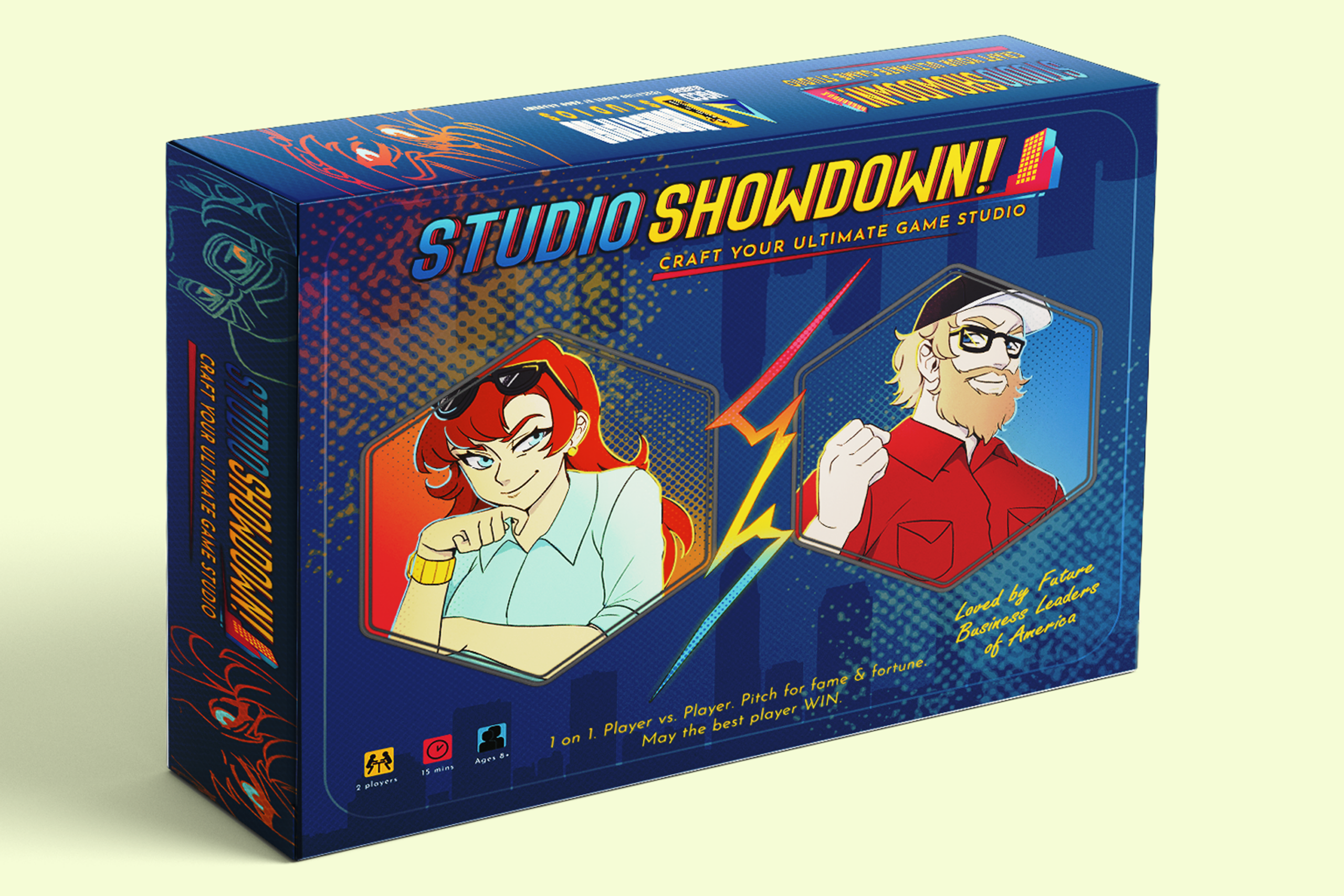
Studio Showdown is the definitive answer to the studio founder’s anxiety. It isn’t just a tabletop experience. It’s a survival manual for the modern developer. Developed by VGCD Academy and DEMYSTIFIED Studios, this strategy game puts you directly in the founder’s seat. You’ll face the same brutal decisions that define the 2026 industry. You’ll manage a production pipeline while the market shifts beneath your feet. Most board games about making video games focus on the glamour of design, but Studio Showdown focuses on the grit of staying solvent.
The simulation goes beyond the “fun” parts of development. It forces you to navigate “grinding redundancies” and the “business as usual” challenges that sink most startups. You’ll master fundraising and pitching without burning through your actual life savings. It’s a high-stakes environment where the only thing at risk is your pride. You’ll learn to read investor psychology and calculate your runway with surgical precision. This is tactical entrepreneurship in its purest form. You aren’t just playing a game; you’re rehearsing your career.
Hands-On Learning for Future Industry Leaders
Launching a hit game is a calculated strike. You must time your release windows to avoid being crushed by rival studios. This requires more than just luck. It demands a deep understanding of true strategy, distinguishing it from superficial tactics or fleeting trends. While others chase fleeting trends, you’ll learn to build a resilient brand. You’ll manage the “Founder’s Dilemma” by balancing financial risks with creative rewards. Every turn is a lesson in resource allocation. You’ll decide when to hire, when to crunch, and when to pivot. This is how you outmaneuver the competition before the first line of code is even written.
Bringing the Showdown to the Classroom
The impact of Studio Showdown extends far beyond the living room. The Studio Showdown: Educator Edition is specifically designed to integrate into STEM and business curricula. It turns abstract economic theories into visceral tabletop battles. Students don’t just read about market dominance; they fight for it. This hands-on approach builds real-world business acumen that textbooks simply can’t replicate. It bridges the gap between technical skill and executive leadership. board games about making video games are the new frontier of professional development. They provide a repeatable, safe sandbox for the next generation of creators.
The future of the industry belongs to those who prepare for the boardroom. Don’t wait for a real-world financial crisis to test your business strategy. Equip your team or your students with the tools they need to win. Order your Classroom Bundle today and start building the next generation of studio founders. The showdown starts now.
Own the Future of Your Studio
The transition from developer to founder is the ultimate boss fight. You’ve learned that technical skill is the entry fee, but business acumen is the victory condition. Surviving the 2026 market demands a mastery of fundraising, investor psychology, and tactical pivots. Don’t wait for your first studio failure to learn these lessons. High-quality board games about making video games allow you to build a professional portfolio of strategic decisions in a risk-free environment. It’s about proving you can lead, not just execute.
Studio Showdown is your unfair advantage. It’s developed by industry experts at VGCD Academy and used in classrooms worldwide to teach real-world business grit. Whether you’re an aspiring founder or an educator, this strategy-first gameplay prepares you for the raw competition of the global stage. Stop guessing your way through the industry. Start leading it. You have the vision; now you need the tactical training to protect it.
Master the business of games with Studio Showdown. Your studio’s success story starts at the table. Build your legacy today.
Frequently Asked Questions
What are the most important skills for a video game entrepreneur?
Strategic risk management, fiscal sustainability, and high-level pitching are the core pillars of a successful game entrepreneur. You must move beyond coding to master the meta-game of industry trends and consumer behavior. Success requires balancing creative ambition with the raw reality of burn rates and market positioning. It’s about building a production machine that survives the visual noise of modern digital storefronts and demanding investors.
How do I find investors for my indie game studio in 2026?
Finding investors in 2026 requires a data-driven approach that proves your studio’s scalability. You need to target venture capital or angel investors who align with your specific genre and creative vision. Success hinges on a pitch deck that demonstrates early traction, such as prototype wishlist numbers or community growth data. Networking at industry workshops and using simulation tools to refine your business logic will set you above the competition.
Can you learn business strategy through board games?
You can absolutely master complex business maneuvers through the tactical environment of board games about making video games. These simulations strip away the fluff and force you to face the financial consequences of your choices without real-world risk. They provide a repeatable laboratory for testing fundraising strategies and market pivots. This hands-on approach turns abstract economic theories into visceral, competitive experiences that build genuine business acumen.
What is the difference between a game developer and a game entrepreneur?
A game developer focuses on the technical execution of a project, while a game entrepreneur focuses on the sustainability of the studio. Developers live in the code; entrepreneurs live in the boardroom. The entrepreneur’s job is to secure funding, manage resources, and ensure the creative vision reaches a profitable market. It’s the difference between building a single tool and owning the entire factory. Both are necessary, but only one ensures the studio’s survival.
How much money do I need to start a video game studio?
The capital required depends entirely on your project’s scope and the size of your professional team. You must calculate your runway by balancing your monthly burn rate against specific development milestones. Some studios bootstrap with minimal funds while others seek significant seed rounds before hiring talent. Regardless of the starting amount, fiscal discipline is the only way to ensure your studio reaches the gold master stage without running out of cash.
Why do so many video game startups fail in their first year?
Most startups collapse because of exhausted capital and a lack of coherent market strategy. While the code might be perfect, the business model often fails to account for genre fatigue or marketing windows. Studios frequently overlook the meta-game of resource management and fail to pivot when market feedback demands a change. Survival requires a strategy-first culture that prioritizes long-term brand reputation over a single, risky release.
Is a business degree necessary to start a successful game studio?
A formal business degree isn’t a requirement, but mastering business acumen is non-negotiable for studio success. Many founders bridge this gap through practical experience and specialized tools. Using board games about making video games provides a faster, more engaging way to learn the mechanics of fundraising and market dominance. Investors value your ability to think systemically and manage a production pipeline more than they value a traditional certificate.
How does Studio Showdown help students build professional portfolios?
Studio Showdown helps students build portfolios by documenting the logic behind their strategic decisions. By recording simulated launch post-mortems and fundraising maneuvers, students prove their leadership and analytical skills to potential employers. This tangible evidence of business logic is often more impressive than technical skill alone. It shows recruiters that you understand the relationship between creative design and fiscal reality in a competitive, high-stakes industry.