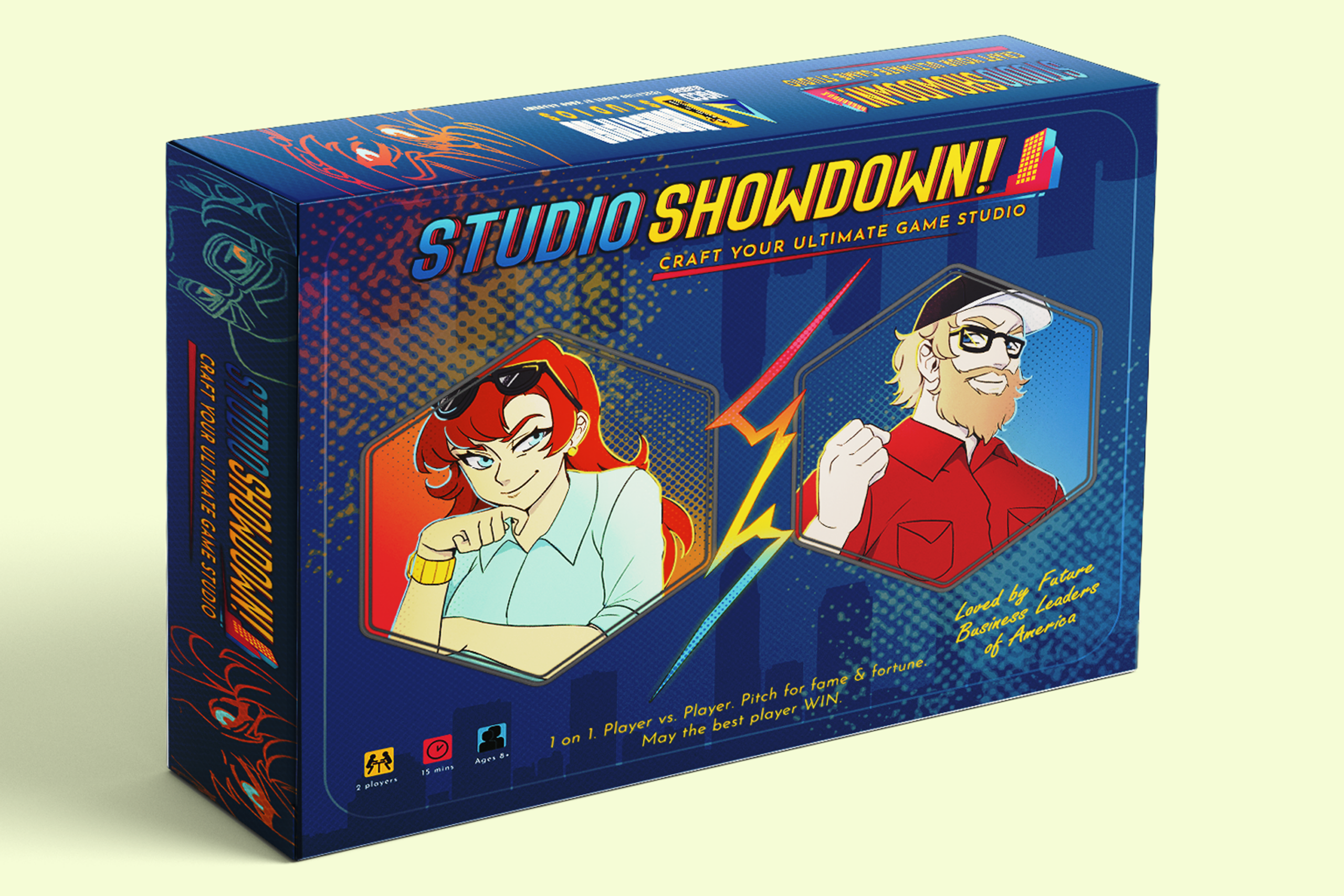
What if the difference between a bored student and a future founder was just a better game plan? Traditional lectures often fall flat because static graphs can’t capture the adrenaline of a market crash or the pressure of a venture capital pitch. You’ve likely seen the glazed eyes when discussing complex topics like market saturation. It’s a common frustration for educators who want to inspire. Fortunately, modern interactive teaching methods for economics are changing the rules of the classroom. They move beyond the screen to create a tactile, competitive arena where theory meets reality.
You’re here to transform dry economic theory into a high-stakes strategic showdown. This isn’t about passive observation. It’s about active participation and measurable results. We’ll show you how to bridge the gap between academic concepts and professional success using hands-on simulations and modern tools. Discover how to boost engagement, improve financial literacy scores, and help students build portfolios that stand out in the 2026 economy. It’s time to elevate your classroom from a lecture hall to a boardroom. Let’s start the fight against disengagement.
Key Takeaways
- Escape the passive learning trap by replacing static textbook definitions with problem-based challenges like The Founder’s Dilemma.
- Deploy interactive teaching methods for economics to create living laboratories where students directly influence market outcomes through strategic choice.
- Reclaim student focus by utilizing screen-free, tactile tools that sharpen negotiation and body language skills beyond the reach of digital platforms.
- Build a results-driven curriculum using a five-step framework that matches high-stakes narratives to core academic standards.
- Transform your classroom into a venture capital hub using Studio Showdown to simulate the real-world pressure of entrepreneurship.
Why Traditional Economics Lectures Fail the Modern Student
Traditional lectures are a relic. They rely on the passive learning trap where students sit, listen, and eventually forget. In the 2026 classroom, textbook definitions feel like static noise. They don’t stick because they lack a pulse. When a teacher spends forty minutes explaining market equilibrium on a whiteboard, the modern student is already miles away. They’re thinking about the creator economy, their next side hustle, or the latest market disruption. The old model of education assumes that information absorption leads to understanding. It doesn’t. It leads to disengagement.
We need a radical shift. Effective interactive teaching methods for economics redefine the classroom dynamic. This isn’t just about adding a quiz at the end of a slide deck. It’s a method where students influence the outcome of the lesson through choice. They aren’t just absorbing facts; they’re making moves. This creates a vital psychological pivot. The person in the desk stops being a student and becomes a stakeholder. When you own the decision, you own the consequence. Economic literacy is no longer just about passing a test. It’s inseparable from entrepreneurship and digital literacy in a world where every student wants to be a founder.
The Engagement Gap in 21st Century Social Studies
Visual noise is everywhere. Digital fatigue has set in. Students tune out traditional slides because they’ve seen it all before. They demand real-world relevance. If a concept doesn’t apply to a startup or a competitive market, they lose interest. The Engagement Gap is a failure to link abstract theory to personal agency. Without that connection, the most brilliant economic theories remain buried in the pages of a heavy textbook. Students in 2026 want to see the “why” behind the “what.” They want a toolkit for the future, not a history lesson on past theories.
From Theory to Tactical Execution
Knowing the definition of supply and demand is useless in a vacuum. Experiencing market saturation in a high-stakes scenario is where the real learning happens. These interactive methods build critical thinking skills that standardized tests often miss. The academic community has long recognized the value of simulations and games in economics education to bridge this gap. It turns a dry subject into a living laboratory.
We are moving toward a strategy board games approach for deeper retention. It’s about tactical execution. It’s about winning. When students compete, they analyze. They adapt. They succeed. By integrating interactive teaching methods for economics, you’re not just teaching a subject. You’re training the next generation of strategic thinkers to navigate a complex world with confidence and precision.
The 3 Pillars of High-Impact Interactive Economics
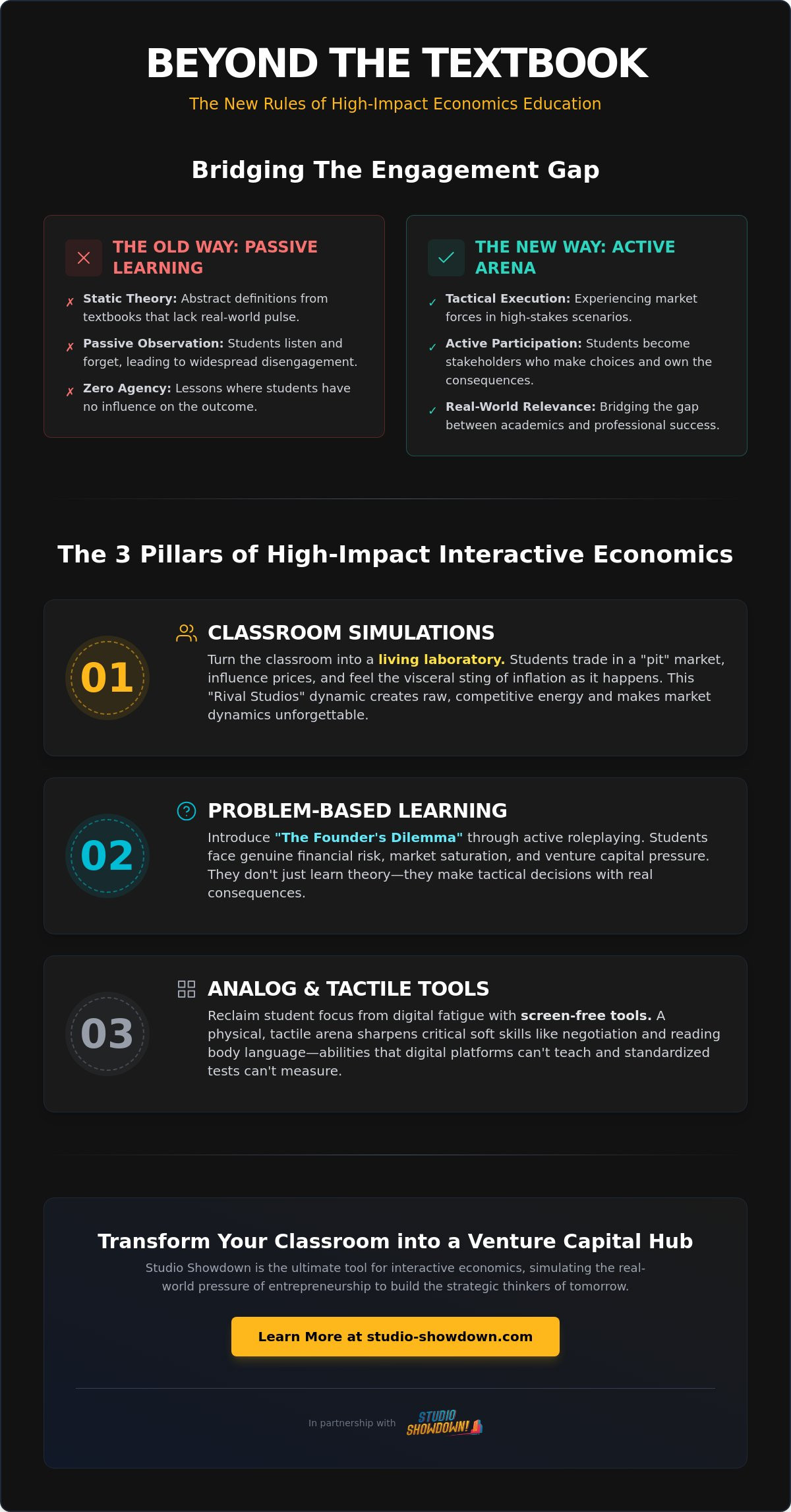
Economic education isn’t a spectator sport. It’s a high-stakes arena. High-impact interactive teaching methods for economics rest on three specific pillars. These aren’t just activities. They’re strategic frameworks designed to turn abstract theory into tactical muscle memory. When students stop being observers and start being operators, the classroom transforms. The goal is to build a living laboratory where every decision carries weight and every consequence is felt in real-time.
Classroom Simulations: The Living Laboratory
Forget expensive software for a moment. You can set up a “pit” market in fifteen minutes with nothing but paper and grit. Students trade. Prices fluctuate. Demand spikes. It’s visceral. By introducing currency issuance, you can make students feel the sting of inflation as it happens. This approach aligns with Vanderbilt’s guide to Active Learning, which proves that students retain more when they are active participants in the process. We call this the “Rival Studios” dynamic. When teams compete for the same market share, the lesson on competitive market dynamics writes itself. No slides required. Just raw, competitive energy.
Problem-Based Learning and Case Studies
The traditional Harvard Case Method is a solid start, but it often feels too detached for the 2026 student. We prefer “The Founder’s Dilemma.” This is active roleplaying where students face genuine financial risk. They must deal with market saturation and venture capital pressure. Instead of reading about a startup that failed, they perform a tactical post-mortem on their own choices. They identify the exact moment their strategy crumbled. To bridge the gap between theory and the boardroom, many educators now use business simulation games. These tools provide the structure needed to analyze complex risks without losing the engagement of the game.
The final pillar is the distinction between simple gamification and true simulation. Simple point systems are for kindergartners. Future founders need deep mechanics. A true simulation ensures that every strategic pivot has a ripple effect across the entire system. If a student overextends their resources, the simulation should punish that move. This creates a “Showdown” environment. It fosters a level of healthy classroom competition that mirrors the venture capital world. It’s about grit. It’s about resilience. It’s about winning. If you want to bring this level of intensity to your curriculum, explore the Studio Showdown: Educator Edition to see how deep mechanics can redefine your teaching results.
Analog vs. Digital: The Case for Screen-Free Interactive Learning
Screen time is at an all-time high. In 2026, the classroom shouldn’t just be another tab in a browser. It should be a physical event. While many institutions push for AI and digital-first tools, they often ignore the digital fatigue currently draining student energy. Tactical, screen-free interactive teaching methods for economics offer a necessary break from the glow. They provide something pixels cannot: a tangible, high-stakes physical presence. By prioritizing these analog interactive teaching methods for economics, you give students the interpersonal edge they need to lead.
In a digital simulation, you click a button to trade. In person, you look a rival in the eye. You read their hesitation. You sense their desperation. These are the soft skills of a future founder. Negotiation, body language, and the art of the pitch are often lost in a “Black Box” algorithm. Physical tools bring these human elements back to the center of the lesson. They turn a lecture into an encounter. They turn a student into a negotiator.
The Social-Emotional Power of the Board Game
Building soft skills is essential for the next generation. Pitching for fundraising or outmaneuvering rivals happens better across a table than through a headset. Physical cards and resource tokens make abstract wealth feel real. Holding a stack of “capital” has a psychological weight that a digital number lacks. It encourages screen-free activities that still feel modern and high-tech. It’s about the experience. It’s about the showdown. The social-emotional connection made during a physical game creates a lasting impression that a screen simply cannot replicate.
Transparency of Mechanics
Digital tools are often mysterious. The math happens in the background, hidden from view. Physical board games make the “gears” of the economic system visible. Students see exactly how a tax affects their pile of tokens or how a market crash wipes out their board state. This transparency is a powerful teaching tool. You can even “mod” a physical game on the fly. Change a few rules to shift from a capitalist model to a socialist one. The classroom sees the immediate impact of policy changes. Tactile feedback through handling pieces and cards significantly reinforces long-term memory retention in teenagers.
Physical tools are also an investment in longevity. There are no subscription fees. There are no tech updates or “server under maintenance” messages. A board game bought today will still be a functional asset in a decade. It’s a permanent part of your educator toolkit that doesn’t rely on a Wi-Fi signal to deliver a world-class experience.
Implementing Interactive Economics: A 5-Step Curriculum Framework
Implementation is where the battle for student engagement is won or lost. It’s not enough to simply bring a game into the room. You need a tactical structure. A clear framework ensures that interactive teaching methods for economics translate into academic mastery. This five-step process moves students from passive observers to strategic operators. It bridges the gap between the classroom and the professional world. By following these steps, you turn a simple lesson into a high-stakes simulation of the global market.
Step 1 & 2: Standards and Stakes
Start with the curriculum. Don’t just play for the sake of playing. Map your activities to specific standards. When students engage in fundraising, they are learning about capital markets. When they pitch an idea, they are defining a value proposition. This alignment gives the activity academic weight. Once the standards are set, you must create “The Hook.” Narrative matters. Ask the students: why must your studio survive the market crash? If the stakes aren’t clear, the motivation won’t be there. You might start with an easy money game to build confidence. Then, quickly pivot to complex strategy where every decision has a price.
Step 3, 4 & 5: Execution and Reflection
During the simulation, your role shifts. You are no longer the lecturer. You are the Market Moderator. Managing the chaos is part of the process. Keep the simulation productive by enforcing time limits and resource scarcity. This mimics the real-world pressure founders face every day. After the showdown, the debrief is critical. This is where you connect the adrenaline of the game back to the textbook theory. Don’t just ask who won. Ask “why” they made specific strategic pivots. Forcing students to justify their moves builds the critical thinking skills that standardized tests often miss.
- Identify the Concept: Link the simulation to specific curriculum goals like supply and demand or fiscal policy.
- Set the Narrative: Give students a reason to care about their “studio’s” survival.
- Moderate the Market: Facilitate the flow of resources and handle disputes in real-time.
- Analyze the Strategy: Connect the game outcomes to real-world economic principles.
- Document the Win: Help students translate their classroom success into professional portfolios.
The final step is the most transformative. Help your students build a Business Portfolio based on their performance. A student who successfully navigates a market crash in a simulation has demonstrated real-world business acumen. This documentation turns a classroom win into a professional achievement. It shows future employers or colleges that the student understands tactical execution. Ready to bring this framework to your school? Explore the Classroom Bundle to equip your students with the tools they need to win in 2026.
Studio Showdown: The Ultimate Tool for Interactive Economics
Studio Showdown is the definitive answer to the engagement gap. It bridges the gap between game design and economic strategy. This isn’t a toy. It’s a high-pressure simulation of the venture capital world. By using interactive teaching methods for economics, it forces students to think like founders. They don’t just read about capital; they fight for it. They don’t just study markets; they attempt to dominate them. It’s a strategic collision where every card played and every resource spent has a measurable impact on the board state. No pixels. No lag. Just pure tactical execution.
The Educator Edition is built for the front lines of the classroom. It provides specialized tools that allow you to implement a complex curriculum with precision. You’re preparing students for real-world STEM and business careers. You’re doing it through a medium they actually care about. By removing the screen, you’ve removed the distractions. What remains is the raw mechanics of entrepreneurship. This is how you train the next generation of leaders to navigate the 2026 economy with confidence and grit.
Mastering the Business of Video Games
Game development is the perfect lens for teaching modern economics. It’s the heart of the creator economy. In Studio Showdown, students manage the entire lifecycle of a production. They handle budgeting. They invest in R&D. They execute marketing campaigns. It’s a living example of microeconomics in action. When you use the Classroom Bundle, you create a multi-group arena. Rival studios compete for market share. They negotiate. They pivot. They learn that in business, as in the game, only the most adaptable survive. It’s a lesson in market dominance that no textbook can replicate.
A Professional Edge for Aspiring Developers
The goal is a professional edge. Winning a session of Studio Showdown is more than just a victory; it’s a credential. It helps students build a professional portfolio for college applications. It proves they understand tactical thinking and resource management. We aren’t just teaching a subject. We are training the next generation of studio founders. They leave your classroom with a deeper understanding of financial risk and strategic planning. They leave ready to win. It’s time to elevate your curriculum and give your students the tools they need to succeed in a competitive world.
Explore the Studio Showdown Educator Edition and Classroom Bundles today.
Elevate Your Classroom into a Strategic Arena
The 2026 classroom demands more than just definitions; it requires tactical execution. Passive learning is a relic of the past. By adopting interactive teaching methods for economics, you bridge the gap between abstract theory and real-world results. We’ve explored how tactile, screen-free simulations foster the negotiation skills and strategic thinking necessary for the next generation of founders. These methods turn students into stakeholders who understand the weight of financial risk and the thrill of market dominance. You aren’t just teaching a subject. You’re training future leaders to navigate a complex economy with confidence.
This isn’t just about passing tests. It’s about building professional portfolios and genuine business acumen that lasts a lifetime. Developed by VGCD Academy and DEMYSTIFIED Studios, our tools are designed to simulate the high-pressure world of entrepreneurship with professional precision. Many schools already use these frameworks to help students stand out in college applications and career paths. It’s time to stop lecturing and start moderating the market. Empower your students with the Studio Showdown Educator Edition and watch them rise above the visual noise. The market is waiting. Give your classroom the competitive edge it deserves today.
Beyond the classroom, maintaining high levels of engagement is a priority for the modern workforce. For those looking to apply similar principles to the corporate world, Ocomedy Show provides expert guidance on reinforcing the collaborator experience through humor and innovative communication in the 2026 economy.
Frequently Asked Questions
What are the most effective interactive teaching methods for economics in 2026?
Market simulations, problem-based learning, and tactile board games are the gold standard. These interactive teaching methods for economics prioritize student agency over passive listening. Students operate in a living laboratory where they handle resource scarcity and competitive dynamics in real-time. It’s about moving from abstract theory to tactical execution with immediate feedback.
How do I implement game-based learning without losing academic rigor?
Maintain rigor by anchoring every simulation in a structured debrief. Use the game to generate data and the analysis to generate the grade. Force students to justify their strategic pivots using specific economic principles. If a student can’t explain the “why” behind their market move, the learning isn’t complete. The game is the hook; the reflection is the rigor.
Can board games really teach complex concepts like venture capital?
Physical board games excel at teaching venture capital because they make negotiation and risk tangible. Students experience the adrenaline of equity trades and the sting of a market crash across the table. Seeing the “gears” of the system through physical pieces helps them grasp how investment drives growth. It turns a complex financial concept into a high-stakes showdown they can actually see.
How much time does it take to set up a classroom economic simulation?
A basic “pit” market simulation takes about fifteen minutes to set up with simple supplies. Professional tools like Studio Showdown are designed for rapid deployment within a single class period. Most educators can transition from a brief introduction to a full-scale simulation in less than twenty minutes. It’s about efficiency and impact, not hours of preparation.
Are interactive methods suitable for both middle school and high school students?
These methods are highly adaptable across different age groups. Middle schoolers focus on the fundamentals of supply, demand, and currency. High school students dive into deeper waters like market saturation, fiscal policy, and entrepreneurship. The core mechanics remain the same, but the narrative complexity scales to match the students’ maturity and academic standards.
How do I assess student learning during an interactive simulation?
Assessment happens through real-time observation and post-game documentation. Track how students adapt to market changes and document their decision-making process in a professional portfolio. This provides a clear record of their business acumen and critical thinking. It’s a more accurate measure of strategic skill than a multiple-choice test could ever provide.
What is the difference between gamification and simulation in an educational context?
Gamification adds simple rewards like points to a traditional lesson. Simulation creates a deep, interconnected system where every choice has a ripple effect. For future founders, simple points aren’t enough to sustain interest. They need the deep mechanics of a simulation to understand how real markets function. It’s the difference between a simple quiz and a boardroom battle.
How can I teach financial literacy to students who find it boring?
Stop talking about savings accounts and start talking about market dominance. Use interactive teaching methods for economics to create a narrative where financial literacy is the weapon they need to win. When students see money as a tool for strategic growth rather than a dry academic topic, their engagement spikes. Give them a studio to run, and the boredom disappears instantly.