35% of risk executives identify compliance and regulatory risk as their company’s biggest threat to growth in 2026. Yet, most ethics training feels like a static image in a high-speed world. You’ve seen the glazed eyes when “fiduciary duty” hits the slide deck. It’s time for a new production. Mastering how to teach business ethics with board games turns abstract moral theories into a high-stakes showdown where every move carries a real price tag. We understand that case studies feel “solved” and lack the real-time pressure your students crave.
This guide promises to transform those dry lectures into competitive experiences that stick. With 72% of S&P 500 companies now identifying AI as a material risk, the need for dynamic decision-making has never been higher. You’ll walk away with a structured framework designed to trigger fierce ethical debates and sharpen critical thinking. We’re moving past the “what” and into the “how,” ensuring your classroom rewards bold decisions and tactical integrity. It’s time to stop lecturing and start competing.
Key Takeaways
- Build a high-stakes “safe failure” arena where students can test moral boundaries without risking real-world capital.
- Master how to teach business ethics with board games by using mechanics like information asymmetry to force transparency and accountability.
- Implement a five-step tactical framework that shifts the focus from passive listening to active, high-pressure decision-making.
- Simulate brutal industry showdowns involving IP theft and investor pressure to bridge the gap between abstract theory and market reality.
- Utilize specialized educator tools to track player development and turn ethical debates into measurable professional growth.
Why Board Games Are the Ultimate Arena for Business Ethics
Ethics isn’t a theory; it’s a performance. Most lectures treat morality like a static image, but the market is a high-speed production. Learning how to teach business ethics with board games replaces the snooze-fest of slides with the adrenaline of a live showdown. It’s about skin in the game. When a student faces a resource crunch, they aren’t just reading about fiduciary duty; they’re living it. Passive case studies are “solved” puzzles. Tabletop simulations are evolving battles.
Game-based learning (GBL) provides a premium environment for professional growth. It’s a controlled arena. In a business simulation game, players navigate the same 38% governance support shifts seen in recent shareholder proposals, but with the safety of a reset button. This is “safe failure.” It allows for artistic bravery in decision-making. You can test the limits of what’s legal versus what’s right before a real career is on the line. It’s a visual victory for education.
The Psychology of the Ethical Showdown
Competition is the ultimate truth serum. When the clock is ticking and opponents are closing in, masks slip. The “End Justifies the Means” trap becomes a tangible reality on the board. We see moral disengagement when players convince themselves that the competitive environment justifies cutting corners. This is a direct parallel to how 72% of S&P 500 firms currently navigate AI risks in 2026. It’s a psychological production that reveals whether a leader prioritizes the long-term vision or just the immediate victory.
Moving Beyond Monopoly: The Need for Modern Simulations
Forget the old-school classics. Monopoly is a flat, one-dimensional loop that lacks the visual and structural depth of modern markets. It doesn’t teach stakeholder management; it teaches ruthless accumulation. Modern educators need the complexity found in mastering strategy board games to reflect today’s corporate reality. We’re talking about asymmetric information, ESG scrutiny, and the delicate balance of sustainability and profit. This isn’t just a game; it’s a high-definition rehearsal for the real world. Every card drawn is a moral crossroads.
Choosing the Right Simulation: Mechanics That Trigger Ethical Dilemmas
Mechanics are the cinematography of the ethical showdown. They dictate the pace, the pressure, and the ultimate payoff. To master how to teach business ethics with board games, you must select systems that mirror the brutal trade-offs of the 2026 market. We aren’t looking for simple roll-and-move systems. We need levers that force players to choose between their vision and their soul. Resource scarcity, poaching, and sabotage aren’t just game elements. They’re moral catalysts.
Zero-sum mechanics create a cutthroat atmosphere where one player’s gain is another’s loss. This simulates the high-stakes environment where 35% of risk executives find their biggest threats. Conversely, positive-sum mechanics reward collaboration, yet they introduce the “free rider” problem. The real magic happens with hidden traitor or secret objective mechanics. These simulate corporate espionage and internal power struggles with surgical precision. It’s a visual and tactical masterclass in trust, forcing players to navigate the thin line between healthy competition and ethical collapse.
Resource Scarcity and the Temptation of Sabotage
When funding is thin and talent is scarce, integrity becomes expensive. Limited resources force players into a corner. Do you pivot your strategy or do you poach a rival’s key asset? This dynamic exposes the easy money game mentality that plagues modern startups. True strategy wins when players resist the urge for aggressive sabotage in favor of long-term sustainability. It’s about building a premium reputation in a world that rewards short-term hacks. If you want to elevate your team’s decision-making, explore how Studio Showdown crafts these high-pressure narratives.
Hidden Information and Fiduciary Transparency
Information asymmetry is where transparency goes to die. In a simulation, giving one player more data than the rest creates an immediate ethical friction point. Does the “CEO” share the material risks with the “investors,” or do they bluff to secure the next round of funding? This mimics the real-world pressure where 72% of S&P 500 firms must now disclose complex AI risks. The “reveal” at the end of the game acts as a post-production review. It’s a moment of accountability that proves dishonesty might win the turn, but it rarely wins the game. This feedback loop is essential for internalizing the consequences of corporate deception.

The 5-Step Framework for Teaching Ethics Through Play
Executing a successful session requires more than just opening a box. It’s a production. To master how to teach business ethics with board games, you need a script that moves from abstract concepts to concrete professional acumen. We don’t just play; we simulate reality. This framework ensures that every roll of the dice and every card played serves a larger vision of integrity and tactical brilliance.
The process follows a disciplined five-step sequence:
- Step 1: Priming the Vision. Set the ethical stage. Before the first turn, define the regulatory environment. Use the fact that 35% of risk executives fear compliance threats to create immediate tension.
- Step 2: The Action Phase. Step back. Let the players engage. This is pure production where you observe behavior without interference, watching how “creative friction” develops between rival studios.
- Step 3: The Showdown Intervention. Pause the game during a high-stakes moment. Ask players to justify a cutthroat move. This mid-game reflection forces them to confront their moral choices in real-time.
- Step 4: The Debrief. Connect the game to the 2026 market. Map player decisions to real-world business laws and the 72% of S&P 500 firms currently disclosing AI-related material risks.
- Step 5: Portfolio Integration. Translate the win. Help students document their ethical decision-making process as a part of their professional portfolio.
Facilitating the High-Stakes Environment
Your role is the Regulator. Don’t be a passive observer; be the force that ensures the “Premium” classroom experience mirrors a real production house. Encourage healthy competition. When two players clash over a resource, don’t settle the dispute. Let them negotiate. This creates the “Showdown” atmosphere where true character is revealed. You are the director of a live ethical drama, ensuring the pacing remains lüktető and purposeful.
The Art of the Ethical Debrief
The debrief is where the visual victory of the game turns into intellectual growth. You must ask questions that pierce the competitive fog. “Was your win worth the reputation cost?” “How did your short-term gain impact the Triple Bottom Line?” To connect game mechanics to “crunch culture,” ask: “If you played the ‘Overtime’ card to hit a release date, did the temporary boost justify the permanent damage to your studio’s talent pool?” This bridges the gap between game mechanics and the brutal reality of modern industry pressure.
Navigating Real-World Scenarios: From IP Theft to Investor Pressure
The board is a mirror. In 2026, business isn’t just about accumulation; it’s about navigating a minefield of intellectual property and investor expectations. Understanding how to teach business ethics with board games means moving into the territory of “vaporware” and “crunch.” These aren’t just buzzwords. They’re mechanics. When a player steals a card to clone a rival’s project, they’re facing a visual representation of IP theft. It’s high-stakes. It’s immediate. It’s a production that requires a moral script.
The Founder’s Dilemma often surfaces mid-game. Do you trade equity for a quick cash infusion, or do you maintain ethical control over your vision? This mirrors the 38% support for governance proposals seen in early 2026. Players must also manage “Crunch Culture.” By sacrificing player health tokens for faster production, they might win the turn, but they risk a long-term studio collapse. It’s a brutal, honest simulation of the modern production house where every decision has a lüktető consequence.
Intellectual Property and Creative Theft
Cloning a rival’s product is a classic move in competitive tabletop play. It forces a fierce debate on the boundaries of inspiration versus theft. By integrating game development business skills into your curriculum, you highlight the moral cost of “fast-following.” Is a legal win worth a reputation as a copycat? In the visual culture of 2026, perception is everything. A single “piracy” mechanic can trigger more discussion than a hundred-page textbook. It’s about artistic bravery in a cutthroat market.
The Ethics of Talent Poaching
High-stakes bidding for Lead Developers or Artists turns the game into a talent war. Aggressive hiring might secure the next “hit,” but it destabilizes the market ecosystem. Simulations show the long-term consequences of burning bridges in a small, interconnected industry. You aren’t just buying a card; you’re managing a legacy. Aggressive poaching reveals a player’s true priorities under stress. If you’re ready to bring this level of intensity to your classroom, elevate your training with Studio Showdown.
The ethics of investor relations also come alive through “bluffing.” Pitching a project that doesn’t exist, or hiding the 72% AI risk profile, might secure capital today. But the reveal at the end of the game acts as a regulatory showdown. It’s a moment of truth that proves integrity is the only sustainable premium strategy. You don’t just learn ethics; you survive them.
Studio Showdown: Mastering the Ethical High Ground in Tech
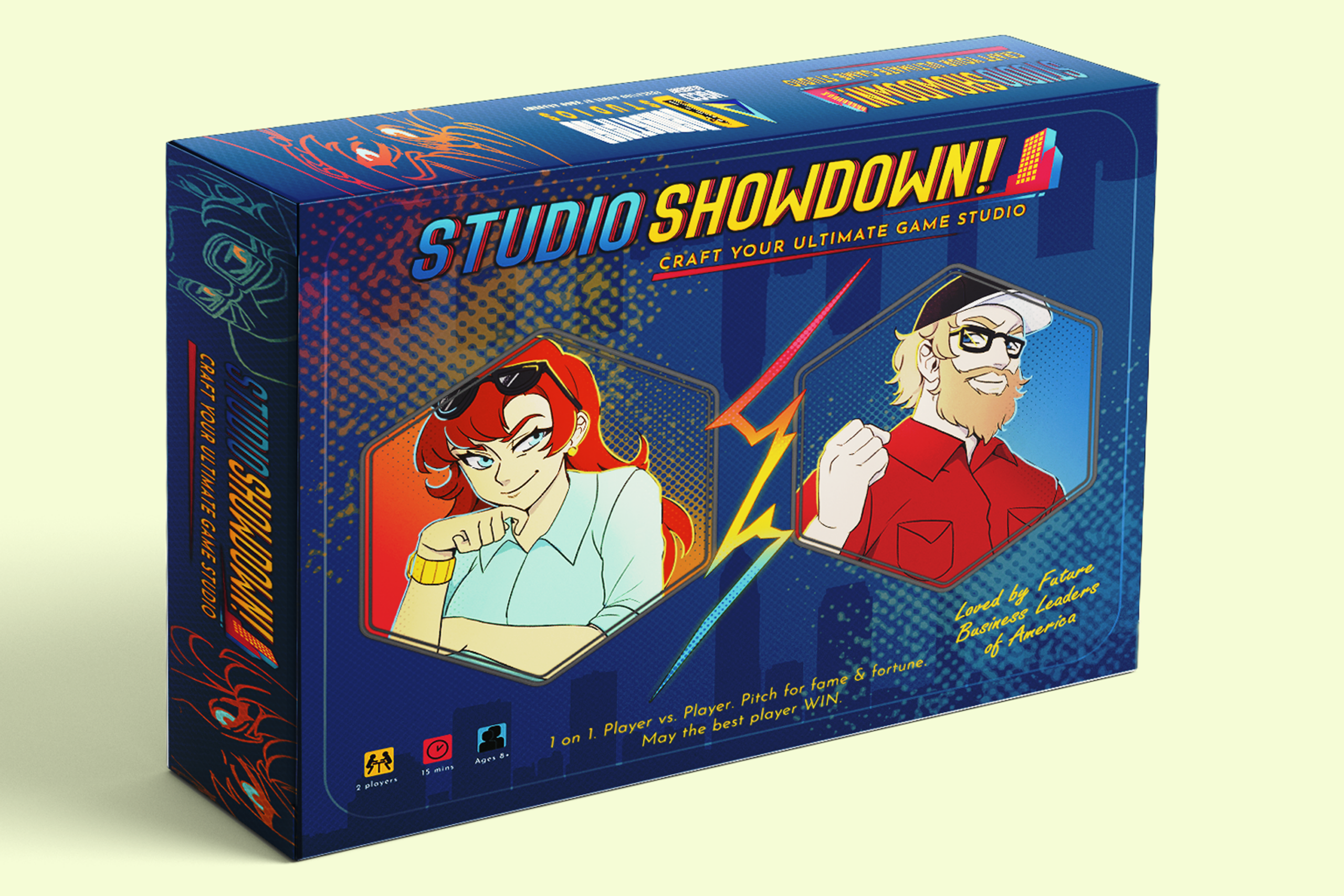
Studio Showdown isn’t just a tabletop experience. It’s a high-definition rehearsal for the brutal, rewarding world of game development. When you’re looking for how to teach business ethics with board games, you need a production that moves beyond abstract theory. Our simulation places players at the center of a creative storm. They navigate the 72% rise in AI material risk disclosures and the 35% spike in regulatory threats with every turn. It’s a visual victory for any classroom or boardroom. Every choice is a frame in their professional image-film. Every move is a statement of intent.
The “Educator Edition” provides the ultimate toolkit for tracking student ethical development. It’s more than a scorecard. It’s a data-driven overview of how players react under pressure. You see the shifts in strategy. You witness the moments where integrity meets ambition. This version offers specific tools to monitor decision-making patterns, ensuring that the lesson lasts long after the final showdown. We’ve designed these metrics to help you transform a simple game night into a premium professional production. It’s about measurable growth, not just participation.
Designed for Future Founders
Success in 2026 requires more than technical skill. It demands artistic bravery. Studio Showdown forces players to master the art of the pitch while maintaining absolute professional integrity. You aren’t just building a game studio; you’re building a portfolio of decisions. These choices demonstrate real-world business acumen to future investors and partners. The “Showdown” meta-narrative perfectly fits the modern ethical landscape. It frames every challenge as a noble struggle. It’s a fight for quality, transparency, and long-term vision in a market often blinded by short-term gains. It’s about winning the right way.
Impact Over Information
Studio Showdown represents a shift from passive information to active impact. We believe in a “can-do” attitude that refuses to settle for mediocre ethical standards. Winning ethically isn’t just possible; it’s the only way to achieve a premium result. This isn’t just a game. It’s a professional production house in a box. It’s time to stop talking about ethics and start living them through high-stakes competition. Elevate your curriculum today with the Classroom Bundle and give your students the tools to conquer the 2026 industry. The next showdown starts now. Secure your Educator Edition and lead the charge with confidence, vision, and impact.
Step Into the Arena of Ethical Leadership
The 2026 market demands more than just compliance; it requires artistic bravery. You’ve discovered how to teach business ethics with board games by leveraging high-stakes mechanics and a disciplined five-step framework. We’ve moved beyond the “solved” case studies that fail to engage modern students. Instead, we’re building a “safe failure” arena where the 35% of risk executives who fear regulatory threats would find their toughest challenges simulated in real-time. It’s about creating a production where every decision matters.
Developed by VGCD Academy experts and used in national entrepreneurship programs, this methodology redefines game-based learning for the digital age. It forces players to face the 72% AI material risk profile head-on through immersive play. Don’t settle for glazed eyes and static slides. Your classroom deserves a visual victory and a premium experience that sticks long after the game ends.
Bring the ultimate business ethics simulation to your classroom with Studio Showdown. It’s time to transform abstract moral theories into tactical wins. Lead your students to the ethical high ground and watch them emerge as the bold founders the future needs. The next showdown is yours to direct.
Frequently Asked Questions
Can board games really teach complex ethical theories like Utilitarianism?
Yes, board games turn abstract philosophy into a tactical production by forcing players to quantify the “greatest good” through resource distribution. In a simulation, a player must decide if sacrificing one unit’s health for a 20% studio-wide speed boost aligns with their long-term vision. It transforms a lecture into a live ethical showdown where every point has a moral price tag.
How long does a typical business ethics board game session take?
Most professional sessions require 60 to 90 minutes to ensure a full narrative arc and a meaningful debrief. This timeframe allows for 45 minutes of active, high-pressure play followed by a 15 to 30 minute reflection period. Shorter micro-simulations can fit into a 30-minute block, but deep ethical experimentation usually needs the extra runtime to develop creative friction.
What is the best board game for teaching entrepreneurship to high schoolers?
Studio Showdown is the premier choice for high schoolers because it mirrors the fast-paced game development industry they already understand. It moves past simple accumulation mechanics to teach students how to navigate the 38% governance support shifts seen in early 2026. It’s a visual victory that prepares them for the real-world investor pressure of the modern market.
Do I need a business degree to facilitate these games in my classroom?
No, you only need a clear vision and a well-structured facilitator guide to lead a successful session. Modern simulations provide the “Regulator” with all the necessary prompts to link game moves to actual business laws. You act as the director of the experience, ensuring the flow remains dynamic while the game mechanics handle the technical complexity.
How do I handle students who play “too dirty” during the game?
Use their aggressive play as the primary case study during the post-game debrief. If a student uses sabotage to win, ask the class if that victory is sustainable when 35% of risk executives prioritize compliance as a growth factor. Their behavior becomes a visual lesson in the long-term cost of reputation damage in a small, interconnected industry.
Are there specific board games for corporate ethics training?
Specialized simulations like “e-Factor!” and “Veritas Vincat” are specifically designed for the corporate world. These tools help managers understand how to teach business ethics with board games by focusing on fiduciary duty and regulatory compliance. They provide a premium, safe arena for employees to practice high-stakes decision-making without risking real-world capital.
How can I assess student learning through a board game?
Assess learning by evaluating the “Post-Production” debrief and the ethical justifications students provide for their moves. You can track how players adapt their strategies after facing an ethical crossroads mid-game. Portfolio integration allows students to document their decision-making process as concrete evidence of their professional growth and tactical integrity.
What is the difference between a business simulation and a regular board game?
A business simulation focuses on realistic market dynamics and feedback loops rather than just entertainment. While regular games prioritize fun, a simulation mirrors the 72% AI risk disclosure requirements and other 2026 market realities. It’s a professional production designed to build specific career acumen through immersive, high-stakes play that rewards critical thinking over luck.