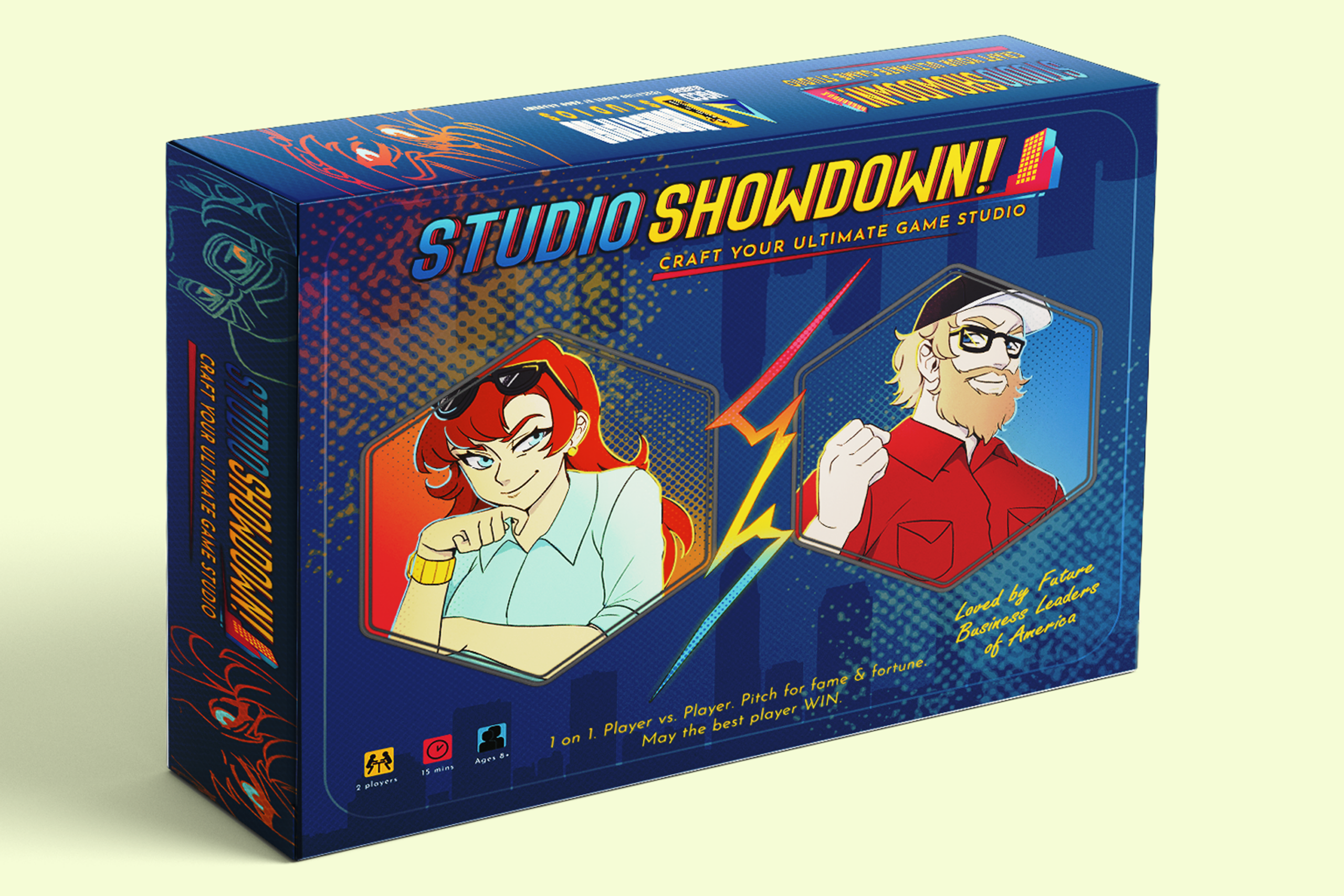
What if the hours your child spends behind a glowing screen aren’t a waste of time, but a high-stakes internship for the 2026 digital economy? It’s easy to look at a headset and see a distraction. You worry about addiction. You feel disconnected. You want more for them than just high scores. Learning how to support a child’s passion for gaming is the first step in shifting the narrative from passive consumption to active creation.
We agree that balance is non-negotiable. However, the skills required to dominate a virtual battlefield are the same ones needed to lead a production team or launch a startup. This guide promises to show you how to transform that gaming habit into a powerful foundation for entrepreneurship and professional success. We’ll break down the transition from screen time to skill-building, explore the latest tools like Unreal Engine 5.8, and provide a clear path to teaching business strategy through the games they already love. It’s time to stop fighting the screen and start fueling the future.
Key Takeaways
- Shift the perspective. Move from passive consumption to the “Dev Mindset” where logic and strategy take center stage.
- Learn exactly how to support a child’s passion for gaming by using analog board games to master complex digital loops.
- Unlock the multi-billion dollar industry. Teach the “Founder Mentality” through fundraising, pitching, and market dominance.
- Build a legacy early. Start documenting creative concepts with professional Game Design Documents to create a high-impact portfolio.
- Bridge the gap. Discover how tools like the Studio Showdown board game transform casual play into professional business acumen.
Beyond the Controller: Reframing Gaming as a Skill Set
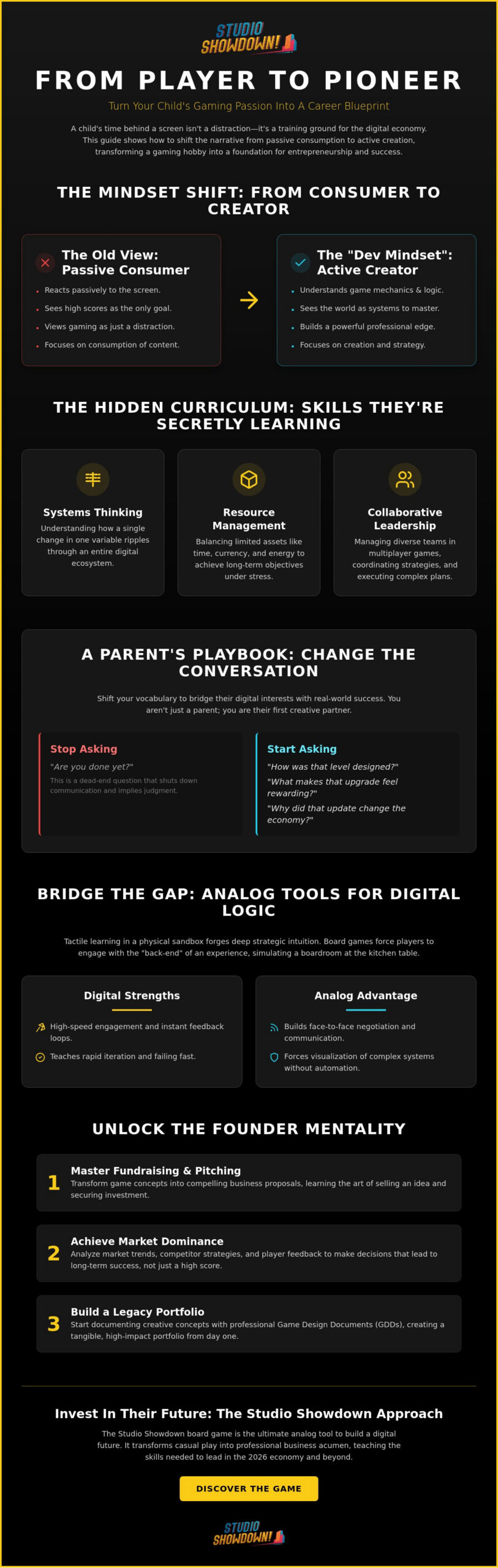
Gaming is often dismissed as idle entertainment. This is a massive oversight. To truly understand how to support a child’s passion for gaming, you must first adopt the “Dev Mindset.” This is a fundamental shift from being a passive consumer who reacts to the screen to an active creator who understands the mechanics behind the curtain. It’s about seeing the digital world as a series of systems to be mastered, not just a distraction to be endured.
The Skills Your Child Is Secretly Learning
Every “Game Over” screen is a lesson in iterative problem solving. They fail fast. They analyze the error. They pivot. This cycle is the core of Games and learning, where digital environments reward persistence over perfection. Beyond the screen, they are developing these essential traits:
- Systems thinking: Understanding how a single change in one variable ripples through an entire ecosystem.
- Resource management: Balancing limited assets to achieve long-term objectives under stress.
- Collaborative leadership: Managing diverse teams in multiplayer environments, coordinating across time zones, and executing complex strategies.
Shifting the Narrative at Home
Change your vocabulary to change their future. Stop asking “Are you done yet?” It’s a dead-end question that shuts down communication. Instead, ask “How was that level designed?” or “What mechanics make this specific upgrade feel rewarding?” This forces them to analyze the game’s architecture rather than just consuming the experience.
Bridging the Screen Gap: Using Analog Tools for Digital Logic
The glowing screen is only one part of the equation. To truly master how to support a child’s passion for gaming, we must look at the mechanics that exist when the power is off. Tactile learning provides a physical sandbox for digital logic. When a computer handles the math, the player can become passive. When a board game requires them to calculate resources, track turns, and predict opponent moves manually, they engage with the “back-end” of the experience. This is where deep strategic intuition is born.
Leveraging strategy board games as a training ground allows your child to experiment with business logic without the distraction of high-fidelity graphics. It’s about the raw data. It’s about the trade-offs. Citing gaming skills for career success is no longer a stretch; it’s a reality recognized by global leaders. Transitioning to analog tools doesn’t just reduce eye strain. It builds the face-to-face negotiation skills that a digital chat box can never replicate. You aren’t just playing; you’re simulating a boardroom.
Why Tabletop Strategy Wins in 2026
Board games force a visualization of complex systems. There is no automated tutorial. No “undo” button. Players must maintain the state of the game in their minds, which builds mental stamina and long-term planning. This environment turns business talk into a competitive advantage. It moves the family dynamic from “stop playing” to “let’s win together.” You’re building a professional mindset at the kitchen table. It’s about patience. It’s about seeing the long game.
Transitioning from Screen to Table
Don’t just pick any game. Find titles that mirror their digital habits. If they love resource-heavy builders, find a game about trade and expansion. If they prefer tactical shooters, look for area-control mechanics. Using screen-free activities helps reset dopamine levels, allowing for deeper focus on complex tasks. Treat these nights as a “Studio Meeting.” Everyone is a founder. Every move is a business decision. If you want to see this transition in action, the Studio Showdown Board Game provides the perfect framework to bridge the gap between fun and professional acumen.
The Business of Play: Teaching Game Dev Entrepreneurship
Gaming isn’t just a hobby. It’s a multi-billion dollar battlefield. If you want to understand how to support a child’s passion for gaming, you have to look at the numbers. Creative vision is the spark, but business savvy is the fuel. Most parents see a screen; a founder sees a market. We need to move the conversation from “stop playing” to “start building.” This means teaching the “Founder Mentality.” It involves fundraising, pitching, and achieving market dominance. It is about understanding how to turn a creative idea into a scalable enterprise.
In the professional world, we call this the “Studio Showdown.” It is the art of outmaneuvering rivals in a saturated market. It’s a high-stakes game of strategy. Teens are often ready for this challenge. They already understand competition. They know what it feels like to win. Now, they need to understand the financial risks and rewards of the tech world. Discussing capital, overhead, and burn rates might sound dry. However, when applied to their favorite game studio, it becomes a masterclass in entrepreneurship. It’s about seeing the industry as a chess match where every move has a cost.
Mastering the “Pitch”
Every hit game started as a pitch. Encourage your child to explain why their favorite title is a commercial success. Is it the mechanics? The marketing? The community? This is where they learn to distinguish between a short-lived easy money game and a sustainable business model. Roleplay as an investor. Let them describe their dream game idea. Challenge their assumptions. Ask about their monetization strategy. This turns a daydream into a business plan. It forces them to think about the audience, not just themselves.
Resource Management as a Life Skill
Managing in-game currency is the perfect bridge to real-world financial literacy. It’s about more than buying skins. It’s about understanding the cost of development. Time. Talent. Capital. When they see how these variables interact, they begin to grasp the complexity of the industry. Linking business board games to real-world entrepreneurship makes these concepts tangible. It’s no longer abstract. It’s a simulation of the exact challenges they will face as future tech leaders. They learn to pivot when resources run low. They learn to invest when the market is right. This is the foundation of professional success.
Building a Professional Portfolio: A Parent’s Checklist
A portfolio isn’t a scrapbook. It’s a weapon. In the 2026 creative economy, “proof of work” is the only currency that matters. If you want to master how to support a child’s passion for gaming, you must help them transition from player to producer. This starts with documentation. Every idea, every mechanic, and every strategic pivot needs to be recorded. You are helping them build a “Founder’s Portfolio” that proves they understand the architecture of engagement.
The gold standard of the industry is the Game Design Document (GDD). This is a comprehensive blueprint that outlines the game’s mechanics, story, and monetization strategy. Encourage your child to draft these for their concepts. It forces them to move beyond “this would be cool” to “this is how it works.” Using analog prototypes is another professional shortcut. Testing a logic flow with paper and dice before writing a single line of code is a high-level industry practice. It shows they can iterate and fail fast without wasting technical resources.
Resumes are built in the heat of competition. Game jams and design contests are perfect for this. These high-pressure events require participants to ship a product in a limited timeframe. It teaches time management, scope control, and collaborative leadership. This is the ultimate way how to support a child’s passion for gaming while ensuring their hobby results in a tangible, professional asset. They aren’t just playing; they are building a career-ready history of success.
Documenting the Journey
Identity is everything. Start by helping your child define their “Studio Brand” in a single, punchy sentence. This establishes a professional persona early. Keep a “dev log” to track their progress. This log should include sketches, logic flows, and even the rulebooks from their tabletop sessions. These artifacts are evidence of a disciplined creative process. They show a future employer that your child doesn’t just have ideas; they have the systems to execute them.
Networking for Young Developers
Creative growth happens in communities. Find safe, moderated spaces where aspiring creators share their work and offer critiques. Look for local workshops that focus on the “business of games” rather than just the mechanics of play. Mentorship is the final piece of the puzzle. Identify professionals in the tech space who can provide real-world feedback on their projects. Networking isn’t just for adults. It’s for anyone ready to elevate their craft above the visual noise. Start building their professional edge today with professional game design tools that bridge the gap between play and production.
Investing in Their Future: The Studio Showdown Approach
The transition from a bedroom hobby to a boardroom legacy isn’t an accident. It’s a strategy. Learning how to support a child’s passion for gaming requires more than just passive approval. It demands the right tools to channel that raw creative energy into professional excellence. The Studio Showdown board game is that tool. It is the ultimate training ground for young founders who are ready to stop playing by the rules and start writing them. This is where the abstract concepts of systems thinking and resource management become tangible, high-stakes decisions.
Most games focus on the individual. Studio Showdown focuses on the enterprise. It moves the needle from “building a character” to “building a studio.” This distinction is critical. In the 2026 tech economy, the ability to lead a team and manage a brand is what separates the creators from the consumers. By engaging with this platform, your child isn’t just learning mechanics. They are learning the architecture of success. Your support today is the cornerstone of the CEO they will become tomorrow. We don’t settle for mediocre play. We aim for market dominance.
Why Studio Showdown is Different
This isn’t a generic tabletop experience. It is a hands-on simulation designed by industry experts who understand the real-world friction of production. Pitching. Fundraising. Market clashing. These aren’t just buzzwords; they are core gameplay loops. Players must secure capital, outmaneuver rivals, and ship products under pressure. It provides a rare, high-octane space for parents and kids to clash as equals. You aren’t hovering over their shoulder. You are competing in the same arena, growing together through every strategic pivot and successful launch.
Taking the Next Step
The path is clear. Move from being a distant observer to an active participant in their journey. This is how to support a child’s passion for gaming with purpose and precision. Ordering the Studio Showdown board game is the first move in a much larger play. It starts the entrepreneurship conversation in a way that feels like a challenge, not a chore. It is about building a professional edge before they even enter the workforce.
Beyond the box, you are joining a community of proactive parents who refuse to let gaming be a waste of time. We are turning digital habits into professional advantages. The visual noise of the industry is loud, but your child’s talent can be louder. The clash begins at the table. The victory belongs to those who prepare. It’s time to invest in the visionaries of 2026 and beyond.
Forge the Future of Play
Gaming is no longer a distraction; it is a high-stakes arena for the next generation of leaders. You’ve seen how reframing play as production turns a simple hobby into a technical skill set. Using analog tools bridges the gap between digital logic and real-world business acumen. Most importantly, you now have a checklist to build a professional portfolio that commands attention. Every level cleared and every strategy refined is a step toward a career in the multi-billion dollar tech industry.
Mastering how to support a child’s passion for gaming means moving from a passive observer to an active partner in their creative journey. Our methodology is developed by VGCD Academy experts and used by educators to teach financial literacy. We focus on reducing screen time while boosting essential STEM skills through tactical, hands-on engagement. It is about preparation. It is about the win. It is about turning a love for the screen into a legacy of success.
Master the business of gaming with the Studio Showdown Board Game. Your support today builds the CEO of tomorrow. The showdown begins now.
Frequently Asked Questions
Is it possible to turn a gaming hobby into a real career?
Absolutely. The global gaming industry is a multi-billion dollar powerhouse that regularly outpaces the film and music sectors combined. Success isn’t limited to professional players. High-demand roles exist in production, marketing, data analysis, and software engineering. By learning how to support a child’s passion for gaming through structured skill building, you prepare them for a professional landscape that prizes complex systems thinking and strategic optimization.
How do I know if my child has a talent for game design or just likes playing?
Look for critical analysis rather than just high scores. A child with design potential often asks why a specific mechanic works or identifies balance issues in a recent update. They might even create their own rules or draw level maps in their spare time. If they enjoy the “back-end” logic of how variables interact, they’re moving toward a “Dev Mindset.” Encourage this by asking them to explain the business logic behind their favorite titles.
What are the best board games to teach business skills to kids?
Strategy board games that focus on resource management and market competition are the most effective tools. Games like the Studio Showdown Board Game are specifically designed to simulate the high-pressure environment of a production studio. These games force players to manage limited capital, pitch ideas, and outmaneuver rivals. They turn abstract business concepts into tangible, competitive challenges that build professional acumen far away from the digital screen.
How can I limit screen time without discouraging my child’s passion?
The key is to transition digital concepts into analog environments. Limiting screen time is about offering a high-quality alternative that still fuels their core interests. Introduce tabletop strategy sessions or design workshops that focus on the mechanics of their favorite digital genres. This approach ensures they stay engaged with game design logic while giving their eyes a break. It shifts the focus from restriction to professional development in a different medium.
Do I need to know how to code to help my child become a game developer?
No, your role is to be a creative partner and a business mentor. While coding is a specific technical skill, successful game development requires leadership, project management, and strategic vision. You can show them how to support a child’s passion for gaming by teaching the “Founder Mentality” and helping them document their ideas. Focus on the business of play. Encourage them to explore free tools like Godot or Blender to start their technical journey.
What is a Game Design Document and why does my child need one?
A Game Design Document (GDD) is a professional blueprint for a project. It outlines the mechanics, story, and monetization strategy of a game in detail. Your child needs one because it forces them to think like a producer rather than a consumer. It moves an idea from a vague concept to a structured, executable plan. This document becomes the cornerstone of their professional portfolio, proving they can communicate complex visions to a team.
Can strategy board games really improve my child’s math and logic skills?
Yes, because they require the manual calculation of complex variables. Without a computer to automate the “back-end” math, players must track resources, calculate probabilities, and predict opponent moves themselves. This builds mental stamina and sharpens logical reasoning. It is a physical sandbox for digital logic. These skills are directly transferable to STEM fields and high-level business strategy, making analog play a rigorous and effective educational tool.
How does Studio Showdown teach fundraising and entrepreneurship?
Studio Showdown simulates the entire lifecycle of a creative project. Players must pitch their concepts to secure funding and manage their burn rate as they build their studio from the ground up. It introduces the “Studio Showdown” concept where outmaneuvering rivals is essential for market dominance. By clashing with other “founders,” kids learn the financial risks and rewards of the tech world in a safe, competitive, and highly engaging environment.