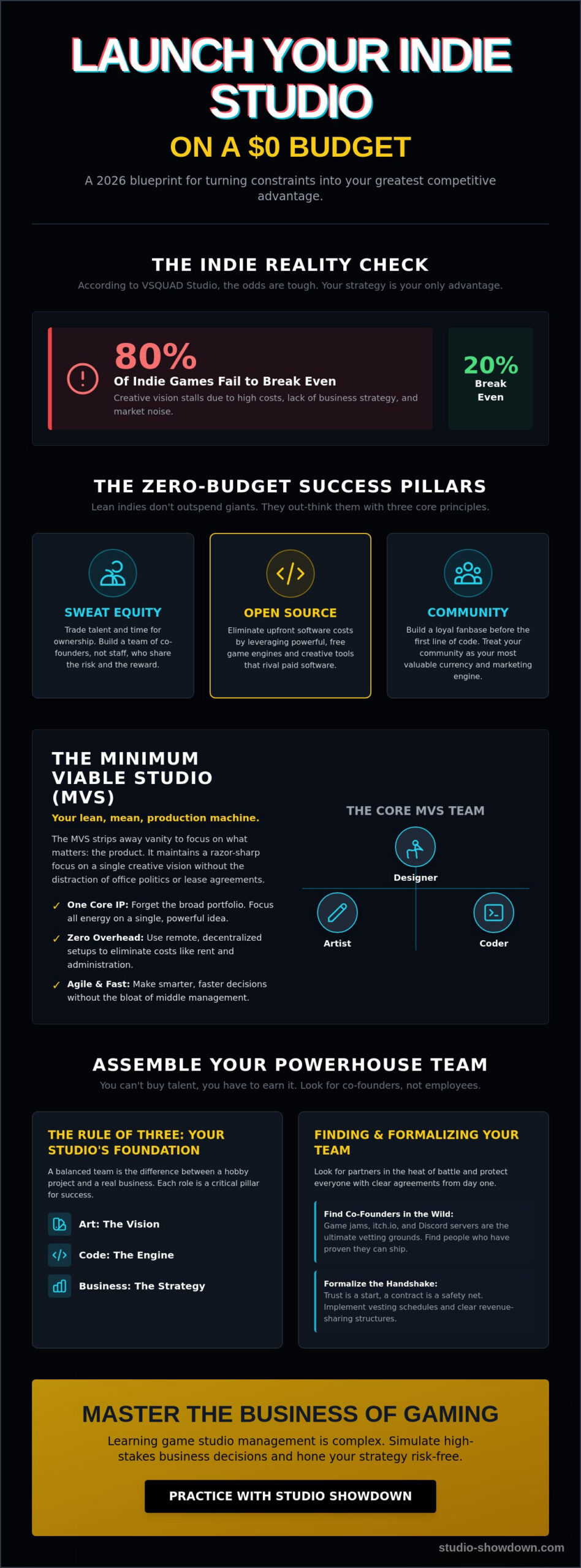
In 2026, your bank balance isn’t the barrier to entry. Your strategy is. You don’t need a million-dollar seed round to disrupt the market; you need a sharper blade. Learning game studio management is the only way to rise above the noise without burning through cash you don’t have. It’s frustrating to watch a creative vision stall because you can’t afford a professional team or premium assets. With only 20% of indie games breaking even in their first year according to VSQUAD Studio, you likely fear the business side will crush your art before you even launch.
This guide delivers the exact blueprint for launching a competitive indie studio from scratch. Sweat equity. Free tools. Strategic business simulation. You’ll master how to find elite collaborators for free. You’ll learn to navigate the 2026 landscape of Steam fees and Epic revenue splits. We’re diving into a roadmap that turns your lack of funding into a lean, mean, production machine. It’s time to win the battle before you even write your first line of code.
Key Takeaways
- Define your Minimum Viable Studio to keep creative decisions sharp and production pipelines lean.
- Assemble a powerhouse team using sweat equity and profit-sharing to bypass the need for a traditional payroll.
- Eliminate upfront software costs by leveraging the 2026 suite of free game engines and open-source creative tools.
- Build market visibility through a viral-first mindset that treats your community as your most valuable currency.
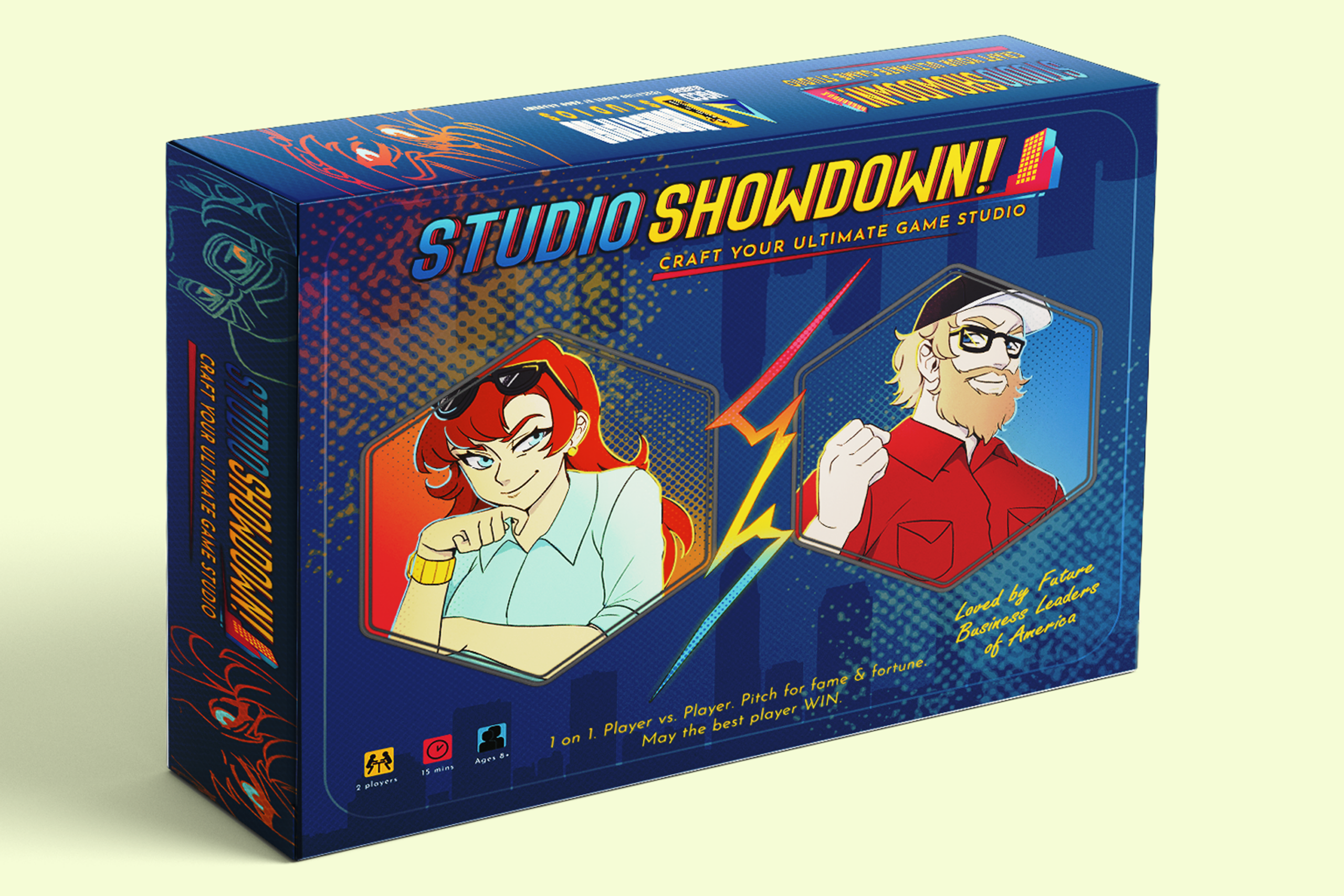
- Master the complexities of learning game studio management by simulating high-stakes business decisions risk-free with Studio Showdown.
The Reality of Launching a Studio on a Zero-Dollar Budget
Starting a studio with zero capital isn’t a handicap. It’s a filter. It strips away the vanity. It forces you to focus on what actually moves the needle: the product. While traditional studios drown in overhead and middle management, the lean indie model thrives on agility. Your capital isn’t cash. It’s your time. It’s your focus. It’s your community. This is the foundation of independent game development in 2026. You don’t need a bank loan to build a legacy. You need a strategy that turns your constraints into your greatest competitive advantages.
Zero money forces better creative decisions. You can’t hide a weak core loop behind expensive marketing or high-fidelity assets you bought on a whim. You have to be smarter. You have to be faster. Mastering the art of learning game studio management starts here, in the trenches of the Zero-Dollar Budget. By removing the safety net of funding, you ensure every decision is calculated. Every hour spent is an investment. Every asset is essential.
Success in this space relies on three pillars:
- Sweat Equity: Trading talent and time for ownership instead of a salary.
- Open Source: Leveraging powerful, free engines and tools that rival paid software.
- Community: Building a loyal fanbase before the first line of code is even finished.
What is a Minimum Viable Studio?
A Minimum Viable Studio (MVS) is the leanest possible version of a professional entity. Forget the broad portfolio. Focus on one core IP. Your team shouldn’t have administrative bloat. You need a designer, an artist, and a coder. That’s it. Everything else is secondary. Keep your overhead at zero by using remote, decentralized setups. This isn’t just about saving money. It’s about maintaining a razor-sharp focus on the creative vision without the distraction of office politics or lease agreements.
The 2026 Indie Landscape: Why Now is the Time
The barriers have crumbled. In 2026, the democratization of game engines and the accessibility of global publishing platforms mean anyone can compete. You don’t need a massive ad spend to find your people. Niche audiences are easier to reach than ever through targeted social algorithms and community-led discovery. Micro-studios are dominating digital storefronts by using viral-first strategies. They don’t outspend the giants. They out-think them. Effective learning game studio management involves recognizing these shifts and using free resources to achieve premium results.
Assembling a Powerhouse Team Without a Payroll
Building a studio without a bank account means you can’t buy talent. You have to earn it. The global surge of independent games proves that passion often outruns a paycheck when the vision is clear. In 2026, the traditional employer-employee dynamic is dead for lean startups. You’re looking for co-founders, not staff. This shift requires a deep dive into learning game studio management, where your primary skill is managing human capital rather than financial capital. You’re building a crew of stakeholders who share the risk and the eventual reward.
The foundation of a successful micro-studio rests on the Rule of Three: Art, Code, and Business. If you have three coders, you have a hobby project. If you have an artist, a developer, and someone focused on the market, you have a business. This trio covers the essential production pipeline while ensuring someone is actually looking at the exit strategy. Culture here isn’t about bean bags or free snacks. It’s about radical transparency and shared ownership. Every member must feel the weight of the studio’s success. Art. Code. Business. The Rule of Three keeps you lean.
Finding Your Co-Founders in the Wild
Don’t look for partners on a job board. Look for them in the heat of battle. Game jams are the ultimate vetting ground. They reveal how a person handles stress, technical debt, and tight deadlines. Use platforms like itch.io or dedicated Discord servers to find collaborators who’ve already proven they can finish a project. Stop thinking about hiring. Start thinking about partnering. A partner brings skin in the game. A partner stays when the first prototype fails. If you want to practice these high-stakes team-building scenarios before the stakes are real, consider testing your leadership skills with Studio Showdown.
Formalising the Handshake Agreement
Trust is a start, but a contract is a safety net. You must implement a vesting schedule to ensure co-founders earn their equity over several years of active contribution. Revenue-sharing structures should be clear. Define who gets what after the platform fees and taxes are paid. Intellectual property (IP) must belong to the studio entity, not the individual creator. This protects the project if a partner decides to leave. Clear legal boundaries don’t kill creativity; they provide the security needed for it to flourish. Mastering these agreements is a vital part of learning game studio management for any serious founder.
The Essential Toolkit: Free Resources for Lean Development
In 2026, your tech stack shouldn’t cost a dime until your game is making millions. The ecosystem has evolved. High-end production is now accessible to anyone with a stable internet connection. Part of learning game studio management is knowing where to spend your energy and where to save your cash. You aren’t just building a game. You’re building a pipeline. Efficiency is your only currency. If you aren’t using free resources, you’re falling behind teams that do.
Engines and Development Environments
Your engine choice dictates your workflow and your future royalties. Godot stands as the king of open-source development. It’s completely free. No royalties. No hidden fees. It’s the ultimate choice for indies who want total control over their financial future. For those chasing high-end visual fidelity, Unreal Engine remains free to use until your gross revenue exceeds $1 million. After that, a 5% royalty applies. Unity remains a powerhouse for mobile and cross-platform projects. Its Personal Plan is free for developers with under $200,000 in annual revenue, making it a viable entry point for micro-studios.
Asset Creation and Management
Visuals and audio don’t require expensive subscriptions. Blender is the undisputed industry standard for 3D modeling and animation. It’s free. It’s open-source. It’s powerful. For 2D art, skip the monthly fees and use Krita or GIMP. These tools provide professional-grade features for everything from concept art to texture painting. Audio doesn’t have to be a bottleneck either. Audacity paired with free-tier sound libraries allows for high-quality sound engineering on a zero-dollar budget. While mastering these tools is critical, understanding the various careers in video game development helps you assign roles within these platforms effectively.
Management is about synchronization. Use GitHub for version control to ensure your code is safe and your team stays aligned. Open-source libraries can shave months off your production cycle. For organization, Trello and Notion are essential. They offer free tiers that are more than enough for a lean, remote team. Keep your pipeline transparent. Keep your communication direct. High-quality production is a result of discipline, not a high budget. Every tool you choose should serve the goal of shipping a polished product without financial strain. This is the core of effective learning game studio management in the modern era.
Securing Your First Win: Pitching and Community Building
In 2026, attention is the only currency that doesn’t require a bank loan. If you’re waiting for a finished prototype to build an audience, you’re already behind. Community isn’t just a group of fans. It’s your market validation. It’s your leverage. A viral-first mindset means you design for visibility from day one. You don’t just build mechanics; you build shareable moments. Mastering this visibility is a core pillar of learning game studio management. It’s about understanding how to cut through the noise without a marketing budget.
The “Show, Do Not Tell” rule is your secret weapon. Don’t tell people your game is immersive. Show a five-second clip of a specific interaction. Don’t promise deep lore. Share a snippet of concept art that sparks a question. This raw, unfiltered transparency builds trust. It turns spectators into stakeholders. You’re not just selling a product. You’re inviting them into the fight. You’re showing them that your studio has the technical grit to deliver on its promises.
Building a Community Before You Have a Game
Your studio’s origin story is your first piece of content. Start a Discord server immediately. Use it to document the messy reality of development. Use short-form video to showcase the creative wins and the technical struggles. People don’t want a polished corporate facade. They want the truth. Engage with other indie developers. Build a cross-promotional network that amplifies everyone’s reach. Success isn’t a solo mission. It’s a collective effort. Your community is the shield that protects you from a quiet launch.
The Art of the Zero-Budget Pitch
Publishers in 2026 aren’t looking for a complete game. They’re looking for a hook and a market gap. Your pitch deck needs to be lean and high-impact. Focus on why your game must exist right now. Explain your business logic. You can even use strategy board games to refine how you talk about resource allocation and risk management. Publishers want to see that you understand the numbers as well as the art. They look for key metrics like community growth rates and engagement levels. If you can prove people care about your idea, the funding will follow. To truly sharpen your executive presence, get the Studio Showdown Board Game and master the art of the deal before you step into the boardroom.
Practicing the Business of Gaming with Studio Showdown
Theory only gets you so far. You can read every devlog on the internet, but until you face a hostile market or a funding crisis, you’re just a spectator. Studio Showdown acts as the ultimate flight simulator for game founders. It’s where you crash without burning your life savings. By engaging with an analog model of the industry, you’re learning game studio management through direct action. You’re making the calls. You’re feeling the consequences. Strategy isn’t a theory here. It’s a survival skill.
Most founders pay for their education in failed projects and lost years. You don’t have to. Using a strategic simulation allows you to test different business models risk-free. Do you go for a niche indie hit or try to scale for a massive buyout? These aren’t just game mechanics. They’re the exact questions you’ll face in the boardroom. Playing the business before you launch it ensures that when the real stakes arrive, you’ve already seen the patterns. You’ve already survived the worst-case scenarios. You’re building a portfolio of strategic thinking that most CEOs only acquire after a decade of mistakes.
The Founder’s Training Ground
Simulate the high-stakes world of game dev without financial risk. Out-maneuver rival studios through strategic resource management. You’ll learn to juggle tight budgets while competitors try to steal your market share. It’s a battle for dominance. You’ll walk away with a firm grasp of industry vocabulary. From seed rounds to market hits, you’ll speak the language of success. This isn’t just play. It’s professional development disguised as a showdown. It’s about training your intuition to recognize opportunity in a crowded market.
From Board Game to Business Plan
The mechanics of The Ultimate Business Board Game mirror real-world challenges with surgical precision. It’s the perfect team-building exercise for your new co-founders. It reveals how your partners think under pressure. Does your lead coder panic when the budget shrinks? Does your artist understand the cost of a pivot? Use these sessions to align your strategic vision before you sign a single legal document. This hands-on approach to learning game studio management ensures your team is battle-tested. Beyond the Easy Money Game, you need to master real strategy to win in 2026. Studio Showdown is your edge.
Own Your Future as an Indie Founder
The 2026 market doesn’t reward the deepest pockets. It rewards the sharpest minds. You’ve seen how a Minimum Viable Studio thrives on sweat equity and open-source power. You know that building a community is more valuable than a traditional ad spend. Learning game studio management is no longer a luxury for the elite. It’s the baseline for survival. You have the tools. You have the roadmap. Now, you need the executive intuition to lead your team through the noise of a crowded industry.
Don’t let your first real-world mistake be your last. Developed by industry experts at VGCD Academy, Studio Showdown is the definitive strategy-first training ground. It’s already used in classrooms worldwide to teach entrepreneurship through high-stakes gameplay. You’ll build real-world acumen without risking a single dollar of your own. Master the business of game dev with Studio Showdown and turn your creative vision into a market-dominating reality. Your studio’s legacy starts with the first move you make today. Build it with confidence.
Frequently Asked Questions
Is it really possible to start a game studio with no money in 2026?
Yes. You trade cash for time and sweat equity. By using a Minimum Viable Studio model, you eliminate traditional overhead like office rent and hardware leases. The 2026 ecosystem of free engines and decentralized teams makes it possible to ship a professional product without a bank loan. You aren’t buying a studio. You’re building one through strategic resource allocation and creative grit.
What are the first legal steps for a zero-budget indie studio?
Start with a Founders’ Agreement. You don’t need a high-priced lawyer to define who owns the intellectual property and how future revenue is split. Use standardized templates to outline vesting schedules for every partner. Registering as a simple partnership or sole proprietorship often carries minimal fees. Protect the studio entity first to ensure the project survives even if a founder leaves.
How do I find artists and programmers willing to work for free?
You don’t hire them. You partner with them. Look for collaborators in game jams and niche communities like r/INAT or specialized Discord servers. Focus on creators who have complementary skills and a shared passion for your specific genre. People work for free when they believe in the vision and have a clear, legal stake in the game’s eventual success through revenue sharing.
Which game engine is best for a studio with no funding?
Godot is the premier choice for zero-budget teams because it’s completely open-source and royalty-free. It gives you total financial independence. If you need high-end 3D fidelity, Unreal Engine is a powerhouse that stays free until you hit significant revenue milestones. Choose the tool that fits your team’s existing technical skill set to avoid wasting time on a steep learning curve.
How do I protect my game idea if I don’t have money for lawyers?
Ideas have no value; execution is everything. You can’t copyright a game mechanic, but you can protect your specific assets and code. Maintain timestamped digital records of your design documents and version control history. The best protection is a visible, active community. By building in public, you establish your studio as the clear, original creator of the project in the eyes of the market.
What is sweat equity and how does it work in game dev?
Sweat equity is the value added to a company through unpaid labor. In indie dev, it’s the primary way to fund your startup. Partners earn ownership percentages based on hitting specific milestones or contributing a set number of hours. It’s a vital part of learning game studio management because it aligns the team’s incentives. Everyone wins only when the game succeeds and generates actual revenue.
Can I get a publisher to fund my studio if I only have a pitch?
It’s rare but possible if your pitch proves a massive market gap. In 2026, most publishers want to see community traction or a viral hook before they sign a check. They aren’t just buying an idea. They’re investing in your team’s ability to execute. Use a lean prototype to prove your core loop works. If you can show a growing Discord server, your pitch becomes much more persuasive.
How can a board game help me start a video game studio?
A board game serves as a risk-free flight simulator for your business logic. It forces you to manage resources, navigate market shifts, and handle rival studio maneuvers without the technical debt of a digital build. It’s a fast, tactile way of learning game studio management. You practice high-stakes decision-making and team dynamics during a single session, ensuring you’re battle-ready before you spend a year in full production.