Why wait for a college degree to become a CEO when 43% of Gen Z is already planning their first startup? Most people think a game studio starts with a line of code, but the real winners start with a strategy. You’ve likely felt the frustration of being too young to talk to investors or felt crushed by the technical complexity of modern engines. It’s a common trap. Instead of getting lost in documentation, smart founders start with games that teach business skills for teens to bridge the gap between hobbyist and professional.
We get it. Building a studio in 2026 requires more than just passion; it requires a production mindset. This guide is your tactical roadmap to studio ownership. You’ll learn to navigate the $5.54 billion indie market, handle the legal hurdles of being a minor founder, and master the fundraising skills needed to scale. We’ll show you how to build a professional portfolio that impresses both investors and college recruiters. Whether you’re aiming for a $2,500 Bizee grant or managing your first $12,000 startup budget, this is how you turn your creative spark into a profit-ready studio.
Key Takeaways
- Shift your mindset from solo developer to studio founder by prioritizing vision, strategy, and resource management over simple coding.
- Master the art of high-stakes decision-making through games that teach business skills for teens before committing to technical development.
- Build a competitive edge by assembling a diverse team that fills your skill gaps and aligns with your studio’s long-term market goals.
- Navigate the legal and financial complexities of 2026 by mastering professional pitching and targeting high-value youth entrepreneurship grants.
- Use analog strategy tools to simulate real-world studio challenges and build a portfolio that commands respect from colleges and investors alike.
What is a Teen Game Studio? Defining the Founder’s Role
A game studio is a business entity. It isn’t just a group of friends coding in a Discord server or a casual weekend project. It’s a structured organization designed to create, market, and sell a product in a competitive landscape. In 2026, the barrier to entry for young creators has vanished. With 43% of Gen Z actively pursuing entrepreneurship, the “Plan A” for many high schoolers is now studio ownership. You don’t need a university degree to understand market demand. You need a roadmap and a professional mindset. By engaging with games that teach business skills for teens, you move from a consumer mindset to a producer mindset before you even graduate.
The founder’s role is distinct and demanding. You are the architect of the vision. While your team focuses on assets, music, and code, you focus on securing resources and setting the pace. This means hunting for grants, like the $2,500 Bizee Young Entrepreneur award, or managing a median startup cost of $12,000. Being a hobbyist is about finishing a project for fun. Being a studio owner is about building a sustainable legacy that commands respect in the industry. Your job is to ensure the studio survives the production cycle and thrives in the marketplace.
The Shift from Player to Producer
Success starts with the “Showdown” mindset. You aren’t just playing; you’re positioning. In the early stages of a studio, business acumen actually beats technical skill. If you can’t pitch your idea or manage a budget, the best code in the world won’t save your project. Many successful founders sharpen these instincts by playing business simulation games to understand risk, reward, and resource allocation. These experiences are essentially games that teach business skills for teens, providing a safe space to fail before real capital is on the line. Your first year should focus on professional milestones rather than technical perfection.
- Establish a legal framework by partnering with a parent or guardian for contracts.
- Secure a development budget through grants or family investment.
- Build a prototype that proves your market thesis and attracts early players.
Identifying Your Studio’s Unique Identity
Don’t try to be everything to everyone. The 2026 indie market is projected to reach $5.54 billion. To get a slice of that, you must pick a niche. Will you innovate in the mobile puzzle space or push the boundaries of tabletop strategy? Your brand must resonate with a specific community. It needs to feel authentic, bold, and professional. This identity is what separates a “teen project” from a “teen-led studio.”
Before you hire your first collaborator, you need a mission. Write a single, punchy sentence that defines your studio’s reason for existing. For example: “We build high-stakes strategy games that empower young founders to outmaneuver the competition.” This clarity attracts talent. It tells potential partners and investors that you aren’t just playing around. You’re building a powerhouse.
The Three Pillars of Game Studio Success for Young Founders
Success in the indie game market isn’t an accident. It’s a structural achievement. To build a studio that lasts, you must master three core pillars: Concept, Team, and Capital. Most teen founders fail because they treat their studio like a hobby. They focus on what’s “fun” and ignore what’s marketable. If you want to survive the $5.54 billion indie landscape of 2026, you need a professional foundation. Engaging with games that teach business skills for teens provides the tactical training necessary to handle these high-stakes decisions before you write your first line of code.
Strategy is the invisible fourth pillar. It’s about outmaneuvering rivals for limited resources and market attention. You aren’t just making a game; you’re fighting for a seat at the table. This requires a production mindset where every move is calculated. You need to know when to pivot, when to double down, and when to seek external support. This isn’t just theory. It’s about building a competitive edge that investors and collaborators can’t ignore.
Developing a Marketable Game Concept
Stop building games for yourself. Start building for an audience. In 2026, players demand polished, unique experiences that solve a specific “itch.” Use the Minimum Viable Product (MVP) approach to test your ideas early. A realistic budget for a small-scale 2D indie game ranges from $10,000 to $50,000. Don’t waste that capital on features nobody wants. Create a prototype. Test the core loop. If the mechanics don’t hold up in a basic build, they won’t hold up in a full release. Verify your market thesis before committing your team to months of development.
Building and Managing a Remote Team
You can’t do everything. A professional studio requires specialists in Art, Sound, Code, and Business. You can find talented collaborators on Discord servers, specialized dev forums, or through school entrepreneurship clubs. Managing a remote team of peers is a unique leadership challenge. It requires clear roles and constant communication. Many founders practice these high-pressure negotiations using strategy board games. These tools force you to communicate logic and resolve conflicts without the distraction of technical syntax errors. It’s about people, not just pixels.
Capital is the fuel for your vision. While the median startup cost is closer to $12,000, you don’t need to fund it all yourself. Look for youth-specific opportunities like the $2,500 Bizee Young Entrepreneur grant. Research from Iowa State University suggests a new model to teach entrepreneurship through simulation is the most effective way to build these instincts. By treating your studio as a business from day one, you position yourself to win. If you’re ready to sharpen your competitive instincts, the Studio Showdown Board Game is the perfect training ground for your future studio success.
Analog Strategy: Why Young Founders Should Start Offline
Digital complexity is a trap. Most young founders burn out fighting software bugs before they ever face a real competitor. The secret to a resilient studio isn’t your ability to debug code; it’s your ability to debug a business model. Starting offline removes the technical noise. It forces you to focus on the core mechanics of profit, loss, and market positioning. This is why games that teach business skills for teens are becoming the preferred entry point for serious founders. You need to master the logic of the market before you touch a game engine.
Board games provide a high-stakes simulation of the real world without the $12,000 median startup cost hanging over your head. In a tabletop environment, every move is visible. You see the rival’s maneuver. You feel the sting of a failed pitch. This immediate feedback loop builds the “Showdown” mindset required to survive in the projected $5.54 billion indie market of 2026. If you can’t win on paper, you won’t win on Steam.
The Power of Business Simulation Games
Modern business board games are designed to simulate the specific pressures of the tech industry. They teach you the “Fundraising Loop.” You learn to pitch to investors, manage equity, and survive market crashes without losing actual capital. This isn’t just play; it’s professional training. Top-tier institutions recognize this value. For example, high schoolers now participate in the Wharton Entrepreneurship Game to test their instincts against peer rivals. These games that teach business skills for teens provide a safe laboratory for failure. You learn to outmaneuver rivals and pivot your strategy in real time.
Prototyping Your Ideas with Paper and Dice
Iterate faster. Paper beats digital for early testing because you can change a rule in seconds. You don’t need to recompile or update assets. You just move a token. This speed allows you to gather feedback from peers and mentors instantly. If a mechanic isn’t engaging on a tabletop, no amount of 4K graphics will save it in a digital build. Use this analog phase to refine your core loop.
Building a physical prototype also creates a tangible asset for your portfolio. It shows colleges and investors that you understand game design at a fundamental level. You aren’t just following a tutorial. You are creating systems. Translating these tabletop mechanics into a digital product is the final step in the founder’s roadmap. It ensures your studio is built on a foundation of proven, marketable logic.
The Founder’s Roadmap: Fundraising, Pitching, and Launching
Transitioning from a prototype to a professional studio requires a tactical shift. You’ve used games that teach business skills for teens to master the logic of the market; now you must build the machine that executes that logic. Most young founders fail because they prioritize pixels over paperwork. In 2026, the indie market is too crowded for amateurism. You need a roadmap that covers every milestone from the first pitch to the final launch. This is where you prove that your age is an asset, not a limitation.
- Step 1: The Pitch Deck. Create a visual narrative that defines your market niche, team expertise, and revenue model.
- Step 2: Secure Capital. Target specific youth grants like the $2,500 Bizee Young Entrepreneur award to cover initial costs.
- Step 3: The Vertical Slice. Develop a fully polished, playable segment of your game to prove technical feasibility to investors.
- Step 4: The Hype Cycle. Execute a community-driven marketing campaign on Discord and social platforms months before release.
- Step 5: Launch and Evolve. Release your product and use player data to iterate, patch, and expand your studio’s reach.
Mastering the Art of the Pitch
Investors don’t fund games; they fund businesses. Your pitch deck must be a masterclass in visual storytelling and data visualization. Show them the $5.54 billion indie market projection for 2026 and explain exactly how you’ll capture your segment. Every slide must scream professionalism. Use high-quality assets and clean typography to elevate your brand above the visual noise. We bridge the gap between entertainment and entrepreneurship by delivering the only strategy engine built for the next generation of founders. Master the art of the pitch by training with the Studio Showdown Board Game.
Navigating Legal and Financial Basics
Minors lack the legal capacity to contract in most jurisdictions. This means you must partner with a parent or guardian to handle LLC formation and bank accounts. In many places, an adult must act as the legal signatory for your business. Budgeting is equally critical. While a 2D indie game might cost between $10,000 and $50,000, you must track every dollar. Use simple accounting tools to manage your burn rate and protect your intellectual property (IP) from day one. Understanding these basics ensures you win the long-term “Showdown” against real-world competitors who ignore the boring side of the business.
Join the Showdown: Preparing for Real-World Studio Success
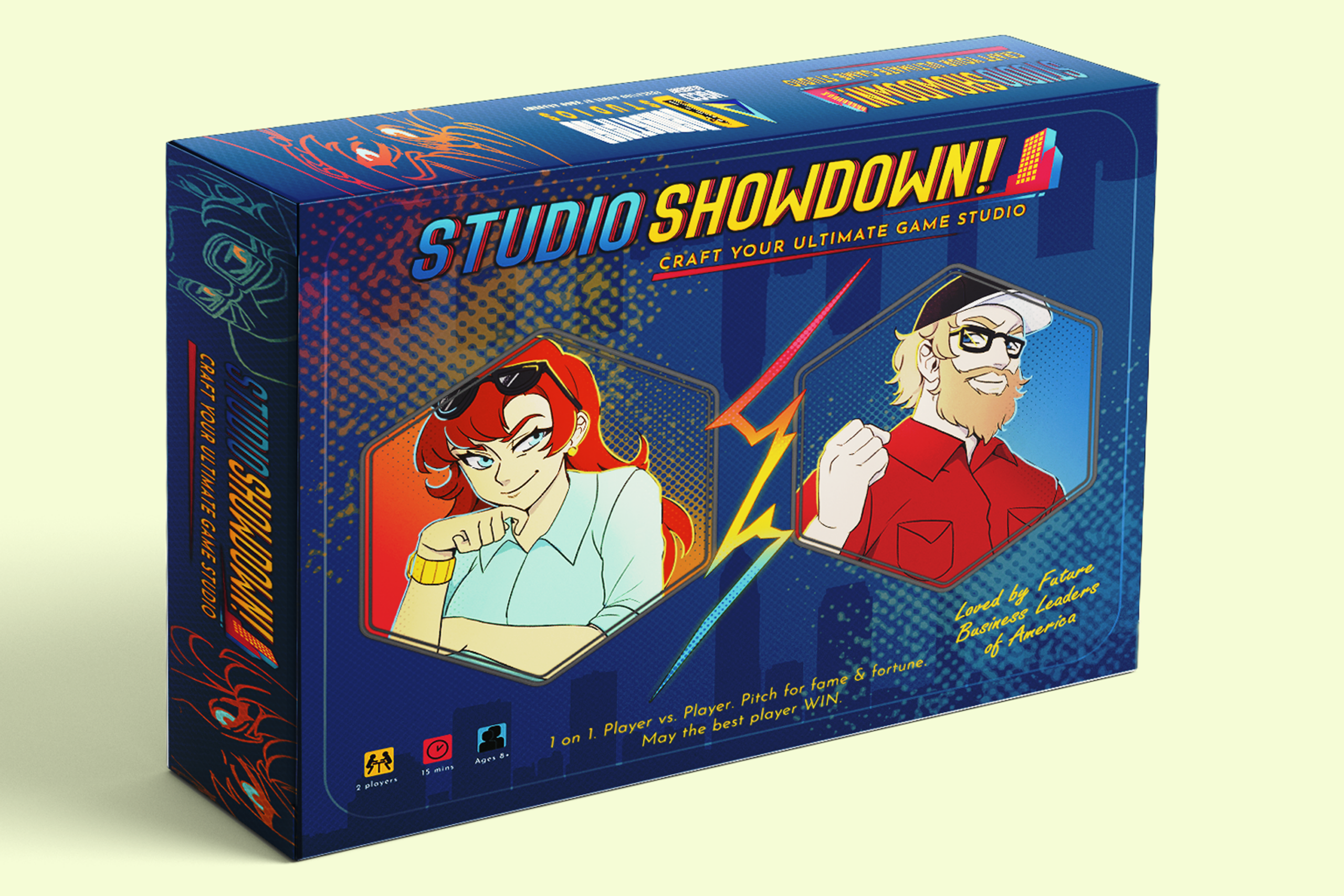
The leap from a brilliant idea to a functional studio is the hardest jump in the industry. You’ve mastered the theory. You understand the pillars of success. Now, you need a high-velocity environment to test your instincts. In the world of games that teach business skills for teens, one tool stands above the rest as a true production simulator. Studio Showdown isn’t just a game; it’s a battleground where the next generation of CEOs is forged. It’s the essential analog simulator that prepares you for the high-stakes reality of the 2026 market.
Most teen founders start with code and fail because they lack a strategy. We reverse that. By starting with a competitive strategy game, you build the mental muscle needed to manage a team and a budget. You learn to treat your studio as a business entity from day one. This is how you rise above the visual noise of the indie scene. It’s about vision, precision, and the courage to outmaneuver rivals who are twice your age.
The Studio Showdown Experience
This experience forces you to navigate the exact challenges of a real studio launch. You’ll manage the fundraising loop, handle rival maneuvers, and fight for market dominance. The game strips away the technical distractions of syntax errors and places you directly in the hot seat of management. You learn to make the hard calls. Should you invest in a marketing push or save your capital for a mid-cycle pivot? Competitive play reveals your strengths and exposes your strategic blind spots. This process builds a portfolio of decisions that proves you understand the game industry at a professional level.
- Master the art of the pitch in a competitive, high-pressure environment.
- Learn to allocate resources across art, sound, and code for maximum market impact.
- Experience the high-stakes world of entrepreneurship without financial risk.
Ready for the Real World?
The skills you sharpen at the table translate directly to the $5.54 billion indie market of 2026. When you sit down with a parent to discuss LLC formation or stand before an investor with a pitch deck, you won’t be guessing. You’ll be executing a proven strategy. You’ll have the “Showdown” mindset. This is how you bridge the gap between being a talented hobbyist and a respected studio founder. High school is the perfect time to start. The market is waiting for fresh vision, and games that teach business skills for teens are your secret weapon for global success.
The journey from student to studio CEO is a noble struggle. Only those with the sharpest business acumen will emerge as winners. Don’t just play the game; own the industry. Your studio’s legacy begins with a single, calculated move.
Start your studio journey with the Studio Showdown Board Game today!
Take Command of Your Studio’s Future
The roadmap from a high school bedroom to a professional studio CEO is now a reality. You’ve seen how to define your role as a founder, assemble a remote team, and navigate the fundraising hurdles of 2026. Success isn’t about being the best coder. It’s about being the smartest strategist. By shifting your focus to the business side of development early, you build a portfolio that commands respect from investors and universities alike. You’re no longer just a player; you’re a producer with a marketable vision.
Mastering this transition requires the right training tools. Instead of getting lost in technical syntax, you should leverage games that teach business skills for teens to sharpen your competitive instincts. Studio Showdown is the definitive analog simulator for this journey. Developed by industry experts at VGCD Academy and already used in classrooms to teach entrepreneurship, it reduces screen time while building real-world business acumen. It’s time to stop playing and start leading. Launch your founder journey with the Studio Showdown Board Game today. The market is waiting for your vision. Don’t just join the industry, own it.
Frequently Asked Questions
Can a 13-year-old actually start a game studio?
Yes, you can start a studio at any age, but you’ll need an adult partner for legal formalities. Minors don’t have the legal capacity to sign contracts, form an LLC, or open business bank accounts alone. A parent or guardian must act as the legal signatory until you reach the age of majority. Starting early allows you to build a professional track record before you even finish high school.
Do I need to know how to code to start a game studio?
No, you don’t need to be a programmer to be a successful founder. Your primary role is vision, strategy, and securing resources for your team. Many of the most effective games that teach business skills for teens focus on management logic rather than syntax. You can partner with talented coders while you handle the market positioning, fundraising, and overall project direction.
How do teen game studios get funding for their projects?
Funding usually comes from a mix of youth entrepreneurship grants, small-scale crowdfunding, and family investments. Since the median startup cost for a new business is around $12,000, many teen founders start with a “Vertical Slice” or prototype. This playable demo proves your concept’s value to potential backers and grant committees, making it easier to secure the capital needed for a full launch.
What is the best way to find a team for my indie game studio?
Discord servers, indie dev forums, and school entrepreneurship clubs are the best places to find collaborators. Look for peers who complement your weaknesses rather than people with the exact same skill set. If you are the strategist, you need a dedicated artist and a reliable coder. Clear roles and a shared professional mindset are more important than proximity when building a remote team.
How can a board game help me learn the business of video games?
Board games act as high-stakes simulators that strip away technical distractions like software bugs. They force you to focus entirely on resource management, rival maneuvers, and market logic. By playing games that teach business skills for teens, you develop the “Showdown” mindset required to survive in a competitive industry. It’s a risk-free way to practice the fundraising and pitching skills you’ll need in the real world.
What are the biggest mistakes teen game founders make?
Over-scoping is the most common trap for young founders. They try to build a massive open-world game instead of a polished, marketable “Minimum Viable Product.” Another major error is ignoring the business side of development. If you focus only on the “fun” features and forget about marketing or budget management, your studio will likely run out of steam before the project is finished.
How do I protect my game idea from being stolen?
Execution is your best protection. In the game industry, ideas are common, but finished, high-quality products are rare. While you can use simple non-disclosure agreements (NDAs) when working with adults, the most effective strategy is to move fast and build a unique brand. Focus on creating a polished prototype that proves your idea works better than any potential copycat’s version.
What software should a teen-led game studio use in 2026?
Unity and Unreal Engine remain the dominant choices for indie studios in 2026. Unity offers a free Personal plan for developers with revenue under $200,000, making it highly accessible for beginners. Unreal Engine is another professional option that is free until your product earns $1 million in gross revenue. To run these demanding engines effectively, many developers rely on high-performance builds from Budget Gamer UAE to ensure a smooth production workflow. For teams looking for a completely free and open-source alternative, Godot is a powerful engine for 2D and 3D projects.