The gaming industry doesn’t want your masterpiece. It wants a profitable business. Most creators fail because they lead with mechanics instead of margins. Learning how to pitch a game idea in 2026 isn’t about being a visionary storyteller. It’s about evolving from a creative dreamer into a strategic studio founder who speaks the language of risk and return.
You’ve felt the sting of being dismissed as just another “idea guy.” You worry your concept will be stolen. You fear your lack of technical knowledge makes you a lightweight. It’s a common struggle. The gap between a hobbyist and a professional is paved with confusion. We understand that pressure. This guide bridges that gap. It turns your creative intuition into a precise, investor-ready weapon.
We’ll provide a clear roadmap for your pitch deck. We’ll explain how to separate a clever mechanic from a viable business case. You’ll gain the confidence to command the room. This article delivers the essential framework: pitch decks, business cases, market analysis, investor confidence. You’ll learn to elevate your project above the noise and secure the partnership your vision deserves.
Key Takeaways
- Transform your concept from a simple story into a strategic business proposal designed to secure professional resources and funding.
- Build a high-impact deck that captures attention in ten seconds and proves your game’s market viability through concrete budget breakdowns.
- Master how to pitch a game idea by focusing on execution strategy and ROI rather than just creative mechanics.
- Identify and eliminate “idea guy” red flags by demonstrating a deep understanding of your competition and production costs.
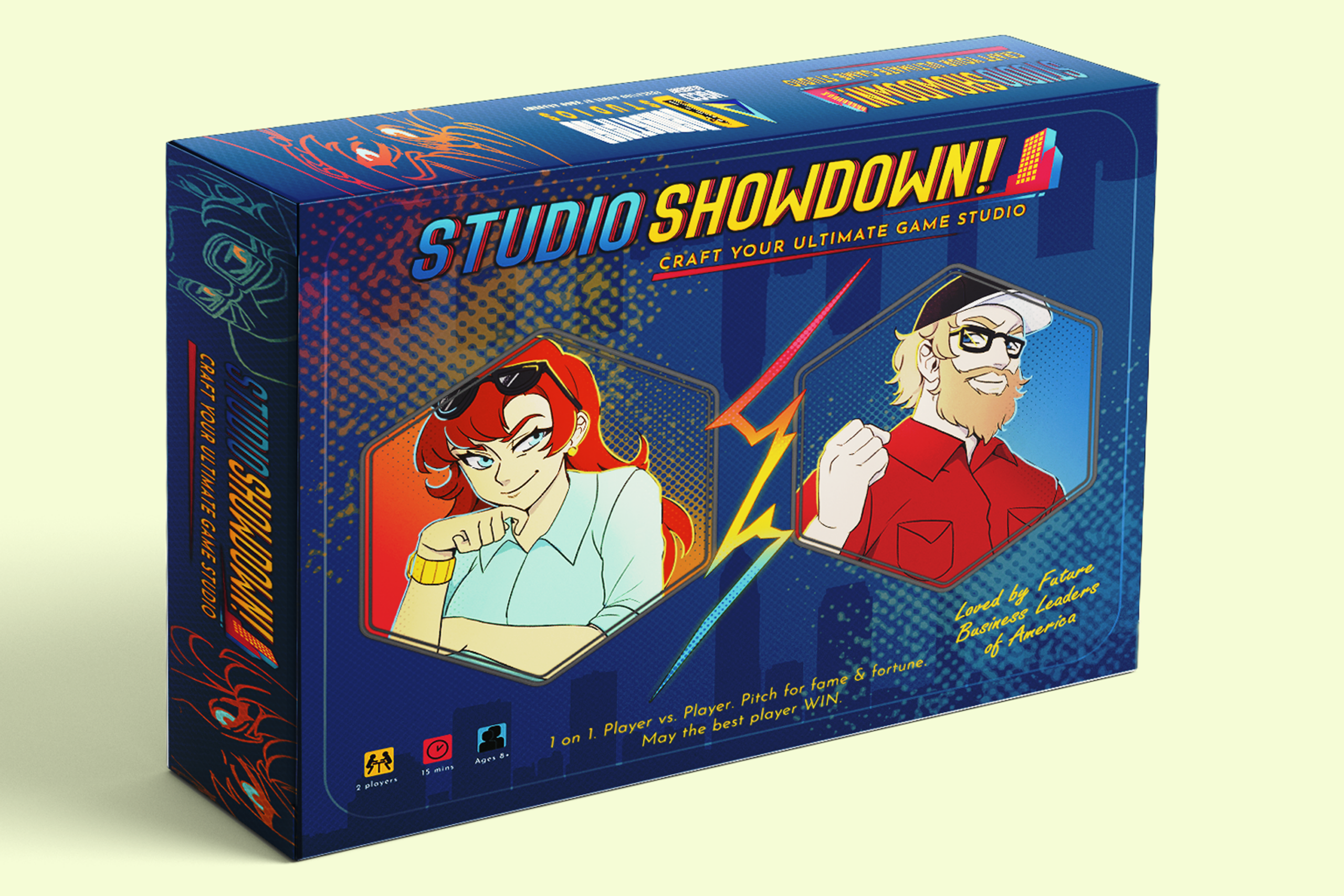
- Use Studio Showdown as a professional flight simulator to practice the high-stakes balancing act of fundraising and studio management.
Beyond the “Idea”: What a Game Pitch Really Is
A game pitch is a battle for attention. It’s not a bedtime story or a fan-fiction summary. When you learn how to pitch a game idea, you’re building a strategic bridge between a creative vision and a commercial reality. Investors don’t buy “fun.” They buy the probability of success. Your pitch is a professional proposal to secure funding, talent, and distribution. It’s the moment your project stops being a hobby and starts being a business.
Ideas have zero market value. This is a hard truth for many creators. A brilliant concept without a roadmap is just noise in a crowded market. A professional pitch is often a high-level distillation of your Game Design Document (GDD). It proves you’ve thought through the mechanics, the technical hurdles, and the production pipeline. Without an execution plan, your idea is a liability, not an asset. Investors look for proof that you can handle the noble struggle of production without burning through their capital.
The goal is simple: proving ROI. You must demonstrate how your game will capture market share. This requires a deep understanding of who you’re talking to. Publishers look for portfolio synergy. They want to know if your game fits their existing marketing machine and distribution channels. Angel investors, however, look for scalable returns. They’re betting on you as a founder and the long-term growth of your studio. One wants a hit product; the other wants a profitable company.
The Founder vs. The Fan
Fans talk about weapon skins and lore. Founders talk about retention rates and player acquisition costs. In the 2026 market, the “Business of Play” requires a radical shift in perspective. You aren’t just making something you want to play. You’re identifying a gap in the market and filling it with a calculated solution. Successful founders pitch solutions to player frustrations or market voids. They lead with data, not just dreams. They understand that every creative choice must serve a commercial purpose.
Why Publishers Say No
Risk kills deals. If the potential reward doesn’t dwarf the development cost, it’s a “no.” Publishers reject thousands of pitches every year. The common threads are easy to spot. They walk away when they see a lack of market research. Claiming “everyone will love this” is a red flag. They also reject pitches that fail the 30-second test. If you can’t explain the core loop instantly, you’ve lost them. Finally, financial blindness is a deal-breaker. Ignoring the reality of marketing and distribution costs suggests you aren’t ready for a professional partnership.
If you can’t prove someone will pay for your game, no one will pay for its development. You must rise above the visual noise of the industry by showing you understand the stakes. A “no” is rarely about the art. It’s almost always about the business case.
The Anatomy of a High-Impact Game Pitch Deck
Your deck is a visual weapon. It is the storyboard for your business success. It’s the precision-cut sequence of information designed to trigger a “yes” from people who see hundreds of concepts every week. Learning how to pitch a game idea effectively means mastering the visual narrative. You don’t have time for fluff. You have a narrow window to cut through the visual noise and prove your project is a viable investment. Every slide must serve the bottom line.
The Hook is your opening move. You have exactly 10 seconds to stop an investor from checking their phone. Don’t start with your studio history. Start with a visceral image or a bold, market-defying question. Follow this immediately with the Core Loop. This is the heartbeat of your game. Use a simple diagram to visualize the player experience: Action, Feedback, Reward. If an investor can’t see the fun in three steps, they won’t see the profit in three years.
Execution is the only currency that matters. Your Unique Selling Point (USP) defines why your game is “The Only One” in its niche. It is the unfair advantage that makes competition irrelevant. Industry veterans at Game Developer suggest that pitching to investors and publishers requires a focus on sales projections and market gaps just as much as creative flair. Finally, sell the Team. Investors bet on the jockeys, not just the horse. Prove you have the technical muscle and the grit to survive the noble struggle of a full production cycle.
Essential Slides for Every Pitch
- The Elevator Pitch Slide: One punchy sentence that defines the game. No jargon. Pure intent.
- Market Comparison (Comps): Identify your competition. Don’t claim they don’t exist. Use them to define your territory and prove there is an active, paying audience.
- The Visual Slice: Concept art that sets the mood, tone, and quality bar. It’s the visual promise of the final product.
Visual Storytelling in Your Deck
Investors don’t read decks; they scan them. Less text is always more. Let your art and mechanics speak for themselves. Structure your deck around the “3 Pillars” of your game design. These are the three non-negotiable values that define your project. Every slide should reinforce at least one of these pillars. This creates a cohesive, professional narrative that sticks in the mind long after the meeting ends.
Your USP needs to be a board-ready statement. For example: “We are the only survival game where players must manage real-world ecological data to maintain their base.” It’s specific. It’s measurable. It’s memorable. Refining these high-stakes elements takes practice. You can sharpen your ability to balance these complex variables by simulating your studio’s growth in Studio Showdown before you ever face a real panel.
Mastering the Business Logic: Budget, Market, and ROI
Creativity is the bait. Logic is the hook. If you want to know how to pitch a game idea that actually secures a check, you must transition from artist to analyst. Investors see your concept art as a cost center. They see your business logic as the profit engine. You need to prove Market Fit by showing that a specific, hungry demographic is waiting for your project. A game without a market is just an expensive hobby.
Your budget breakdown is the ultimate proof of your professionalism. It demonstrates that you understand the grueling reality of development. You must account for engineering, art production, quality assurance, and localization. Investors look for a clear revenue model that aligns with your design. Whether you choose a premium price point, DLC expansions, or a free-to-play live-ops strategy, it must be a calculated choice, not an afterthought. When you pitch to publishers at GDC, they will expect you to defend these numbers under pressure.
Risk mitigation is the secret weapon of the strategic founder. Projects fail. Deadlines slip. Tech stacks break. Showing you have a contingency plan for these “noble struggles” builds immense trust. It proves you aren’t just dreaming; you’re managing. You’re showing them that their capital is protected by your foresight and grit.
Understanding Your Target Demographic
Stop saying “everyone will love it.” That’s the mark of an amateur. In the 2026 market, success belongs to those who identify specific player personas. Are you targeting “Cozy Completionists” or “High-Stakes Competitive Strategists”? Use existing data from similar titles to back up your creative intuition. Analyze current trends in player spending and community engagement. If you can’t name your audience, you can’t sell to them.
The Fundraising Roadmap
Backers need to see your burn rate and your milestones. They want to know exactly how their money will be spent and what value it creates at every stage. Asking for too little money makes you look naive. Asking for too much without justification makes you look greedy. You need to find the “Goldilocks zone” of funding. You can master these complex financial variables and practice high-stakes decision-making screen-free with Studio Showdown. It is the ultimate training ground for the business side of play.
Avoiding the “Idea Guy” Trap: Common Pitching Pitfalls
The “Idea Guy” is the industry’s most persistent ghost. Everyone has a concept. Few have a plan. If you want to master how to pitch a game idea, you must prove you are the latter. Investors and publishers don’t fear bad ideas; they fear incompetent execution. They look for red flags that signal a lack of production maturity. Avoiding these pitfalls is what separates the strategic studio founder from the daydreamer. You must rise above the visual noise of amateurism with a deck built on cold, hard reality.
Mistake #1 is pitching a “dream” instead of a “product.” A dream is how the game feels. A product is how it’s built, sold, and maintained. If your deck focuses 90% on lore and 10% on production, you’ve already lost. Mistake #2 is claiming “there are no games like this.” This statement tells an investor you haven’t done your homework. It suggests there’s no market for your idea or that you’re too arrogant to see your rivals. Acknowledging competition shows you understand the battleground you’re entering.
Mistake #3 is over-scoping. Pitching a sprawling MMO as your first project is a death sentence. It shows a fundamental misunderstanding of development costs and technical risk. Finally, Mistake #4 is defensive behavior. When an investor asks a hard question during the Q&A, they aren’t attacking your art. They’re testing your coachability. A founder who can’t take feedback is a liability in the high-pressure world of game production. They want to know you can survive the noble struggle of a multi-year project without breaking.
The Prototype Reality Check
A “Greybox” build is worth a thousand slides. It’s a rough, untextured version of your game that proves the core loop is actually fun. It demonstrates technical feasibility. It shows you’ve moved beyond the “Idea Guy” phase and into the “Maker” phase. Even a small team can build a vertical slice that proves the concept works. Understanding these Key Business Concepts Every Game Developer Must Know ensures your prototype serves a commercial purpose, not just a creative one.
Handling Rejection Like a Founder
Rejection is a data point. It’s not a failure. Most “No” responses mean “Not right now” or “This doesn’t fit our current slate.” A professional founder turns every rejection into a networking opportunity. Ask for feedback. Listen. Keep the door open for your next project. Conduct a rigorous “Post-Mortem” after every failed pitch to identify where your logic or presentation faltered. This proactive attitude builds respect in an industry that values resilience over ego.
Success in this industry is a marathon of calculated risks. You can sharpen your business instincts and learn to navigate these high-stakes pitfalls by ordering Studio Showdown today to practice the art of the deal before you step into the boardroom.
Mastering the Art of the Pitch with Studio Showdown
Theory is a foundation. Practice is the victory. You’ve learned the anatomy of a deck, the logic of a budget, and the traps to avoid. Now, you need the reps. Knowing how to pitch a game idea isn’t just about memorizing slides. It’s about developing a reflex. Studio Showdown acts as a high-stakes flight simulator for game studio founders. It provides a risk-free arena where you can fail, pivot, and win before you ever step into a real boardroom. It turns abstract business concepts into visceral, competitive experiences.
The Studio Showdown Board Game forces you to balance the three pillars of studio survival: fundraising, development, and market dominance. You don’t just talk about a burn rate; you manage it. You don’t just guess at market fit; you fight for it against rivals. This repeated strategic play builds a “Pitcher’s Instinct.” You learn to see the industry not as a collection of ideas, but as a series of calculated moves. You’ll gain the confidence to speak the language of investors because you’ve already lived the scenarios they fear most.
Simulating the Competitive Market
The industry is a noble struggle. Outmaneuvering rivals in the game mirrors the real-world dynamics of the 2026 gaming landscape. You’ll learn to manage capital, allocate talent, and respond to market shifts in real-time. It’s a masterclass in resource management. Understanding How Business Simulation Games Teach Real-World Skills is the first step in moving beyond the “idea guy” label. You’re not just playing; you’re building a mental framework for professional success. You learn to spend virtual capital wisely so you don’t waste real funding later.
From Tabletop to Boardroom
The skills you sharpen at the table transfer directly to your professional portfolio. Mastering Studio Showdown prepares you to defend your project’s ROI with authority. This is why educators utilize the Studio Showdown: Educator Edition and the Classroom Bundle to teach financial literacy. They know that immersion beats a lecture every time. Whether you’re a student building a portfolio or a founder prepping for GDC, this game is your competitive edge. Stop dreaming about your studio. Start running it.
Ready to turn your vision into a professional reality? Get your copy of Studio Showdown and start building your studio today.
Secure Your Studio’s Future
Success in the 2026 market isn’t a gift. It’s a conquest. You’ve moved beyond the dreamer phase. You now understand that mastering how to pitch a game idea requires a lethal combination of visual storytelling and cold business logic. You’ve seen the roadmap. You have the high-impact deck structure. You know how to defend your budget. You’re ready to dodge the traps that sink amateurs. The transition from fan to founder is complete.
Don’t leave your studio’s future to chance. Refine your instincts before the stakes are real. Developed by industry veterans at VGCD Academy, our durable, high-quality strategy tabletop experience is used by schools worldwide to build professional portfolios. It is your risk-free flight simulator for the noble struggle of studio management. It turns abstract theory into a competitive advantage you can feel.
Master the business of games with the Studio Showdown Board Game. The industry is waiting for your vision. Rise above the noise. Prove you’re ready to lead. Your evolution from creator to founder starts at the table. Go out there and win your “yes.”
Game Pitching Frequently Asked Questions
Can I pitch a game idea without a prototype?
You can, but it’s a massive uphill battle. Investors and publishers want to see that you can actually build what you’re describing. A prototype proves technical feasibility and cuts through the visual noise of the “idea guy” trap. If you don’t have a build, you’re just selling a dream, not a product. Most professional founders lead with at least a greybox prototype to show the core loop is fun.
Do I need to sign an NDA before pitching my game idea?
No, and asking for one is a common rookie mistake. Most publishers and investors will flatly refuse to sign an NDA just to hear a pitch. They see hundreds of concepts every year, and many inevitably overlap. Your protection lies in your execution plan and your team’s unique ability to build the vision, not in a legal document. Focus on being the best person to lead the project.
How long should a game pitch presentation be?
Keep your core presentation between 10 and 15 minutes. This leaves ample time for the Q&A session, which is where the real deal-making happens. Learning how to pitch a game idea requires respect for an investor’s time. If you can’t explain your game’s hook, market fit, and budget in that window, your project likely lacks the clarity needed for a professional partnership.
What is the best way to find a game publisher?
Target publishers who specialize in your specific genre and platform. Use industry events like GDC or digital matchmaking platforms to secure face-to-face time. Research their recent releases to ensure your project fits their portfolio synergy. A focused, professional approach to a few right-fit publishers is always more effective than a scattergun email campaign to every company in the directory.
What should I do if a publisher steals my game idea?
Focus on execution rather than paranoia. Professional publishers don’t steal ideas because it’s a legal nightmare and a PR disaster. They’re looking for partners and talent, not just raw concepts. If you’re the only one who can lead the project to success through the noble struggle of production, your vision is safe. Industry veterans value a reliable team more than a standalone idea.
How much of my game should be finished before I pitch?
You don’t need a finished game, but you do need a polished vertical slice. This should be a 5 to 10-minute segment that demonstrates the core loop and art style at near-final quality. It proves you’ve moved past the initial design phase and are ready for full production. A vertical slice shows you understand the quality bar required for the 2026 market.
What are the most common questions investors ask during a pitch?
Expect questions about your burn rate, development milestones, and player acquisition strategy. They want to know how you’ll manage their capital and what happens when the production hits a snag. Mastering how to pitch a game idea means preparing for these high-stakes financial inquiries. They aren’t testing your art; they’re testing your business acumen and resilience as a founder.
Can a student pitch a game idea to a major studio?
Absolutely, provided you lead with a professional mindset and a solid portfolio. Major studios look for fresh talent and innovative concepts that fill specific market gaps. Students who use simulation tools to build their studio management skills show a level of maturity that stands out. If you can speak the language of ROI and risk mitigation, you’ll be taken seriously regardless of your age.