28% of game industry professionals have faced layoffs in the past two years according to the GDC 2026 State of the Game Industry report. It’s a brutal reality check. A brilliant concept is just a ghost without the game development project management skills required to drive it. You’ve likely felt the sting of scope creep killing a project you loved, or watched a budget evaporate because the creative vision didn’t align with business reality. It’s the ultimate showdown between your imagination and the logistics of the market.
Mastering this discipline isn’t about just moving digital tickets on a board. It’s about strategic studio leadership. We’ll show you how to build a professional portfolio backed by real business acumen, ensuring your next title doesn’t just exist as a prototype, but as a successful launch. You’ll learn to bridge the gap between task tracking and the high stakes logic of production. This is where artistic bravery meets professional precision.
This guide provides a clear framework for leadership in the 2026 landscape. We’ll explore how to manage the 36% of teams now integrating generative AI and why 52% of developers are shifting focus to smaller, more manageable projects to secure their future. Prepare to elevate your process from simple coordination to premium production victory.
Key Takeaways
- Balance creative vision with technical and market constraints to ensure your project survives the high-stakes production cycle.
- Master effective game development project management by implementing strict scope control and tactical resource allocation to kill feature creep before it kills your studio.
- Move beyond tool fetishism and recognize that software is merely the engine; strategic leadership is the driver that actually crosses the finish line.
- Adopt a founder’s mindset to navigate market volatility and prepare for the inevitable pivots every successful studio must face.
- Leverage immersive simulations like the Studio Showdown board game to master fundraising and team-building logic without risking your actual capital.
What is Game Development Project Management?
Vision is a weapon. But without a grip, a weapon is useless. In the creative industry, that grip is game development project management. It’s the high-stakes intersection where your artistic dreams slam into technical constraints and market reality. Unlike standard software, games must be functional and fun. If it’s just functional, it’s a spreadsheet. If it’s just fun but crashes, it’s a failure. This discipline is the difference between a prototype gathering dust and a premium production victory.
This role is your studio’s ultimate competitive edge. Since Unity 6.4 launched on March 17, 2026, and Unreal Engine 5.8 hit Preview 1 in May 2026, the technical floor has shifted. Efficiency isn’t optional. It’s survival. Managing the Video game development process requires a unique blend of empathy and ruthlessness. You’re balancing the 42% of developers choosing Unreal as their primary engine with the demand for zero-downtime micro-updates. A Studio Founder isn’t just a dreamer; they’re a high-performance producer ensuring the art remains financially sustainable.
Beyond the Kanban Board
Moving a ticket from ‘To Do’ to ‘Done’ feels good. It’s also deceptive. True game development project management isn’t about ticking boxes; it’s about strategic production. Task management tracks what happened. Strategic production predicts what will happen next. You need to identify the visual pulse of your studio. Is the bottleneck in the art pipeline or the logic? Don’t get lost in the board. Focus on the impact. If a feature doesn’t serve the core loop, cut it. Kill your darlings to save the studio.
The Lifecycle of a Game Project
Every project follows a rhythm. It’s a pulse you must master to stay ahead of the visual noise. It’s a showdown against time and budget.
- Pre-production: Map the vision. Define your ‘Showdown’ moment. This phase is for testing the logic before the heavy lift of production begins.
- Production: The grind. Maintain creative momentum while managing teams in environments like Godot 4.6.3, which saw its RC 1 release on May 8, 2026. This is where most projects bleed out.
- Post-production: The launch isn’t the end. It’s the transition. Leverage player feedback to pivot, update, and achieve market dominance.
Success isn’t an accident. It’s a calculated victory. It’s the result of mastering the business of play before the first line of code is even written.
The Four Pillars of Strategic Game Production
Production isn’t a passive process. It’s a calculated fight for quality. While we established that vision requires a firm grip, elite game development project management specifically rests on four strategic pillars that define studio survival. You’re not just a coordinator; you’re a guardian of the vision, a master of resources, and a tactical leader in a crowded market. If you neglect these pillars, your project becomes another statistic in the visual noise of failed launches.
The first pillar is Scope Control. You must guard the gates against the feature creep monster. The second is Resource Allocation. Managing talent and time is obvious, but you must also manage the “sweat equity” of your team to prevent burnout. Third is Fundraising and Pitching. This is the oxygen of your studio. Finally, Market Positioning ensures you aren’t building in a vacuum. With 73% of executives placing PC in their top three target platforms for 2026, according to the GDC State of the Game Industry report, knowing where your rivals stand is essential for dominance.
Mastering Scope and Milestones
Setting “must-have” versus “nice-to-have” features isn’t a one-time event. It’s a daily discipline. Early definition prevents the bloat that drains budgets. Milestones shouldn’t be boring deadlines; they’re psychological victories that fuel team momentum. Scope creep is the #1 killer of indie projects. By locking your core loop early, you ensure the production stays lean and lethal. This focus allows you to master the business logic of your studio, a skill you can sharpen through immersive tools like the Studio Showdown board game.
The Art of the Pitch
Every project manager is a storyteller. You don’t just report that a build is 50% done. You translate technical milestones into investor-ready progress. Investors don’t care about your Jira board; they care about risk mitigation and market impact. Master the pitch to turn your technical roadmap into a narrative of inevitable success. This isn’t just about money. It’s about building a professional portfolio that proves you possess the business acumen to lead a studio from concept to a premium launch. High-stakes communication is what separates the hobbyists from the industry leaders.

Digital Tools vs. Strategic Simulations: Bridging the Skills Gap
Software isn’t a strategy. It’s an engine. In the high-stakes world of game development project management, many founders fall into the trap of tool fetishism. They polish their Kanban boards until they shine while the actual production rots. They mistake moving tickets for making progress. A tool like Codecks or HacknPlan can track a thousand tasks, but it won’t tell you if your core loop is failing or if your burn rate is about to sink the studio. The software is the engine; you are the driver. If you don’t know the road, the engine’s power is irrelevant.
Effective leadership requires a level of intuition that a digital interface simply cannot provide. With 36% of industry professionals now integrating generative AI into their daily jobs according to GDC 2026 data, the volume of assets is exploding. The noise is louder than ever. You need a filter. You need the ability to step back from the screen and see the project as a business entity, not just a collection of technical dependencies. This is where the gap between a manager and a studio leader becomes a chasm.
When to Use PM Software
Digital tools are non-negotiable for scale. When you’re tracking 1,000+ unique assets across a distributed global team, you need a centralized source of truth. Software excels at automating burndown charts and mapping technical dependencies that would break a human brain. It’s perfect for integrating Discord feeds and community feedback directly into your daily workflow. Use these tools to handle the “what” and the “when.” Let the software manage the grind so you can focus on the “why.”
The Power of Analog Learning
Strategic logic is best sharpened away from the glow of a monitor. Top educators are increasingly moving toward screen-free activities to teach the complex systems of studio leadership. Analog simulations allow you to experience the “Founder’s Dilemma” without a six-figure financial risk. You’re forced to look your peers in the eye. You negotiate. You pivot. You feel the weight of a bad decision in real-time.
Board games provide a unique sandbox for high-stakes business decisions. They strip away the technical distractions of Unreal Engine 5.8 or Unity 6.4 and leave you with the raw logic of resource management and market dominance. You’ll build the social skills and negotiation tactics that a Jira board can’t teach. This is how you master the business of play. You learn to win the showdown before you even touch a keyboard. It’s about developing the gut instinct to lead your team through the visual noise and into a successful launch.
Developing the Founder’s Mindset: Risk and Dominance
Success is a decision. In the high-velocity arena of game development project management, you’re either the architect of your studio’s victory or a casualty of market volatility. This isn’t just about organizing assets. It’s a showdown against the unknown. With 52% of developers in early 2026 shifting toward smaller, more manageable projects according to the Unity Game Development Report, the competition for player attention has never been tighter. You need a founder’s mindset that treats every technical bottleneck as a creative win. You don’t just solve problems. You dominate them.
Risk mitigation is the core of this mindset. Every studio faces a moment where the original vision clashes with financial reality. You must be prepared to pivot without losing your soul. This requires a level of professional intuition that only comes from high-stakes experience. Interestingly, mastering the board in a strategic sense prepares you for the boardroom. It teaches you to see the entire landscape, anticipate rival moves, and strike when the opportunity for impact is highest.
Navigating Rivalry and Market Trends
Your studio doesn’t exist in a vacuum. You’re competing against thousands of creators for the same 24 hours in a player’s day. Analyzing competitor studios isn’t about copying; it’s about finding the gap they missed. Building a premium brand means rising above the visual noise with a unique creative concept. It’s about ethics too. Ethical entrepreneurship builds long-term trust with your team and your audience, ensuring your studio survives the industry’s cyclical “showdowns.”
Decision-Making Under Pressure
High-stakes scenarios define your career. The “Founder’s Dilemma” is a constant pressure: do you cut the feature that’s 80% done to save the budget, or do you double down and hope for a miracle? Real-time simulation is the only way to build the gut instinct required for these choices. Learning from failure in a safe environment prevents those mistakes from becoming terminal for your business. You can sharpen these instincts today by exploring the Studio Showdown Board Game to simulate the high-stakes logic of a real production house.
This “can-do” attitude isn’t just optimism. It’s a calculated stance backed by technical preparedness and artistic bravery. When you master the logic of dominance, game development project management stops being a chore. It becomes your most powerful tool for visual victory. You aren’t just managing a game. You’re building a legacy.
Studio Showdown: Mastering Game Dev Project Management Through Play
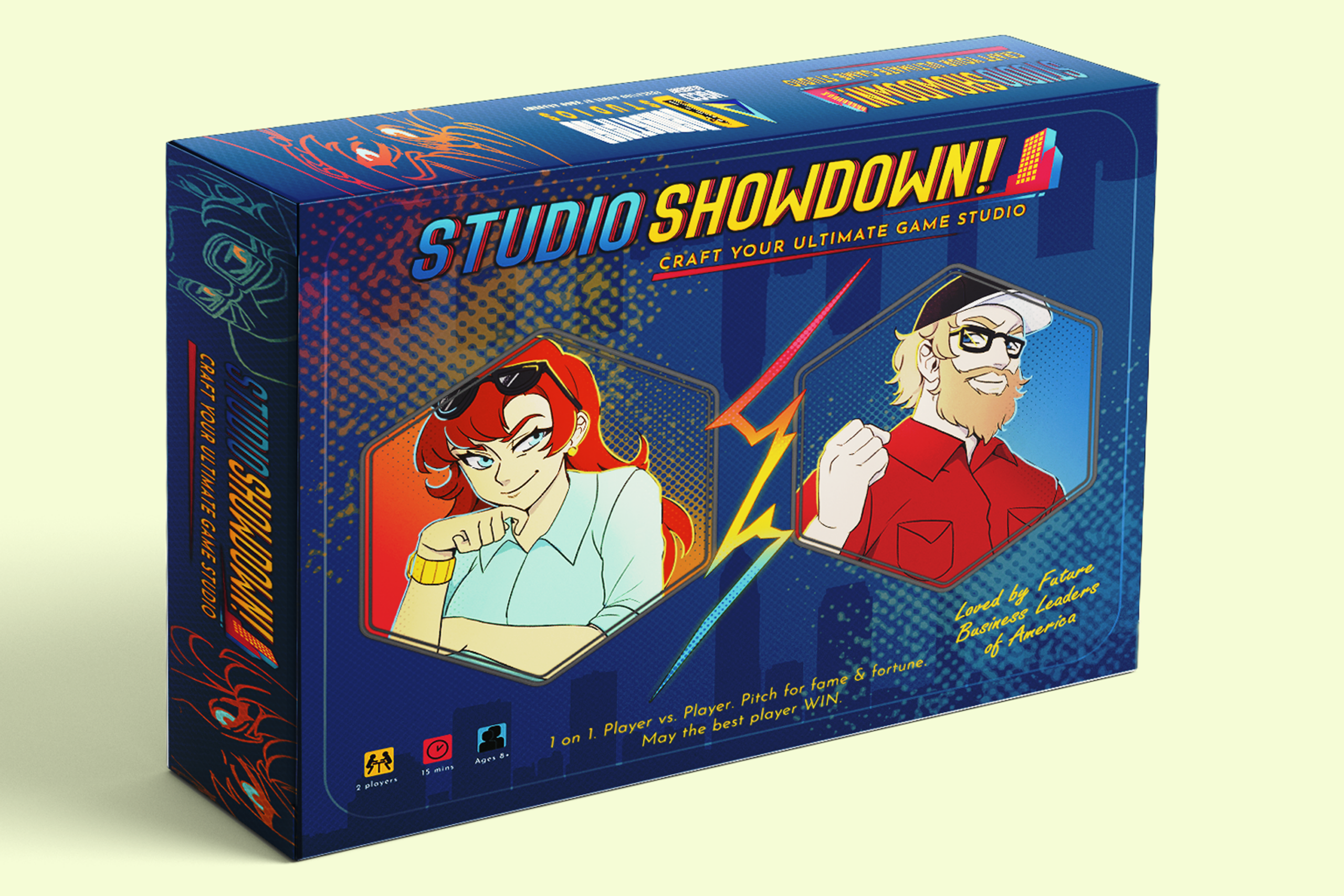
Theory is a start. Execution is the win. While digital tools track your progress, they don’t teach you the gut instinct required for studio survival. Studio Showdown is the ultimate business board game designed to bridge this skills gap. It transforms the abstract concepts of game development project management into a high-stakes, tactile experience. You aren’t just moving pieces on a board. You’re building a production house from the ground up.
The game simulates the entire lifecycle of a professional project. You’ll face the same pressures real founders deal with in the 2026 market. Fundraising. Team building. Market launches. It forces you to navigate the logic of resource allocation and the “Founder’s Dilemma” we explored in previous sections. By simulating these scenarios, you build a professional portfolio of strategic decisions before you ever risk real capital. It’s a sandbox for dominance where failure is your greatest teacher.
A Hands-On Learning Experience
Mastering complex skills like pitching and tactical resource allocation shouldn’t take years of trial and error. You can absorb these concepts in a focused 60-minute session. Students and parents today increasingly prefer tactile learning to combat screen fatigue. It provides a level of engagement that a standard lecture or a Jira tutorial can’t match. You’ll develop real-world business acumen through strategic play, learning to handle technical bottlenecks and creative pivots with confidence. This is where your vision meets the reality of the market.
Join the Showdown
The impact of this simulation extends beyond the living room. The Studio Showdown: Educator Edition is designed to bring studio management directly into the classroom. It integrates seamlessly into STEM and business curricula, providing students with a direct look at the creative industry’s professional side. For larger institutions, the Classroom Bundle offers a scalable way to prepare an entire cohort for visual victory. Don’t just study the industry. Lead it.
Secure your copy of Studio Showdown and start building your empire today. Whether you’re a student, a founder, or an educator, the path to a successful launch starts here. Master the board. Win the boardroom. Claim your victory in the ultimate creative showdown.
Claim Your Visual Victory
The creative industry doesn’t reward participation; it rewards production. You’ve seen how mastering game development project management requires more than just a software license. It demands a founder’s mindset, ruthless scope control, and the ability to pitch a vision that investors can’t ignore. Whether you’re navigating the 2026 market shifts or managing a distributed team, your strategic intuition is the only asset that truly scales. It’s the difference between a project that fades into the noise and a studio that dominates the market.
Studio Showdown provides the bridge between theory and visual victory. Developed by VGCD Academy and DEMYSTIFIED Studios, this hands-on simulation prepares you for real-world studio challenges without the six-figure financial risk. It’s a proven tool used by educators to teach high-stakes financial literacy and entrepreneurship in a tactile environment. You don’t just learn the business; you live the struggle and celebrate the win.
The board is set. The market is waiting. It’s time to step out of the task list and into the boardroom to secure your legacy. Ready to lead your own studio? Get Studio Showdown now. The next great studio launch belongs to the leader who dares to master the logic of play today. Go out there and win your showdown.
Frequently Asked Questions
What is the best project management tool for indie game developers?
The best tools are those built specifically for game workflows, like Codecks or HacknPlan. While 42% of developers use Unreal Engine 5.8 as of May 2026, their project management often relies on Jira for its robust industry integration. Choose a tool that tracks your visual assets as effectively as your code. Don’t let the software become the work; use it to clear the path for your creative vision.
How do you manage a game development team effectively?
Effective game development project management requires balancing artistic bravery with technical discipline. You must set clear milestones that act as psychological victories for your team. With 28% of the industry facing layoffs in the last two years according to GDC 2026 data, maintaining morale through transparent leadership is vital. Focus on the impact of each task rather than just the number of tickets moved.
What are the core stages of game project management?
Game production moves through three critical phases: pre-production, production, and post-production. Pre-production is where you map your vision and define the core loop. Production is the high-stakes grind where you manage the 52% of developers now focusing on smaller, manageable projects. Post-production involves leveraging player feedback for market dominance. Each stage requires a different tactical approach to ensure a premium launch victory and studio survival.
Can you learn game development project management through a board game?
Yes, you can master the strategic logic of studio leadership through immersive simulations. Studio Showdown provides a screen-free sandbox where you face the high-stakes decisions of a real production house. It strips away technical noise and focuses on the “Founder’s Dilemma.” You’ll learn to manage resources and navigate market volatility without risking your actual capital. It’s a professional training ground for aspiring creators and future founders.
What is scope creep and how do you prevent it in game dev?
Scope creep is the unplanned expansion of features that drains budgets and kills projects. You prevent it by locking your “must-have” features during pre-production. Guard your vision against the urge to add “just one more” mechanic. If a feature doesn’t serve the core loop, cut it immediately. Ruthless prioritization ensures your budget and timeline remain intact for a successful showdown in a crowded market.
Why is fundraising a part of project management in game development?
Fundraising is the oxygen of any professional studio. Without capital, your production stops and your team dissolves. Project management includes securing the resources necessary to keep the lights on and the servers running. Translating technical milestones into investor-ready progress is a core skill for any founder. You aren’t just managing tasks; you’re managing the financial sustainability and long-term health of your entire creative concept.
How does Studio Showdown teach real-world business skills?
Studio Showdown simulates the high-stakes logic of pitching, negotiation, and resource allocation in a 60-minute session. It forces you to look rivals in the eye and make decisions under pressure. Developed by VGCD Academy and DEMYSTIFIED Studios, it builds the professional intuition required for the boardroom. You’ll learn to handle fundraising and team-building challenges that digital tools or standard software tutorials simply cannot replicate.
Is project management different for video games compared to other software?
Yes, because games must be both functional and fun. Standard software focuses on utility, but game development project management must account for the subjective “feel” of the player experience. You’re managing a volatile blend of artistic intuition and technical constraints. This duality makes the production cycle more unpredictable, requiring a more dynamic and “can-do” approach to leadership compared to traditional enterprise software development or web design.