What if your student project wasn’t just a grade, but the foundation of a $200 billion industry victory? In a market where over 1,200 indie titles flood Steam every month, your vision needs more than just passion to survive. Crafting a professional game concept pitch document for students is the definitive line between a hobbyist and a future studio founder. It’s your first visual victory in a crowded arena.
You’ve felt the creative block when trying to document abstract mechanics. You might fear your project is too small for formal documentation, especially when only 20% of indie games break even. This guide changes the game. You’ll master the art of a professional GDD that bridges creative vision with sharp business strategy. We’re delivering a roadmap to transform your ideas into a premium portfolio piece that wins funding and commands total team commitment.
Key Takeaways
- Define your project’s “Single Source of Truth” to align your creative vision with technical reality and stakeholder expectations.
- Build a professional game concept pitch document for students that features a razor-sharp high concept and a compelling core loop.
- Bridge the gap between art and profit by integrating market analysis and monetization strategies directly into your documentation.
- Execute a proven production roadmap that transitions your idea from a raw paper prototype to a market-ready player persona.
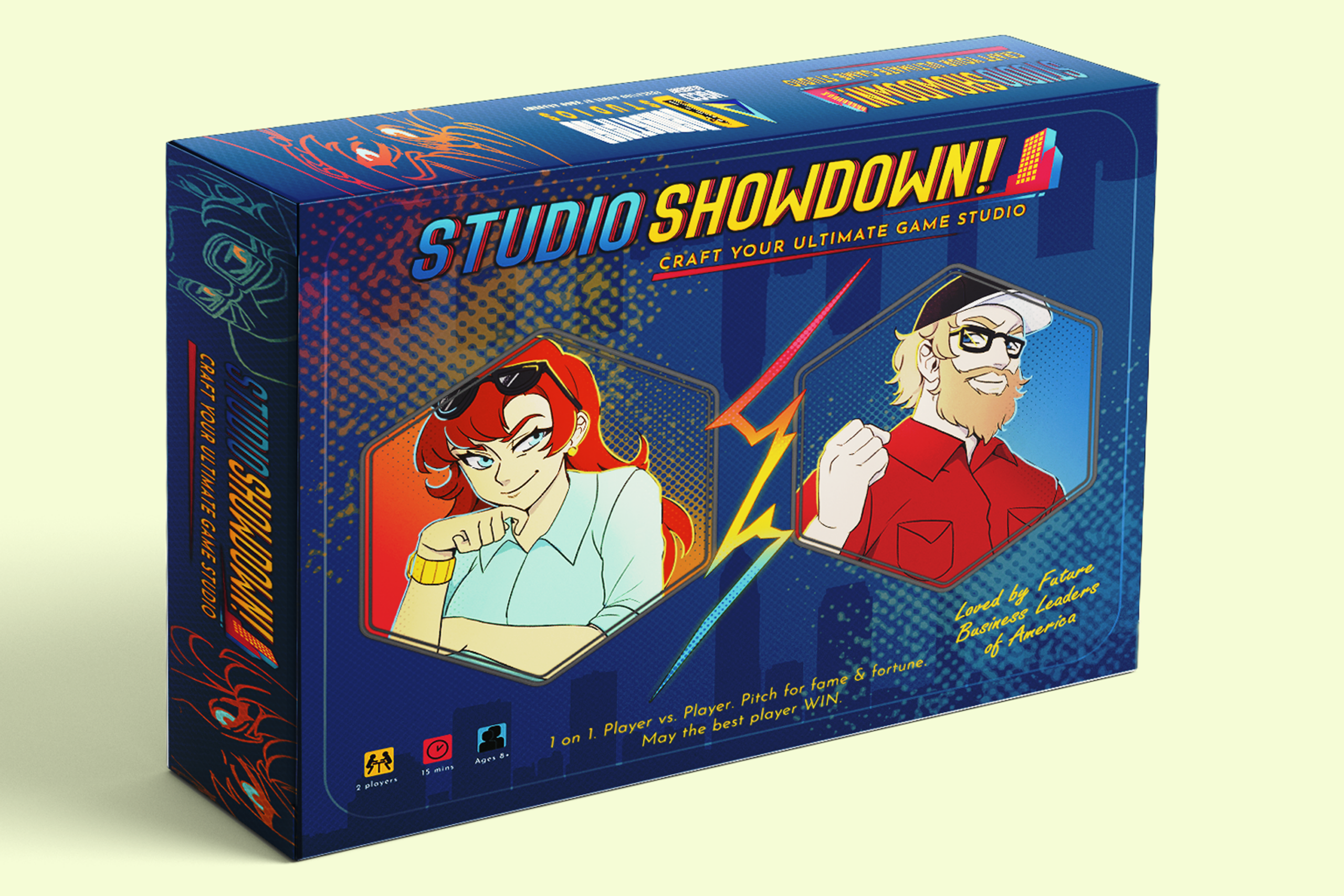
- Elevate your entrepreneurial skills with Studio Showdown to master the art of the pitch and studio management before you launch.
What is a Game Design Document? The Blueprint for Your Studio Victory
A Game Design Document isn’t just a technical manual. It’s the pulse of your production. Think of it as a living, breathing blueprint that captures every mechanic, story beat, and technical requirement of your vision. In the 2026 market, where precision is the difference between a hit and a digital ghost town, this document is your primary weapon. It serves as the ‘Single Source of Truth,’ ensuring your creative team and stakeholders move in perfect sync. No confusion. No wasted energy. Every pixel and every line of code must serve the core concept defined here.
When you craft a game concept pitch document for students, you aren’t just completing an assignment. You’re drafting a manifesto for your future studio. Documentation has evolved past the age of static, dusty PDFs. Today, successful founders use dynamic, collaborative wikis that update in real-time. This agility allows a student project to punch above its weight class, matching the professional output of established production houses. It’s about visual victory and functional clarity.
GDD vs. Pitch Deck vs. TDD: Know the Difference
Clarity is power. You must distinguish between your different strategic assets to win the showdown. Each serves a specific phase of the creative struggle:
- Pitch Deck: The high-impact visual tool. It’s designed to secure initial interest, grab attention, and hook potential investors with raw aesthetic energy.
- Game Design Document (GDD): The comprehensive manual. This defines how the game actually functions, detailing the mechanics, systems, and user experience.
- Technical Design Document (TDD): The deep-dive. This focuses on code architecture, engine specifics, and the heavy lifting of back-end implementation.
Why Every Studio Founder Needs a GDD
Feature creep is the silent killer of indie dreams. Without a strict roadmap, projects swell until they collapse under their own weight. A solid GDD keeps your scope strictly defined and manageable. It’s your shield against wasted resources. For a student, this is also a premium portfolio piece. It proves you don’t just have ideas; you have the discipline to execute them. By identifying logic flaws on paper before a single line of code is written, you drastically reduce production costs. In an industry where 60% of creators self-fund, every dollar saved is a step toward a successful launch. Your game concept pitch document for students is the foundation of that financial survival.
Anatomy of a Hit: Essential Sections Every GDD Must Include
Your vision deserves a stage. To win the attention of a team or an investor, your game concept pitch document for students must be more than a collection of ideas. It needs a rigid structure. Every section must serve a purpose, stripping away the noise to reveal the core genius of your project. In a market where 1,200 indie titles drop every month, your documentation is the only thing standing between professional execution and total obscurity.
Start with the High Concept. This is your one-sentence hook. It defines your game’s unique identity and its place in the $200 billion global market. If you can’t explain why your game matters in fifteen words, you haven’t found the heart of your production yet. Following this is the Core Loop. This is the heartbeat of player engagement. You must identify the repetitive actions that keep players locked in for hours. When you are Creating a Game Design Document, you’re not just listing features; you’re choreographing an experience that balances challenge and reward.
Precision continues with the User Interface (UI) and User Experience (UX). Map the player’s journey through every menu and interaction. Finally, anchor your dreams in reality with a Development Timeline. Set realistic milestones for Alpha, Beta, and Gold versions. This level of detail transforms a basic game concept pitch document for students into a professional production manual that proves you understand the high-stakes reality of studio management.
Gameplay Mechanics and Systems
Break down the physics of your world. Detail character movement, combat systems, and environmental interactions. Define your win conditions and fail states with absolute clarity. Use the Action-Result-Feedback framework to define your primary mechanic: The player strikes a weak point (Action), the enemy’s armor shatters (Result), and a visceral metallic crunch echoes through the haptic controller (Feedback). This clarity ensures your developers don’t have to guess your intent.
Art, Sound, and World-Building
Consistency is king. Establish a visual style guide to ensure every asset feels like it belongs to the same universe. Soundscapes aren’t just background noise; they’re emotional anchors that reinforce the impact of every player action. Document your narrative architecture, from lore to character arcs, to create a world that feels lived-in and worth defending. Before you dive into the technical struggle, you can practice these high-level decisions with Studio Showdown to see how your strategic choices impact your studio’s survival.

The Studio Founder’s Edge: Integrating Business Strategy into Your GDD
Creative vision is the spark, but business strategy is the fuel. In a global market exceeding $200 billion, your game concept pitch document for students can’t just be a collection of cool ideas. It must be a blueprint for a viable startup. Only 20% of indie games break even in their first year. To join that elite circle, you need to prove your project isn’t just fun; it’s a calculated visual victory. You aren’t just making a game. You’re launching a production house.
Start with a ruthless Market Analysis. With 3.6 billion gamers worldwide, you must identify exactly who will buy your experience. Analyze the 1,200 monthly titles on Steam to find the gaps your rivals missed. Next, define your Monetization Model. Whether you choose premium, F2P, or a subscription, your GDD must account for the 2026 reality. Factor in the 5% Unreal Engine royalty on revenue over $1 million or the $2,200 annual cost for a Unity Pro seat. These aren’t just numbers. They’re the boundaries of your creative struggle.
Your Marketing and Community Plan is your defense against obscurity. In 2026, the average Cost Per Install (CPI) for casual mobile games in Tier-1 countries sits between $2.50 and $4.00. You can’t afford to build in silence. Finally, perform a Risk Assessment. Identify production bottlenecks early. If AI is automating 60% of your background art, document how that shifts your budget toward polish and marketing. This level of foresight transforms a student project into a premium investment opportunity.
Fundraising and The Pitch
Your GDD is the evidence that backs up every bold claim in your pitch deck. Investors look for a Return on Investment (ROI) hidden within your systems. Show them how your game loop drives retention and how your monetization scales. Adopting a business simulation mindset early ensures you treat your production like a strategic startup. It’s about proving you can manage the high-stakes showdown of game development without flinching.
Competitive Positioning
Define your Unique Selling Proposition (USP). In a crowded digital marketplace, “good” is the enemy of “great.” You must explain how your title outmaneuvers existing giants in your genre. Understanding the mechanics of business board games helps you grasp these concepts of market dominance and resource management. Your game must offer a specific emotional or mechanical payoff that players can’t find elsewhere. Don’t just compete. Dominate the space by being the only solution to a player’s specific craving.
Creating a Game Design Document: A Step-by-Step Production Roadmap
Success isn’t accidental. It’s engineered. When you begin creating a game concept pitch document for students, you need a roadmap that prevents your vision from dissolving into chaos. This isn’t about writing a novel. It’s about building a functional engine on paper. Your roadmap must move from abstract inspiration to concrete technical requirements through a series of calculated phases. Every step is a tactical move toward your ultimate visual victory.
Step 1 starts with brainstorming and the ‘Paper Prototype’ phase. Before you spend $2,200 on a Unity Pro seat, test your core fun with physical components. Cardboard and dice don’t lie. If the mechanic fails here, it’ll fail in 4K. Step 2 involves drafting your High Concept and identifying your target player persona among the 3.6 billion gamers worldwide. Step 3 moves into Building the System Architecture. This is where you define how the UI, inventory, and combat systems interact. Step 4 is the Iteration and Peer Review phase. Feedback is the fuel that refines your production. Finally, Step 5 is about finalizing the GDD and transitioning into active development. This document becomes your ‘Definition of Done’ for every sprint.
Phase 1: The High Concept and Core Mechanics
Focus on the ‘Why.’ What makes this game worth a player’s time and money in a market where 1,200 indie titles drop every month? You must validate your mechanics through strategy board games to ensure perfect balance and engagement. Document the ’30 seconds of fun’ that defines your player experience. If those 30 seconds aren’t addictive, your 30-hour RPG won’t survive the first level.
Phase 2: Level Design and Technical Requirements
Map out the player’s progression and the difficulty curve. This isn’t just about art; it’s about pacing. Identify your technical stack early. Whether you’re paying the 5% Unreal Engine royalty or staying under the $200,000 Unity Personal revenue limit, your tech choices must align with your budget. Create a clear ‘Definition of Done’ for every section to ensure your team never hits a creative bottleneck. To master these high-stakes production decisions before you write a single line of code, bring the Studio Showdown board game to your next team meeting.
Beyond the Document: Mastering Game Entrepreneurship with Studio Showdown
You’ve drafted the blueprint. Your game concept pitch document for students is sharp, professional, and strategic. But a document alone doesn’t launch a hit. A founder does. Studio Showdown immerses you in the high-stakes world of studio management before you commit a single dollar to digital production. It’s the ultimate training ground where creative struggle meets the boardroom showdown. You aren’t just playing a game; you’re simulating the survival of your vision in a $200 billion global arena. With over 1,200 titles hitting Steam every month, your strategic edge must be razor-sharp to achieve a visual victory.
Practicing fundraising, pitching, and market strategy is usually a high-risk gamble. In the real world, only 20% of indie games break even in their first year. Studio Showdown removes the fear of a digital fail. It allows you to test your business acumen in a controlled, competitive tabletop environment. You’ll learn how to bridge the gap between a creative GDD and a successful business launch. It’s about seeing the “big picture” of production. Educators across the globe use the Studio Showdown: Educator Edition to teach the real-world business of gaming. This ensures students graduate as founders, not just employees. The Classroom Bundle provides a scalable way to bring this high-stakes simulation to every desk, turning abstract theory into practical experience.
Hands-On Learning for Aspiring Founders
Experience the chaos of a hit launch first-hand. In this tabletop environment, you face rival studios and shifting market trends that mirror the 2026 industry. You’ll master professional skills like portfolio building, resource allocation, and team buy-in. It’s a premium way to reduce screen time while still mastering the deep principles of game design and entrepreneurship. Tactile learning cements these strategic lessons. You’ll feel the weight of every investment and the thrill of every successful pitch. This is where your creative vision gains the discipline it needs to survive the marketplace.
Join the Next Showdown
Prepare for your first professional pitch with total confidence. Use the lessons from the board to sharpen your game concept pitch document for students. This is where you build the “Studio Founder” mindset. Whether you’re in a classroom or at home, you’re learning to outmaneuver the competition and command attention. Don’t let your vision stay on paper. Step into the arena, manage your resources, and lead your team to a visual victory. Get your copy of Studio Showdown and start building your empire today!
Command the Future of Your Creative Empire
The journey from a student project to a global hit requires more than just passion; it demands a strategic manifesto. You’ve mastered the art of transforming abstract ideas into a professional game concept pitch document for students that commands attention in a $200 billion market. By bridging creative vision with ruthless market analysis and a defined production roadmap, you’ve already outmaneuvered the hobbyists. The industry moves fast. You must move faster. Every document you draft and every mechanic you refine is a tactical move toward your first visual victory.
Now, it’s time to test your grit in the ultimate arena. Developed by VGCD Academy experts, the Studio Showdown board game is already used in classrooms worldwide to teach high-stakes entrepreneurship. It drastically reduces the learning curve for aspiring studio founders, giving you the “can-do” attitude needed to survive the industry showdown without the risk of a digital fail. Don’t leave your success to chance. Master the business of gaming with the Studio Showdown Board Game and turn your creative struggle into a premium success. Your empire starts with the next move.
Frequently Asked Questions
How long should a game design document be?
Length depends on your project’s complexity; most professional documents range from 20 to 100 pages. For a student project, focus on quality over quantity. A 15-page document that covers every core mechanic and business strategy is more valuable than a 100-page document filled with fluff. Keep it lean, functional, and visually engaging to maintain your team’s focus. Precision beats volume every time.
Do I need a GDD for a small indie game?
Yes, every project requires a “Single Source of Truth” to prevent feature creep and wasted production time. Even a hyper-casual title needs a roadmap. Without one, you risk losing your creative vision in the technical struggle. A small-scale document ensures your team stays aligned and your resources are spent on high-impact features. It’s your primary defense against project collapse.
Can I use a GDD template for my student project?
Templates are excellent starting points, but you must customize them to fit your unique vision. A generic game concept pitch document for students won’t capture the specific strategic edge of your studio. Use a template to ensure you don’t miss essential sections like monetization or risk assessment. Then, inject your brand’s voice and aesthetic energy to make it stand out in a crowded market.
What is the difference between a game design document and a game bible?
A GDD is a functional manual for production, while a game bible is a comprehensive archive of lore and world-building. The GDD focuses on mechanics, systems, and technical requirements. The bible stores every character backstory, environmental history, and narrative arc. Think of the GDD as the engine’s blueprint and the bible as the world’s history book. Both are essential for a premium production.
How often should I update my GDD during development?
Treat your GDD as a living document that you update after every major milestone or iteration. If a mechanic changes during the paper prototyping phase, reflect that change immediately. Static documents lead to production errors and team confusion. Modern studios use collaborative wikis to ensure the blueprint evolves alongside the actual game build. Stay agile to maintain your competitive edge.
Who is the primary audience for a GDD?
The primary audience is your development team, including programmers, artists, and sound designers. It’s the manual they follow to build the vision correctly. However, a game concept pitch document for students also serves potential investors and stakeholders. It proves you have a professional production mindset and a clear path to market success. It’s your professional handshake with the industry.
Is a GDD necessary for a board game design?
Absolutely, as board games rely on rigid rulesets and balanced mechanics that must be documented with precision. You need to define every card interaction, board state, and win condition. Prototyping a tabletop experience like Studio Showdown requires the same level of documentation as a digital title. It ensures the gameplay remains fair, engaging, and ready for manufacturing. Documentation is the foundation of balance.
What happens if we deviate from the GDD during production?
Deviation is natural, but you must document the reasons and update the blueprint to reflect the new direction. If testing reveals a mechanic isn’t fun, pivot. Just ensure the change doesn’t break other systems or blow your budget. Uncontrolled deviation is feature creep; managed deviation is creative evolution. Keep the document in sync with your reality to ensure a visual victory.