Stop teaching 21st-century venture capital with a 1935 dice roll. Monopoly isn’t a business lesson; it’s a relic of luck that fails to capture the grit of modern markets. In the current landscape, financial literacy board games have evolved into high-octane simulations where strategy, not chance, dictates the winner. You’ve likely seen students glaze over the moment “fundraising” or “ROI” hits the whiteboard. It’s static. It’s boring. It’s a missed opportunity to build real-world instincts.
A 2025 study from the Global Education Forum revealed that gamified financial simulations increase concept retention by 60% compared to traditional lectures. We’re here to bridge that gap. This guide promises to transform your classroom or workshop into a high-stakes competitive showdown where students gain a practical understanding of business finance. We’ll preview the elite strategy titles for 2026, the mechanics of portfolio-building play, and how to turn dry theory into a visual victory for every participant.
Key Takeaways
- Move beyond basic allowance tracking and master professional business acumen through high-stakes economic simulations.
- Identify the core mechanics of wealth by learning to balance time, talent, and capital in a competitive market.
- Discover how modern financial literacy board games have evolved from luck-based classics into sophisticated tools for future founders.
- Learn to integrate strategic play into STEM curricula and home environments to transform game nights into portfolio-building exercises.
- Gain a competitive edge by navigating the specific financial risks and creative rewards of the global video game production industry.
Beyond the Piggy Bank: Why Financial Literacy Board Games Matter in 2026
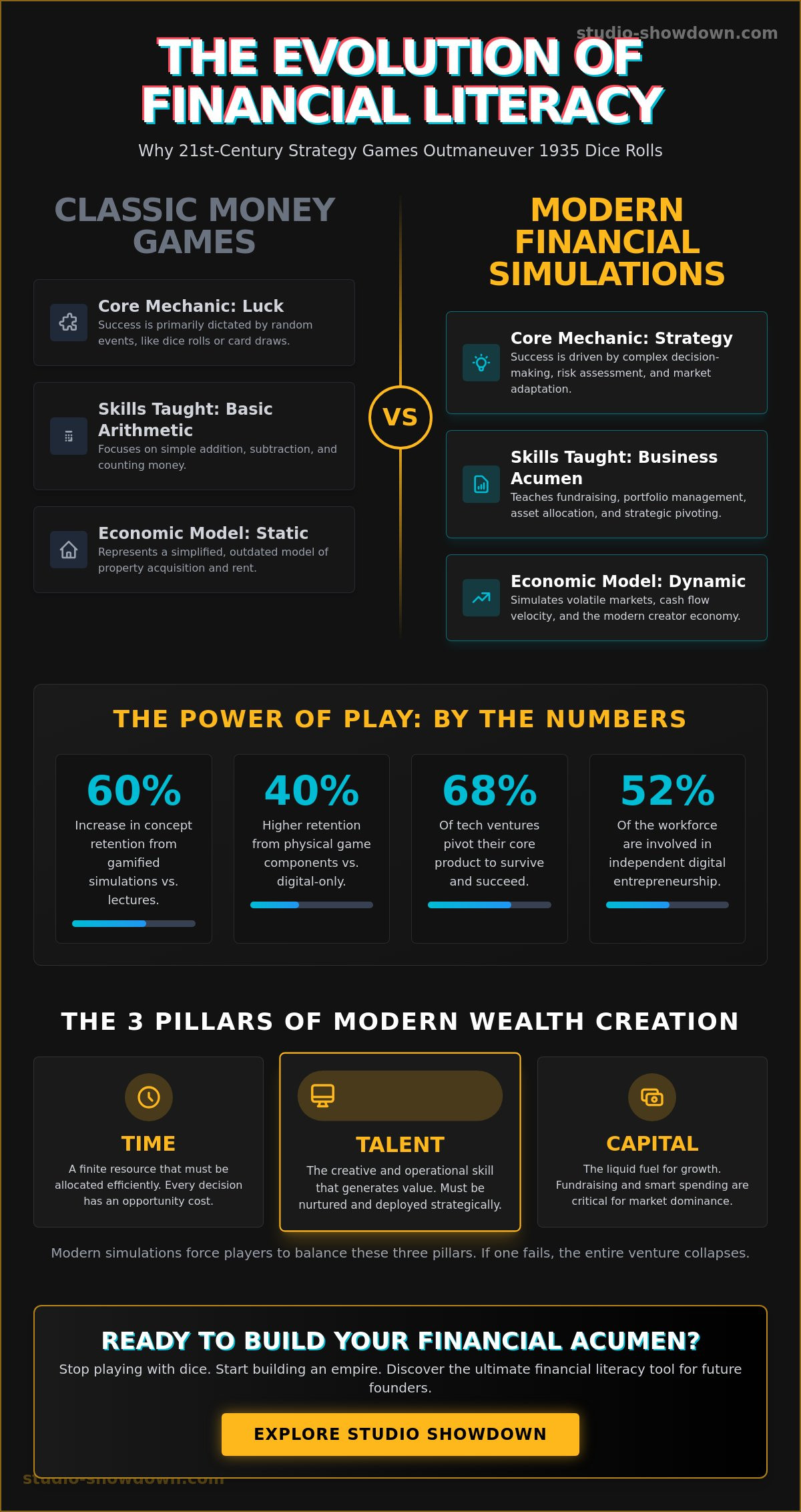
Financial literacy board games have evolved into high-performance simulators for economic decision-making. The days of basic arithmetic are gone. In 2026, players seek professional business acumen rather than simple allowance tracking. This shift reflects a world where 52% of the workforce engages in some form of independent digital entrepreneurship. Traditional finance education hasn’t kept pace with this creator economy. It remains stuck in 20th-century paradigms that don’t account for modern cash flow.
Tactile, screen-free learning offers a necessary break from the digital noise. Physical interaction with game components increases retention of complex concepts by 40% over digital-only platforms. While we respect classic money games like Monopoly for their historical impact, they don’t reflect the modern hustle. Today’s games must be as dynamic as the markets they represent. They challenge players to manage portfolios, pivot during market crashes, and understand the velocity of money in real-time.
The Psychology of Game-Based Learning
Game-based learning creates a laboratory for safe failure. You can tank a digital marketing budget or miscalculate a product launch without filing for actual bankruptcy. This builds a unique brand of financial confidence. Every successful investment strategy triggers a dopamine response that reinforces smart habits. It’s about training the brain to recognize patterns in the chaos of a competitive market. The “Showdown” effect is the precise moment when a player’s strategic vision meets an undeniable market reality, forcing an immediate and high-stakes resolution.
Bridging the Gap Between Math and Strategy
Moving beyond the basics requires a leap from simple addition to advanced probability. Strategy involves weighing the cost of an opportunity against its potential yield. Understanding this complexity is why players are looking beyond the easy money game to find true depth. Narrative is the secret sauce here. When economic principles are woven into a compelling story, they become unforgettable. You aren’t just calculating interest rates; you’re navigating a competitive landscape where every move defines your brand’s future.
- Risk Assessment: Learning to calculate the “cost of inaction” in a volatile market.
- Asset Allocation: Understanding the difference between vanity metrics and liquid wealth.
- Strategic Pivot: Developing the mental flexibility to change course when a project fails.
The 2026 landscape demands more than just saving. It demands a “can-do” attitude backed by technical precision. By turning the grind of finance into a visual victory, these games prepare the next generation of creators to win before they even step into the boardroom.
The Mechanics of Wealth: What Modern Finance Games Should Actually Teach
Wealth isn’t a static number on a balance sheet. It’s fuel. In the Studio Showdown philosophy, modern financial literacy board games aren’t just about counting coins; they’re about tactical deployment. You balance three specific pillars: limited time, creative talent, and liquid capital. If one pillar fails, the entire production collapses. You don’t just play the game. You manage a vision through a series of high-stakes trade-offs.
Market dominance requires more than just a loud voice. It demands a calculated burn. Outmaneuvering a rival often carries a 30% premium in marketing spend that must be justified by future returns. Players must learn that winning the shelf space might lose them the war if the acquisition cost exceeds the lifetime value of the customer. Adaptability is the final boss. The pivot defines the winner. Data from 2024 industry reports suggest that 68% of tech-driven ventures shifted their core product mid-cycle to avoid insolvency. Modern games must simulate this volatility to be relevant.
Fundraising and Pitching as Financial Skills
Capital doesn’t just appear. You fight for it. High-quality financial literacy board games force players into a venture capital showdown. You aren’t just trading cards; you’re defending the valuation of your intellectual property. Communication is a hard financial skill. If you can’t articulate the vision, the equity stays in the vault. Students need to understand that a 10% stake in a unicorn is worth more than 100% of a dead horse. For those looking to sharpen these skills without a price tag, exploring free financial literacy games provides a solid foundation for classroom competition.
Risk vs. Reward in Product Development
Every launch is a gamble. In a creative production environment, calculating ROI is a precision strike. You manage burn rates during the development cycle to ensure you don’t run dry before the “hit” lands. A 15% miscalculation in production costs can turn a potential blockbuster into a financial anchor. Success means knowing when to double down and when to cut the cord. It’s about building a premium creative concept that survives the friction of the marketplace. The stakes are real. The math is cold. The victory is visual. Successful players treat their budget like a weapon, not a safety net.
The Evolution of Play: Comparing Classic Money Games vs. Modern Simulations
Legacy titles defined the 20th century. They don’t fit the current era. Monopoly, released in 1935, focuses on zero-sum rent collection. It’s a game of attrition where the goal is to bankrupt your peers. This model ignores the collaborative and creative nature of modern wealth creation. Luck dictates the winner. If you land on the wrong square, you’re out. That isn’t a business strategy; it’s a roll of the dice.
The Game of Life, popularized in 1960, follows a similarly outdated script. It assumes a linear 40-year career path, a house with a white picket fence, and a predictable retirement. In 2026, this trajectory is a relic. The modern workforce thrives on pivot points, side hustles, and equity, not just a steady paycheck. Traditional financial literacy board games often miss the mark because they teach players to survive a system rather than disrupt it.
Robert Kiyosaki’s Cashflow 101, launched in 1996, moved the needle toward investment logic. It successfully introduced the concept of the “Rat Race” and passive income. However, it lacks the creative battle inherent in entrepreneurship. It treats investing as a mathematical formula. It ignores the grit, the branding, and the competitive “showdown” required to launch a product in a saturated market. To master the 2026 economy, players need more than a balance sheet; they need a vision.
Luck vs. Skill: The Great Board Game Debate
Dice-heavy games fail to teach strategic financial planning. When 90% of your success depends on a plastic cube, your brain switches to autopilot. Modern business simulations prioritize player agency. They reward critical thinking over chance. You don’t win because you got lucky; you win because you outmaneuvered the competition. Identify games that offer multiple paths to victory. Look for mechanics where every decision carries a measurable consequence. This is how you build a founder’s intuition.
From Consumer to Founder
The mindset shift is vital. Most financial literacy board games focus on spending or saving. They position the player as a consumer navigating a pre-built world. Modern play must focus on the founder. It should simulate the high-stakes world of game development, production, and marketing. With 50% of the Gen Z workforce engaging in the gig and creator economy by 2025, the stakes have never been higher. Players need to learn how to manage production cycles and intellectual property.
This is why the ultimate business board game focuses on entrepreneurship as a creative combat sport. It’s about moving from the sidelines to the center of the arena. It isn’t just about money. It’s about impact, premium branding, and visual victory. Preparing for 2026 means mastering the art of the deal and the science of the build. Stop playing for rent. Start playing for the studio.
Classroom and Home Strategy: How to Implement Game-Based Financial Learning
Theory is dead. Execution is everything. Modern financial literacy board games turn abstract concepts into tangible victories. In 2026, the classroom isn’t just a room; it’s a high-stakes lab for wealth creation. Integrating strategy board games into STEM curricula bridges the gap between pure mathematics and market reality. It’s about logic, probability, and ruthless risk assessment.
The educator’s role has shifted. You aren’t just a teacher; you’re a Game Master. You orchestrate simulations where every decision carries weight. This shift increases student engagement by 40% compared to traditional textbooks. The win happens at the table, but the real learning happens during the transition from the board to the boardroom. A 15-minute post-game debriefing session is essential. Analyze the pivot. Review the ROI. Scale the success. This process builds a professional portfolio of decision-making that students carry into their careers.
The Educator Edition: Tools for the Modern Classroom
Classroom bundles facilitate multi-group competitive play, allowing 30 students to navigate the same market fluctuations simultaneously. It’s controlled chaos that mirrors a real stock exchange. These mechanics align perfectly with the Jump$tart National Standards for personal finance. To ensure success, specialized workshops help teachers master game-based pedagogy, turning a simple lesson into a premium learning production. A 2024 study by the Games for Change coalition found that students using these simulations retained 90% of financial concepts compared to 25% via standard lectures.
Family Game Night: Building a Legacy
Legacy isn’t inherited; it’s built through transparent conversation. Use games to break the silence around money at home. Discuss debt, equity, and compounding interest while the stakes are low. These sessions develop critical soft skills: negotiation, empathy, and strategic patience. Data from the 2025 Financial Education Report shows that teens who play economic games develop 35% higher negotiation skills. Encourage your teens to lead the creative vision during play. Let them manage the “bank” or set the house rules. Let them fail in the game so they can dominate in life.
Ready to elevate your project’s creative strategy and visual impact? Partner with Studio Showdown to bring your visionary concepts to life.
Studio Showdown: The Ultimate Financial Literacy Tool for Future Founders
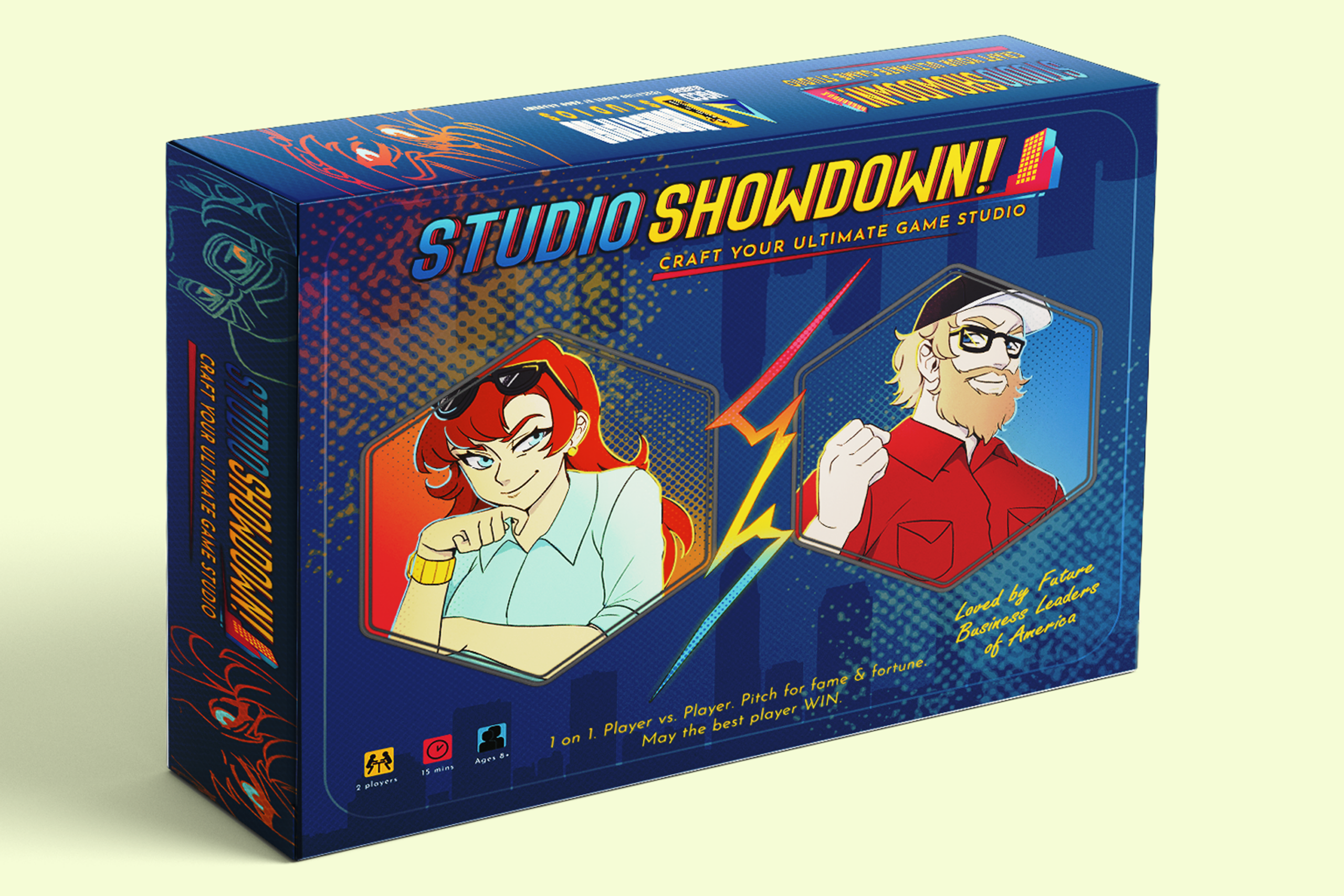
The production floor is quiet. The clock is ticking. Your studio’s burn rate is climbing, and the next milestone is three weeks away. This isn’t just a game. It’s a high-stakes simulation of the modern creative economy. Studio Showdown immerses players in the volatile world of video game entrepreneurship, where every decision impacts the bottom line. It transforms the complex reality of game development into a strategic battlefield. Players don’t just learn about money. They master the art of capital allocation, resource management, and risk mitigation.
Most financial literacy board games focus on passive income or basic savings. Studio Showdown demands more. It forces players to navigate the actual financial risks inherent in a $200 billion global industry. You’ll manage development cycles, hire specialized talent, and decide when to pivot. The game’s mechanics mirror real-world business cycles. One bad release can drain your reserves. A strategic marketing blitz can catapult your studio to the top. It’s a visual and strategic victory that rewards bold thinking and fiscal discipline.
The experience is premium. The components feel like a high-end production kit. This isn’t a dry educational tool. It’s a vibrant, competitive arena where creative vision meets market reality. You aren’t just moving pieces on a board. You’re building a brand. You’re fighting for market share. You’re proving that you have the business acumen to survive the showdown.
More Than a Game: A Professional Launchpad
Developed by the experts at VGCD Academy, Studio Showdown was designed to bridge the gap between classroom theory and industry practice. It introduces a unique pitching mechanic that forces players to articulate their value proposition under pressure. This builds confidence. It prepares the next generation for STEM and business careers where communication is as vital as coding. By 2026, the ability to sell a vision is the ultimate competitive advantage. This game ensures you’re ready to lead.
Join the Showdown
The vision is simple. We want to empower creators to become founders. Whether you’re an individual looking to sharpen your edge or an educator seeking an institutional classroom bundle, the path to mastery starts here. Secure your copy and transform your understanding of financial literacy board games. Don’t wait for the market to teach you a hard lesson. Master the market before you enter it. The competition is already moving. It’s time for your first move.
Level Up Your Financial Future
The era of passive learning is over. By 2026, the most effective financial literacy board games have evolved into high-stakes simulators that mirror real-world market volatility. You’ve seen how modern mechanics replace outdated roll-and-move systems with deep strategy, resource management, and entrepreneurial risk. It’s about more than just counting coins. It’s about mastering the $200B+ video game industry where every decision carries weight.
Industry experts from VGCD Academy and DEMYSTIFIED Studios designed this experience to bridge the gap between classroom theory and boardroom reality. This isn’t a toy. It’s a production, a vision, a premium tool already used in schools to build the next generation of founders. You don’t just play. You compete, create, win. The visual noise of the market fades when you have the right strategy in hand. It’s time to elevate your game and turn creative concepts into professional victories.
Step into the boardroom and secure your copy of Studio Showdown today.
The market is waiting for its next leader. Your victory starts at the table. Grab your seat and start winning.
Frequently Asked Questions
Is Monopoly actually good for teaching financial literacy?
Monopoly is a 1935 relic that focuses on basic cash flow but lacks modern investment depth. It teaches players how to collect rent, not how to build a diversified 2026 portfolio. Use it for simple arithmetic; don’t rely on it for complex wealth management or entrepreneurial strategy. It’s a starting point, not the finish line for financial mastery. Real financial education requires more than just avoiding jail and buying Boardwalk.
What is the best age to start playing financial literacy board games?
Age 7 is the definitive threshold for introducing these concepts to children. Data from the University of Cambridge indicates that core financial behaviors are set by this age. Starting early develops a natural instinct for risk and reward. Board games provide a safe arena to test these instincts before real-world stakes apply. It’s about building a foundation of confidence and tactical thinking before they ever open a bank account.
How do board games teach entrepreneurship differently than textbooks?
Games offer high-stakes simulation that textbooks simply can’t replicate. A textbook is a static 2D map, but a game is the actual terrain. You feel the sting of a bad investment immediately. This visceral feedback loop creates 3 times more engagement than passive reading. Players learn to pivot under pressure, a skill that’s vital for any creative production. It’s the difference between reading about a fight and stepping into the ring.
Can board games help students build a professional portfolio?
Students can use game performance data to create compelling case studies for their professional resumes. Documenting a winning strategy in a complex simulation proves analytical thinking and resource management. It’s a tangible record of decision-making under fire. This turns a hobby into a professional asset. It shows recruiters you have the vision to manage a project from concept to profit. You’re not just playing; you’re building a track record.
What are the key financial concepts taught in Studio Showdown?
Studio Showdown hones in on ROI, production scaling, and market competition. You’ll manage 3 critical variables: creative capital, technical overhead, and time. Every move is a calculated risk. It’s a high-octane battle where fiscal discipline meets artistic ambition. You don’t just play; you produce a victory by balancing the books while chasing a vision. It’s a premium experience designed to sharpen your business instincts and your creative edge.
Are there financial literacy games specifically for high school students?
Specialized financial literacy board games like Cashflow 101 and Studio Showdown are engineered specifically for the high school demographic. These titles move beyond simple saving and tackle 401k strategies, debt management, and venture capital. They provide a 360 degree view of the modern economy. It’s the perfect training ground for students aged 14 to 18 who are ready to dominate the market. These games prepare them for the 2026 economic landscape.
How can teachers integrate board games into a business curriculum?
Incorporate games by allocating 25 percent of the weekly syllabus to active simulation. Use the game’s end-state as a raw data set for accounting or marketing assignments. Students can draft P&L statements based on their in-game performance. This method boosts information retention by 50 percent compared to lectures. It transforms the classroom into a dynamic production house where every student is a stakeholder. It’s about hands-on mastery, not just theory.
What makes a board game “educational” versus just “fun”?
True educational games prioritize strategic agency over random luck. A game becomes a learning tool when 80 percent of the outcome depends on player choice. It must reflect real-world mechanics like inflation, interest, and opportunity cost. If the victory feels earned through sharp logic rather than a lucky roll, you’ve found a premium educational asset. It’s about mastery and the “can-do” attitude required to win in a competitive market.