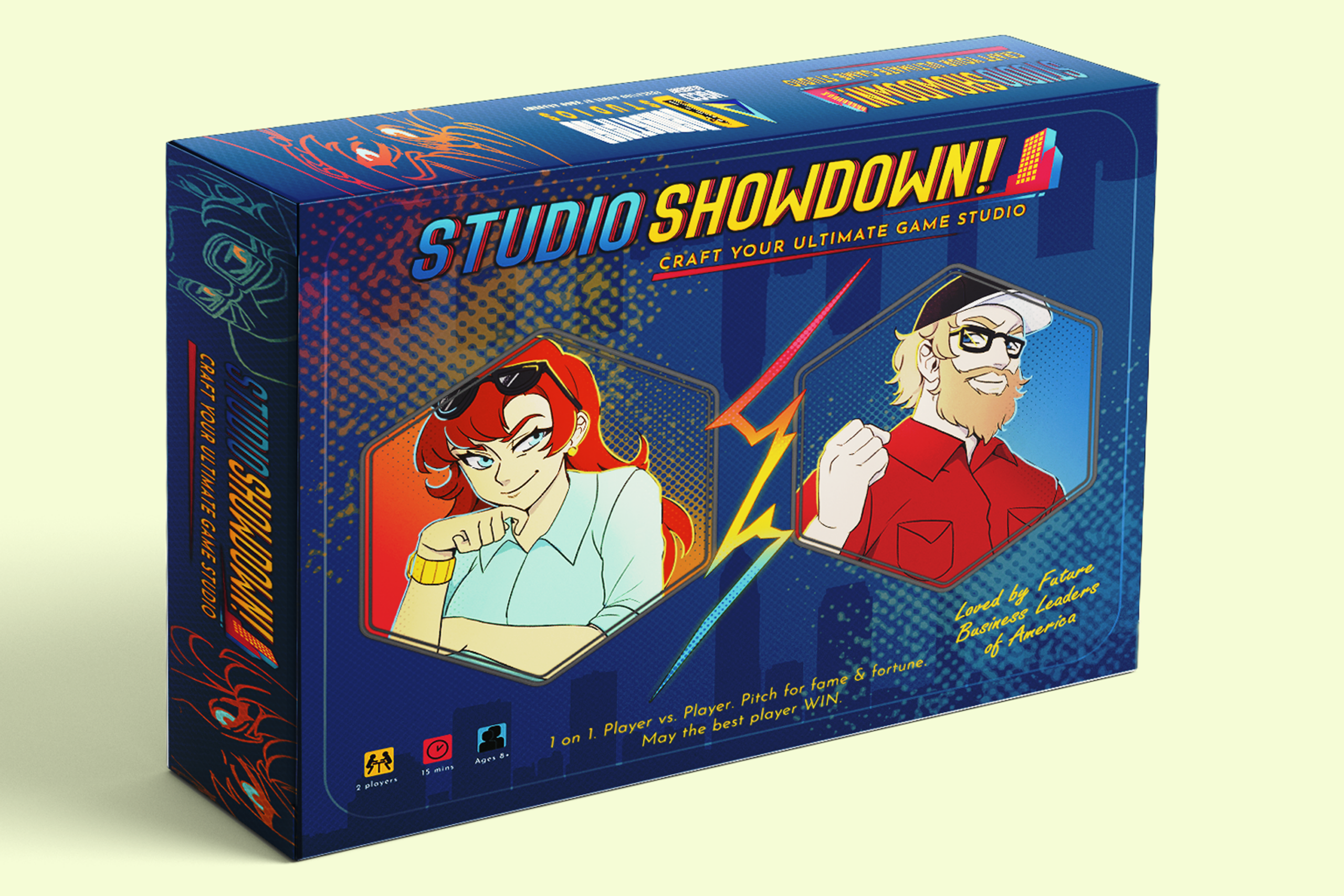
Why are you still letting a plastic die decide who’s the smartest person at the table? Luck is a crutch for those who aren’t prepared to win. If you’re tired of Monopoly-induced headaches and the hollow victory of a lucky roll, it’s time to elevate your play. You deserve a game night that feels like a professional arena. Tactics. Vision. Victory. Finding the right family board games for competitive players is the first step toward reclaiming your Sunday nights from the grip of boredom.
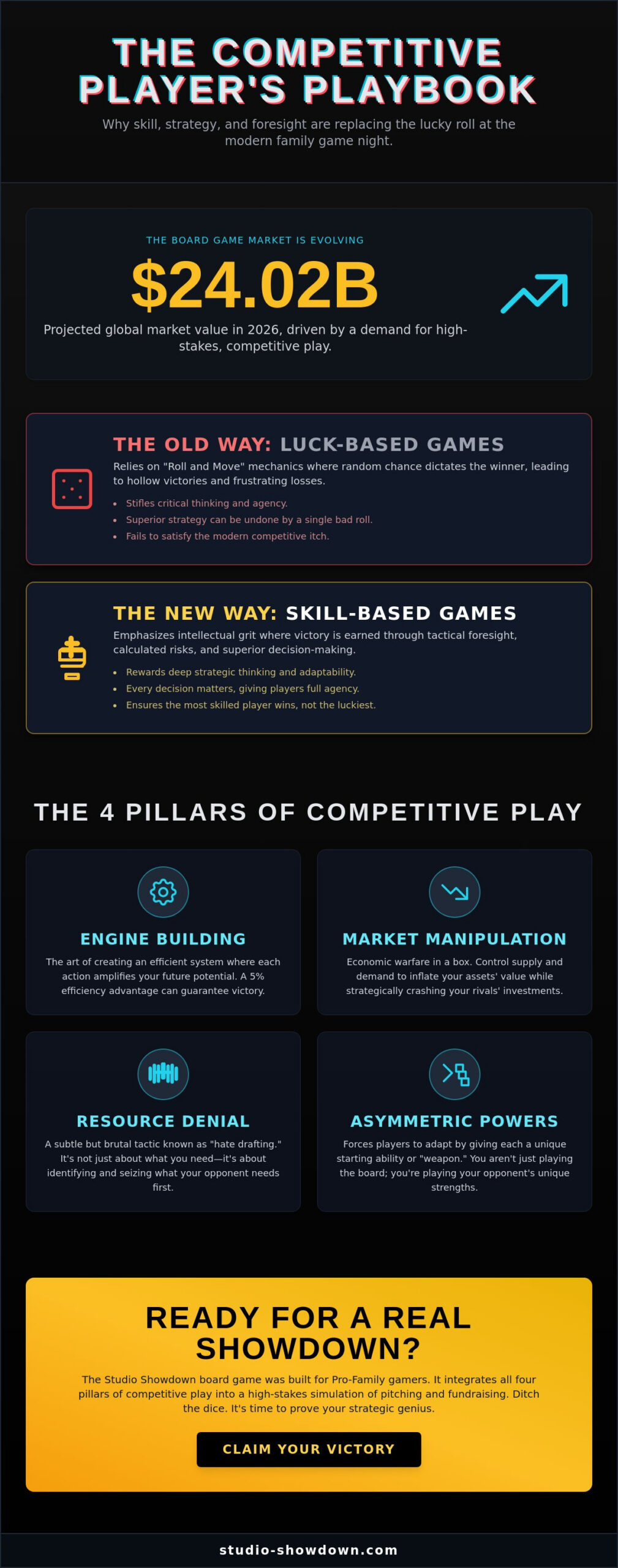
We know the frustration of “unfair” mechanics and the lack of intellectual stimulation in traditional titles. You want a challenge that rewards foresight and tactical grit. With the global board game market projected to grow to 24.02 billion dollars in 2026, the shift toward skill-based play is more than a trend; it’s a standard. This strategy guide will help you transform your kitchen table into a high-stakes battlefield. We’ll show you how to build real-world skills and introduce you to the Studio Showdown Board Game, a title designed for those who play for keeps. Get ready to outmaneuver your rivals and claim your place at the top.
Key Takeaways
- Ditch the participation trophies and discover why 2026 families are pivoting toward high-stakes, skill-driven competition.
- Master the selection of family board games for competitive players by identifying mechanics like engine building and market manipulation.
- Learn to distinguish between input and output randomness to ensure every victory is a result of strategic vision, not a lucky roll.
- Professionalize your game night with “The Showdown” protocol to manage high-energy rivalry and maintain family harmony.
- Bridge the gap between play and professional success by leveraging games like Studio Showdown that simulate real-world pitching and fundraising.
The Shift Toward High-Stakes Family Board Games for Competitive Players
The participation trophy era is dead. In 2026, families aren’t looking for a casual way to kill time; they’re looking for a way to prove who has the sharpest mind. The market reflects this shift. With the global board game industry projected to hit 24.02 billion dollars this year, the demand for family board games for competitive players has surged. Modern families are abandoning cooperative models where “everyone wins.” They recognize that healthy rivalry is a vital life skill. It’s about more than just a board. It’s about the psychological edge, the tactical maneuver, and the satisfaction of a win earned through pure intellect. Millennials and Gen Z now account for 55% of all board game purchases, and they’re bringing a hunger for professional-grade competition to the living room.
If your family thrives on outsmarting one another, you’ve likely felt the “competitive itch.” It’s that restless energy that surfaces when a game lacks depth. Traditional titles like Monopoly no longer satisfy the modern gamer. The “Easy Money” mechanics and endless loops of chance feel hollow. Today’s players want agency. They want their decisions to matter. They want a showdown that rewards the bold. Competitive gaming isn’t just fun; it’s a simulation of the professional “showdown,” teaching teens to outmaneuver rivals with strategy, not luck. This isn’t just play. It’s training.
Why Luck-Based Games Fail Competitive Families
Nothing kills the energy of a high-stakes evening faster than a bad dice roll. When superior strategy is undone by “Roll and Move” mechanics, the competitive spirit dies. These games stifle critical thinking. They replace agency with random chance. To avoid this, many are turning to abstract strategy games and skill-dominant titles. These games remove the safety net of luck. They force players to own their mistakes and celebrate their genius. Transitioning to skill-based play means every move is a calculated risk, not a prayer to the dice gods. It ensures the winner actually deserves the trophy.
The Rise of the ‘Pro-Family’ Gamer
The 2026 family treats the dining table like a strategic workshop. They don’t just play; they analyze. This “Pro-Family” gamer knows that competitive play mirrors the challenges of the real world. Whether it’s academic pressure or professional rivalries, the skills honed during a “showdown” are transferable. You’re building resilience. You’re teaching teens to pivot when a rival blocks their path. By fostering a culture of high-intensity rivalry, you’re creating an environment where a “good game” isn’t just a polite phrase. It’s an acknowledgement of a battle well fought. Finding family board games for competitive players that keep up with your ambition is the only way to sustain this energy.
Core Mechanics: What Makes a Family Game Truly Competitive?
A truly competitive game is a puzzle that fights back. It isn’t enough to simply follow a path; you must outpace, outmaneuver, and outthink the people sitting across from you. For those seeking family board games for competitive players, the secret lies in the mechanics. These are the gears under the hood that transform a casual evening into a high-stakes arena. High-level competition requires systems that reward foresight and punish hesitation. When you remove the safety net of luck, the game becomes a pure expression of skill.
To dominate the table in 2026, you need to master four specific pillars of competitive play:
- Engine Building: This is the art of efficiency. You’re creating a metaphorical machine where every card or token placed increases your output. If your “engine” is even 5% more efficient than your opponent’s, you win.
- Market Manipulation: This creates a “showdown” atmosphere. By controlling supply and demand, you can crash the value of your rival’s assets while inflating your own. It’s economic warfare in a box.
- Resource Denial: It isn’t just about what you need. It’s about identifying what your opponent needs and taking it first. This “hate drafting” is subtle, brutal, and incredibly effective.
- Asymmetric Powers: Starting the game with different abilities forces players to adapt. You aren’t just playing the game; you’re playing your specific “weapon” against theirs.
If you want to see these mechanics in action, the Studio Showdown board game integrates these systems into a pacy, professional-grade simulation of the creative industry.
Direct vs. Indirect Competition
Competition comes in two flavors. Direct conflict involves “Take That” mechanics where you actively sabotage a rival’s progress. It’s loud, aggressive, and immediate. Indirect competition is a silent strangulation. It’s about winning through superior optimization and efficiency. You don’t necessarily break their machine; you just build a better one faster. Balancing these two styles ensures the game remains cutthroat without devolving into a shouting match. It keeps the focus on the strategy, not the person.
Complexity and Depth in 2026 Strategy Titles
Modern titles follow the “Easy to Learn, Hard to Master” framework. This accessibility is crucial for family play, but the depth is what keeps the pros coming back. Multi-layered strategy prevents the “runaway leader” problem, where one player becomes unstoppable early on. Instead, 2026 strategy board games offer catch-up mechanics and hidden scoring that keep the tension high until the final turn. This depth ensures that every session feels fresh, rewarding long-term engagement and tactical evolution.
Strategy vs. Luck: Finding the Sweet Spot for High-Stakes Play
Luck is a variable. Strategy is a constant. For families who treat game night like a boardroom battle, the ratio between the two defines the experience. You can’t eliminate chance entirely, but you can control how it affects the outcome. In the search for family board games for competitive players, the distinction between input and output randomness is the ultimate filter. Input randomness gives you the tools, such as a hand of cards or a set of available resources, that you must then use effectively. Output randomness, like rolling a die to see if your attack hits, takes the game out of your hands. Pros choose the former every time.
Competitive players want to control their own destiny. They look for mechanics that allow them to pivot when plans go wrong. If a rival takes the resource you needed, a well-designed game offers a tactical alternative. It’s about mitigation. It’s about having enough depth in the system to turn a setback into a setup for a later win. This prevents the “Monopoly Trap,” where a single bad turn leads to a two-hour slow death. Modern titles ensure that if you’re losing, it’s because you were outplayed, not because the universe conspired against you. You want a game that escalates, building tension until a decisive, skill-based conclusion.
When selecting family board games for competitive players, look for these three luck-mitigation features:
- Resource Conversion: The ability to trade common items for the specific ones your strategy requires.
- Multiple Paths to Victory: Systems where a player can focus on economy, prestige, or speed to win.
- Partial Information: Keeping some cards hidden to allow for bluffing and psychological play.
The ROI of Strategy: Skill Over Chance
Merit matters. When a teen outplays their parents through a sequence of twelve interconnected moves, the victory is earned. It’s a rush. This meritocracy encourages post-game analysis. It’s the “debrief” where players discuss what went right and where the pivot happened. Games with “Perfect Information” remove the excuses. There’s no “bad luck” to blame. Only better play. This builds a culture of continuous improvement and respect for the winner’s craft.
Analyzing the 2026 Competitive Landscape
The 2026 landscape has evolved. We’ve moved beyond the territory-grabbing of traditional war games. Today, the most intense rivalries happen in the world of commerce. Modern business board games offer a higher stakes narrative. They simulate the pressure of a startup pitch or a high-pressure fundraising round. It’s not about rolling a six to move; it’s about reading the market and striking when the ROI is highest. These “Entrepreneurial Showdowns” provide a sophisticated alternative to the simplistic combat of the past.
Managing the Heat: Tips for Competitive Family Game Nights
High stakes bring high temperatures. When the table is set for family board games for competitive players, the air should feel different. It isn’t just a game; it’s a showdown. To keep the energy productive, you must establish ground rules before the first card is dealt. We call this “The Showdown Protocol.” It separates the strategic rival from the family member. Personal attacks are off-limits, but tactical ruthlessness is encouraged. By defining these boundaries, you create a safe space for intensity. You’re not just playing; you’re competing at a professional level. This clear distinction ensures that when the game ends, the family bond remains intact while the competitive fire stays fueled for the next session.
Emotional management is the secret weapon of the pro player. A “sore loser” kills the vibe, but a “sore winner” destroys the tradition. Shift the focus from the outcome to the execution. If someone loses, don’t offer pity. Instead, analyze the “why.” Turn that frustration into a strategic post-game debrief. This turns a defeat into a data point for the next session. This level of face-to-face resilience is why screen-free activities are essential for modern families. They force negotiation, eye contact, and emotional calibration that digital screens simply can’t replicate. You’re building social muscles that will serve your teens long after the board is folded away.
Fostering Healthy Rivalry
Psychological warfare is part of the fun. Encourage “table talk.” Let players bluff, brag, and negotiate. This isn’t about being mean; it’s about the meta-game. The goal is to celebrate the most brilliant move of the night, even if it resets your own progress. When you acknowledge a rival’s genius, you raise the standard for everyone. It creates a cycle of excellence. You’re building a culture where the win is respected because the competition was fierce. High-intensity play demands mutual respect for the craft of the game.
The Logistics of a High-Stakes Night
Environment dictates behavior. Transform your dining room into a “War Room.” Clear the clutter. Put the phones in another room. Set a firm time limit so the game doesn’t drag into exhaustion. Rotating titles is also key to keeping the “meta” fresh. If one person dominates a specific game, switch to a new challenge immediately. This forces everyone back to the drawing board and prevents stagnation. Ready to test your family’s tactical limits? Order the Studio Showdown Board Game and start your own high-stakes tradition tonight.
Studio Showdown: Where Cutthroat Strategy Meets Real-World Skills
Competition isn’t just about moving tokens. It’s about market share. Studio Showdown is the ultimate simulation for those who find traditional family board games for competitive players too simplistic. You aren’t just playing a game; you’re running a studio. You’re hiring talent. You’re managing budgets. You’re competing for the same limited pool of investors and fans. This creates a friction that mirrors the high-pressure world of creative production. It’s fast. It’s focused. It’s professional. In this arena, every choice has a ripple effect on your studio’s reputation and bottom line.
In this arena, your voice is a weapon. Pitching and fundraising aren’t just flavor text; they are core mechanics. You must convince the table that your project is the one worth backing. This adds a psychological layer that most strategy games miss. It’s about reading the room. It’s about timing. It’s about outmaneuvering rival studios to claim strategic market dominance. Every decision is a step toward a professional victory. You’re building a brand while dismantling your opponent’s reputation through superior execution and tactical foresight.
The Business of Winning
Success requires more than a good plan. You must master the art of the pitch to secure vital resources before your opponents do. You’ll face the “Founder’s Dilemma” in every round. Do you scale fast? Do you stay lean? Do you pivot or double down? These choices happen under intense pressure from your family rivals. It’s the perfect environment for families who want to win big and learn how actual industries operate. Tactical. Brutal. Rewarding. This is the new standard for game night, where the winner doesn’t just get bragging rights; they prove their entrepreneurial grit.
Educational Strategy Without the Fluff
We’ve moved past the era of the easy money game. Competitive families choose Studio Showdown as their primary training ground because it offers substance. Every move contributes to a portfolio of strategic decisions. You’re building a professional mindset through tabletop play. Teens learn to manage risks. They learn to handle rejection. They learn that in business, as in the best family board games for competitive players, only the most adaptable survive. You’re not just moving pieces; you’re developing a creative vision. You’re allocating capital. You’re managing a team. These are the exact skills required in the modern production landscape. This is where the next generation of leaders is forged. It’s not just a game; it’s a launchpad for a career in the creative economy.
Claim Your Seat at the Strategy Table
Sunday night shouldn’t be a race to see who gets lucky with a pair of dice. It should be a test of tactical grit and foresight. We’ve explored how mechanics like engine building and market manipulation transform a simple evening into a high-stakes arena. You now have the tools to manage competitive heat and turn every loss into a strategic lesson. Choosing the right family board games for competitive players isn’t just about entertainment; it’s an investment in your family’s collective intelligence.
Studio Showdown represents the pinnacle of this shift. Developed by industry experts at VGCD Academy, this simulation is already used in classrooms to teach high-stakes entrepreneurship. It’s a game designed for deep replayability and true strategic mastery. You don’t need luck when you have a superior vision. It’s time to stop playing for chance and start playing for keeps. Your next victory is waiting for you to take the lead.
Ready for the ultimate family showdown? Order Studio Showdown today!
Frequently Asked Questions
What makes a board game ‘competitive’ rather than just ‘confrontational’?
Competitive games reward superior skill and optimization, while confrontational games often rely on direct sabotage. A truly competitive title uses mechanics like engine building to ensure the win is earned through merit. This distinction is vital for family board games for competitive players. You want a system where the smartest player wins, not just the one who attacked the leader most frequently.
Can competitive board games actually improve a child’s social skills?
Strategic play builds resilience and emotional intelligence by forcing players to navigate high-pressure situations. Teens learn to negotiate, pivot after a setback, and respect a rival’s superior move. These games function as a safe laboratory for social dynamics. You’re teaching them to handle the professional “showdown” of the real world with grace and tactical grit.
How do I introduce a high-strategy game to a family used to casual play?
Choose a title with an “Easy to Learn, Hard to Master” framework to bridge the gap. Focus on a compelling theme that resonates with everyone, such as building a business or a creative studio. Explain the primary win condition clearly before diving into the nuances. Let the complexity reveal itself through play rather than a long, boring rulebook session.
What are the best board game mechanics for competitive teens in 2026?
Market manipulation and asymmetric powers are the dominant mechanics for 2026. Teens crave agency and the ability to outmaneuver rivals through unique abilities. Resource denial adds a layer of subtle intensity that keeps the energy high. These systems provide the intellectual stimulation that simple luck-based games lack, making them perfect for ambitious players.
Is Studio Showdown suitable for families who aren’t into video games?
Yes, because the core experience is a business and entrepreneurship simulation. The game uses the creative industry as a high-stakes backdrop, but the focus remains on pitching, fundraising, and market dominance. You don’t need technical knowledge to enjoy the thrill of outsmarting a rival studio. It’s about strategy, not software.
How long does a typical game of Studio Showdown take for a family group?
A standard session usually wraps up within 45 to 90 minutes. This duration is engineered to maintain high-intensity engagement without causing mental fatigue. It fits perfectly into a modern family schedule, allowing for a pacy, professional-grade competition on any night of the week. Every minute is packed with meaningful decisions and strategic pivots.
How can I prevent game night from turning into a family argument?
Establish the “Showdown Protocol” to separate tactical rivalry from personal relationships. Ground rules should explicitly encourage ruthless strategy while forbidding personal attacks. Shift the post-game conversation toward a strategic debrief. Discussing the “why” behind a win helps everyone improve and keeps the focus on the craft of family board games for competitive players.