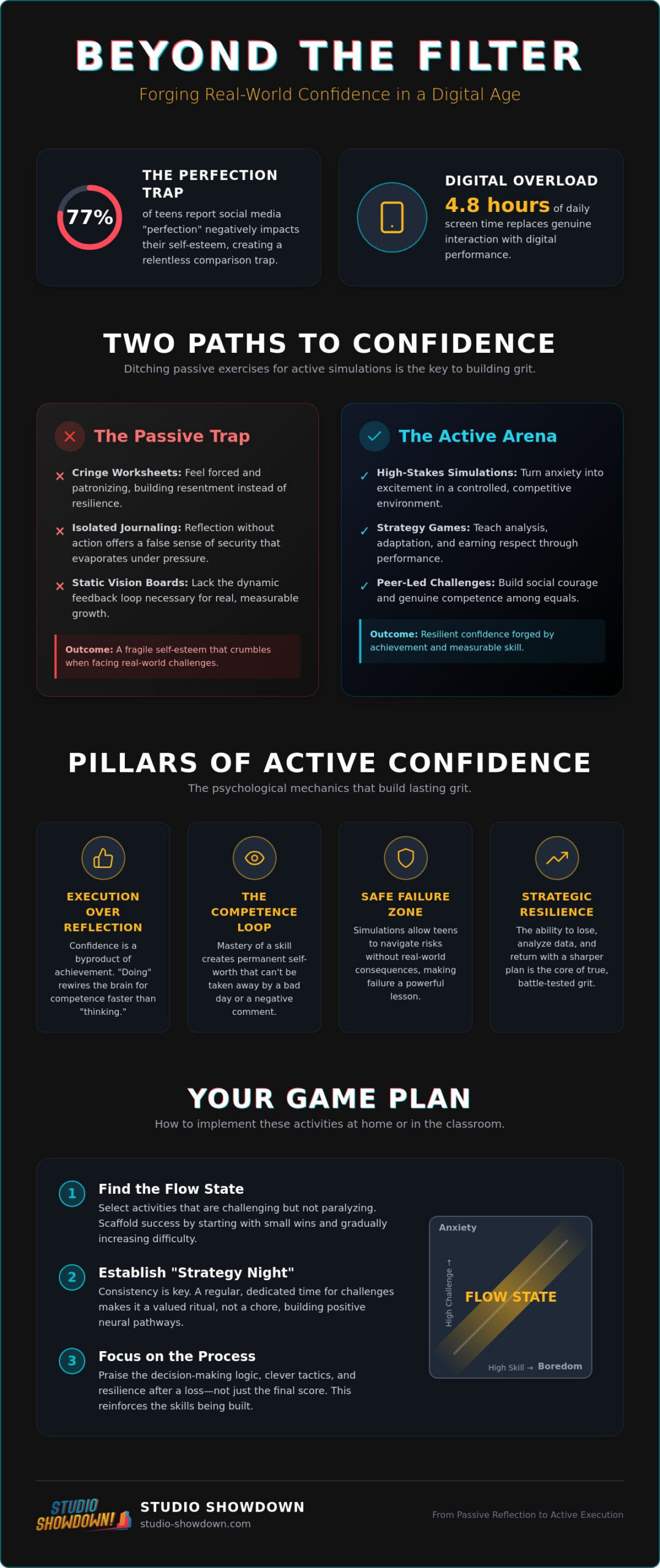
77% of teens report that the “perfection” they see on social media negatively impacts their self-esteem. It’s a relentless digital comparison trap. You’ve likely seen the eye-rolls when you suggest standard confidence building activities for teens. They don’t want another lecture or a cringe worksheet. They want to be challenged. They want to win. Real confidence isn’t found in a mirror. It’s forged in the heat of a high-stakes simulation.
We agree that the old methods are failing a generation facing 4.8 hours of daily screen time. As the Kids Off Social Media Act begins to reshape the digital world in 2026, the need for strategic resilience has never been higher. This article promises to show you how to swap passive exercises for active simulations that build real-world grit. We’ll explore how competitive environments transform a hesitant teenager into a decisive leader who can articulate ideas clearly and bounce back from setbacks. It’s time to rise above the visual noise and enter the arena of growth.
Key Takeaways
- Ditch the “cringe” worksheets. Real growth happens when competence meets social courage in high-stakes environments.
- Prioritize execution over reflection. Active confidence building activities for teens build faster neural pathways than passive self-help exercises.
- Master the “Safe Failure” zone. Use strategic simulations to let teens navigate complex rules and outmaneuver rivals without real-world risk.
- Build strategic resilience. Teach them to lose, analyze the data, and try again with a sharper plan.
- Focus on the process. Establish a regular “Strategy Night” where you praise the decision-making logic instead of the final score.
The Confidence Gap: Why Traditional Activities Often Fail Teens
Teen confidence isn’t a soft internal glow. It’s the sharp intersection of competence and social courage. To truly grasp this, understanding the psychology of confidence is vital. It’s the self-assurance that one can handle the demands of a specific task. In 2026, this assurance is often missing. Social media has replaced genuine interaction with a constant state of digital performance. This creates a dangerous gap. Teens might look confident in a filtered post, but they often crumble during a real-world confrontation or a high-pressure decision. They’re performing, not participating.
Traditional confidence building activities for teens often miss the mark because they ignore the “Cringe Factor.” Teens are hyper-aware of anything that feels forced or patronizing. Self-esteem worksheets and scripted group hugs don’t build grit. They build resentment. They feel like a lecture when they should feel like a challenge. Real confidence is forged in the arena, not in a classroom folder. We need to stop asking them to reflect on their feelings and start asking them to execute a strategy.
The Problem with Passive Self-Esteem
Passive reflection has its limits. Journaling about your strengths doesn’t replace the visceral experience of winning or losing. There’s a massive difference between feeling good and being capable. When we prioritize “safe” environments, we remove the friction necessary for growth. If there’s no risk of failure, the success feels unearned. Passive exercises offer a false sense of security that evaporates the moment a teen faces a real-world setback. We must move toward execution-based models where confidence is a byproduct of achievement, not just a positive thought.
The Role of Risk in Teen Development
Teenagers are biologically hardwired for risk. Their brains crave high-stakes environments and dopamine-heavy challenges. This isn’t a bug; it’s a feature of their development. By providing controlled, high-energy simulations, we can turn anxiety into excitement. Healthy competition is the ultimate teacher. It forces teens to analyze their rivals, adapt their strategies, and earn respect through performance. When a teen navigates a complex simulation, they aren’t just playing. They’re running a social experiment. They learn that losing isn’t the end of the world. It’s just a reason to try a different tactic next time. This is how we build “Active Confidence” that survives outside the digital bubble.
Active vs. Passive Confidence Building Activities
Stop staring at vision boards. They’re static. They don’t fight back. Effective confidence building activities for teens require a constant feedback loop. When a teenager executes a strategy, they receive immediate data. The plan works, or it doesn’t. This isn’t about “feeling” confident in a vacuum. It’s about becoming demonstrably competent. Passive reflection is a quiet, isolated room. Active execution is a loud, crowded arena where every move counts—whether it’s in a complex business simulation or on a technical course where you can learn more about SgGolfCoach to see how professional coaching drives real-world mastery.
High-energy tasks actually rewire the brain. They create thick, resilient neural pathways. Every time a teen solves a complex problem under pressure, the brain records a concrete win. This is the Competence Loop. Mastery breeds self-worth that is permanent. Unlike a fleeting compliment from a parent, a skill once mastered cannot be taken away by a bad day or a mean comment. Adult-led lectures often feel like background noise to a bored mind. Peer-led activities, however, carry immense social weight. Earning respect from a rival is always more valuable than receiving mandatory praise from a teacher.
The Power of “Doing” Over “Thinking”
A teenager who builds a viable business plan undergoes a psychological shift. They move from the internal “I am” to the external “I can.” Writing about confidence is just a placeholder for the real thing. Building something tangible is the cure for hesitation. While global initiatives like the Dove Self-Esteem Project highlight how media and body image pressure impact young people, the most effective antidote is found in achievement. Coding a functional app, designing a production workflow, or outwitting an opponent provides a shield against digital comparison. You don’t need a filter when you have actual results to show for your effort.
Finding the Right Level of Challenge
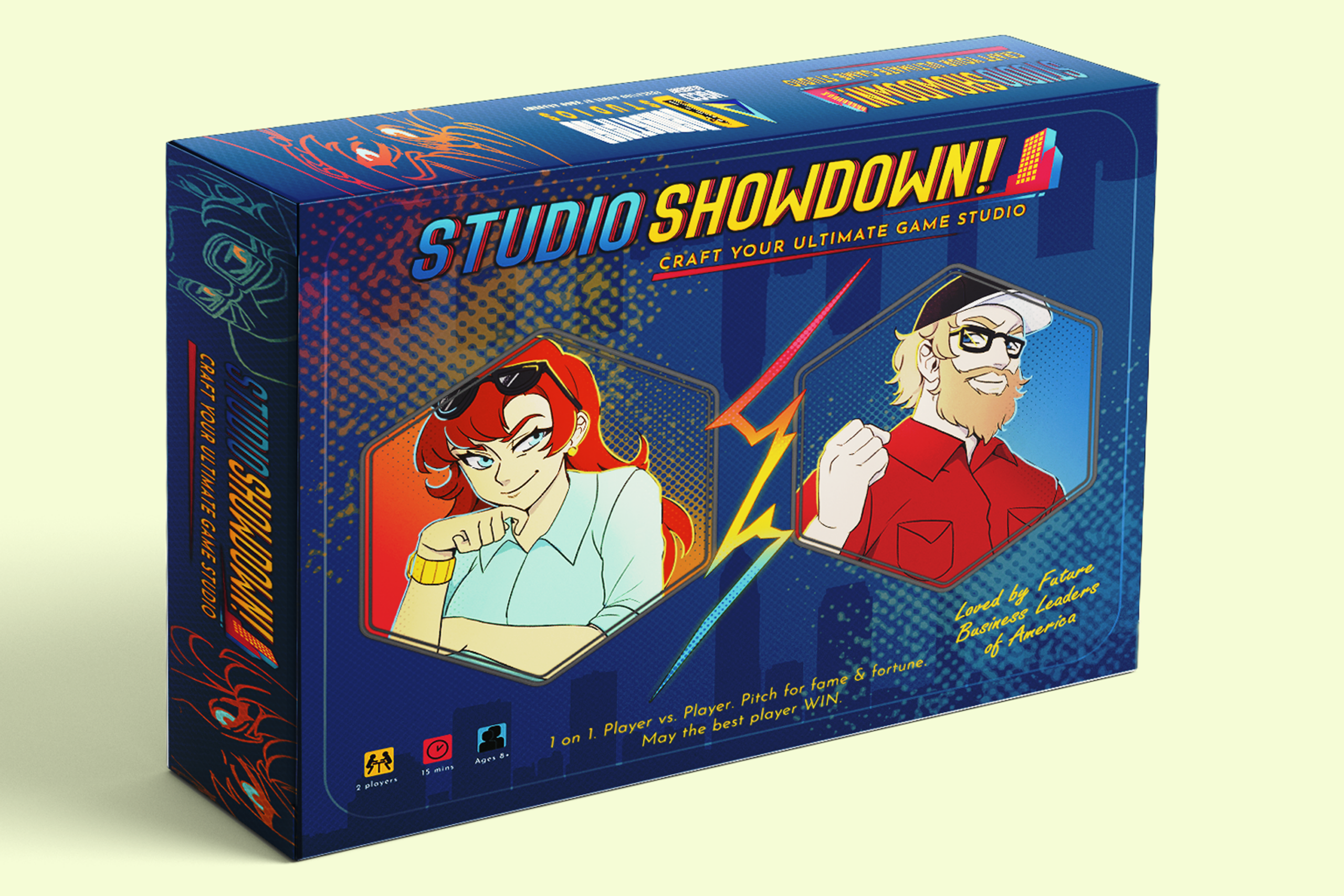
Real confidence lives in the Flow State. If a task is too easy, it’s boring and yields no growth. If it’s too hard, it’s paralyzing. We must scaffold success by starting with small, manageable wins to build momentum. Then, we crank up the heat. Using strategy board games is an elite way to bridge this gap. These games offer a structured environment where the stakes feel high but the consequences remain safe. It’s a laboratory for social courage and tactical thinking. If you’re ready to move beyond basic exercises, the Studio Showdown Board Game provides the perfect competitive arena to test these skills in real time.
Top 5 High-Impact Confidence Building Activities for 2026
Forget the gratitude journals. In 2026, teens need to engage with the world, not just reflect on it. The most effective confidence building activities for teens today are those that mirror the complexities of the adult world. They require strategy, social risk, and the ability to pivot when things go wrong. These aren’t just games; they’re training grounds for life. We’ve identified five high-stakes simulations that move the needle from passive thinking to active execution.
- Entrepreneurial Simulation: Developing a startup concept and pitching it to a panel of “investors.”
- Strategic Board Gaming: Mastering high-complexity rules and outsmarting rivals in a competitive setting.
- Public Speaking Workshops: Honing the “Elevator Pitch” to communicate value in under sixty seconds.
- Community Problem-Solving: Identifying local pain points and presenting data-backed solutions to leaders.
- Improvisational Theatre: Learning to react instantly to unpredictable social cues under pressure.
These activities work because they have stakes. When a teen pitches an idea, the validation comes from the strength of the logic, not just a participation trophy. While many resources focus on How to Improve Self-Esteem through positive self-talk, these simulations provide the evidence needed to back up that talk. You don’t have to tell yourself you’re capable if you’ve already proven it in a simulation. The social courage built here is permanent.
Why Entrepreneurship is the Ultimate Confidence Builder
Entrepreneurship forces a teen to value their own ideas. It isn’t just about money. It’s about market simulation. Pitching to a “Board of Directors” requires a level of social presence that no worksheet can replicate. They learn to defend their vision. They learn to handle tough questions. Most importantly, fundraising mechanics teach them the actual value of their time and effort. It turns abstract concepts of self-worth into concrete professional value. It builds a foundation of competence that survives any digital comparison.
The Studio Showdown Experience
Stepping into the role of a studio founder changes how a teen carries themselves. They aren’t just players; they’re decision-makers. Strategic decision-making involves more than just making moves. It’s about having the confidence to say “no” to a bad deal even when the pressure is on. This is where a business board game mindset becomes a lifestyle. They start seeing every interaction as a series of tactical choices. They analyze the board, calculate the risk, and execute with precision. This is the premium experience of growth that elevates their presence above the visual noise of social media.
How Simulation Games Build “Strategic Resilience”
Strategic resilience isn’t just a buzzword. It’s the ability to lose, analyze the wreckage, and try again with a sharper plan. In the context of confidence building activities for teens, simulation games provide the ultimate “Safe Failure” zone. Unlike real-world social blunders that might linger in a digital footprint, a failed game strategy ends when the board is cleared. This creates a laboratory for social experiments. Teens can test boundaries, attempt bold negotiations, and face rejection without permanent consequences. They aren’t just playing; they’re stress-testing their own decision-making processes.
The shift in mindset is profound. A teen stops saying “I lost” and starts saying “My strategy needs an update.” This transition removes the personal sting from failure. It turns a setback into a data point. While team sports offer physical discipline, they often leave intellectually competitive, non-athletic teens behind. Simulation games bridge this gap. They provide a high-stakes mental arena that builds the same level of grit and peer respect without needing a jersey. It’s a professional-grade approach to personal growth.
Learning to Fail Forward
Setbacks are normalized here. In a complex simulation, everyone loses eventually. The magic happens during the “Debrief.” We teach teens to strip away the self-criticism and look at the mechanics of their choices. Did they overextend their resources? Did they misread a rival’s move? By analyzing these choices objectively, they learn to apply game logic to real-world school or work challenges. A bad grade or a rejected proposal becomes a tactical puzzle to solve, not a reflection of their worth. This is how you build a mind that doesn’t just survive pressure but thrives on it.
The Social Dynamics of Strategy
Social confidence is built on negotiation and persuasion. You can’t win a high-level simulation in a vacuum. You have to read the “market” and understand the motivations of your opponents. This develops a deep, competitive empathy. You learn to anticipate moves and influence outcomes through dialogue. Outmaneuvering a rival studio in a game builds a professional presence that translates directly to the boardroom or the classroom. You gain the authority to lead because you’ve already practiced the moves.
This type of game-based learning is the best screen-free activity for deep focus. In a world of 4.8-hour daily scrolls, sitting around a physical board forces a level of presence that digital loops can’t match. It’s about being in the moment. It’s about the win. If you want to see this resilience in action, get the Studio Showdown Board Game and start building a strategist’s mindset today.
Implementing Confidence Activities at Home or in the Classroom
Consistency is the fuel for growth. You can’t build grit in a single afternoon. Schedule a regular “Strategy Night” to make high-stakes thinking a habit. This isn’t a chore. It’s an appointment with potential. When you integrate confidence building activities for teens into a weekly routine, you normalize the process of strategic risk-taking. It becomes part of their DNA. They stop fearing the unknown and start seeing it as a board to be conquered. It’s about building a rhythm that outlasts the digital noise.
Focus on the process, not just the final score. Stop praising the win. Praise the logic behind the move instead. If a teen takes a calculated risk and loses, celebrate the calculation. This shifts the focus from external validation to internal competence. You want them to value their own reasoning over the applause of others. Use tools like the Studio Showdown Board Game to make these professional-grade skills feel like high-octane entertainment. It’s about building a mental framework that survives long after the game ends.
Create a “Pitch Pit” at home or in the classroom. This is a zero-judgment zone for innovation. It’s a safe space for teens to present their wildest, most disruptive ideas without fear of being shut down. They practice the delivery. They defend the vision. They learn that an idea is only as strong as the conviction and data behind it. This builds the social courage required to stand in front of a real board of directors one day. It turns a “cringe” activity into a professional simulation.
Tips for Parents: Being a Mentor, Not a Coach
Step back. Let the teen lead the strategy. Your role is to observe, not to dictate every move. Ask open-ended questions like “What was your backup plan if that deal fell through?” or “What did you notice about your opponent’s resource management?” This forces them to articulate their reasoning. It’s the ultimate way to reduce screen time. By introducing high-engagement strategy board games, you swap passive scrolling for active mental combat and genuine connection.
Tips for Educators: Gamifying the Curriculum
Educators can turn the classroom into a production studio. Use business simulations to meet STEM and business standards while keeping engagement at a peak. This builds “Portfolio Confidence.” Students don’t just leave with a grade; they leave with a history of achievements they can actually describe. For a structured approach, integrate the Studio Showdown: Educator Edition into your lesson plans. It’s designed to bridge the gap between academic theory and real-world execution, ensuring every student leaves the classroom with a winner’s mindset.
Forge the Future Strategist
The era of passive self-esteem is over. In 2026, real growth happens in the arena, not in front of a mirror. We’ve explored how high-stakes simulations transform hesitation into decisive action by prioritizing execution over reflection. By integrating strategic confidence building activities for teens and looking to explore High School Assemblies that provide a practical guide for mental resilience, you provide them with the tools to navigate a world that demands more than just soft skills. They learn to analyze, adapt, and lead with authority.
It’s time to move beyond the cringe of traditional exercises. Empower your teen with Studio Showdown: The Strategy Board Game for Future Founders. Developed by VGCD Academy and DEMYSTIFIED Studios, this immersive entrepreneurship simulation is already used in classrooms to build professional portfolios. It turns complex business logic into a competitive, high-energy experience where every decision counts.
Give them the confidence that comes from actual mastery. The board is set. It’s time for them to make their move and rise above the noise.
Frequently Asked Questions
What are the best confidence building activities for shy teens?
Strategic simulations and rules-heavy games are the best confidence building activities for teens who are shy. These activities provide a structured “mask” to wear. Instead of worrying about social cues, they focus on the mechanics of the game. It’s a safe entry point into social interaction. They earn respect through their moves, not their small talk. It turns the social arena into a tactical puzzle.
How do board games help with a teenager’s self-esteem?
Board games build self-esteem by decoupling worth from winning. In a game, losing is just data. It’s a safe failure zone where teens can crash a strategy and reboot immediately. This builds strategic resilience. They learn that a setback is just a reason to pivot. It’s a professional-grade way to handle rejection without the real-world sting. Mastery of complex rules provides a permanent sense of competence.
Can entrepreneurship really be taught through a game?
Entrepreneurship is perfectly suited for game-based learning. Modern simulations like Studio Showdown force teens to manage resources, negotiate deals, and predict market shifts. It’s a production-focused environment. They aren’t just reading about business; they’re running a studio. This active execution builds a professional portfolio of mental wins. It’s the difference between hearing a lecture and actually being in the arena.
How can I encourage my teen to try new activities?
Frame new activities as high-stakes challenges or elite simulations. Avoid “cringe” self-help language. Teens want to test their limits, not talk about their feelings. Offer them a chance to outmaneuver a system or a rival. When the activity feels like a game or a project, the fear of “trying too hard” disappears. Focus on the win, the strategy, and the creative result.
What is the difference between self-esteem and self-confidence in teens?
Self-esteem is a broad internal feeling of worth. Self-confidence is the specific belief that you can execute a task. Most traditional confidence building activities for teens focus on the former, which is often too abstract. We focus on building task-specific confidence. When a teen masters a complex game or a pitch, their general self-esteem follows. Competence is the foundation of a stable identity.
Are there screen-free activities that actually interest modern teenagers?
Modern teenagers are drawn to high-complexity strategy games and tactical simulations. They crave depth. If a screen-free activity offers a chance to outsmart others or master a difficult system, it can compete with the digital loop. It’s about the intensity of the experience. High-energy board games provide a tactile, social competition that social media can’t replicate. It’s about being present in the moment.
How often should we do confidence building exercises?
Consistency wins over intensity. A weekly strategy session is far more effective than a monthly seminar. You’re building neural pathways through regular practice. Aim for a regular “Strategy Night” to keep the momentum high. This makes high-stakes thinking a habit rather than a special event. It turns professional-grade decision-making into a natural part of their weekly production cycle.
What should I do if my teen is afraid of failing in front of peers?
Use the “Debrief” to strip the personal sting from a loss. If the focus is on the strategy, the person is safe. In a game, everyone fails eventually. Normalizing this process is vital. Teach them to analyze the “why” of a move instead of the “who” of the player. When failure is just a tactical error to be corrected, the social pressure evaporates. They become fearless strategists.