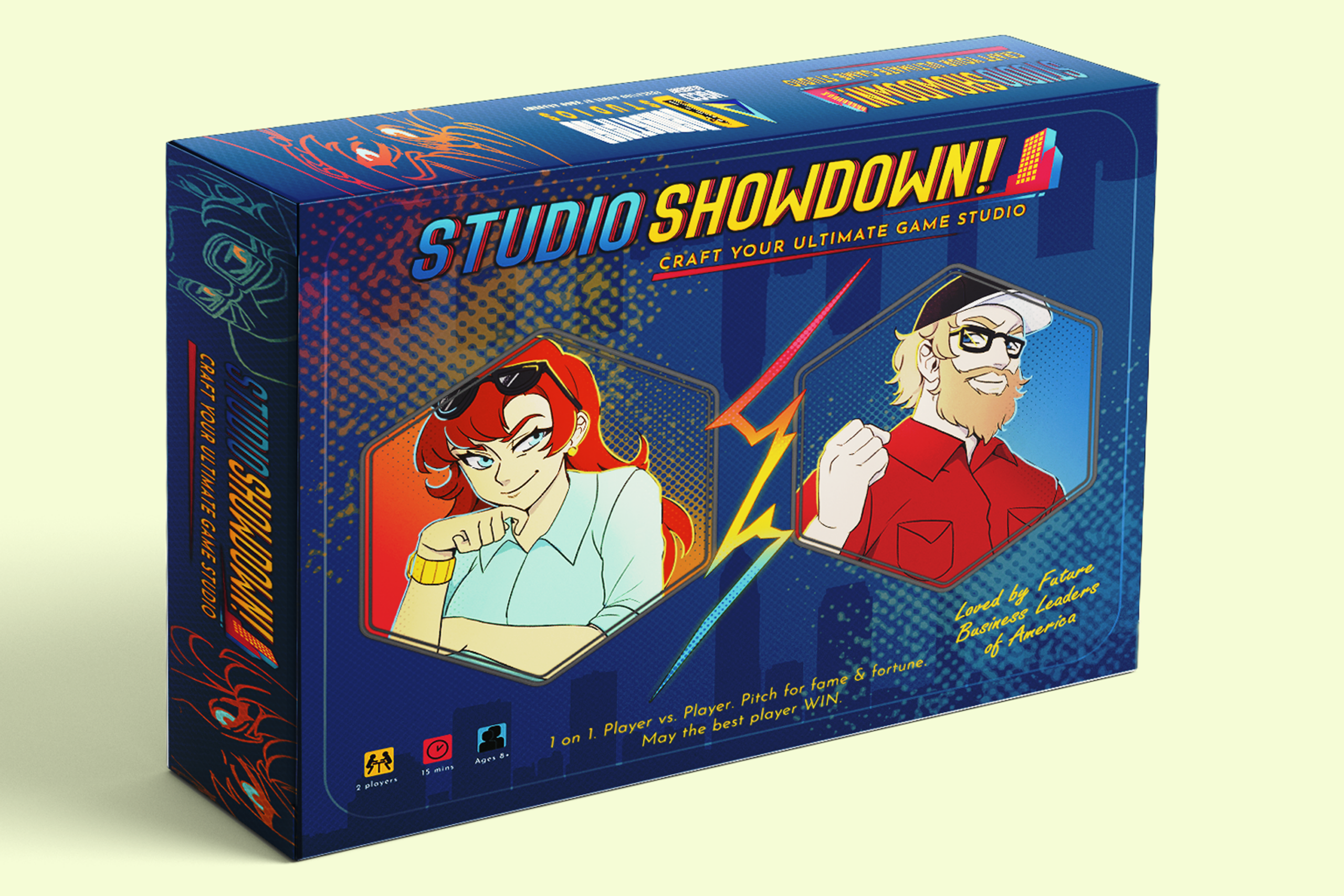
What if the most powerful tool for training a future game director isn’t a high-end GPU, but a simple deck of cards and a stopwatch? You know the frustration of watching students glaze over during a coding marathon or fighting for a hardware budget that never arrives. It’s time to stop defending gaming and start leading a studio. In a global market projected to hit $255 billion in 2026, the industry is hungry for visionaries who understand the “why” behind the “how.”
We’re here to help you bridge that gap. This guide reveals how to implement classroom activities for aspiring game developers that prioritize business strategy and logic over technical troubleshooting. You’ll learn how to transform your classroom into a high-stakes production environment where students build professional-grade portfolios through screen-free prototyping and entrepreneurial challenges. We’re moving beyond the syntax to master the systems, mechanics, and market realities that define the modern creator. Get ready to turn your students into studio leads who can thrive in any environment, from the latest Unity 6 builds to the open-source freedom of Godot 4.6. Let’s build something that stands out from the visual noise.
Key Takeaways
- Pivot from hobbyist play to professional production. Learn how to shift your curriculum toward a career-first model that treats every student like a studio founder.
- Discover why analog mechanics are the secret weapon for teaching complex logic. These screen-free classroom activities for aspiring game developers force students to master the “math” behind the fun.
- Master the 60-second investor pitch. Equip your students with the business vocabulary and the confidence to sell their creative vision to any board or stakeholder.
- Bridge the hardware gap with strategic simulations. Use Studio Showdown to teach high-stakes entrepreneurship and resource management without needing an expensive computer lab.
- Fix the “broken” game. Learn how to use iterative design activities to help students identify, analyze, and rebalance mechanics for a polished final product.
The Landscape of Classroom Activities for Aspiring Game Developers
The year is 2026. Gaming is no longer a niche hobby. It’s a $255.03 billion global powerhouse. For educators, this means the old model of “let’s build a simple platformer” is obsolete. We’re entering an era where classroom activities for aspiring game developers must reflect the high-stakes reality of a professional studio. It’s about moving from consumption to production. We’re not just teaching kids how to play; we’re teaching them how to lead. This shift requires a three-pillar approach to curriculum design: Technical mastery, Creative vision, and Strategic execution.
Industry literacy is the new gold standard. While coding remains a foundational skill, the ability to understand the process of creating a video game from a business perspective is what separates a hobbyist from a professional. Students shouldn’t just be “coders.” They should be founders. Your classroom needs to function like a mini-studio. Every project is a launch. Every deadline is a release date. Every critique is a board meeting. This mindset forces students to look beyond the screen and understand the systems that drive success.
The Social vs. Professional Club Model
Casual gaming clubs focus on social-emotional learning and friendship. That’s fine for some, and you can even explore Games night software from Gameznights to enhance those sessions, but it doesn’t build careers. Career-ready programs in 2026 are goal-oriented. They’re intense. They’re project-based. Instead of just playing, students engage in classroom activities for aspiring game developers that mirror real-world collaboration. They learn to manage assets, handle version control, and navigate team conflict. High standards. Sharp focus. Professional conduct. This model prepares students for the competitive landscape where over 250,000 jobs in the U.S. alone depend on this industry’s success.
The 2026 Industry Reality
The Studio Founder Mindset: Entrepreneurship in the Classroom
The “Founder First” approach isn’t just a buzzword. It’s a survival strategy. With 50% of studios already integrating AI into their development processes as of 2026, technical skills alone won’t secure a student’s future. They need to own the vision. This means classroom activities for aspiring game developers must evolve to include market dominance and creative leadership. We’re building studios, not just assets. We’re training the next generation of CEOs, not just scriptwriters.
Understanding the business of video games is the bridge between a bedroom hobby and a high-impact career. It’s about recognizing that every creative choice has a financial consequence. Integrating business simulation games into your curriculum provides a safe space for students to fail fast and iterate. They learn that a “fun” mechanic means nothing if the studio runs out of runway before the launch date. It shifts the focus from “is this cool?” to “is this viable?”
The Pitch is where the battle is won. It’s the most high-stakes activity you can run. Students shouldn’t just present their work; they should sell it. They need to analyze rival studios in the classroom and find the gaps in the market. Who is making the next mobile hit? Who is targeting the hardcore PC niche? This competitive analysis turns a standard assignment into a strategic clash for market share. It’s about outmaneuvering the competition with data, not just luck.
Mastering Professional Portfolios
College admissions officers have seen a thousand generic platformers. They’re looking for leaders. When students engage in classroom activities for aspiring game developers that focus on project management and budgeting, their portfolios stand out from the visual noise. They aren’t just students. They’re Lead Designers and Marketing Directors. Developing a Studio Charter defines these roles and forces accountability. It shows they can lead a team through a full development cycle, managing both people and resources effectively.
Financial Literacy Through Gaming
Real growth happens when we move beyond the easy money game. Students need to grapple with burn rates and ROI. They should understand how fundraising works and why industry trends affect production costs. Using game mechanics to teach these concepts makes the complex stuff feel like a quest. It turns a math lesson into a resource management challenge. If you want to see this in action, the Studio Showdown Board Game is the perfect catalyst for these high-stakes discussions.
The Analog Advantage: Why Board Games Beat Screens
Forget the $20,000 PC lab. You don’t need photorealistic textures to teach core mechanics. In fact, screens often hide the very logic students need to master. Digital engines handle the heavy lifting, but classroom activities for aspiring game developers should strip away the visual noise. When a student plays a board game, they aren’t just a user; they’re the CPU. They calculate the math. They feel the friction of a broken mechanic. They understand the economy of the game because they’re the ones moving the tokens. Analog play is the engine room of systems design.
Screens are a distraction. In a professional studio, the best ideas start on a whiteboard or a scrap of paper. By prioritizing the benefits of screen-free activities, you’re giving students the mental space to focus on pure design. They aren’t fighting with syntax or debugging a crash; they’re debating balance and player agency. This face-to-face interaction builds the soft skills that headsets kill. You can’t outmaneuver a rival studio if you can’t read the person sitting across from you. Negotiation, persuasion, and bluffing are the real tools of industry leaders.
Strategy board games are the ultimate equalizer. They allow every school, regardless of budget, to provide elite-level training. This accessibility ensures that talent, not just hardware, determines who becomes the next industry founder. If a game loop doesn’t work on a table, it won’t work in Unreal Engine 5.7. It’s that simple. By mastering the physical, students develop a deeper intuition for how systems interact, preparing them for a career where they’ll oversee complex digital ecosystems.
Teaching Design Logic Without Code
Cards and dice are the building blocks of logic. When students use strategy board games as a reference, they learn how to iterate in seconds. No compiling. No loading screens. Just immediate feedback. This speed allows for a higher volume of classroom activities for aspiring game developers, turning your students into seasoned designers. They learn to see “outmaneuvering” as a strategic design choice rather than just a play style, embedding competitive depth into everything they create.
Reducing Screen Fatigue in 2026
The “Digital Detox” isn’t just a lifestyle choice; it’s an educational necessity. By 2026, the isolation of high-end VR and 4K monitors has created a demand for shared physical spaces. Board games foster a high-intensity social culture that digital environments can’t replicate. Students collaborate. They argue. They build a community that doesn’t rely on a stable Wi-Fi connection. This shared table space is where the most creative sparks happen, fostering deeper collaboration through physical components and shared goals.
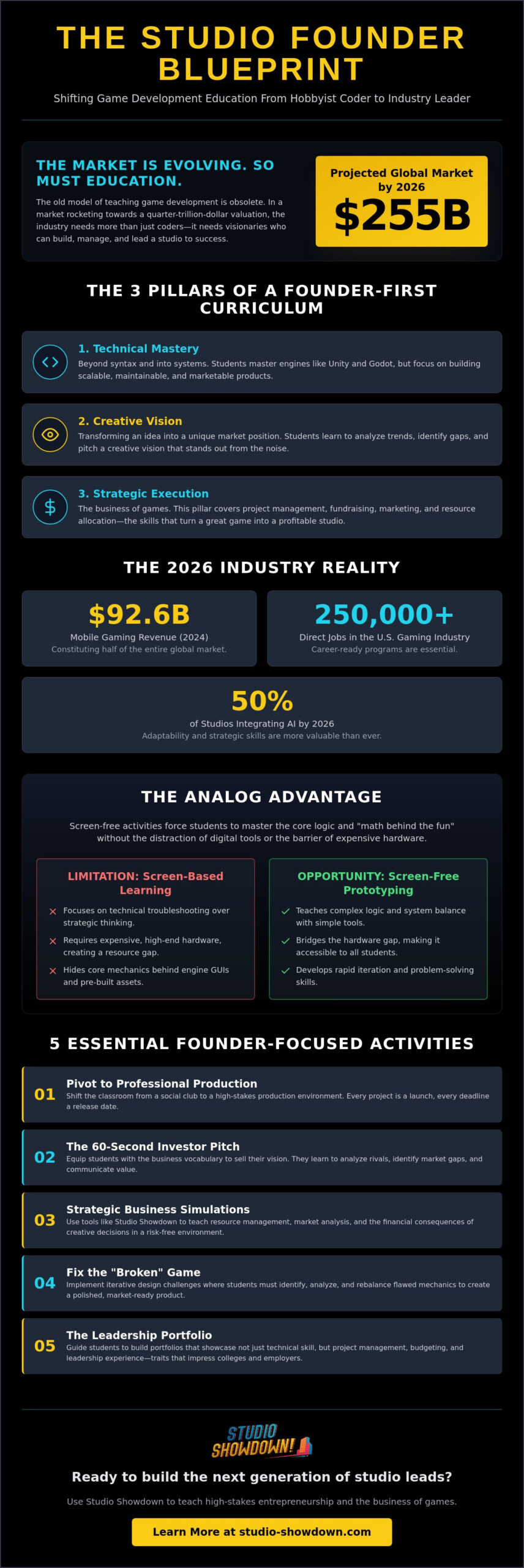
5 Essential Classroom Activities for Aspiring Game Developers
Practical execution is where theory meets reality. You’ve set the stage. Now, it’s time to run the studio. These classroom activities for aspiring game developers move beyond the screen to challenge the intellect and strategic instincts of your students. They’re designed to be repeatable, scalable, and high-impact. No expensive hardware required. Just sharp minds and a competitive spirit.
- Activity 1: The 60-Second Pitch. Students stand before a “Board of Investors.” They have one minute. No slides. No fluff. They must sell the core loop, the target audience, and the monetization strategy. It’s a masterclass in brevity and vision.
- Activity 2: The Balancing Act. Hand students a “broken” game. Maybe a specific card is overpowered or the resource economy is stagnant. Their mission is to fix the math. This is systems design in its purest form. If the game isn’t fair, the players leave.
- Activity 3: The Fundraising Sprint. Simulate the hunt for studio capital. Students role-play interactions with venture capitalists, navigating the stress of burn rates and equity. It’s a quest for survival that mirrors the real-world struggle for studio runway.
- Activity 4: Market Rivalry. Deep dive into competitor analysis. Students research existing hits to find the “white space” in the market. If mobile gaming took half the market in 2024, they need to find the next untapped niche.
- Activity 5: The Studio Showdown. This is the capstone. A competitive tournament where business dominance is the only goal. Students use every strategic tool in their arsenal to outmaneuver rivals and launch the most successful studio.
Ready to bring these high-stakes challenges to your students? Get the complete Classroom Bundle and start building your studio today.
Pitching to School Administration
You need to frame your program as a STEM and Business hybrid. Don’t just talk about “games.” Talk about the $255 billion global economy. Use industry projections to prove the educational value of these classroom activities for aspiring game developers. Show them that you’re teaching financial literacy, project management, and leadership. When the board sees that you’re preparing students for high-value careers, the funding for instructional tools follows.
Managing Logistics and Hardware
Keep your overhead low with a “Bring Your Own Analog” day. Tabletop simulations are the ultimate equalizer. They keep the classroom accessible to every student regardless of their home tech setup. For larger environments, sourcing multi-unit bundles ensures that every student has a seat at the table. You don’t need a 4K monitor to teach the logic of a market-dominating hit. You just need the right systems in place.
Mastering the Business of Games with Studio Showdown
Stop looking for a digital solution to a strategic problem. Studio Showdown is the definitive platform for high-stakes classroom activities for aspiring game developers. It’s more than a game. It’s a simulation of the global gaming economy. In this environment, students don’t just write scripts; they launch brands. They don’t just follow tutorials; they build empires. This is where technical intuition meets market reality.
The core experience puts students in the hot seat as studio founders. They must launch hits while navigating the cutthroat reality of market saturation. It’s about outmaneuvering rivals. It’s about knowing when to pivot and when to push. Through these mechanics, students master the high-value skills of fundraising, pitching, and strategic dominance. They learn that a great product is only half the battle. The other half is winning the market. This is the “Showdown” mindset.
The Studio Showdown: Educator Edition is built for the trenches of high school education. It’s designed to be fast, engaging, and deeply educational. We’ve stripped away the fluff and focused on the pressure points of the industry. This isn’t a leisure activity. It’s a career-accelerant. By integrating these classroom activities for aspiring game developers into your weekly schedule, you’re giving your students a competitive edge that a standard coding class simply can’t match.
A Hands-On Learning Experience
Moving from player to owner is a psychological shift. Studio Showdown uses unique tabletop mechanics to make entrepreneurship feel visceral. Students feel the weight of every investment. They experience the rush of a successful launch. It’s the ultimate business board game for the 2026 classroom because it demands vision. It rewards boldness. It punishes hesitation. There’s no “undo” button in the real market, and there isn’t one here either.
Integrating Studio Showdown into Your Curriculum
Implementation is seamless. Use the game for weekly Development Sprints to keep energy high and focus sharp. Run monthly Showdown events to crown the dominant studio founder. For large groups and school clubs, the Classroom Bundle provides everything you need to scale this experience across multiple teams. It’s a turnkey solution for professional-grade education. Don’t let your students just play the game. Let them own the studio.
Explore the Studio Showdown Educator Edition for your classroom today.
Launching the Next Generation of Visionaries
The transition from a casual gaming club to a professional production studio starts with a single strategic choice. We’ve moved beyond the isolation of the screen to embrace the systems logic and business grit that define the $255 billion market of 2026. Effective classroom activities for aspiring game developers prioritize the “why” over the “how,” ensuring your students don’t just follow tutorials but lead industries. By mastering analog prototypes and high-stakes pitching, they build the business acumen needed to survive the high-pressure reality of a modern studio.
Success isn’t accidental. It’s engineered. Developed by VGCD Academy and DEMYSTIFIED Studios, our curriculum tools are designed specifically to foster student entrepreneurship. Educators around the globe are already using these systems to help students build career-ready portfolios that stand out from the visual noise. It’s time to stop defending play and start demanding excellence.
Ready to transform your space into a high-performance studio? Order the Studio Showdown Classroom Bundle for your school and equip your students with the tools they need to dominate the market. The next hit game is waiting to be founded in your classroom. Let’s build it together.
Frequently Asked Questions
What are the best classroom activities for aspiring game developers?
The most effective classroom activities for aspiring game developers focus on systems logic and business strategy rather than just syntax. These include high-stakes investor pitches, iterative balancing exercises, and market gap analysis. By stripping away the screen, students master the core mechanics that drive player engagement and studio profitability.
How do I start a gaming club if my school has no budget for PCs?
You start with an analog-first model. Paper prototyping and strategy board games provide elite-level design training without a single GPU. This approach democratizes game education. It ensures that students in every district can learn the logic of the $255 billion gaming industry using only shared table space and physical components.
Can game development activities help with college applications?
Absolutely. Colleges prioritize students who demonstrate leadership and project management. A portfolio that includes a “Studio Charter” or a documented “Founding” experience stands out from the visual noise of generic coding projects. It shows a student understands the complex intersection of art, technology, and market dominance.
What is the difference between an e-sports club and a game development club?
E-sports clubs focus on the consumption and mastery of existing games through competitive play. Game development clubs are production environments where students act as creators and entrepreneurs. While e-sports builds reflexes, development programs build the strategic instincts required to launch the next global hit.
Why should high school gaming clubs include strategy board games?
Strategy board games force students to become the “CPU” of the system. Without an engine to handle calculations, they must understand the math and friction of every mechanic. This builds a deeper intuition for game loops and player agency. It’s the most effective way to teach complex design logic in high-intensity social environments.
How can I convince my administration to sponsor a gaming business club?
Frame the club as a STEM and Business hybrid. Use the fact that the U.S. video game industry supports over 250,000 jobs to prove career relevance. Show them that you aren’t just playing games. You’re training future studio leads in financial literacy and resource management through targeted classroom activities for aspiring game developers.
What professional skills do students learn through game simulations?
Students master fundraising, risk assessment, and market analysis. These simulations teach them to manage “burn rates” and secure studio capital. These aren’t just gaming skills. They are universal professional competencies that apply to any high-stakes creative industry.
Are there specific board games that teach game design and entrepreneurship?
Studio Showdown is the premier tool designed specifically for this purpose. The Educator Edition allows students to act as studio founders, launching hits and outmaneuver rivals. It bridges the gap between a hobby and a career by simulating the real-world pressures of the gaming economy.