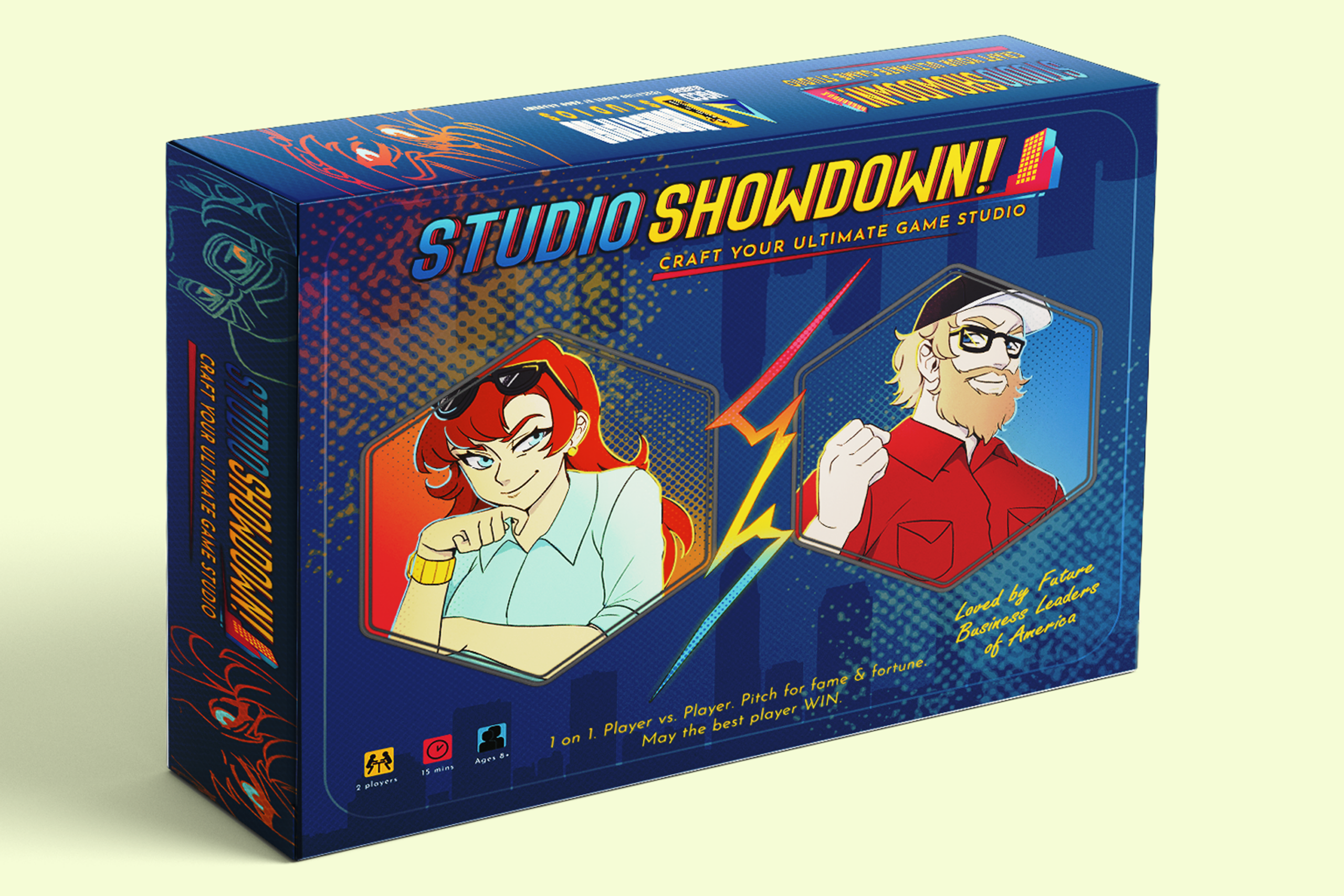
Most 16-year-old boys don’t need another plastic gadget. They need a launchpad. Finding the right gifts for aspiring game developers means shifting the focus from passive consumption to active production. It’s about moving beyond the screen to build real-world creative muscle. In a 2026 market where the global video game industry is projected to reach 351.6 billion dollars, the best gift isn’t just a toy. It’s a strategic investment in their future as a creator or founder.
We know the struggle. You want to support their passion without wasting money on clutter they’ll outgrow by next month. It’s frustrating to buy a gift that doesn’t spark a lasting fire. This guide cuts through the noise to help you find tools that fuel ambition and professional success. We promise to show you how to bridge the gap between playing a game and building an empire. We’ll break down the best software subscriptions, design bibles, and strategic tabletop experiences that turn a hobby into a career. Get ready to see them genuinely engaged in the craft of creation.
Key Takeaways
- Understand why age 16 is the definitive moment to pivot from a digital consumer to a creative architect.
- Discover how to find gifts for aspiring game developers that prioritize professional ambition and skill-building over generic gadgets.
- Master the 5-question audit to ensure every gift offers lasting engagement and real-world career value.
- Learn how tabletop strategy experiences like Studio Showdown prepare the next generation for the high-stakes world of game studio management.
Why Finding the Best Gifts for 16-Year-Old Boys is a Strategic Challenge
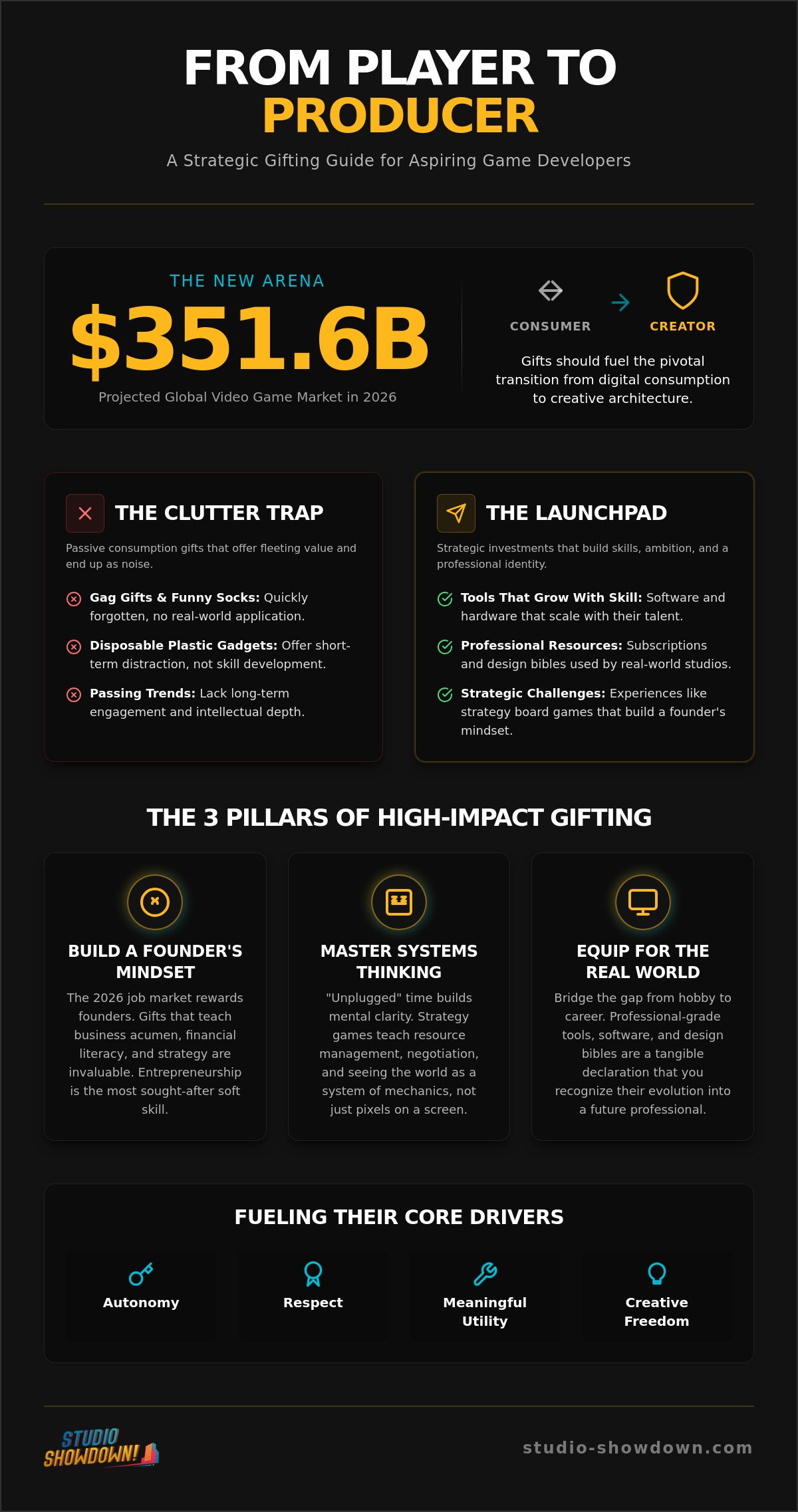
Gifting a sixteen-year-old isn’t a casual errand. It’s a high-stakes tactical maneuver. At this age, the line between childhood and professional ambition blurs. They’ve spent a decade consuming content. Now, they’re ready to build it. Most generic guides suggest plastic junk or funny t-shirts. That’s a mistake. In 2026, the best gifts for aspiring game developers are tools that bridge the gap between a hobby and a career. It’s about moving from the couch to the director’s chair. You aren’t just buying an object; you’re investing in an identity.
The “toy” culture is dead for this demographic. Sixteen marks the pivotal transition from digital consumer to creative architect. They don’t want distractions. They want leverage. A successful gift must balance the “cool” factor with emerging adult-level responsibilities. It needs to look good on a desk and perform in a production environment—to organize a developer’s suite of devices with elegant engineering, you can explore udoq 400. 2026 gift-giving requires a relentless focus on utility, intellectual stimulation, and personal branding. If it doesn’t help them level up, it’s just clutter.
The Psychology of the 16-Year-Old Recipient
They crave autonomy. They want respect. For a teen obsessed with the process of creating a video game, identity is everything. They’ve moved past the need for “expensive” status symbols that offer no function. Instead, they seek meaningful utility. They want to be seen as peers in the creative community. A milestone gift for a sixteen-year-old is a tangible declaration that you recognize their evolution from a casual player into a serious future professional. It’s about providing the professional-grade tools they need to claim their seat at the table. Logic. Strategy. Creative freedom. These are their primary drivers.
Moving Beyond the Gag Gift Trap
Funny socks end up in the back of the closet. Gag gifts are visual noise. In the creative industry, you need high-signal investments. A high-signal gift reflects a deep understanding of a teen’s specific career interests. It shows you’ve been paying attention to their late-night coding sessions or their complex world-building notes. To choose wisely, you must distinguish between passing trends and core passions. Focus on items that provide:
- Long-term engagement: Tools that grow with their skill level.
- Professional relevance: Equipment used in real-world studios.
- Intellectual depth: Challenges that require strategic thinking.
Don’t settle for the easy choice. The best gifts for aspiring game developers are those that spark a fire that lasts for years, not just until the wrapping paper is cleared away.
Beyond Gadgets: Categorizing Gifts That Actually Resonate
Hardware is the baseline. It’s not the finish line. While many gift guides focus exclusively on headsets or the latest consoles, they miss the psychological engine behind the creator. Successful gifts for aspiring game developers must hit three specific pillars: Tech, Experience, and Skill-Building. It’s about finding tools that don’t just occupy time but build a legacy. You need to look for items that transition them from being a player to being a visionary.
Physical products still hold immense value in our hyper-digital world. They provide a vital break from blue light. They offer a tangible sense of progress and tactile feedback. Unplugged time isn’t just about resting. It’s about mental clarity. It’s about seeing the world as a system of mechanics rather than just pixels on a screen. When a teen holds a physical tool, their brain engages differently. They start to analyze systems. They begin to understand the architecture of engagement.
Skill-Building and Entrepreneurial Tools
The 2026 job market doesn’t just reward coders. It rewards founders. Entrepreneurship is the most sought-after soft skill in today’s competitive landscape. Gifts that teach financial literacy and business acumen through play are invaluable for long-term success. Industry experts have noted that the process of making your own games leads to quality learning that sticks far longer than passive tutorials. It’s a mental gym for the next generation of studio leads.
This is where strategy board games come into play. These tools force players to manage limited resources, negotiate with rivals, and think three steps ahead. It is the business of play. It’s about linking a gift to a potential career path without it feeling like a weekend homework assignment. You’re giving them the mental framework of a studio head while they think they’re just having a game night.
Experience-Based and Social Gifts
Competition is the lifeblood of sixteen-year-old social dynamics. It’s how they bond. It’s how they test their limits. Most gaming today is isolated, occurring behind a screen and a microphone. We need to shift that energy toward collaborative, real-world social challenges. Fostering screen-free activities that feel high-stakes and exciting is the ultimate win for any parent looking to reconnect with their teen.
High-stakes social play builds communication skills that a headset simply cannot provide. It creates memories that outlast any digital download or seasonal update. If you want a gift that combines all these pillars into one package, consider a tool that puts them directly in the founder’s seat. A game like Studio Showdown offers exactly that kind of immersive, competitive experience that builds real-world acumen through intense, face-to-face tactical play.
The Rise of the ‘Prosumer’ Gamer: Why Strategy Board Games Win
The prosumer gamer doesn’t just consume. They dissect. Most sixteen-year-old boys have spent thousands of hours inside digital worlds. They’ve mastered the controls. Now, they want to master the systems. This represents a massive psychological shift from a “player” mindset to a “studio founder” identity. They no longer just want to beat the boss. They want to know how the boss was balanced, how the economy was designed, and how the studio stayed profitable during development. When selecting gifts for aspiring game developers, you must feed this hunger for systemic knowledge.
Analog strategy games offer a transparency that digital titles often hide behind lines of code. In a video game, the computer handles the math. In a board game, the player is the engine. You see every gear turning. You manage every resource manually. This hands-on approach builds real-world professional acumen. It turns abstract concepts like “resource management” or “market volatility” into tangible, high-stakes decisions. It’s a laboratory for game design. By understanding tabletop mechanics, a teen builds a mental library of game loops that adds genuine value to their future creative portfolio.
Digital vs. Analog: A 2026 Comparison
Digital gaming often relies on twitch-based reflexes. Tabletop gaming demands long-term strategic planning. While a headset facilitates communication, it often lacks the nuance of direct negotiation. Face-to-face interaction requires reading social cues, managing optics, and executing high-pressure deals. Business concepts are retained significantly better through the physical manipulation of game pieces and face-to-face tactical debate than through automated digital simulations. It’s the difference between watching a flight sim and actually sitting in the cockpit. Analog play forces the brain to stay active, calculating every move against a live opponent who can look you in the eye.
The Founders Interest: Game Design and Business
Game development has become the rock star career path of the mid-2020s. It’s the ultimate blend of art, tech, and commerce. However, the technical skill of coding is only half the battle. To survive in a 351 billion dollar industry, they need to understand the hustle. They need to understand the startup grind. You can bridge the gap between a simple hobby and a professional future by introducing a business board game that mirrors the industry.
Strategy games simulate the intense pressure of a real-world startup. They force players to deal with limited runway, aggressive competitors, and shifting market demands. This isn’t just play. It’s a simulation of the high-stakes showdowns found in every major studio. These gifts for aspiring game developers provide the mental toughness and tactical flexibility required to lead a team. They learn that winning isn’t just about the best code. It’s about the best strategy.
Evaluating Engagement: A Parent’s Guide to Choosing Wisely
Price is a vanity metric. When searching for gifts for aspiring game developers, the real currency is engagement. You need a framework to separate professional tools from digital clutter. This is where the 5-Question Audit comes in. Before you click buy, ask yourself: Will he actually use it? Does it provide a genuine challenge? Is it mature enough for a 16-year-old? Does it offer high replay value? Most importantly, does it bridge the gap to his future career? If the answer to any of these is “no,” you’re just buying clutter.
Avoid the easy money game trap. Many products promise success through simplistic, repetitive mechanics. They’re boring. They don’t respect his intelligence. A 16-year-old developer wants to solve complex problems, not just push buttons. You must balance what he thinks he wants, like the latest shiny gadget, with what he actually needs. He needs a tool that develops his strategic mind. Real growth happens at the edge of his comfort zone.
The Complexity Threshold
Don’t patronize his intellect. Most “educational” toys are too simple for a teenager. You need “high-floor, high-ceiling” experiences. These are tools that are easy to start but take a lifetime to master. For this demographic, hard is often synonymous with fun. If a gift doesn’t push back, he’ll lose interest in a week. Look for systems that require deep logic and long-term planning. The goal is to find tools that grow with him as his skills evolve.
Social Integration and Peer Currency
Isolation is the enemy of creativity. Does the gift facilitate a sense of community? Can he play it with his friends? Social currency is vital for a 16-year-old. He needs gifts that make him the center of the action, not more reasons to hide behind a screen. A great gift should be a catalyst for connection. It should turn his bedroom into a war room where he and his peers can debate, negotiate, and compete. This builds the communication skills he’ll need to lead a real studio one day.
If you’re ready to move beyond generic gadgets and provide a high-stakes challenge, it’s time to look at the ultimate strategic tool. Invest in a gift that passes every audit and builds genuine founder skills. Order Studio Showdown and give him the competitive edge he deserves.
Studio Showdown: The Ultimate Gift for Aspiring Game Founders
Most gifts are passive. Studio Showdown is an offensive move. It is the definitive strategy experience for the next generation of developers. It doesn’t just ask them to play; it forces them to lead. This isn’t a digital simulation hidden behind a screen and a user interface. It’s a high-stakes showdown of fundraising, pitching, and market dominance. For those seeking the best gifts for aspiring game developers, this is the final boss of gift-giving. It demands focus. It rewards brilliance. It turns a hobby into a mission.
The pedigree of this experience is unmatched. It was designed by industry veterans from VGCD Academy and DEMYSTIFIED Studios. These are professionals who understand the brutal reality of the production cycle. They’ve distilled years of studio-level experience into a tactical board game. It provides a hands-on way to build a professional portfolio of strategic thinking while engaging in fierce competition. When you prioritize gifts for aspiring game developers that focus on systems, you give them a head start. They aren’t just learning the rules of a game; they’re learning the rules of the multi-billion dollar industry.
What Makes Studio Showdown Unique?
Studio Showdown doesn’t pull punches. It utilizes real-world business mechanics that require players to manage sudden market shifts and counter rival studio strategies. Every turn is a high-pressure decision. Every decision has a tangible cost. The high-quality components are designed for a premium, professional tabletop feel. They command respect on any desk or conference table. It is the perfect centerpiece for high-stakes game nights with family or peers. It transforms a casual Friday night into a tactical war room. The tactile feedback of the cards and pieces reinforces the weight of every strategic choice.
An Investment in Their Future
Playing Studio Showdown translates directly to real-world entrepreneurship skills. It teaches them to value their runway, protect their intellectual property, and pivot when the market turns cold. This is how you move from “just a gamer” to a “studio founder.” Immersive play is the best teacher. It builds the mental muscle required to survive the startup grind and navigate complex negotiations. If you want to give a gift that actually matters, stop looking at hardware. Start looking at strategy. Give them the tools to win before they even start their first company.
Order Studio Showdown for the 16-year-old founder in your life. This is more than a game. It’s a declaration of their potential. It’s the tool they need to master the business of play and dominate the competitive landscape of tomorrow.
Level Up Their Future
Sixteen is the definitive age to stop playing by the rules and start writing them. We’ve explored why the best gifts for aspiring game developers must move beyond passive screens to build professional-grade strategic muscle. By focusing on high-signal tools that foster social connection and business acumen, you’re providing more than a distraction. You’re providing a career foundation. It’s time to trade generic gadgets for the high-stakes reality of the industry. You aren’t just buying a product. You’re validating their ambition.
Studio Showdown represents the pinnacle of this transition. Developed by the veterans at VGCD Academy and DEMYSTIFIED Studios, it brings immersive entrepreneurship and pitching mechanics to the tabletop. With premium components designed for the next generation of founders, it turns any game night into a professional war room. Don’t let their creativity settle for mediocre toys. Give them a tool that respects their intellect and challenges their vision.
Give them the gift of a gaming empire with Studio Showdown.
The next great studio founder is already in your house. Now, give them the tactical edge they need to win.
Frequently Asked Questions
What are the most popular hobby-based gifts for 16-year-old boys in 2026?
High-performance hardware remains a staple, but the trend has shifted toward tools that facilitate creation. Subscriptions to professional engines or high-end 3D modeling software like Blender 5.1 are massive. Beyond software, strategic tabletop experiences that simulate industry environments are surging in popularity. These gifts move the needle from casual play to professional development. They offer a tangible way to engage with complex systems while building a creator identity.
Are board games a good gift for a 16-year-old who usually plays video games?
Absolutely. Board games strip away the automated code and force the player to become the engine. This transparency is addictive for anyone interested in game design. It builds a deeper understanding of balance, resource management, and player psychology. For a teen used to digital interfaces, the tactile, high-stakes negotiation of a physical strategy game provides a refreshing and intellectually stimulating challenge that digital titles often hide.
How much should I spend on a 16th birthday gift for a son or nephew?
There is no fixed rule, but the focus should be on the gift’s signal rather than its price tag. A meaningful investment in their future career often resonates more than a generic luxury item. Whether it’s a professional software license or a premium tabletop strategy game, aim for items that offer hundreds of hours of engagement. Quality tools that build real-world skills provide a much higher return than fleeting gadgets.
What kind of gifts help a 16-year-old boy build a college or career portfolio?
Look for gifts for aspiring game developers that result in a finished product or a documented achievement. Professional assets, design bibles, specialized tools like Siebly.io JavaScript SDKs, or strategy games that teach studio management are excellent choices. These items allow a teen to discuss their creative process and strategic decision-making during interviews. Demonstrating an understanding of the business side of the industry is a powerful way to stand out to admissions officers and recruiters alike.
What are some high-quality screen-free gift ideas for teens?
Premium strategy board games, high-end design notebooks, and professional-grade art supplies are top tier. These items provide necessary mental clarity and foster face-to-face social interaction. Tactical tabletop games are particularly effective because they maintain the competitive intensity of video games without the digital fatigue. They encourage long-term planning and social negotiation. These are vital skills that a screen simply cannot replicate in an isolated digital environment.
Is Studio Showdown suitable for a 16-year-old with no prior business knowledge?
Studio Showdown is perfectly accessible for a teen with zero business background. The game is built to teach complex concepts like fundraising and market shifts through intuitive, high-stakes gameplay. It doesn’t feel like a lecture; it feels like a battle. By the end of the first session, players naturally grasp the fundamentals of studio management. It is a high-floor, high-ceiling experience that rewards growth and tactical experimentation over time.
Can Studio Showdown be played with the whole family?
It is an ideal centerpiece for family game night. While the themes are professional, the mechanics are engaging for anyone who enjoys a strategic challenge. It facilitates direct negotiation and high-stakes social interaction between parents and teens. Playing together allows parents to see their teen’s strategic mind in action. It transforms a standard evening into a collaborative and competitive experience that builds lasting memories and mutual respect through play.
Why is entrepreneurship a popular interest for boys this age?
For this generation, being a founder is the new rock star status. They’ve grown up seeing independent creators disrupt massive industries. Entrepreneurship offers them a path to total creative control and financial independence. It combines their technical skills with their desire for social impact. Providing gifts for aspiring game developers that lean into this founder mindset acknowledges their ambition. It gives them the tools to turn their creative vision into a reality.