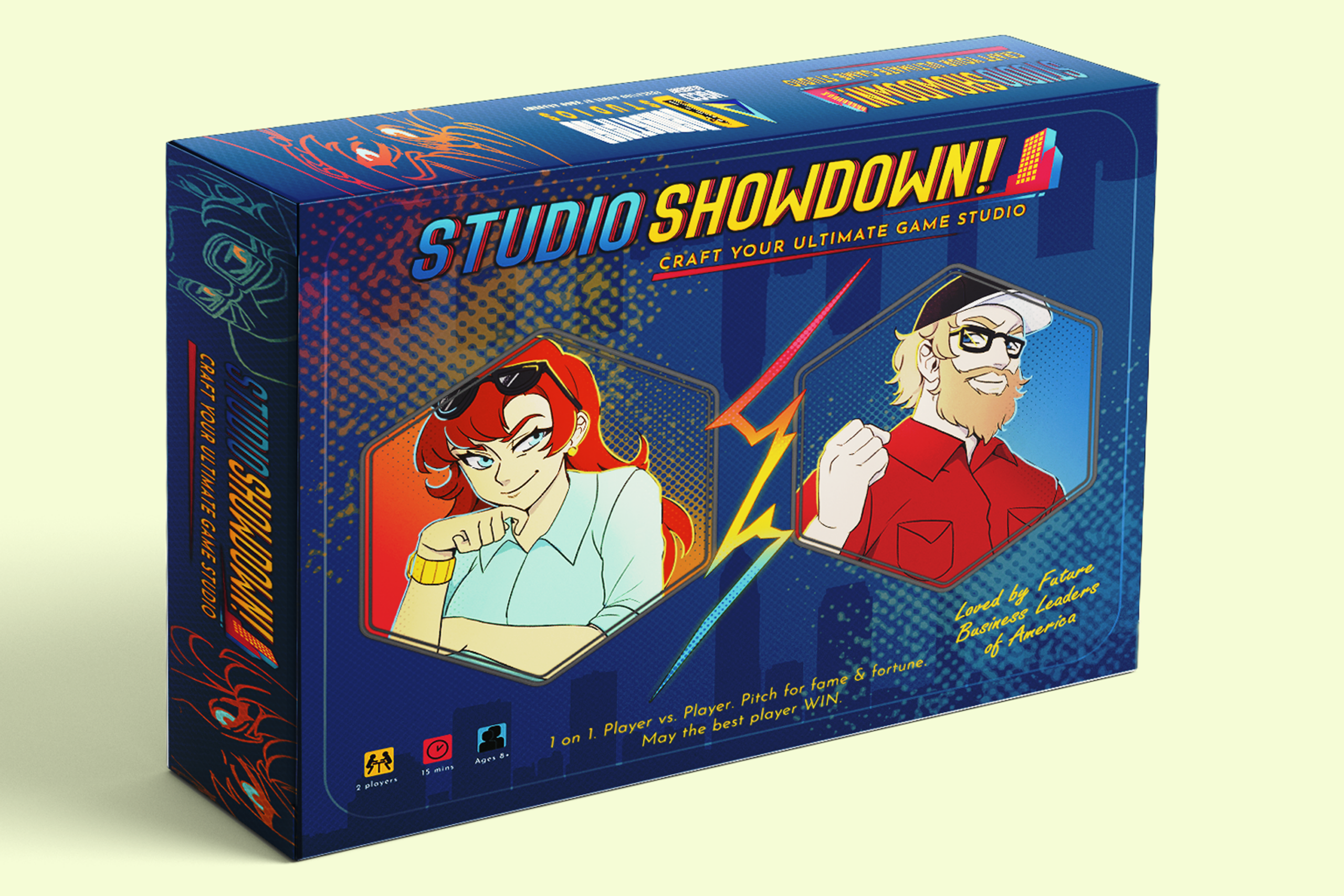
Business isn’t a solo browser tab. It’s a social showdown where negotiation beats data entry every single time. While 1:1 laptop programs were once hailed as the ultimate solution, they’ve often left students staring blankly at spreadsheets, disconnected from the pulse of real entrepreneurship. In 2026, the most effective business simulation games for high school aren’t just about clicking buttons. They’re about high-stakes decisions and face-to-face strategy. You’ve likely seen the glazed eyes that come with screen fatigue. It’s time to cut through the digital noise and bring the heat back to the classroom.
We agree that teaching soft skills like pitching and financial literacy requires more than a passive video. You want your students to build professional portfolios and think critically under pressure. This guide shows you exactly how to transform dry theory into a competitive arena using the most engaging tools available today. We’ll preview the latest market trends, compare digital platforms, and explore how tactile experiences like the Studio Showdown Board Game are driving massive improvements in student performance. Discover the strategy to turn your classroom into a powerhouse of innovation and professional success.
Key Takeaways
- Move beyond static textbooks to dynamic business simulation games for high school that mimic real-world market volatility and entrepreneurial pressure.
- Compare the scalability of digital platforms with the superior social negotiation and body language reading found in analog board games.
- Identify the essential features of high-impact simulations, focusing on industry relevance and core concepts like equity and fundraising.
- Learn a two-step integration process to align simulations with state STEM standards while ensuring a smooth classroom rollout.
- Discover how the Studio Showdown Board Game transforms game development theory into a high-stakes arena for mastering professional pitches.
What Are Business Simulation Games for High School?
Static textbooks belong in the archives. Modern business simulation games for high school are dynamic engines designed to mimic the volatility of the global market. They aren’t just games. They are stress tests for the next generation of CEOs. Students move from being passive observers of case studies to active participants in high-stakes entrepreneurial challenges. This isn’t about reading history; it’s about making it. In 2026, the priority has shifted from rote memorization to the development of a founder mindset. Educators now understand that knowing a definition is useless if a student can’t apply it when a competitor slashes prices.
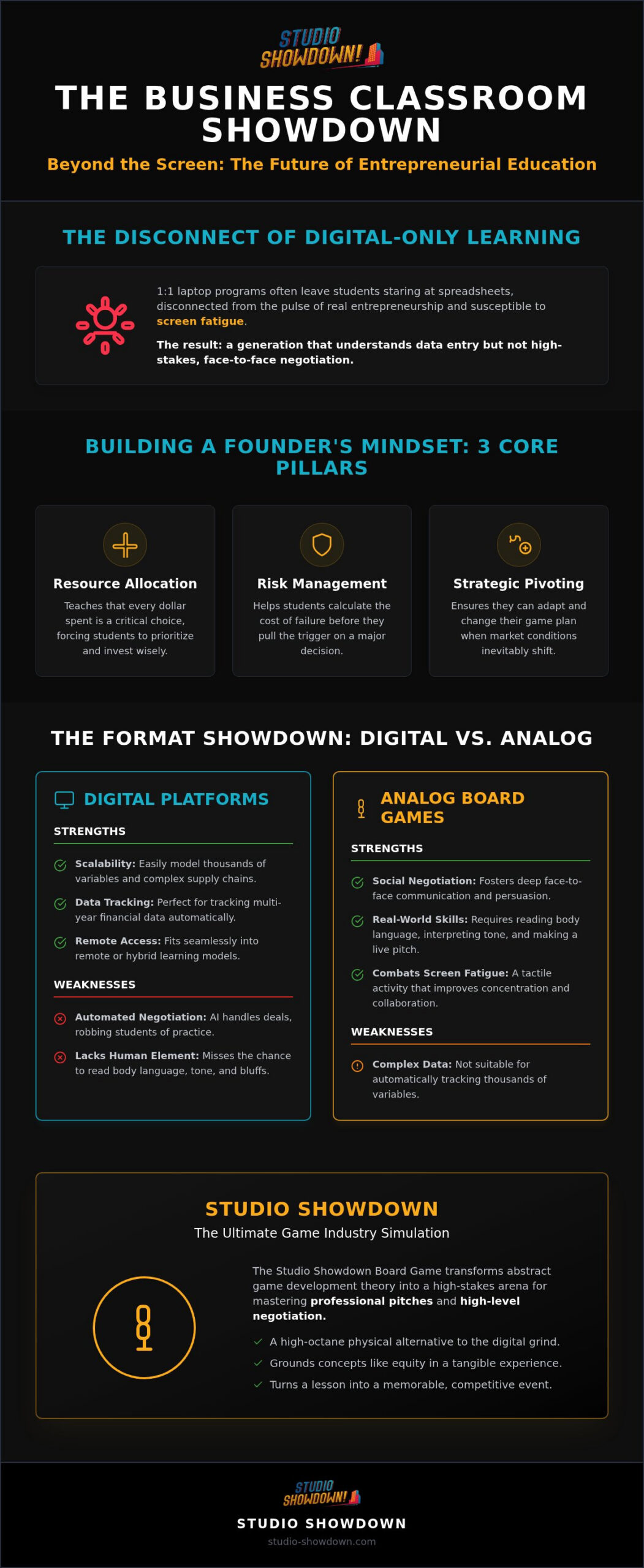
The goal is to move beyond the “what” and into the “how.” These simulations force students to grapple with the same pressures found in demanding professional environments. Through these interactive tools, classrooms focus on three core learning pillars. First, resource allocation teaches them that every dollar spent is a choice made. Second, risk management helps them calculate the cost of failure before they pull the trigger. Finally, strategic pivoting ensures they can change their game plan mid-stream when market conditions shift. It’s about grit, intuition, and the courage to make a call under pressure.
The Evolution of Educational Simulations
The journey of business simulation games began with clunky, data-heavy spreadsheets that lacked soul. They were functional but failed to capture the imagination. Today, these tools have evolved into immersive, story-driven environments. They integrate modern industries like tech and game development, reflecting the world students actually inhabit. This evolution prepares them for more advanced strategy board games that require deep tactical thinking and social negotiation. By blending digital precision with narrative depth, these simulations turn abstract theory into a visceral experience that sticks.
Why High School is the Critical Window
High school is the ultimate bridge. It’s the gap between general education and career technical education (CTE). This is the critical window to build financial confidence. Before students enter the workforce or face college debt, they need to understand how money moves. Simulations provide a safe, risk-free environment to fail. A lost investment in a classroom simulation is a lesson learned. A lost investment in the real world can be a catastrophe. We’re fostering an entrepreneurial spirit that gives students the professional edge they need to lead, not just follow. They leave the classroom with more than just a grade; they leave with a portfolio of strategic wins.
Digital vs. Analog: Choosing the Right Format
The 1:1 laptop era changed the classroom. It made data accessible. It made simulations scalable. But it also created a wall of glass between students. Digital business simulation games for high school excel at heavy lifting. They model complex supply chains. They track multi-year financial data. They fit perfectly into remote learning models. However, automation has a cost. When an AI handles the negotiation, the student misses the human element. They lose the chance to read a room or sense a bluff.
The analog edge is where the real “Showdown” happens. Business is inherently social. It’s a series of face-to-face confrontations. Board games foster deeper social negotiation. They require students to interpret body language and tone of voice. You don’t just click a button to close a deal; you look your classmate in the eye and make a pitch. This creates memorable learning outcomes that a browser tab simply cannot replicate. It turns a lesson into a high-stakes event.
The Case for Screen-Free Learning
Screen fatigue is real. Students spend hours tethered to devices, leading to fragmented focus and passive scrolling. Prioritizing screen-free activities in the curriculum improves concentration. It forces verbal communication. Collaborative problem-solving becomes a physical act as students move pieces and trade resources. There’s a tactile satisfaction in holding a game board. It grounds the abstract concepts of equity and market share in something tangible. If you want to break the cycle of disengagement, the Studio Showdown Board Game offers a high-octane physical alternative to the digital grind.
When to Go Digital
Digital formats still have their place in 2026. Use software when you need to model thousands of variables or track long-term supply chain shifts. Digital tools are ideal for hybrid learning models where students need access from home. They integrate seamlessly with your existing learning management systems (LMS) for easy grading. 88% of teachers who use digital games report increased student engagement, according to recent industry data. The key is balance. Use digital for the data, but use analog for the adrenaline. Combine both to create a comprehensive entrepreneurial experience that prepares students for the professional world.
Key Features of Effective High School Business Simulations
Not all simulations are created equal. A good game is just a game. A great tool is a career launchpad. Effective business simulation games for high school must bridge the gap between classroom theory and real-world results. High-stakes decisions only matter if students care about the outcome. If the scenario is boring, the learning stops. In 2026, over 80% of students found gamified learning to be more motivating than traditional courses. To hit that level of engagement, the simulation must mirror the world they actually inhabit.
Real rigor involves more than simple math. It requires students to manage fundraising rounds, navigate equity splits, and fight for market share. These aren’t just buzzwords; they’re the mechanics of survival. When a student successfully leads a company through a series of funding rounds, they aren’t just earning a grade. They’re building a narrative for their professional portfolio. This is how they prove they can handle the pressure of the digital economy before they even graduate.
Industry-Specific Passion Projects
Forget the lemonade stand model. Today’s students are consumers of global tech and media. They want to build empires, not kiosks. High-tech entrepreneurship is the ultimate hook for modern learners. The business of creativity, specifically game development, offers the perfect simulation environment. It combines artistic vision with cold, hard financial data. By connecting classroom play to professional career paths in the digital economy, you show students that their interests have real-world value. They learn that a great product is nothing without a solid business plan to back it up.
Soft Skills vs. Hard Data
Hard data is only half the battle. The real magic happens during “The Pitch.” Students must learn to sell an idea to rivals or skeptical investors. This requires strategic outmaneuvering and the ability to think three steps ahead of the competition. Resource management under pressure is the ultimate test of a student’s grit. Can they balance time, money, and talent when the clock is ticking? Business simulation games for high school that prioritize these social dynamics produce more than just smart students; they produce leaders who can navigate complex human interactions.
Finally, consider the power of replayability. A single path to victory is a puzzle, not a business. Real markets are unpredictable and chaotic. A simulation must offer different paths to victory every time it’s played. It should reward different styles of play, from the aggressive market disruptor to the cautious, data-driven strategist. This ensures the classroom environment remains competitive and fresh until the final bell rings. When students ask to play one more round, you know the simulation has done its job.
How to Integrate Simulations into the Curriculum
Integration isn’t a hurdle. It’s a strategic rollout. To get the most out of business simulation games for high school, you need a clear roadmap that connects gameplay to gradebooks. This process ensures that the excitement of the “showdown” doesn’t overshadow the educational objectives. Follow these four steps to turn a game into a cornerstone of your business program.
- Step 1: Align with Standards. Mapping the simulation to state business or STEM standards is your first move. This provides the academic justification needed for administration and ensures students hit key benchmarks in entrepreneurship and financial literacy.
- Step 2: Launch a Tutorial Round. Don’t dump the rulebook on them all at once. Facilitate a low-stakes tutorial round to lower the barrier to entry. Let them make mistakes when the points don’t count so they can focus on strategy when the stakes are high.
- Step 3: Host the Final Showdown. Every simulation needs a climax. Conclude the unit with a “Final Pitch” event where students defend their decisions to a panel of “investors” or classmates. This is where the pressure creates real professional growth.
- Step 4: The Post-Game Debrief. Mechanics are just metaphors. Use debrief sessions to connect game events like “market crashes” or “funding rounds” to real-world financial concepts. This is where the theory finally clicks.
Classroom and Club Implementation
Simulations aren’t just for the standard 45-minute period. You can use a dedicated business board game to give your DECA or FBLA club a competitive edge. These tools are perfect for practicing impromptu pitching and rapid resource management before regional competitions. For a full classroom experience, structure a multi-week unit around a single simulation game. Train your most engaged students as “lead facilitators” to help manage gameplay across multiple tables. This builds leadership skills while keeping the classroom pace fast and focused.
Professional Development for Educators
You don’t have to be a gaming expert to lead a successful simulation. Professional development is about mastering the instructional strategies behind the mechanics. Attend workshops to learn how to pivot the game’s difficulty based on student performance. Utilizing the Studio Showdown: Educator Edition gives you the specific tools needed for better classroom management and assessment tracking. Build a community of practice with other “game-based” teachers to share lesson plans and tournament brackets. Ready to upgrade your teaching toolkit? Explore the Classroom Bundle to bring professional-grade strategy to your students today.
Studio Showdown: The Ultimate Game Industry Simulation
The Studio Showdown Board Game isn’t just another entry in the list of business simulation games for high school. It’s a high-octane deep dive into an industry that students actually care about. While competitors focus on generic retail models like food trucks or t-shirt companies, we put students in the founder’s seat of a major game studio. They aren’t just calculating profit margins; they’re fighting for market dominance in a crowded digital landscape. This shift in context transforms classroom energy instantly. The glazed eyes of a typical lecture disappear, replaced by the intensity of a competitive studio founder.
Success in this simulation requires more than luck. It demands mastery of fundraising, studio management, and the art of the pitch. Students must secure capital, manage talent, and outmaneuver rivals to launch a hit title. The Studio Showdown: Educator Edition is a game-changer for high school business teachers because it bridges the gap between play and assessment. It provides the structure needed to track student progress while maintaining the “Showdown” atmosphere that keeps engagement at an all-time high. It turns the classroom into a professional production house where every decision has a visible impact.
Beyond the Rules: Real-World Acumen
Launching a game in a crowded market is a brutal lesson in strategy. Students learn that a great product is only half the battle. They must strategically outmaneuver rival studios to claim market share. This isn’t just about winning a board game; it’s about building a professional portfolio. By documenting their strategic wins and pitching successes, students create tangible proof of their business acumen. They leave the classroom with the confidence to navigate real-world entrepreneurial challenges. They don’t just learn about business simulation games for high school; they live the experience of a startup founder.
Getting Started with Classroom Bundles
Scaling the experience for a full class is seamless with our Classroom Bundle. These multi-unit sets ensure every student is part of the action, whether in a standard business course or a CTE program. We offer specialized pricing and support for educational environments to make implementation as easy as possible. You get the tools to run a high-stakes tournament that students will remember for years. No more complex setups or automated reports that remove the human element. Just pure, tactical competition. Ready to bring the showdown to your school? Explore our Classroom Bundles here.
Level Up Your Business Curriculum
The era of passive learning is over. You’ve seen how the right tools can bridge the gap between dry theory and the professional world. By prioritizing hands-on negotiation and industry-specific rigor, you aren’t just teaching; you’re launching careers. The future of business simulation games for high school lies in tactile, high-stakes experiences that force students to think like founders. We’ve explored how to integrate these tools and why the game development industry provides the ultimate hook for student engagement.
Studio Showdown was developed by industry experts at VGCD Academy to ensure every round builds professional student portfolios. It’s already used in high schools nationally to teach entrepreneurship through real-world pressure. Your students deserve more than spreadsheets. They deserve a platform where they can master the art of the pitch and manage resources under fire. Don’t let your curriculum fall behind the pace of the modern market.
Ready to transform your classroom energy and inspire the next generation of CEOs? Order the Studio Showdown Classroom Bundle for Your School and start the showdown. Give your students the edge they need to win in 2026 and beyond.
Frequently Asked Questions
Are business simulation games actually effective for teaching high schoolers?
Business simulation games for high school are highly effective tools for engagement. Challenge-based gamification can improve student performance by as much as 89.45% compared to traditional lectures. Over 80% of students find these methods more motivating than standard coursework. They provide a safe environment for strategic pivoting and risk management. This hands-on approach helps students build real-world confidence and professional portfolios before they enter the workforce.
How do simulation games align with national business education standards?
Most modern simulations are built to align with national entrepreneurship and STEM curricula. They cover critical benchmarks like resource allocation, market analysis, and financial literacy. This alignment ensures that classroom gameplay supports academic rigor and meets institutional requirements for Career Technical Education (CTE). Educators can easily justify the use of these tools because they turn abstract state standards into concrete, actionable experiences for every student.
Can board games be as rigorous as digital business simulations?
Board games provide a level of social rigor that digital tools often miss. While software handles complex data, analog games excel at teaching negotiation and body language reading. They force face-to-face competition, which is essential for mastering the art of the pitch. Analog formats also eliminate the screen fatigue common in 1:1 laptop environments. This ensures students stay focused on the human interactions that drive real-world business success.
What specific skills do students learn from the Studio Showdown Board Game?
Players master the core mechanics of the video game industry. They learn to navigate fundraising rounds and manage studio talent under pressure. The game sharpens their ability to pitch ideas to rival founders and calculate the risks of market dominance. Through this process, students develop deep financial literacy and critical thinking skills. They leave the table with a practical understanding of how to build an empire from scratch.
How long does a typical session of a business simulation game take?
Typical session lengths depend on the depth of the simulation you choose. A single round can often fit within a standard 45-to-60-minute class period. However, many teachers prefer to run multi-week tournaments or one-day intensive workshops to allow for more complex strategic shifts. This flexibility allows you to integrate gameplay into your existing schedule without disrupting other essential curriculum requirements or school activities.
Is there an Educator Edition of Studio Showdown for classroom use?
The Studio Showdown: Educator Edition is built specifically for high school business teachers. It provides the structure needed to track student progress and manage assessment data across multiple groups. This edition includes specialized tools that help facilitators bridge the gap between game mechanics and academic objectives. It ensures that the classroom remains a professional production house where every decision is a measurable learning moment for the students.
Do I need prior business knowledge to teach with these games?
You don’t need a background in venture capital to lead these sessions. Most business simulation games for high school come with comprehensive facilitator guides and instructional strategies. We also provide professional development workshops to help you master the mechanics and classroom management. These resources empower you to act as an orchestrator of learning. You’ll guide your students through the entrepreneurial process with total confidence and professional authority.
How do I choose between a digital and an analog simulation for my class?
Your choice depends on your specific instructional goals. Choose digital simulations if you need to model thousands of variables or support remote learning models. Select an analog board game if you want to prioritize social negotiation and combat screen fatigue. Many top-tier programs use a hybrid approach to maximize results. They use digital tools for data-heavy analysis and analog showdowns for high-stakes pitching and face-to-face competition.