The most effective boardroom isn’t found in a glass tower. It’s laid out on your dining table. Victory shouldn’t depend on a lucky roll of the dice. If your strategy is dismantled by a random number generator, you aren’t playing a game of skill. You’re just a spectator to chance. Most serious players crave meaningful interaction and decisions that carry weight. You want competitive board games that challenge your intellect rather than your luck. It’s frustrating to invest hours into a session only to realize the outcome was decided by a plastic cube. Luck is a variable. Strategy is a choice.
Risk. Reward. Results. True competition is a catalyst for professional growth. This is the arena where theory meets practice. We’ll show you how to master the mechanics of high-stakes tabletop rivalry to build real-world strategic dominance. You’ll discover how titles like the Studio Showdown Board Game bridge the gap between pure entertainment and professional skill-building. This guide explores deep replayability, tools for teaching entrepreneurship, and the secrets to hosting high-engagement game nights. We’re cutting through the noise to find games that reward sharp minds. Let’s turn your next session into a masterclass in tactical execution.
Key Takeaways
- Identify games where player agency outweighs luck, ensuring your victory is earned through skill rather than chance.
- Master area control and resource management to sharpen your tactical decision-making and dominate any tabletop arena.
- Use competitive board games as a professional sandbox to refine your negotiation, pitching, and leadership skills.
- Learn to host high-engagement game nights by selecting the right “feature film” titles and a motivated group of players.
- See how the Studio Showdown Board Game transforms complex industry mechanics into a high-stakes battle for market dominance.
What Defines a Truly Competitive Board Game?
True competition isn’t found in a box. It’s forged in the decisions you make. If a game plays itself, it’s a toy. If you control the outcome, it’s an arena. Agency is the pulse of competitive board games. Every move must carry weight. Every choice must have a consequence. In 2026, the market has shifted. Players no longer settle for “multiplayer solitaire.” You know the type. Everyone sits at the same table, stares at their own player board, and optimizes in a vacuum. That’s not a showdown. That’s a simultaneous math quiz.
High-stakes gaming demands friction. You need to block, outmaneuver, and disrupt. It’s the difference between a time trial and a dogfight. Whether it’s a zero-sum battle where one person’s gain is another’s loss, or an efficiency race that pushes your tactical limits, the goal is the same. You’re looking for a platform that rewards mastery. Modern gamers demand deeper immersion that mirrors real-world pressure. They want mechanics that feel like a high-end production: precise, intentional, and visually striking.
The Psychology of the Tabletop Showdown
Winning starts in the mind. You aren’t just managing wooden cubes; you’re managing people. Risk assessment becomes a second language at the table. You calculate the odds, weigh the payout, and pull the trigger. It’s a mental gym. Healthy rivalry sharpens your focus. It forces you to think three steps ahead while your opponent is still reading the board. The meta-game is where the real battle happens. It’s about reading a bluff, spotting a pattern, and executing a plan with surgical precision. This isn’t just play. It’s a simulation of professional dominance.
Skill vs. Luck: Finding the Balance
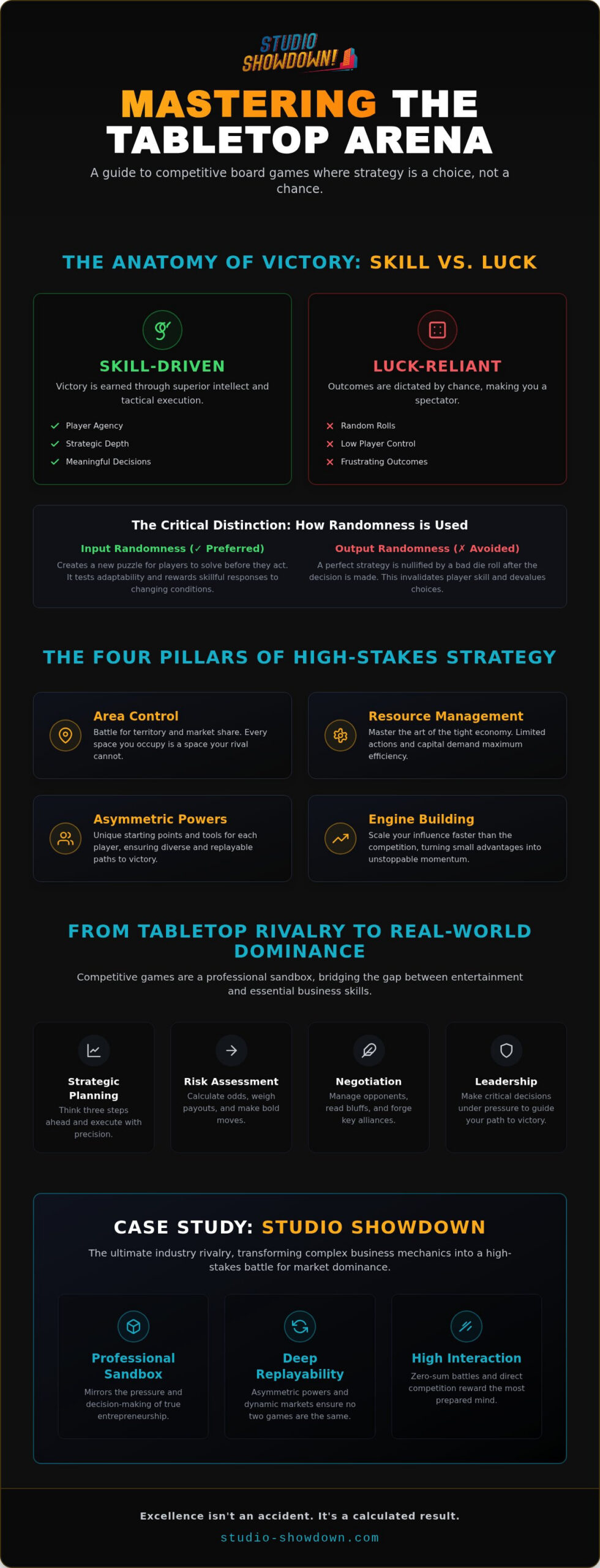
Randomness isn’t the enemy, but it must be controlled. Competitive players look for “Input Randomness.” This means the chaos happens before you move, and you solve the puzzle it creates. “Output Randomness” is the death of skill. If a genius plan is killed by a single bad die roll, the competitive viability vanishes. This is why purists often gravitate toward abstract strategy games where information is perfect and the better player wins. In 2026, competitive board games must offer a “fair fight.” They need to provide the tools for an epic comeback while ensuring that the most prepared mind takes the trophy. Excellence isn’t an accident. It’s a calculated result.
Core Mechanics of High-Stakes Strategy
Mechanics are the physics of the tabletop. They define what’s possible, what’s optimal, and what’s fatal. In competitive board games, these systems work together to create a pressure cooker. You aren’t just playing against the board. You’re fighting through a web of constraints designed to reward the most efficient mind. Every rule is a tool. Every limitation is a challenge. To dominate the arena, you must understand the gears that drive the machine.
Area Control is the most visceral mechanic. It’s about footprint. You battle for territory, market share, or influence. Every space you occupy is a space your rival cannot have. Resource Management adds the fuel. It’s the art of the tight economy. You have limited actions and even more limited capital. Asymmetric Powers give players different starting points and unique tools, ensuring no two paths to victory are the same. Finally, Engine Building is the heartbeat of the late game. It’s about scaling your influence faster than the competition, turning small advantages into an unstoppable momentum.
Market Dominance and Area Control
Positioning is everything. A well-placed blocking maneuver can starve an opponent of the oxygen they need to grow. You deny resources. You cut off trade routes. You force them into sub-optimal moves. This isn’t just a game; it’s a simulation of real-world business competition. Companies fight for shelf space, digital real estate, and consumer attention. On the board, you’re learning to see the gaps before they’re filled. You learn to defend your borders while expanding your reach. It’s a constant tug-of-war where the prize is total market dominance.
Economic Warfare and Resource Scarcity
Capital is a weapon. In high-pressure environments, managing limited funds is the difference between a hit and a total collapse. Timing is your greatest asset. You must know when to burn your reserves for a tactical advantage and when to hoard for the long game. Mastery comes from understanding the strategy board games that prioritize efficiency over sheer volume. Every coin spent must return a dividend. If you waste resources on vanity moves, your engine will stall. If you’re ready to test your business acumen in a professional simulation, exploring the Studio Showdown Board Game is the next logical step in your strategic evolution. Victory belongs to the player who does more with less.
Competitive Play as a Professional Training Tool
Soft skills are hard to teach. You can’t learn grit from a slide deck. You can’t master negotiation by reading a PDF. True professional growth happens in the heat of a struggle. While cooperative games focus on harmony, competitive board games simulate the friction of the real world. Leadership isn’t just about getting along. It’s about making the right call when resources are low and rivals are closing in. In a competitive arena, you own every decision. You own every defeat. That accountability is the ultimate teacher.
Negotiation is the social side of winning. It’s not just about the board; it’s about the people across from you. You learn to pitch ideas. You learn to trade assets. You learn to read the room. Resilience is built when a rival disrupts your “perfect” three-turn plan. You don’t quit. You pivot. You find a new path to the objective. This ability to adapt under pressure is what separates a player from a leader. By the end of a session, you haven’t just played a game. You’ve built a portfolio of strategic wins that translate directly to the boardroom.
The Entrepreneurial Edge
Founding a company is a high-stakes gamble. You can simulate that pressure through a business board game designed for modern professionals. Entrepreneurship is decision-making under uncertainty. You never have all the data. You never have enough time. Competitive play forces you to manage capital and risk simultaneously. Textbooks talk about financial literacy. Games make you live it. When it’s your virtual studio on the line, the lessons stick. You learn the value of a dollar and the cost of a delay. It’s about building an engine that outpaces the market.
Teaching Business Acumen to the Next Generation
The classroom needs a reboot. We’re bridging that gap with the Studio Showdown: Educator Edition. It transforms abstract concepts into tangible challenges. Students don’t just hear about fundraising; they execute it. They don’t just study pitching; they battle for market dominance. Using the Classroom Bundle, instructors can turn an entire group into a competitive ecosystem. It’s a safe environment to fail fast and learn faster. We’re preparing the next wave of talent for the cutthroat game development industry. Experience is the best teacher. We just made it more engaging, visual, and results-oriented.
Planning the Ultimate Competitive Game Night
A great session doesn’t happen by accident. It’s a production. To elevate competitive board games from a casual hobby to a high-stakes event, you must curate the experience. Start with the players. You need a mix of tactical thinkers, bold risk-takers, and relentless competitors. If one person isn’t playing to win, the tension evaporates. High-intensity play requires a shared commitment to the challenge. It’s about the clash of minds. It’s about the pursuit of excellence.
Structure your evening like a film schedule. Choose a “Feature Film” game that offers deep strategic depth. This is your main event. Surround it with “Filler” games; short, punchy titles that act as a palate cleanser or a warm-up. Keep the focus sharp by encouraging screen-free activities that lock everyone into the board state. Phones are a distraction. The board is the reality. Set the stage with focused lighting, high-energy snacks, and a clean workspace. Visual clarity leads to mental clarity. Every detail counts when the stakes are high.
Tournament Formats for Home and Classroom
Scale the rivalry with a formal structure. For smaller groups, a round-robin format ensures everyone faces every rival. It’s the fairest way to crown a champion. If you’re short on time, single elimination provides instant drama. Track progress through “Studio Rankings” over multiple nights. It turns a single win into a season-long campaign. For larger groups, use the Classroom Bundle to run massive, multi-table simulations. It creates a living ecosystem where every move impacts the global standings. Consistency is the hallmark of a true strategist.
Etiquette in High-Stakes Competition
Rivalry must stay healthy to remain productive. The “Kingmaker” effect; where a player who can’t win decides who does; is the enemy of fair play. Players must always move toward their own best possible outcome. Focus on the strategy, not the person. Once the final score is tallied, move to post-game analysis. Deconstruct the winner’s tactics. Identify the pivot points. Learning from a loss is just as valuable as celebrating a win. It’s about the evolution of your craft. If you’re ready to host your own high-stakes event, get the Studio Showdown Board Game and start your first season today.
Studio Showdown: The Ultimate Industry Rivalry
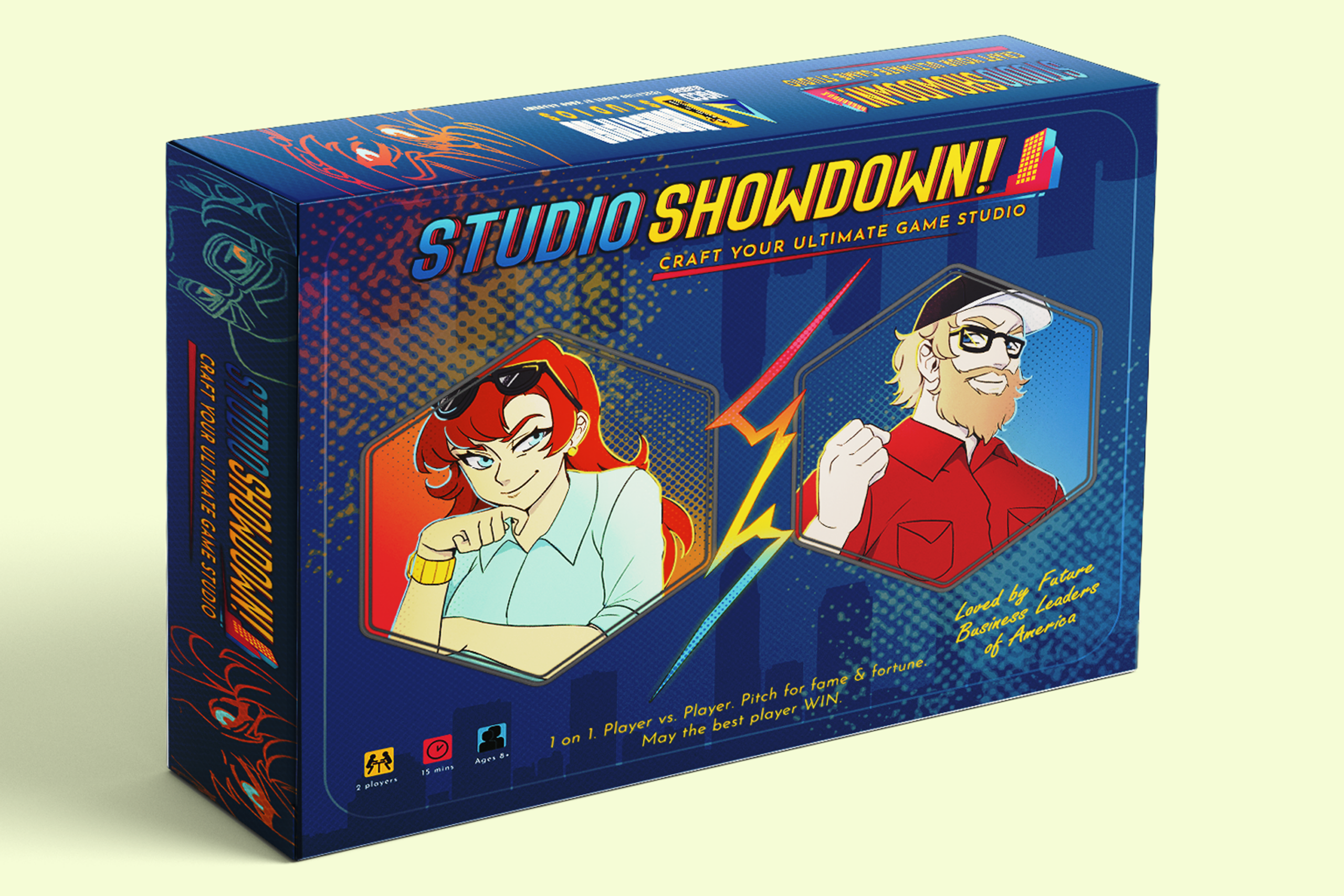
The grind is real. The stakes are higher. In the world of competitive board games, Studio Showdown isn’t just a product; it’s a blueprint for industry dominance. You don’t just sit at the table. You step into the shoes of a studio founder. Your mission is clear. Build. Pitch. Conquer. Developed by VGCD Academy and DEMYSTIFIED Studios, this simulation strips away the fluff and leaves only the raw mechanics of the game development world. It’s a high-octane battle for talent, technology, and territory. This is where your vision meets the market’s reality.
Success requires more than a good idea. You must navigate the “Showdown” mechanics with surgical precision. Fundraising is your first hurdle. You need capital to fuel your engine. Then comes the pitch. You battle rivals for the best projects, knowing that every win for them is a loss for you. Finally, you launch. Hits bring glory; failures bring lessons. Outmaneuvering your competition in this shifting landscape is the ultimate test of your strategic acumen. In 2026, enthusiasts demand depth. Studio Showdown delivers a professional-grade experience that rewards the bold and punishes the unprepared.
From Pitching to Market Dominance
The art of the deal is a weapon. Most titles offer a shallow experience, but this isn’t an easy money game. It’s a masterclass in resource allocation. You must balance your creative vision with the cold reality of financial survival. One wrong move and your studio stalls. One perfect pitch and you’re the market leader. The thrill of launching a hit while your rivals falter is unmatched. It’s about the timing. It’s about the execution. It’s about winning when it matters most.
Scale Your Success with Institutional Tools
The arena extends beyond the living room. The Studio Showdown: Educator Edition transforms the classroom into a dynamic boardroom. It’s a tool for mentors who want to teach real-world business acumen through hands-on play. By implementing the Classroom Bundle, STEM and entrepreneurship programs can simulate an entire industry ecosystem. Students learn to manage risk, pitch to “investors,” and scale their success in a safe but competitive environment. Experience is the only teacher that counts. Ready to dominate the industry? Secure your copy of Studio Showdown today.
Step Into the Arena of Excellence
Victory is a choice, not a roll of the dice. We’ve explored how the right mechanics transform a tabletop session into a high-stakes professional simulation. Mastery in competitive board games isn’t just about winning a round; it’s about building the resilience and tactical depth needed for real-world dominance. You’ve seen how area control and economic warfare mirror the pressures of the boardroom. You know that player agency is the only metric that matters. Now, it’s time to put that knowledge into practice.
Studio Showdown is redefining the strategy genre for 2026. Developed by industry experts at VGCD Academy, it’s already being used in classrooms to teach real-world business skills to the next generation of founders. Whether you’re hosting a high-intensity game night or scaling a training program, the goal remains the same: outmaneuver, outpitch, and outlast. The board is set. The rivals are waiting. Your legacy starts at the table.
Join the Showdown: Get the Studio Showdown Board Game Now
Frequently Asked Questions
What makes a board game competitive vs. cooperative?
Direct conflict and individual agency define the difference. In a cooperative game, everyone works against the board’s automated systems. In competitive board games, your primary obstacle is the person sitting across from you. One player’s gain often comes at another’s expense. This creates a high-stakes environment where you aren’t just solving a puzzle. You’re outmaneuvering a human rival who is actively trying to disrupt your path to victory.
Are competitive board games good for children and teens?
They’re essential for building resilience and critical thinking. These games act as a safe sandbox where younger players can experience the consequences of their decisions. They learn to manage resources, negotiate with peers, and handle both victory and defeat with professional poise. Engaging with these mechanics builds the grit necessary for real-world challenges. It’s a hands-on way to move beyond the screen and develop a sharp, strategic mind early on.
How do I choose a competitive game for a group with mixed skill levels?
Look for titles that offer depth without unnecessary complexity. You want a game where the rules are easy to grasp but the strategy takes a lifetime to master. Focus on games with multiple paths to victory. This allows beginners to explore different styles while veterans focus on optimization. A well-designed game ensures that everyone can impact the board state, keeping engagement high even when there’s a gap in experience.
What are the best mechanics for high-stakes strategy games?
Area control and resource management are the gold standard. Area control forces players into direct confrontation over territory or market share. Resource management creates a “tight economy” where every coin spent must return a dividend. When you add asymmetric powers, every player starts with a unique toolkit. This variety prevents the game from becoming a repetitive mirror match. These systems ensure that skill and efficiency always outweigh luck in the final tally.
Can competitive board games really teach business skills?
They’re the ultimate simulation for entrepreneurship. Players must manage limited capital, pitch ideas, and navigate shifting market conditions. You learn financial literacy by balancing a budget under pressure. You learn leadership by making tough calls when resources are scarce. These games simulate the “Founder Experience” more effectively than any textbook. They require active participation and immediate accountability for every strategic choice you make at the table during the session.
Is Studio Showdown suitable for people who aren’t video game developers?
Absolutely. The theme provides a modern, high-energy backdrop, but the core mechanics are universal business principles. Anyone interested in marketing, strategic planning, or leadership will find the “Showdown” mechanics rewarding. You’re learning how to fundraise, pitch to investors, and achieve market dominance. The skills you sharpen during the game apply to any professional field where competition and innovation drive success. It’s about the strategy, not just the setting.
How long does a typical session of Studio Showdown last?
A standard session of the Studio Showdown Board Game typically lasts between 60 to 90 minutes. This timeframe is designed to be punchy and high-engagement. It fits perfectly into a dedicated game night or a standard classroom period. It’s long enough to allow for deep strategic development and engine building, but short enough to keep the energy levels high. You’ll experience the full arc from the initial pitch to final market dominance.
What is included in the Studio Showdown: Educator Edition?
The Studio Showdown: Educator Edition is a specialized package designed for schools and professional workshops. It includes the core game along with instructional guides to help mentors integrate the mechanics into STEM or business curricula. It focuses on teaching students how to build professional portfolios and master the social side of winning. For larger groups, the Classroom Bundle offers multiple sets to facilitate a full-scale industry simulation across an entire class or program.