The era of the $5 lukewarm brownie is dead; it’s time to treat your school’s $2 billion annual fundraising potential like the high-stakes market it actually is. You’ve felt the sting of donor fatigue and the frustration of trying to motivate a room full of students who see bake sales as a chore rather than a career-defining challenge. It’s difficult to justify the educational value of a car wash when your students should be mastering the art of the pitch. By integrating games that teach fundraising, you can pivot from begging for pocket change to orchestrating a professional-grade production.
We understand that traditional models are failing because they lack the competitive edge and creative depth that modern students crave. This guide promises to transform your next initiative into a strategic simulation where students build professional portfolios while crushing donation targets. We’ll explore how to leverage the 2026 tax law changes for non-itemizers, utilize fee-free platforms like Zeffy, and use tools like the Studio Showdown Board Game to turn every student into a savvy studio founder ready for the real world.
Key Takeaways
- Replace passive product sales with active, goal-oriented events that treat every donation as a strategic exchange for entertainment and value.
- Harness the psychology of competitive play and real-time leaderboards to trigger dopamine loops that significantly increase average donation sizes.
- Adopt the student founder’s blueprint by assigning professional roles like Marketing Lead and Pitch Master to build real-world career portfolios.
- Integrate games that teach fundraising to give students hands-on experience in market dominance and strategic resource management before the main event.
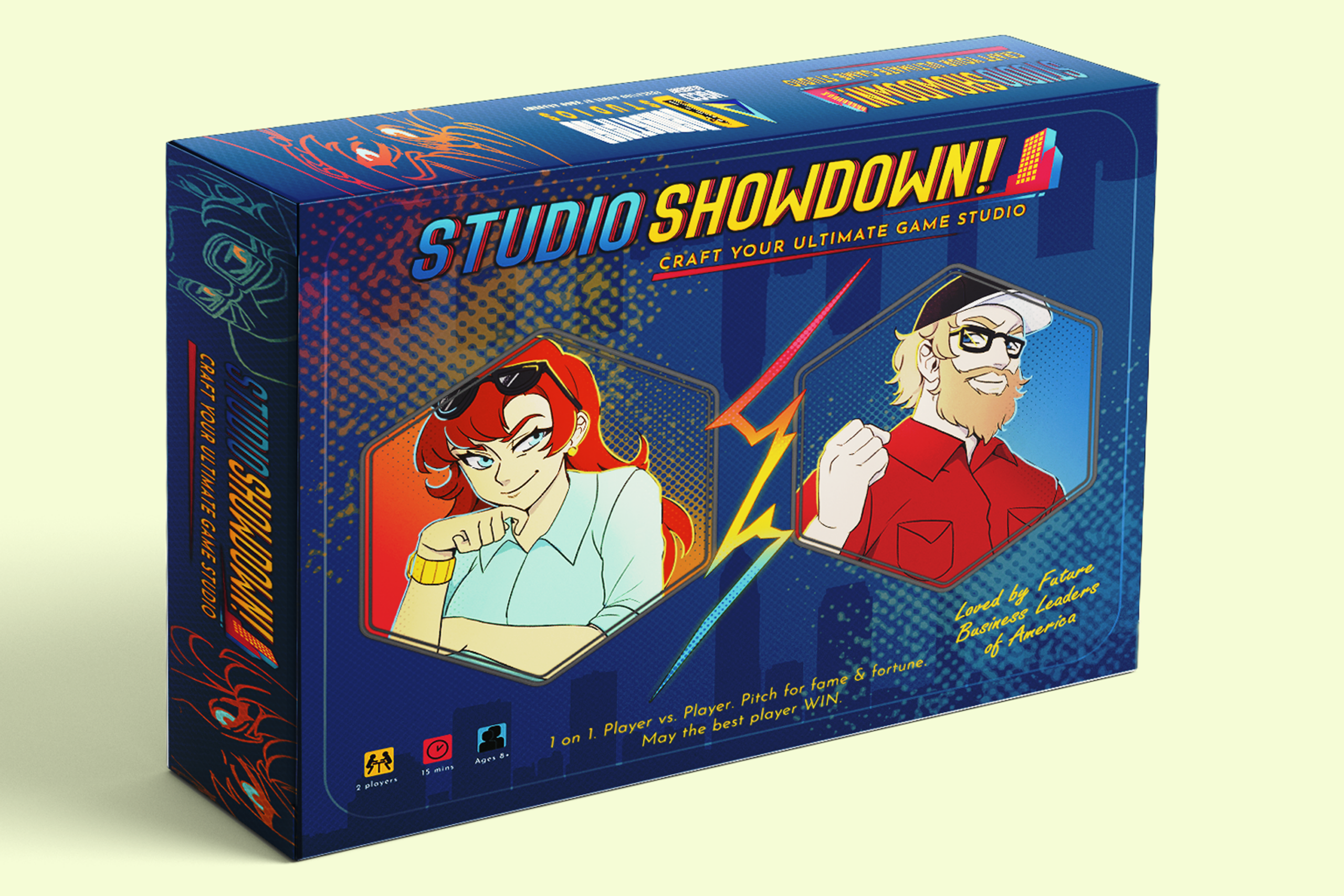
- Utilize tools like the Studio Showdown Board Game to create a high-stakes simulation that prepares teams for the pressure of professional-grade pitching.
Beyond the Bake Sale: Why Fundraising Games are the New Standard
Traditional school fundraising is broken. The era of static donation boxes and uninspired flyers has reached its expiration date. Today, donors don’t just want to give; they want to participate. Fundraising games represent a shift from passive begging to a high-value exchange where entertainment and engagement are the primary currencies for donations. These are goal-oriented activities that transform the act of giving into a memorable event. By utilizing games that teach fundraising, organizations can generate capital while simultaneously training students in the high-stakes world of business strategy.
The transition to active participation isn’t just a trend. It’s a survival tactic. In the 2026 participation economy, donors are looking for transparency and impact. They want to see the direct result of their contribution in real-time. This model relies heavily on the gamification of learning to turn complex financial goals into achievable milestones. It’s a dual-threat approach. Students raise the funds they need while building a professional portfolio that proves they can navigate market pressures and secure resources.
The Death of Passive Fundraising
Gen Z and Gen Alpha have developed a natural immunity to traditional marketing. They ignore static donation bins. They walk past printed flyers without a second glance. To these demographics, passive observation is boring. They crave interactive school environments where they can influence the outcome. Games cut through the visual noise of modern campus life by offering a challenge instead of a request. When a fundraiser becomes a competition, participation rates skyrocket. You aren’t asking for a favor; you’re inviting them into an arena.
- Interactive leaderboards replace static goal thermometers.
- Skill-based challenges replace uninspired product catalogs.
- Real-time social proof drives momentum faster than any morning announcement.
Fundraising as a Business Simulation
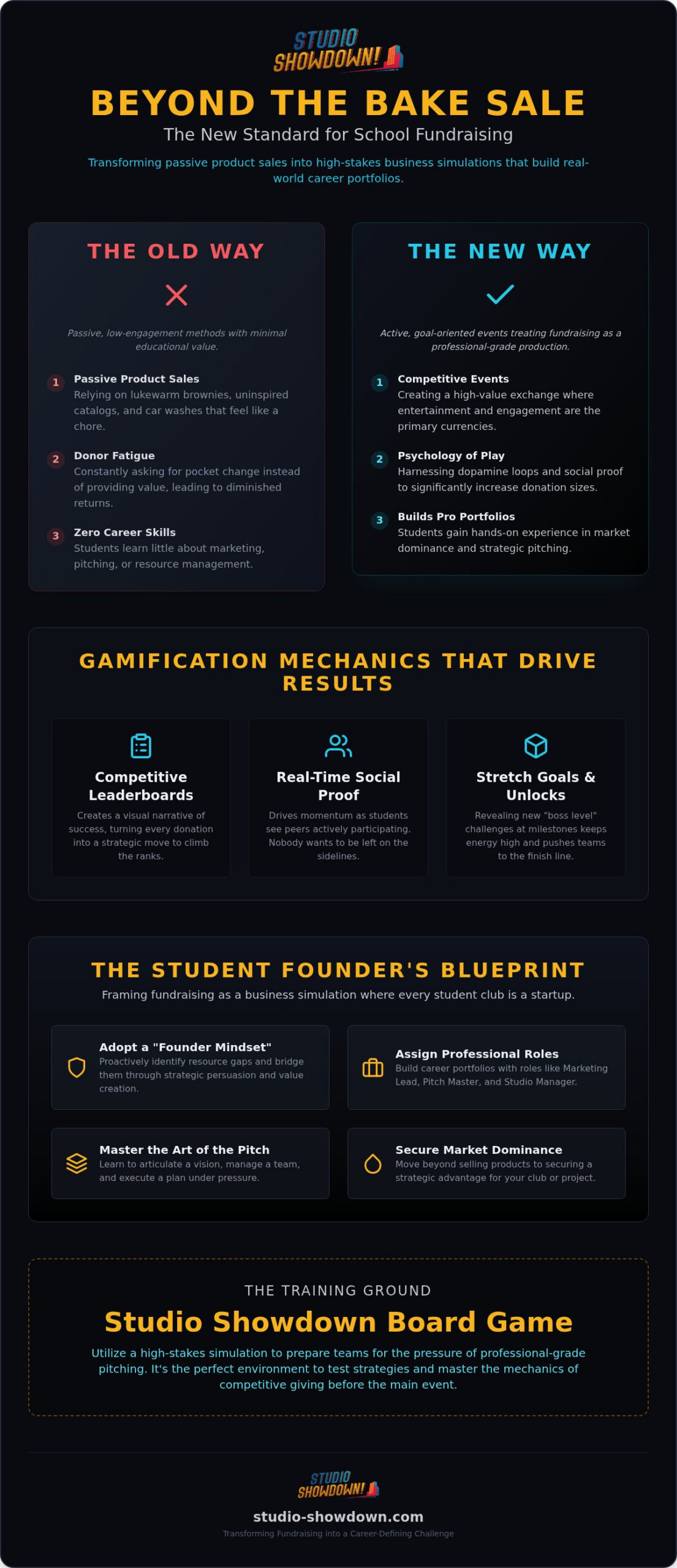
Every student club is essentially a startup in search of its first seed round. When you frame a fundraiser as a business simulation, the stakes change. It’s no longer about selling cookies; it’s about securing market dominance. This requires a “Founder Mindset,” which we define as the proactive ability to identify resource gaps and bridge them through strategic persuasion and value creation. Pitching becomes the core mechanic of success. Students learn to articulate a vision, manage a “studio” of peers, and execute a plan under pressure. This is where games that teach fundraising bridge the gap between the classroom and the boardroom, turning every event into a high-impact professional rehearsal.
The Psychology of Play: Why Competitive Giving Works
Competitive fundraising isn’t about guilt. It’s about the win. When you implement games that teach fundraising, you’re tapping into a primal drive for status, achievement, and collective victory. Leaderboards create a visual narrative of success. Every donation becomes a strategic move to leapfrog a rival class or department. This creates a dopamine loop. The instant feedback of seeing a rank change keeps participation high throughout the day. It’s the difference between a one-time gift and sustained, high-energy engagement.
Friction disappears when the “ask” shifts. Instead of “please give,” the message becomes “join the challenge.” This transition turns a donor into a player. Social proof acts as the engine. When students see their peers actively engaging in fundraising game ideas, the barrier to entry collapses. Nobody wants to be left on the sidelines while their friends are dominating the field. The result is a surge in average donation size as the focus moves from the cost to the competitive outcome.
Gamification Mechanics That Drive Results
Leaderboards are the pulse of the event. They visualize progress toward shared goals in real-time. Stretch goals or unlockable milestones keep the momentum from plateauing. If the event hits 80% of its target, reveal a new “boss level” challenge to push participants to the finish line. Reward systems should evolve beyond plastic trophies. Offer real-world networking opportunities or exclusive access to industry mentors. For those looking to master these mechanics before the big day, the Studio Showdown Board Game provides a perfect simulation environment for testing these strategies.
Building Community Through Shared Challenges
Team-based games break down the social silos often found in large educational institutions. A shared struggle creates a shared identity. Rivalries between grade levels aren’t divisive; they’re unifying forces that rally students around a common cause. Spectator engagement is equally vital. Those who aren’t playing can still influence the game through “buffs” or “power-ups” triggered by smaller micro-donations. This ensures every dollar linked to a game outcome translates into tangible, real-world community impact that everyone can see and celebrate.
Choosing Your Arena: Top Fundraising Game Formats for 2026
Choosing your arena isn’t just about picking a game. It’s about engineering a profit center. High-energy physical events like fun runs or basketball tournaments generate raw excitement, but they carry heavy logistical burdens. Strategy-based games that teach fundraising offer a superior alternative with near-zero overhead. You swap expensive venue rentals for classroom space. You trade unneeded product inventory for student intellect. The ROI of skill-based challenges like pitching competitions or business trivia is unmatched because the primary investment is creativity, not capital.
To see the full spectrum of possibilities, Juniata College’s list of fundraising games provides a solid foundation of traditional formats. However, 2026 demographics demand themes that resonate with their career aspirations. They want to simulate the “raise” for a startup or the launch of a new studio. This alignment between student interest and event format ensures high participation and deeper engagement from the community. When the theme matters, the donations follow.
The Strategy Tournament: High Impact, Low Cost
Strategy tournaments are the ultimate low-barrier entry point for student organizations. They transform a simple room into a high-stakes competitive environment. By integrating the Studio Showdown Board Game, you provide a framework where students master entrepreneurship while raising funds. It’s a professional-grade simulation. Keep your structure simple. Entry fees should fund a modest prize pool and leave a significant margin for your organization. Tiered pricing works best. Reward early registrants to build social proof and urgency before the first die is cast.
Digital vs. Analog: Finding the Balance
Digital saturation has made physical experiences a luxury. Screen-free events are no longer just a break; they’re a necessity for student focus and mental well-being. Tabletop games provide a tactile, premium experience that digital downloads simply lack. Negotiating across a physical board builds interpersonal skills that a screen obscures. For more on this shift, check our guide on screen-free activities. Analog formats encourage deeper concentration. They force players to read the room, not just the code. This face-to-face intensity is what makes a strategy tournament memorable and effective.
The Student Founder’s Blueprint: Planning Your First Event
Planning your event is the production phase of your project. You’re no longer just a student; you’re a studio founder. The first step is defining the mission. What specific problem does this capital solve? Whether it’s upgrading equipment or funding a community initiative, clarity is your strongest selling point. If you don’t have a mission, you don’t have a market. Next, you must assemble the studio. Assign roles that mirror professional industries. A Marketing Lead handles the visual noise. A Pitch Master refines the message. This structure ensures that while you’re playing games that teach fundraising, your team is actually learning the mechanics of a real-world startup.
Treat your permit process as a business hurdle. Bureaucracy is just another level to beat. Securing the venue requires professional communication and persistence. Once the space is locked, execute a marketing blitz. Use high-contrast visuals. Cut through the campus noise with creative assets. Finally, never skip the post-mortem. Analyze the data. What worked? What failed? This is how you improve your next “release.” Secure the Classroom Bundle to equip your team with the tools they need to master the raise before your event goes live.
Marketing Your Game to the Student Body
Create a hook that makes the event sound like a must-attend party, not a mandatory meeting. Use social media teasers to build hype weeks before the official launch. Focus on the experience and the competition. Visuals should be punchy and high-contrast. Every piece of content needs a clear call to action. Don’t just tell them what it is; tell them how to win. FOMO is a powerful tool when used correctly in student environments.
Managing Logistics Without the Stress
Keep your margins high. Aim for 90% or more of the funds to go directly to the cause. This requires keeping overhead low. Use your school’s existing infrastructure whenever possible. Pitch local businesses for prizes or sponsorships to eliminate out-of-pocket costs. The dry run is the most critical stage of production; if you haven’t rehearsed the flow, you aren’t ready for the audience. Professionalism in the planning phase leads to premium results on event day. Focus on the details that matter and cut the fluff that doesn’t drive donations.
Studio Showdown: Mastering the Art of the Pitch and the Raise
Studio Showdown isn’t a pastime. It’s a rehearsal. While other programs focus on the “ask,” this game focuses on the strategy. It’s the ultimate training tool for student fundraisers who want to dominate their market. The pressure is real. You aren’t just rolling dice; you’re securing capital. You’re building a studio from the ground up. This simulation prepares students for the high-stakes reality of professional portfolio building. It stands at the peak of games that teach fundraising because it treats the process as a creative production. You’re a founder. You’re a visionary. You’re a competitor.
For teachers, the Studio Showdown: Educator Edition is the definitive resource. It moves the conversation from simple arithmetic to complex business logic. It’s about securing market dominance. It’s about winning. You don’t just learn the rules; you learn how to break the competition. This edition provides the structure needed to turn a standard classroom into a high-octane business incubator where every student has a stake in the outcome.
From Tabletop to Boardroom
The mechanics are precise. Every turn mirrors a real-world fundraising round. You manage developers. You pitch to investors. You navigate market shifts. This isn’t abstract; it’s a direct link to STEM and business careers. Students develop the business acumen needed to outmaneuver rival studios. They learn that fundraising is a skill, not a gift. It requires courage. It requires data. It requires a visual story that investors can’t ignore. By the time they reach a real boardroom, they’ve already played the game a hundred times. They don’t just participate in games that teach fundraising; they master the industry itself.
Getting Started with the Classroom Bundle
Investing in the Classroom Bundle is the smartest move an organization can make in 2026. It’s a scalable solution for high-impact learning. Educators use these tools to meet financial literacy standards without the dry lectures. It turns a classroom into a production studio. You’re giving your students a competitive edge. You’re building their resumes. You’re teaching them how to raise capital by starting with the board. Don’t settle for mediocre results. Level up your student organization with Studio Showdown today.
Winning the Raise: The Future of Student Leadership
The era of the passive donor is over. Success in 2026 requires a decisive shift toward experiential participation and strategic competition. By implementing games that teach fundraising, you give students more than just a budget; you give them a career-ready portfolio. They master the art of the pitch and the science of the raise in a controlled, high-stakes environment. These are the skills that cut through the visual noise of a crowded marketplace and build lasting professional confidence.
Studio Showdown is the definitive tool for this professional transformation. Designed by industry experts from DEMYSTIFIED Studios and utilized by VGCD Academy for professional development, it bridges the gap between classroom theory and boardroom reality. It’s time to stop asking for change and start building founders. Your students are ready for the challenge. Let them play to win. Get the Studio Showdown Classroom Bundle for Your Students and transform your next school fundraiser into a professional-grade production that delivers real-world results.
Frequently Asked Questions
What are the most profitable fundraising games for students in 2026?
Strategy tournaments and online peer-to-peer campaigns are the most profitable formats in 2026. Online programs often yield net margins between 60% and 80%, significantly outperforming the 30% to 50% margins seen in traditional product sales. By using games that teach fundraising, students focus on high-value engagement rather than moving physical inventory. This shifts the focus toward digital reach and community participation, which are the primary drivers of modern donation growth.
How do you make a fundraising game educational for students?
You make a fundraising game educational by embedding real-world business mechanics into the gameplay. Instead of just collecting money, students should act as studio founders managing resources and pitching for seed rounds. This approach builds a professional portfolio and develops a Founder Mindset. When games simulate market pressures and strategic decision-making, the fundraiser becomes a hands-on lesson in entrepreneurship and professional communication that extends far beyond the event day.
What are some low-cost fundraising games for small student clubs?
Small clubs should focus on low-overhead, high-intellect formats like trivia nights, pitching competitions, or tabletop tournaments. These events utilize existing school infrastructure, which keeps costs minimal. By hosting a strategy board game competition, you ensure that nearly 90% of all funds raised go directly to your cause. These formats prioritize student creativity and skill over expensive equipment, making them ideal for organizations with limited initial capital but high ambition.
How can students use strategy board games to raise money?
Students can host a ticketed tournament where participants pay an entry fee to compete for a prize pool. Using the Studio Showdown Board Game allows players to master entrepreneurship while contributing to the organization’s goals. You can also secure local sponsorships for prizes to keep expenses low. This format turns the fundraiser into a premium, high-stakes experience that justifies a higher ticket price than a standard raffle or bake sale.
Do fundraising games require special permits at schools?
Most schools require formal approval and often specific state registrations for charitable solicitation. For example, California requires an initial $50 registration fee, and other states like Illinois have their own specific deadlines and fees. It’s crucial to check your local board’s policies and state laws before launching. Ensuring compliance with these regulations prevents legal hurdles and builds trust with your donor base, showing that your student organization operates with professional integrity.
What is the best way to promote a student fundraising game event?
The most effective promotion strategy is a digital-first approach using social media teasers and real-time leaderboards. You need to create a visual hook that makes the event feel like a high-stakes production. Focus on social proof by highlighting early registrants and building FOMO through countdowns. Clear, punchy calls to action in every post ensure that interested participants know exactly how to join the challenge and start their journey as a founder.
How does Studio Showdown help with student fundraising skills?
Studio Showdown acts as a professional training ground where students act as studio founders. It teaches the specific mechanics of fundraising and pitching within the competitive world of game development. Developed by industry experts from DEMYSTIFIED Studios, the game provides a hands-on simulation of securing market dominance. It helps students build the business acumen and resource management skills necessary to navigate real-world financial challenges and professional portfolio building.
Can middle school students organize their own fundraising games?
Middle school students can definitely lead these initiatives, especially when supported by the Studio Showdown: Educator Edition. This version is specifically designed for classroom use to help teachers facilitate complex business concepts. It empowers younger students to take on leadership roles like Marketing Lead or Pitch Master. By starting early, middle schoolers develop the foundational entrepreneurship skills needed for high school and future STEM or business careers.