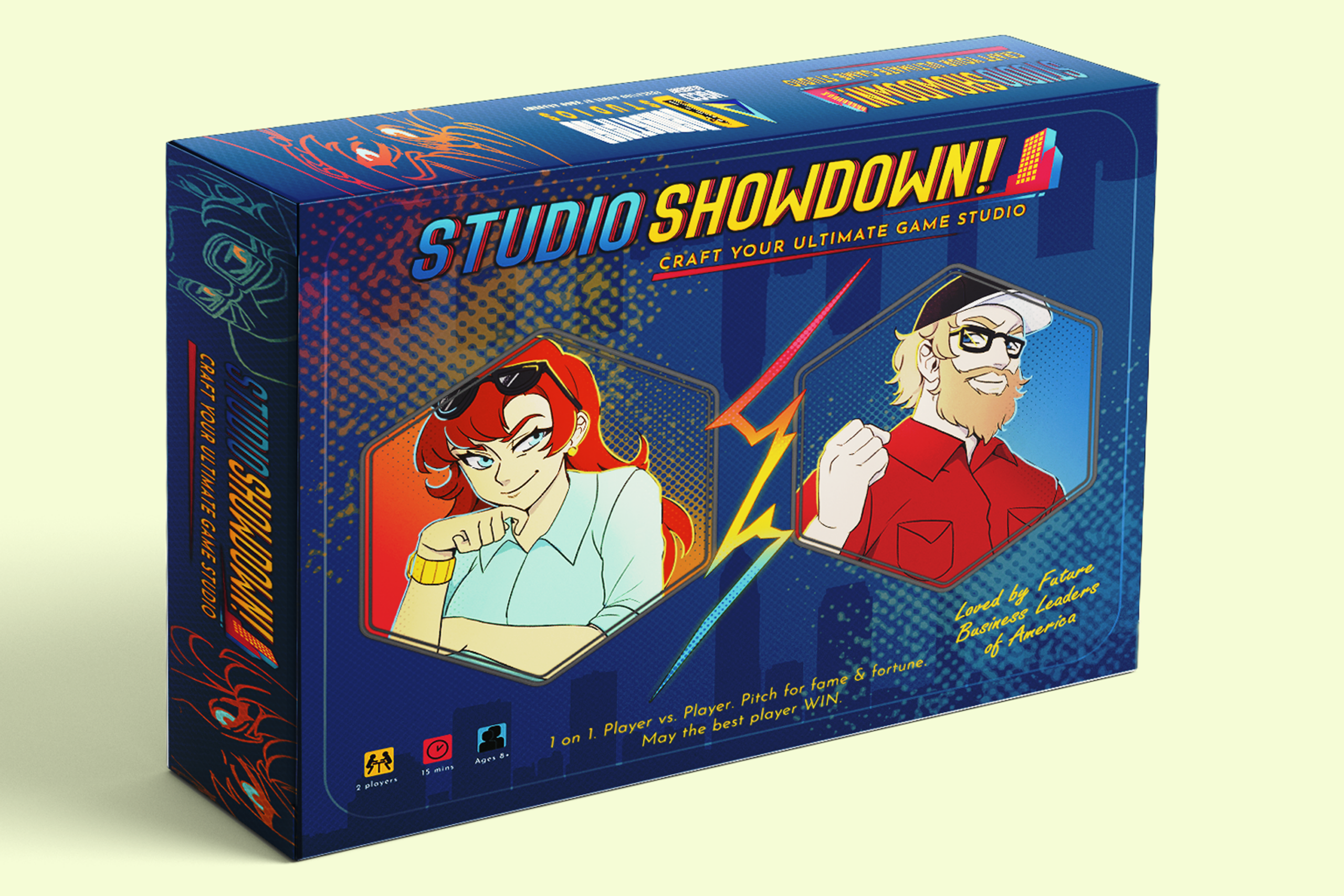
What if the most critical weapon in your studio launch isn’t a line of code, but a deck of cards and a tabletop strategy? You’ve likely felt the grind of digital-only learning, where screen fatigue sets in long before you understand how to actually fund a project. This is where a game development business board game changes the rules of the encounter. Coding is the engine; business is the fuel. Most developers master the former only to crash when they hit the wall of fundraising and market strategy.
We agree that the jump from hobbyist to professional feels like a leap into the dark. It’s a struggle that requires more than just technical precision. You’ll discover how simulating the high-stakes world of production builds real-world business acumen and portfolio-ready skills that textbooks simply cannot teach. We are breaking down the game dev lifecycle, the art of the pitch, and the professional mindset needed to rise above the visual noise of a crowded market. Just as The Late Desk chronicles how iconic television personalities navigated their own competitive landscapes, mastering these simulations helps you find your voice in this space.
Key Takeaways
- Master the full studio lifecycle. Move beyond the engine and learn the art of the commercial launch from concept to market.
- Bridge the gap between theory and practice. A game development business board game forces you to navigate real-world fundraising and competitive strategy.
- Reclaim your focus. Analog simulations eliminate screen fatigue while sharpening your ability to read social cues and negotiate in real-time.
- Build a professional mindset. Gain the financial literacy needed to manage burn rates, talent acquisition, and high-pressure development crunches.
- Step into the arena. Experience the visceral pressure of a studio founder through strategic mechanics designed for market dominance.
What is a Game Development Business Simulation?
A game development business simulation is a high-fidelity model of a video game studio’s lifecycle. It tracks every heartbeat of the process from the first concept sketch to the global market launch. While digital tutorials focus on the mechanics of building a game, a game development business board game focuses on the strategy of the industry. It’s a professional layer that sits above the code. You aren’t just managing assets; you’re managing survival. This simulation provides a safe sandbox to test aggressive creative models, allowing players to fail, pivot, and iterate before a single dollar of real-world capital is at risk. Business simulation games have long been used to sharpen corporate instincts, but applying this to the volatile gaming industry requires a specific, nuanced approach. Precision meets intuition here. You learn to navigate the high-stakes social dynamics that define a successful studio launch.
The Shift from Coding to Commercialisation
Technical proficiency is a baseline requirement in the 2026 gaming market. It’s no longer a differentiator. The visual noise is deafening. To rise above it, developers must master the Business of Play. This means understanding that a masterpiece without a market strategy is just a hobby. A game development business simulation is the definitive intersection where artistic creativity meets the strategic deployment of capital. You learn to balance the artistic vision against burn rates and launch windows. It’s about making the hard calls. Do you polish a feature or hit the release date? Every choice has a price. Every delay has a consequence. Mastering these trade-offs is what separates a developer from a founder.
Who Benefits from Studio Simulations?
Success in this arena isn’t reserved for CEOs. It’s for anyone who wants to own their professional trajectory. Using a game development business board game turns abstract industry concepts into visceral muscle memory. You don’t just read about market dominance; you execute it.
- Students: Build a portfolio that speaks the language of producers. Show you understand ROI, budget management, and project lifecycles.
- Educators: Use tools like the Studio Showdown: Educator Edition to turn dry business theory into an immersive, competitive experience that sticks.
- Aspiring Founders: Pitching to investors is a performance. Use simulations to practice the high-stakes dance of fundraising and resource allocation before the stakes are real.
These simulations bridge the gap between technical skill and entrepreneurial success. They provide the tactical edge needed to survive the crunch and dominate the market. Fail fast. Fail cheap. Learn everything. That’s the path to a premium studio launch.
The Core Mechanics: From Fundraising to Global Launch
Success in the studio world isn’t accidental. It’s engineered. The mechanics of a high-tier game development business board game strip away the fluff and expose the raw skeletal structure of the industry. You aren’t just playing; you’re executing a four-phase assault on the market. Each phase demands a different set of instincts. Each move carries a weight that code alone can’t simulate. This is about the visceral reality of production where every decision ripples through your studio’s future.
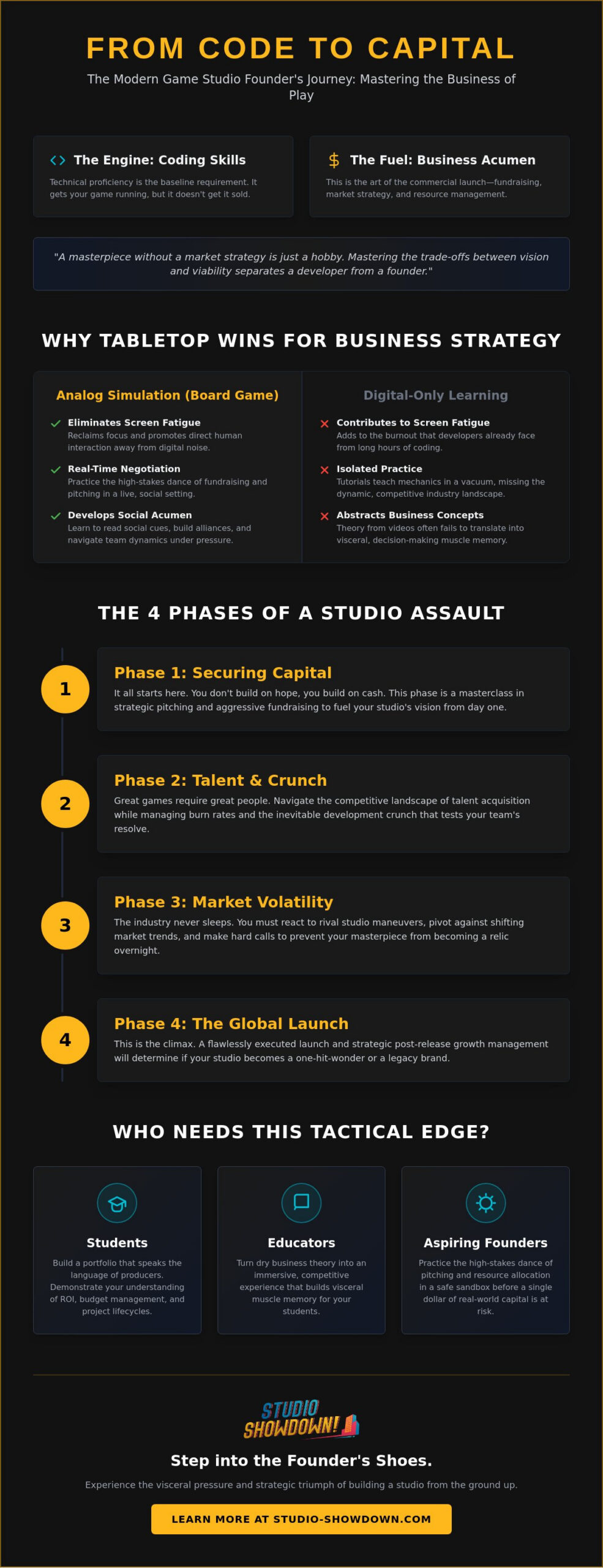
- Phase 1: Securing Capital. You don’t build on empty promises. You build on cash. This phase is about strategic pitching and aggressive fundraising to fuel your vision.
- Phase 2: Talent and Crunch. Great games require great people. You’ll navigate talent acquisition while managing the inevitable development crunch that tests your team’s resolve.
- Phase 3: Market Volatility. The industry doesn’t sleep. You’ll face rival studio manoeuvres and shifting trends that can turn a masterpiece into a relic overnight.
- Phase 4: The Global Launch. This is the climax. Executing a launch and managing post-release growth determines if you’re a one-hit wonder or a legacy brand. Partnering with a specialized QA provider like JumboJelly can ensure the technical polish required for a successful debut.
Mastering the Pitch and Fundraising
Simulating investor relations is a masterclass in psychological warfare. You need the capital, but you can’t surrender your creative soul. It’s a delicate balance of equity stakes and immediate development needs. You learn to translate your artistic vision into the language of ROI. Investors don’t care about your shaders; they care about your scale. When designing a business simulation, these high-stakes negotiations provide the most critical learning moments. You’ll learn to walk into a room, hold the floor, and secure the funding your project deserves without selling out your future.
Strategic Outmanoeuvring in a Crowded Market
Timing is a weapon. Platform selection is a shield. In a crowded market, you aren’t just releasing a product; you’re invading a space. You must analyse rival moves to secure the best release windows. Don’t launch your indie darling the same week a titan drops its sequel. By using business board game strategies, you learn to identify market gaps before they’re filled. It’s about being the smartest player at the table, not just the loudest. If you want to refine these instincts, checking out the Studio Showdown experience is the best way to sharpen your competitive edge. Stop guessing and start dominating through calculated, battle-tested strategy.
Analog vs. Digital: Why Tabletop Wins for Learners
Digital fatigue is the silent killer of creative productivity. You spend eight hours a day coding, debugging, and rendering. Adding another screen to learn the business side of the industry isn’t just exhausting; it’s ineffective. A game development business board game breaks this cycle. It replaces the glow of the monitor with the visceral reality of the tabletop. Here, strategy is visible. It’s physical. You can see the board state, touch the resources, and feel the weight of a bad investment. This tactile experience fosters a deeper retention of complex financial concepts. You aren’t just looking at data; you’re manipulating the market with your hands.
- Tactile Feedback. Physical components turn abstract burn rates into tangible assets.
- Social Dynamics. Real-time negotiation replaces the cold buffer of a chat window.
- Focus. No notifications. No tabs. Just pure, unadulterated strategy.
- Immediate Iteration. Visualise your studio’s trajectory and pivot without clicking through menus.
The Power of Screen-Free Strategy
Distraction is the enemy of business logic. When you’re at a screen, you’re one click away from a thousand rabbit holes. Analog simulations strip away the noise. They force you to focus on the core mechanics of your studio’s survival. Engaging in screen-free activities leads to superior collaborative problem-solving. It’s about the energy in the room. The psychological benefits of tactile components cannot be overstated. Moving a talent token or handing over a funding card creates a neural connection that digital clicks can’t replicate. You learn faster because you’re more present.
Developing Soft Skills through Face-to-Face Play
The gaming industry is built on relationships. Deals are made in hallways, at after-parties, and in high-pressure boardrooms. You cannot master these interactions through a digital interface. A game development business board game forces you to look your rivals in the eye. You learn to read tells. You spot the hesitation in a rival’s voice when they’re overleveraged. You see the body language of an investor who isn’t quite sold on your pitch. This is where you build the confidence required for real-world entrepreneurship. It’s about the social hunt. Mastering the table is the first step to mastering the market. You aren’t just playing a game; you’re practicing for the launch of your life.
Essential Skills Mastered Through Studio Simulation
Technical talent is the entry fee. Business acumen is the victory condition. Generic simulations often miss the mark because they don’t account for the unique, volatile pressure of the creative sector. A game development business board game targets the specific skills needed to keep a studio afloat when the creative vision gets expensive. You aren’t just learning to play; you’re learning to lead. This environment forces you to confront the brutal realities of production without the safety net of a digital reset button. Every skill you master here is a direct translation to the real-world industry.
- Financial Literacy. Master the art of managing burn rates, budgets, and profit margins. Cash flow is the lifeblood of your studio.
- Risk Assessment. Evaluate the cost-benefit of adding “one more feature” versus hitting a hard launch date. Perfection is the enemy of the release.
- Critical Thinking. Adapt to unexpected market shifts and black swan events. Survival depends on your ability to pivot under fire.
- Portfolio Building. Demonstrate a holistic understanding of the industry that goes beyond the engine. Show that you understand the big picture.
Bridging the Gap to Financial Literacy
Accounting is usually a dry exercise in spreadsheets. In a simulation, it becomes a high-stakes survival mechanic. You learn to balance the “Founders Dilemma” by deciding when to trade equity for survival and when to hoard resources for the long game. Engaging with strategy board games turns abstract accounting into visceral win-or-lose scenarios. This simulation prepares students for the volatile financial risks of the 2026 economy by forcing them to manage liquid assets against long-term creative debt. You’ll stop seeing numbers as data and start seeing them as ammunition.
Building a Professional Portfolio
The job market is crowded. Everyone has a demo reel. Very few have proof of business acumen. Documenting your simulation wins provides tangible evidence of your strategic thinking. You can show future employers that you understand how a studio actually functions. You’ve managed simulated million-dollar budgets. You’ve navigated dev crunches. You’ve outmanoeuvred rivals. Using game-based learning makes you stand out as a candidate who is ready to contribute to the bottom line on day one. It proves you have the professional mindset required for the elite level of the gaming sector. If you’re ready to elevate your career, you can get the Studio Showdown Board Game and start building your legacy today. Don’t just be a developer; be a founder who understands the game.
Studio Showdown: Stepping into the Founder’s Shoes
Studio Showdown isn’t a casual pastime. It’s an arena. It’s the ultimate strategy experience for those who refuse to settle for the mediocre. While many settle for a simplistic easy money game, true innovators demand a simulation that challenges their intellect and mirrors the brutal reality of the industry. This game development business board game puts you in the hot seat. You’ll navigate the high-stakes dance of fundraising, master the art of the pitch, and fight for market dominance. It’s designed for those who want to see the big picture before they step into the real-world arena. You learn to win because you’ve already survived the simulation.
The Studio Showdown Experience
This isn’t theory. It’s practice. The gameplay is immersive because it was forged by industry experts at VGCD Academy and DEMYSTIFIED Studios. They’ve seen the studio launches that failed and the ones that conquered. They’ve baked that knowledge into every card and mechanic. The Studio Showdown experience builds real-world business acumen through competitive, visceral play. You aren’t just managing tokens; you’re managing a legacy. You learn to make the hard calls that a founder makes every day. It’s about the hunt for capital and the defense of your creative vision. Every round is a lesson in survival.
Bringing Studio Showdown to the Classroom
Education needs more than just textbooks. It needs engagement. We’ve developed specialized pricing and support for schools and libraries through our Classroom Bundles. This is the definitive tool for the 2026 school year. It integrates perfectly with STEM and business curricula, turning dry entrepreneurship theory into a high-octane battleground. Students don’t just learn about the industry; they live it. They face the same pressures as real-world founders, from talent acquisition to market crashes. This is how you build a professional mindset before the first day of work.
- Classroom Bundles. Scalable solutions for groups of all sizes.
- Educator Edition. Tools designed to facilitate deep learning and post-game analysis.
- Curriculum Sync. Align gameplay with real-world business and marketing standards.
The visual noise of the job market is only getting louder. Give your students the tactical edge they need to rise above it. You can Transform your classroom with a Studio Showdown Bundle today! and start building the next generation of studio founders. This game development business board game is the bridge between a dream and a professional reality. Stop playing. Start launching. Your studio’s legacy begins at the table.
Dominate the Studio Arena
The gap between a technical expert and a successful studio founder is bridged by strategic action. You’ve seen how a game development business board game transforms abstract industry theory into visceral, hands-on experience. Mastering the studio lifecycle requires more than just code; it demands a professional mindset, financial literacy, and the ability to pivot under market pressure. Analog strategy isn’t just a break from the screen. It’s the ultimate training ground for real-world negotiation and social dynamics.
Studio Showdown is the definitive tool for this transition. Developed by the experts at VGCD Academy and DEMYSTIFIED Studios, it’s specifically designed for STEM and business curricula. You’ll gain hands-on learning for fundraising and pitching that digital tutorials simply cannot replicate. It’s time to rise above the visual noise of the industry. Launch your studio with the Studio Showdown Board Game and start building your legacy today. The market is waiting for a leader who knows the game. Your creative future starts at the table.
Frequently Asked Questions
What is a business simulation game in the context of game development?
A business simulation in this sector is a structured model that mimics the economic and operational lifecycle of a video game studio. It focuses on high-level decision-making, resource allocation, and market strategy rather than technical coding. Players navigate the transition from creative concept to commercial launch while managing capital and team morale in a competitive arena.
How do these games help students with financial literacy?
These simulations turn abstract accounting into visceral survival mechanics that demand constant attention. Students manage real-world business variables like burn rates, equity stakes, and ROI within a safe environment. By playing a game development business board game, they see how financial decisions directly impact their studio’s ability to ship a product and stay solvent in a volatile market.
Can a board game really simulate the complex video game industry?
Tabletop mechanics excel at modeling the high-stakes negotiation and risk assessment required for a successful launch by stripping away technical noise. They focus on core economic drivers and social dynamics that digital platforms often miss. Board games force you to read the table and outmanoeuvre rivals through face-to-face interaction, providing a high-fidelity experience of industry pressure.
What age group is best suited for game development simulations?
These simulations are designed for teenagers, university students, and aspiring professionals aged 13 and up. The complexity of the mechanics scales with the players’ ability to grasp strategic concepts. Younger learners focus on basic resource management, while older students tackle advanced fundraising, venture capital relations, and complex market volatility.
How do educators integrate these games into a standard curriculum?
Educators use these tools as interactive case studies within STEM, business, or media production courses. A Classroom Bundle allows for group-based learning where students take on specific studio roles. The gameplay serves as a foundation for deeper discussions on entrepreneurship, project management, and the global gaming economy during the 2026 school year.
What is the difference between a game development sim and a standard business game like Monopoly?
Standard games rely heavily on luck and basic property accumulation, whereas studio sims focus on strategic production and market timing. Studio Showdown requires active pitching, talent management, and navigating industry-specific risks. It’s a professional-grade game development business board game that rewards calculated strategy and creative intuition over random dice rolls.
Do I need coding knowledge to play a game development business simulation?
No coding knowledge is required to master the business side of the industry through these simulations. The focus is entirely on the entrepreneurial and managerial aspects of running a studio. This makes the experience accessible to business students, producers, and designers who want to understand how creative projects are funded and brought to market.
How does Studio Showdown help in building a professional portfolio?
It provides documented proof of your ability to think strategically and manage complex project lifecycles. Winning a high-stakes simulation demonstrates business acumen that recruiters in the gaming sector value. It shows you understand the commercial pressures of the industry, making you a more rounded candidate who understands the intersection of creativity and capital.