Your parents don’t fear the joystick. They fear a future without a safety net. When you’re struggling with how to explain a game dev career to parents, the mistake isn’t your passion; it’s your vocabulary. You’re talking about “fun.” They’re thinking about “security.” It’s time to stop pitching a hobby. Start presenting a $207 billion global industry.
It’s exhausting to defend your ambition against the traditional prestige of law or medicine. We know this isn’t just about art. It’s about building a legacy in a high-stakes market. This guide gives you the tactical data to earn their respect. You’ll learn to use the $108,471 average U.S. salary and the 13.31% annual growth rate to frame your career as a professional triumph. We’ll translate technical roles into business assets. You’ll walk away with a strategy to turn skepticism into total support.
Key Takeaways
- Reframe your role from a consumer to a production architect to shift the conversation from entertainment to high-level engineering.
- Master how to explain a game dev career to parents by using 2026 market data that proves gaming’s economic dominance over traditional media.
- Map complex development tasks to corporate job titles like Systems Engineer or Project Manager to validate your technical expertise.
- Prioritize a “Vertical Slice” portfolio as your primary credential to meet the 2026 industry demand for proven, shipped results.
- Transform the family discussion into a formal business pitch supported by a five-year growth strategy and a clear professional roadmap.
Stop Calling it a Game: Redefining Game Development for Your Parents
Stop treating your career choice like a hobby. Your parents see a screen; you see a complex engine. Gaming isn’t just about entertainment anymore. It’s a massive intersection of technology, art, and commerce. By June 2026, the global video game market is projected to reach $255.03 billion. That is a staggering figure. It’s an industry that dwarfs the traditional film and music sectors. Games have become the primary medium for social interaction and digital education. When you’re struggling with how to explain a game dev career to parents, start with the scale. You aren’t “playing games.” You’re entering the most dominant economic force in modern media.
The Creator vs. Consumer Distinction
The biggest hurdle is the “player” label. Your parents see you at a desk and assume you’re consuming content. You need to flip the script immediately. Use the architect versus resident metaphor. A resident enjoys the comfort of a home; the architect understands the load-bearing walls, the electrical grids, and the structural integrity. To truly grasp what is video game development, they must understand the technical depth required. It’s not a pastime. It’s thousands of hours of professional labor. You’re mastering 3D modeling, logic design, and complex production cycles. You don’t just “play” through a level. You engineer the experience from a blank canvas.
The Software Engineering Connection
Game development isn’t just “art.” It’s a specialized, high-stakes branch of software engineering. Every character movement and lighting effect relies on rigorous mathematical foundations. You’re working with real-time rendering and sophisticated physics engines. Game development is the pinnacle of interactive software architecture. It demands the same logical precision as banking software or aerospace systems. It isn’t about making things “fun” in a vacuum. It’s about solving impossible technical puzzles under tight deadlines. When you’re figuring out how to explain a game dev career to parents, remind them that you’re building the most advanced software on the planet. This is a technical discipline, not a game of tag.
The Economic Reality: Proving Game Development is a High-Growth Industry
Gaming is a financial titan. By June 2026, the global market is hitting $255.03 billion. That isn’t just a large number. It’s a total eclipse of the film and music industries combined. When you’re figuring out how to explain a game dev career to parents, you must lead with these cold, hard facts. This isn’t a starving artist’s path. It’s a high-growth engineering sector with a compound annual growth rate of 13.31%. The demand for talent is relentless. The money is real.
Modern job security comes from the “Games as a Service” (GaaS) model. Studios don’t just ship a product and hope for the best. They build living ecosystems. This shift ensures recurring revenue and long-term project stability for developers. Major studios and specialized work-for-hire firms provide a backbone of steady employment. You could work for a lean indie startup or a Fortune 500 tech giant. The opportunities are diverse. The industry is stable.
Global Market Reach and Revenue
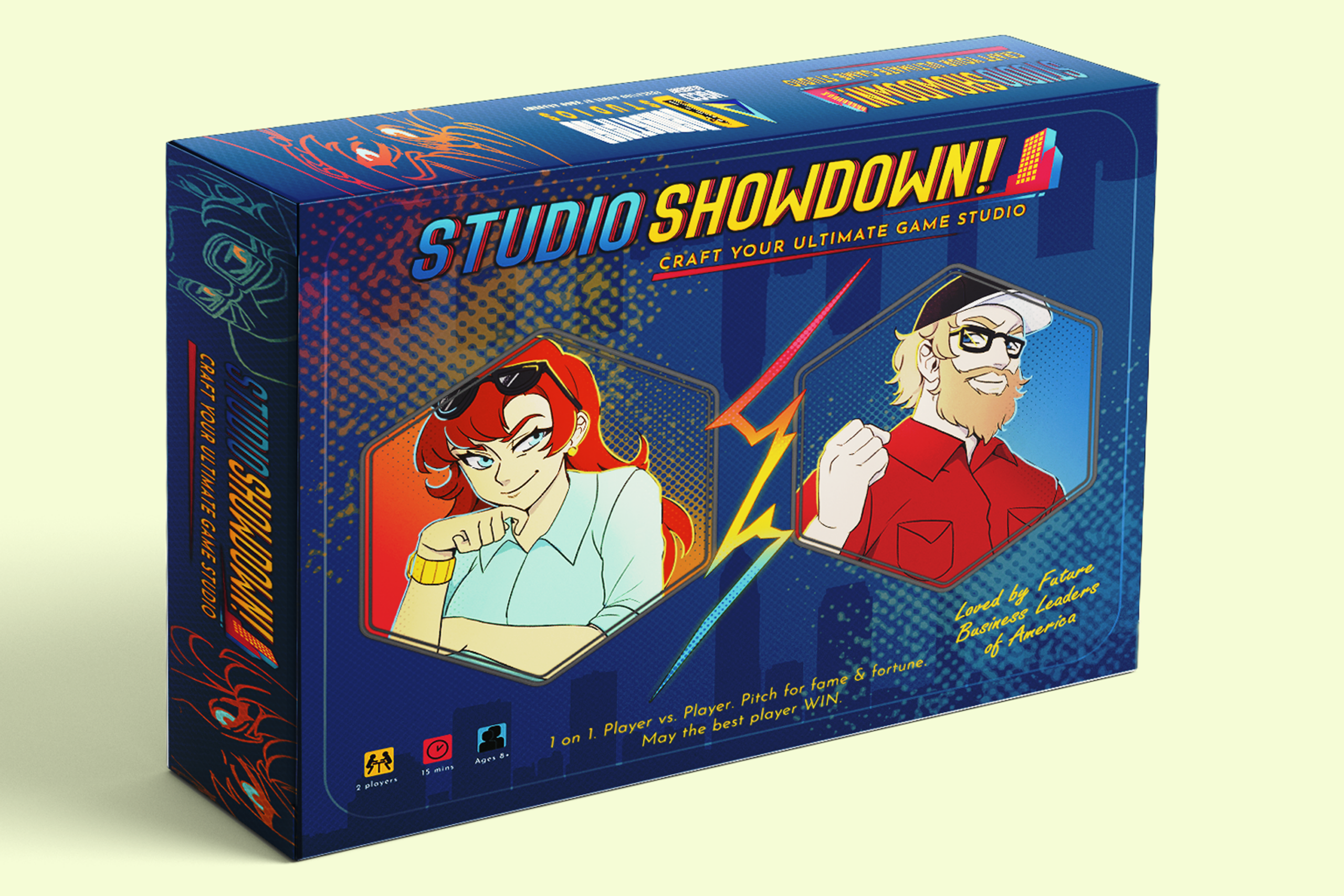
Digital distribution changed the game. The overhead of physical retail is gone. High margins are the new standard. Mobile gaming alone generated over $92.6 billion back in 2024, and that trajectory hasn’t slowed down. Global reach means a small team can connect with 3.6 billion gamers worldwide instantly. This massive economic impact of the video game industry transforms lines of code into a global commodity. To help your family visualize these production dynamics, playing the Studio Showdown board game can be a great way to demonstrate the business logic behind the art.
Salary Expectations and Career Longevity
Let’s talk about the paycheck. As of June 2026, the average annual salary for a Game Developer in the United States is $108,471. Even entry-level roles start strong at approximately $99,481. This is a lucrative profession with clear, aggressive upward mobility. You aren’t just a coder for life. You’re on a path toward becoming a Creative Director, a CTO, or even a Studio Founder. The ceiling is as high as your ambition.
Parents often worry about the “burnout” myth. The reality is evolving. Modern studio cultures are prioritizing sustainability, better management, and unionization efforts. It’s a marathon, not a sprint. This longevity is a crucial point when learning how to explain a game dev career to parents. You’re building a 40-year career in a sector projected to reach $415.78 billion by 2034. The data is clear. The future is interactive.
Translating Skills: Why Game Dev is Actually Business and STEM
Stop describing your work as “making levels.” That sounds like play. Start describing it as “managing complex production sprints.” Your parents understand project management. They understand deadlines, resource allocation, and risk mitigation. This shift in vocabulary is the secret to how to explain a game dev career to parents. You aren’t just a creative. You’re a technician operating in a highly structured, high-stakes environment. Every mechanic you design is a solution to a logical problem. Every asset you create is a piece of a larger commercial engine.
Game development requires a level of financial literacy that rivals traditional corporate roles. Making a game isn’t just an artistic endeavor; it’s a business venture that requires fundraising and rigorous ROI analysis. You’re learning to pitch ideas, manage budgets, and analyze user psychology to drive engagement. These aren’t “gaming skills.” These are universal business assets. You’re becoming a strategist who can navigate the intersection of human behavior and digital commerce.
The Business of Game Development
A game Producer isn’t just a fan with a clipboard. They’re a high-level Project Manager holding responsibilities equivalent to a PMP certification. They oversee multi-million dollar budgets. They synchronize cross-functional teams of engineers, artists, and marketers. The “pitch” process is essentially a round of venture capital fundraising. You’re convincing stakeholders to invest millions based on data and market viability. If you want to master these entrepreneurial dynamics and prove your business acumen, The Ultimate Business Board Game serves as an elite training tool for navigating these professional production environments.
STEM Integration and Technical Mastery
Game development is the ultimate stress test for STEM disciplines. It isn’t just “tech-adjacent.” It’s the cutting edge. Consider the requirements:
- Science: Developing physics engines and complex environmental simulations that mimic reality.
- Technology: Mastering cloud computing, networking, and hardware optimization for global distribution.
- Engineering: Building robust systems architecture that can handle millions of concurrent users.
- Math: Applying linear algebra, geometry, and economic balancing to ensure a functional ecosystem.
These are the same skills used in fintech, aerospace, and medical software. According to official career outlook data, software development roles are among the most stable and fastest-growing in the economy. When you learn how to explain a game dev career to parents, emphasize that you’re building a foundation in the most valuable technical fields of the 21st century. You aren’t just making a game. You’re mastering the language of the future.
Practical Evidence: How to Build a Career Roadmap and Portfolio
Tangible proof kills skepticism. When you’re figuring out how to explain a game dev career to parents, showing a half-finished digital project usually isn’t enough. They need to see a professional roadmap that mirrors traditional corporate success. By June 2026, the tech hiring landscape has shifted decisively toward a “Portfolio over Diploma” model. While a degree provides a foundation, shipped code is what closes the deal. You must demonstrate that you can move a project from an abstract concept to a finished product. This is where a “Vertical Slice” becomes your strongest asset. It’s a fully polished, playable segment of a game that showcases all core mechanics and art assets. It proves you understand the entire production pipeline, not just one isolated task.
Prove your professional discipline by participating in Game Jams. These are high-pressure development marathons, usually lasting 48 to 72 hours. They aren’t just social events. They’re intense production sprints that simulate real-world studio environments. Completing a Game Jam shows you can manage scope, collaborate under stress, and hit a hard deadline. This is the practical evidence parents respect. It moves the conversation from “spending time on the computer” to “delivering a functional product on a fixed schedule.”
Using Board Games to Teach Game Design
Analog tools bridge the gap between your digital world and their physical experience. Top-tier universities use board games to teach pure systems design because they strip away the complexity of code to reveal the underlying logic. If your parents can’t see the “work” behind the screen, bring the logic to the kitchen table. Learning how Mastering the Board helps visualize complex business mechanics can be a game-changer for family dynamics. Set up a strategy session. Show them how you balance resources, manage risks, and design player incentives. It turns an abstract career into a visible, logical challenge they can finally touch.
The Education Path
Choosing your education is a strategic business decision. Traditional Computer Science degrees offer a broad safety net, while specialized game design academies provide deep, industry-specific technical mastery. Both paths are valid if they’re paired with “mentorship-first” learning and professional internships. To remain competitive in the 2026 market, you must master the industry’s standard toolkit. Focus on these five essentials:
- Unity or Unreal Engine: The industry-standard development environments.
- Jira: Professional project management and agile bug tracking.
- C++ or C#: The fundamental languages of high-performance interactive software.
- Blender or Maya: The core tools for 3D asset production and animation.
- Version Control (Git): The essential framework for collaborative engineering.
This isn’t just a list of software. It’s a professional production stack. If you’re ready to demonstrate the business logic of the craft, explore the Studio Showdown Classroom Bundle to see how professional game production is taught in elite environments.
The Final Pitch: Turning Skepticism into Support
Permission is for hobbies. Proposals are for careers. Don’t walk into the living room asking for a favor. Walk in with a strategy. When you’re mastering how to explain a game dev career to parents, your posture is as important as your data. You are a professional entering a high-stakes, competitive market. Treat this conversation like a board meeting. Bring a five-year growth plan. Show them the milestones. Explain your “Plan B” by highlighting how your C++ and systems architecture skills transfer directly to fintech or aerospace. You aren’t just following a dream. You’re executing a high-value career strategy.
Invite them into the engine room. Most parental fear stems from a lack of visibility. Show them the “behind the scenes” of a modern studio. Explain the hierarchy of a production team. When they see the complexity of the workflow, the “just playing games” myth dies. Position your choice as an investment. You’re building a future-proof skill set in an industry that is projected to reach $415.78 billion by 2034. This isn’t a gamble. It’s a calculated move into the center of the digital economy.
The “Showdown” Strategy
Preparation is your best defense. Create a 10-slide presentation or a one-page “Executive Summary” of your career path. Address their primary objection-stability-before they even have the chance to ask. Use the salary data and growth projections we discussed earlier. If they still struggle to grasp the business side, use Studio Showdown as a low-stakes way to “play out” the business challenges together. It’s a tangible tool that simulates studio management, resource allocation, and market competition. It turns an abstract technical career into a logical, strategic challenge they can finally understand. It moves the debate from “if” to “how.”
Building the Bridge
Inclusion builds trust. Don’t isolate your career from your family life. Ask for their advice on the “business” side of your journey. They might not know Unreal Engine, but they understand taxes, contracts, and networking. Asking for their expertise makes them stakeholders in your success rather than obstacles to it. Schedule regular “status updates” to show your progress on your portfolio or your latest Game Jam entry. Emphasize that your goal is a successful, stable career that utilizes your unique technical talents. When they see your discipline and your results, skepticism naturally transforms into support. You’ve proven the case. Now, go build the future.
Secure Your Future in the Global Interaction Market
Success in this industry isn’t about luck; it’s about strategy. You’ve learned to replace the “hobby” label with high-growth economic data and STEM-driven technical mastery. You now have the framework for how to explain a game dev career to parents by focusing on production sprints, systems architecture, and a professional portfolio. It’s time to move from defending your passion to demonstrating your expertise. The transition from a gamer to a developer requires a shift in mindset that your family can finally visualize. You’re no longer just a player. You’re an architect of the digital economy.
If you want to bridge the gap between digital ambition and physical reality, you need the right tools. Master the business of game dev with the Studio Showdown Board Game. Developed by VGCD Academy experts, this elite training tool is already used in classrooms to teach high-level entrepreneurship. It builds professional skills and reduces screen time by letting you play out real-world studio challenges at the kitchen table. It’s the ultimate proof that you aren’t just playing; you’re planning a professional legacy. Take the lead. Your career starts today.
Frequently Asked Questions
Is game development a stable career in 2026?
Stability in 2026 is driven by the “Games as a Service” model and the industry’s expansion into non-entertainment sectors. Major studios and specialized engineering firms now provide long-term contracts and project continuity. Unlike the hit-driven era of the past, modern developers build living platforms with multi-year lifecycles. This shift ensures a steady, predictable demand for talent across the global market. Your job security is backed by recurring revenue and massive consumer engagement.
Do I need a college degree to work in the game industry?
A degree isn’t a mandatory gatekeeper, but a high-quality portfolio is non-negotiable. The 2026 hiring landscape values proven technical mastery over a traditional diploma. While Computer Science degrees offer a solid logical foundation, many top studios hire based on vertical slices and code samples. You must show you can build, optimize, and ship. Practical results and a history of successful production cycles are the ultimate currency in this field.
How do I explain the difference between playing and making games?
Focus on the labor-intensive production pipeline rather than the end product. Playing is an act of consumption; making is a rigorous process of engineering, logic design, and asset management. Explain that you aren’t engaging with the fun. You’re building the systems that make the fun possible. This distinction is vital for anyone learning how to explain a game dev career to parents effectively. You are the architect, not the resident.
What are the highest-paying roles in game development?
Technical roles like Lead Software Engineers and Systems Architects command the highest salaries. These positions often reach the upper percentiles of the industry range, frequently exceeding six figures. Creative Directors and Studio Founders also see significant financial upside through equity and profit sharing. These roles require years of management experience and deep technical intuition. The path to high compensation is paved with successful project cycles and specialized skills in high-end engines.
Can game development skills be used in other industries?
Game dev skills are highly transferable to any sector requiring real-time 3D simulation or complex systems architecture. Fintech, aerospace, and medical technology all utilize game engine logic for training and data visualization. You’re mastering C++, C#, and AI. These are the same tools used to build the world’s most advanced non-gaming software. Your career path has a massive, multi-industry safety net. You’re building a foundation for the entire digital economy.
How can I show my parents the business side of gaming?
Bring the abstract concepts into the physical world with data-driven roadmaps and logic tools. Showing them a production plan with clear milestones, budgets, and risk assessments demonstrates professional maturity. You can also use the Studio Showdown Board Game to simulate studio management. It allows them to participate in the decision-making process. This is a practical way to show how to explain a game dev career to parents without the distraction of a screen.
What if my parents want me to be a doctor or lawyer instead?
Address their desire for security and prestige by reframing game dev as a high-stakes engineering discipline. Game development in 2026 is a specialized technical field with earning potential that rivals traditional law or medical practices. Remind them that you aren’t choosing an easy path. You’re choosing a technical challenge that requires a similar level of dedication and intellectual rigor. Frame your choice as a pursuit of 21st-century excellence in a booming market.
Is the game industry too crowded for new developers?
The market is massive, but it demands elite talent. While there are many aspiring creators, there is a persistent shortage of skilled engineers and technical artists. You don’t need to fear the crowd if you have a specialized skill set and a professional portfolio. Focus on mastering emerging trends like AI integration or cloud gaming. The industry isn’t crowded for those who can solve complex production problems and deliver high-quality, shipped results.