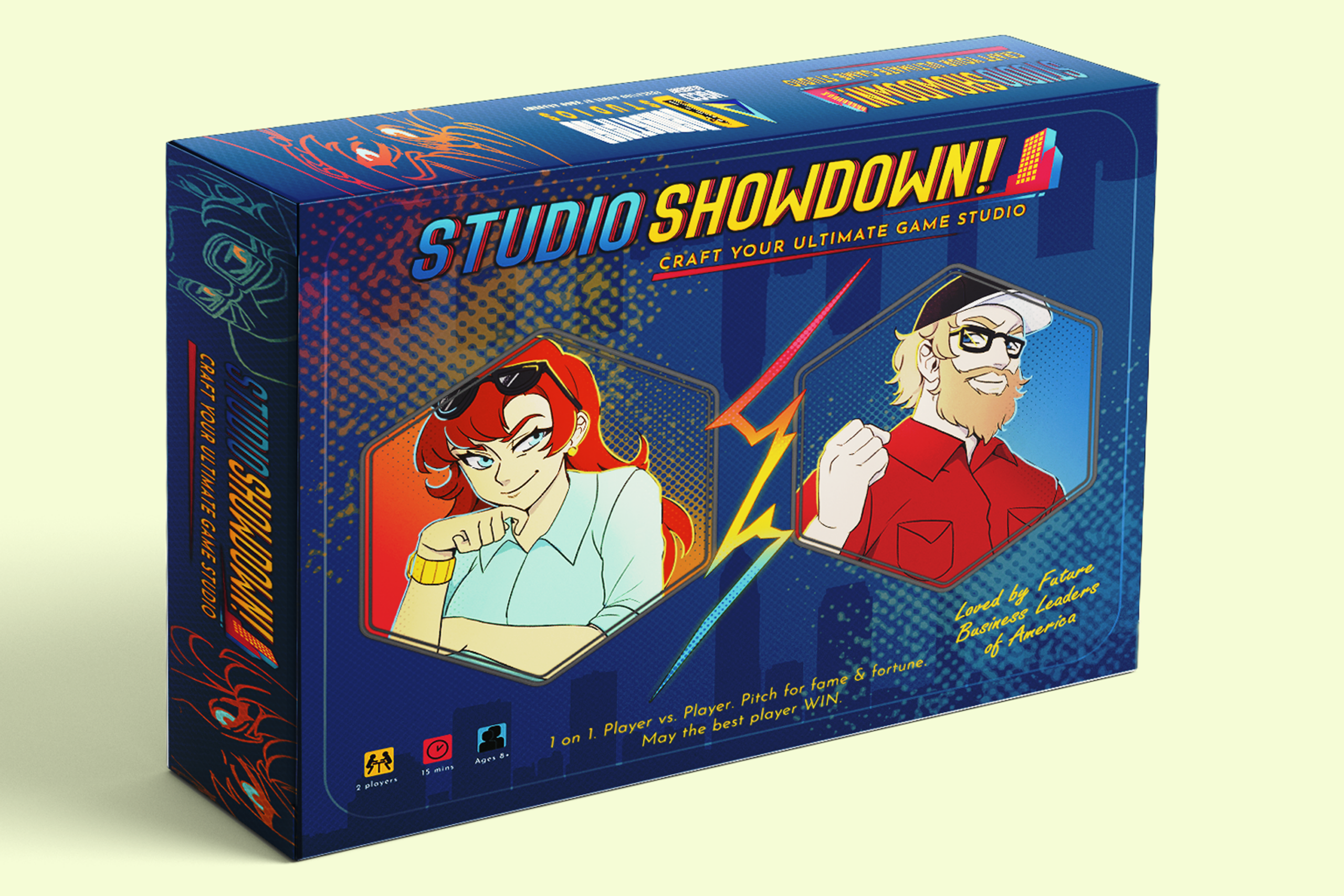
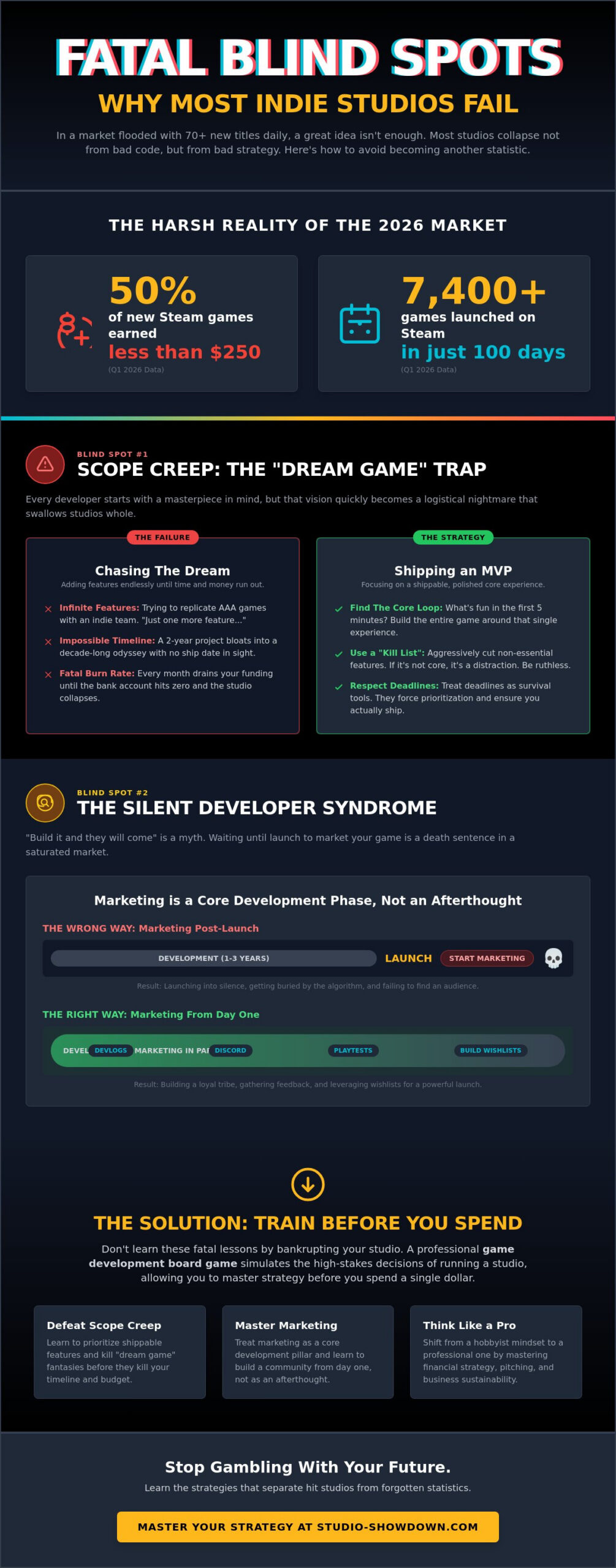
50% of games released on Steam in the first quarter of 2026 earned less than $250. This isn’t a coding error; it’s a strategic failure. You’ve likely felt the fear of wasting years on a project that simply doesn’t sell. In a market where 70 new titles drop every day, your vision needs a competitive edge. Using a professional game development board game to simulate market hurdles can be the difference between a flop and a hit studio.
We understand the pressure. The self-funding. The confusion. The struggle to balance creative fire with market reality. This article promises to reveal the seven fatal blind spots that kill indie studios before they even launch. You’ll learn to master the business of development and build a sustainable path to market. We are diving into how to avoid the 2026 pitfalls, pitch your vision with confidence, and ensure your next project is a shippable success rather than a statistic.
Key Takeaways
- Defeat scope creep by prioritizing shippable features over “Dream Game” fantasies to keep your studio timeline on track.
- End the Silent Developer Syndrome by treating marketing as a core development phase instead of a post-production task.
- Shift your mindset from hobbyist to professional by mastering the financial strategy and pitching skills required for sustainability.
- Train for high-stakes industry scenarios with a game development board game to sharpen your decision-making before spending a single dollar.
- Identify market mismatches early to ensure your vision aligns with 2026 player demands rather than outdated trends.
Chasing the Dream Game: Why Scope Creep is a Studio Killer
Every indie developer starts with a masterpiece in mind. It is the vision that keeps you awake at night. But without a strategic game development board game perspective, that dream quickly turns into a logistical nightmare. Scope creep is a failure of project management. It happens when you add features without calculating the cost. You want a crafting system. You add an open world. Suddenly, your two-year project is a decade-long odyssey. You’re trying to out-code giants with a fraction of their resources. It’s a psychological sinkhole that swallows studios whole.
The trap is simple. You see a feature in a AAA hit and think you can replicate it alone. You probably can’t. First-time developers often fall in love with a vision that requires 200 people and a massive budget. By the time they realize the scale is impossible, the bank account is empty. Simulating these risks with a game development board game like Studio Showdown allows you to see these management failures before they cost you your career. It forces you to make the hard choices that real production demands.
The Minimum Viable Product (MVP) Framework
Find the core fun loop. Strip everything else away. If a mechanic doesn’t make the game engaging in the first five minutes, it belongs on the kill list. Deadlines aren’t suggestions; they are survival tools. They force creative prioritization. You must decide what stays and what goes to ensure you actually ship. A kill list for non-essential features keeps your project lean and your team focused on the hook that will actually sell.
The High Cost of Infinite Development
Burn rate kills studios. Every month spent perfecting a blade of grass is money out of your pocket. Many developers spend months on 10% of the game while the other 90% remains a skeleton. This imbalance is fatal. Finishing a small, polished game builds a professional portfolio and a sustainable business. A half-finished epic builds nothing but debt. Understanding the board game development process provides a blueprint for this kind of lean, iterative production. It teaches you to value a completed project over an infinite promise. Every day you don’t ship is a day you aren’t earning. Don’t let your dream game become the reason your studio fails.
The Silent Developer Syndrome: Marketing Too Late
The “build it and they will come” era is buried. In 2026, the market is a battlefield. Over 7,400 games launched on Steam in the first 100 days of the year alone. If you wait until your gold master to talk to players, you’ve already lost. Marketing isn’t a post-production task. It’s a core development phase. Silence is a studio killer. You need to build a devlog culture that invites supporters into the struggle. They should see the artistic courage and the technical hurdles. This turns casual observers into a dedicated tribe before you ever hit “publish.”
Selling a single title is a transaction. Building a brand is a legacy. Your studio needs to stand for a specific quality, aesthetic, or experience. One hit provides a paycheck; a loyal fan base provides a career. While you’re balancing these creative priorities, using a strategic game development board game can help you map out these non-technical milestones. It forces you to think about the visual noise of the market before you’re drowned out by it. You learn to fight for attention when the stakes are still manageable.
Community as a Development Tool
Playtests are your early warning system. They identify UX friction before it morphs into a crushing negative review. Don’t just hunt for bugs. Hunt for confusion. Use Discord as your primary war room for organic reach. It’s where your tribe lives and breathes. While some studios bank on a “Big Bang” reveal, a consistent, transparent presence often yields better long-term results. Successful indie game marketing strategies focus on this slow-burn engagement rather than a single, expensive explosion that might fizzle out in hours.
The Wishlist Trap and Conversion Metrics
Steam wishlists are the lifeblood of indie survival. They dictate your visibility and algorithmic favor on launch day. Your trailer shouldn’t just list mechanics like a technical manual. It needs to sell a fantasy. It must promise a premium experience that stands above the crowd. There is a direct and measurable correlation between the number of wishlists accumulated during the production cycle and the total sales volume achieved in the first 48 hours after launch. If you aren’t tracking these metrics, you aren’t running a business. You’re just hoping for luck. Professionalism means knowing your numbers before the bank account hits zero.
The Business Blind Spot: Ignoring Fundraising and Pitching
Passion doesn’t pay the bills. Treating your studio as a hobby is the fastest way to ensure it stays one. Many developers hide behind their code because the “money talk” feels corporate or intimidating. This is a fatal mistake. By the time your bank account hits zero, it’s too late to start looking for a lifeline. You aren’t just an artist. You’re a founder. You’re a CEO. You’re a project lead. Mastering the business of creation is just as vital as mastering the engine. Integrating a game development board game into your routine turns these abstract business concepts into tangible, repeatable wins.
Venture capital and publisher expectations in 2026 have shifted toward stability and proven pipelines. They don’t just invest in ideas; they invest in teams that understand their own burn rate. Even if you’re self-funding, you need a professional pitch deck. It forces you to articulate why your game matters in a crowded market. It highlights your Unique Selling Point (USP) and proves you’ve considered the competition. Avoiding this process is one of the common mistakes of indie game developers who prioritize art over survival. A game development board game like Studio Showdown helps bridge this gap by simulating the stress of resource management before you’re spending real capital.
Mastering the Art of the Pitch
You have 30 seconds to hook a publisher. Your USP must be razor-sharp. Why should they care? What gap does your game fill? A professional portfolio isn’t just a collection of screenshots. It’s a demonstration of a shippable pipeline. It shows you can finish what you start. Practicing high-stakes negotiation through strategy board games builds the mental muscle needed for real-world deals. You learn to read the room. You learn when to push and when to pivot. This isn’t just play. It’s training for the boardroom.
Financial Literacy for Founders
Do you know your runway? Burn rate isn’t just a buzzword. It’s the ticking clock on your studio’s life. Many indies rely on revenue-sharing models with friends, but without legal contracts, these teams often implode at the first sign of success or failure. Professionalism means clarity. You need to understand how revenue sharing, gross versus net, and recoupment work before you sign anything. Using a business board game for financial simulation allows you to experience these pitfalls in a safe environment. It teaches you to manage cash flow and team morale simultaneously. If you can’t manage a simulated budget, you won’t survive a real one.
Market Mismatch: Picking the Wrong Genre or Platform
Building a game for a non-existent market is a creative tragedy. Genre Blindness happens when developers prioritize personal nostalgia over current player data. If you’re chasing 2024 trends in 2026, you’re already late to the party. The visual noise is too loud for another casual 2D platformer. You need to analyze Steam Tags with surgical precision. See what players are actually buying right now. Don’t guess. Use a game development board game like Studio Showdown to simulate market shifts before you commit to a three-year production cycle.
Technical debt starts with your engine. Picking a tool that lacks robust console porting support can lock you out of lucrative markets. While engines like Unreal and Unity are industry standards, your choice must align with your target platform. Every hour spent fighting a limited engine is an hour of lost revenue. Strategy requires foresight. It requires an understanding of where the industry is moving, not where it was. You must be prepared to pivot before your code becomes a cage.
Finding Your Profitable Niche
The Blue Ocean strategy is your path to survival. Stop fighting for scraps in over-saturated genres. While 2D graphics and casual games are flooded, complex genres like Simulation and Strategy offer loyal, hungry player bases. Balance your creative fire with market reality. Analyze your competitors. Don’t just copy them; find their weaknesses and make those your strengths. A successful hook is built on underserved needs. To master this strategic positioning, you should get the Studio Showdown board game to test your studio’s market viability in a safe, competitive environment.
Platform Strategy: PC vs. Console vs. Mobile
Mobile platforms accounted for 51.42% of revenue in 2025, but the discoverability crisis is real. Without a massive marketing spend, your mobile hit will likely vanish into the void. PC remains the gold standard for indie sustainability. Steam offers a direct path to a hardcore audience that values originality and depth. However, you must prepare for console requirements early. Porting isn’t a post-production afterthought. It’s a technical hurdle that requires planning from day one. If your game isn’t built for multiple inputs and performance standards, you’re leaving money on the table. Professionalism means being ready for every screen.
Winning the Showdown: Training with a Game Development Board Game
Don’t let your first real-world mistake be your last. Simulating the struggle is safer than failing with real capital. A game development board game provides a sandbox for disaster. You face crushing deadlines, talent shortages, and sudden market shifts without losing your house. It transforms raw passion into professional acumen. You learn to fight for your vision before the stakes involve real bank accounts. It is about building a mental framework that survives the pressure of a live launch.
Studio Showdown isn’t just a tabletop experience; it’s a dry run for your entire career. It bridges the gap between artistic vision and the cold reality of market saturation. You’ll build essential soft skills like fundraising, negotiation, and market dominance through intense play. It prepares aspiring founders and students for the brutal honesty of the 2026 industry. You aren’t just moving pieces across a board. You’re allocating talent, managing burn rates, and building a studio that can survive a market where 50% of releases fail to break even.
The Board Game as a Business Simulator
Studio Showdown mimics the high-pressure environment of a modern game studio with surgical precision. You must manage limited resources while outmaneuvering rivals who want your market share. It’s about more than just mechanics. It’s about strategic dominance. Using the game development board game to teach screen-free activities builds real-world skills that digital courses can’t replicate. You learn to read the room. You learn to negotiate deals. You learn to survive the “Indie-pocalypse” in a tactile, high-stakes setting where every decision has a visible cost.
From Player to Professional Founder
Victories at the table translate directly into a professional business mindset. You start seeing your projects as assets rather than just art. Educators and studio leads now use game-based learning to teach financial literacy because it sticks. It makes the “money talk” less intimidating and more of a strategic puzzle to solve. You learn to balance burn rates and revenue models while the competition is breathing down your neck. This is where you master the business of your future studio. Join the showdown. Train your intuition. Don’t just dream of a hit; build the skills to ensure one.
Take Command of Your Studio’s Future
Survival in the 2026 indie market requires more than artistic vision; it demands strategic ruthlessness. You’ve seen the pitfalls. Scope creep drains your budget. Late marketing leaves you lost in the visual noise. Financial blindness ends the dream before it starts. You must pivot from a developer mindset to a founder mindset to ensure your studio thrives rather than just survives.
Training for these high-stakes scenarios shouldn’t happen when your actual capital is on the line. An immersive game development board game like Studio Showdown provides the sandbox you need to master resource management and market dominance. Developed by VGCD Academy and DEMYSTIFIED Studios, this tool is already used by educators to teach entrepreneurship to aspiring founders. It’s time to stop guessing and start executing with precision.
Master the Business of Gaming with Studio Showdown. Your vision deserves a shippable future. Go build it.
Frequently Asked Questions
What is the number one reason indie game developers fail?
Strategic blind spots kill more studios than technical errors. Most failures stem from a lack of market awareness and poor financial planning. Developers often focus on the art while ignoring the burn rate. Without a clear business roadmap, even the most beautiful game will struggle to find an audience in a saturated market.
How early should I start marketing my indie game?
Start marketing the moment you have a core loop. You don’t need a finished product to build a tribe. Sharing your development journey creates an early connection with players. This transparency builds trust and secures those vital early wishlists. Waiting until launch day is a recipe for silence.
Do I need a business degree to start an indie game studio?
A degree isn’t required, but professional acumen is non-negotiable. You must understand the mechanics of a studio founder to survive. You can build these skills through hands-on experience and simulation. Using a game development board game allows you to practice fundraising and negotiation without the risk of real-world bankruptcy.
How can I avoid scope creep in my first game project?
Stick to a Minimum Viable Product (MVP) framework. Identify your core hook and cut everything else. Use a kill list for features that delay your release date. Hard deadlines force you to prioritize what actually matters to the player. Shipping a small, polished game is a greater victory than an unfinished epic.
What are the best genres for new indie developers to target in 2026?
Target underserved niches like Simulation or Strategy. These genres have loyal player bases and less visual noise than the 2D platformer market. Avoid saturated tags where organic discovery is nearly impossible. Success depends on finding a Blue Ocean where your unique vision can stand out.
Is it better to self-fund or look for a publisher for an indie game?
Self-funding offers total creative control but carries the highest personal risk. Publishers provide marketing muscle and funding at the cost of revenue share. Your decision should depend on your studio’s runway and long-term goals. Regardless of the path, you need a professional pitch deck to prove your project’s market viability.
How does Studio Showdown help me learn game development business?
Studio Showdown bridges the gap between passion and professional reality. This game development board game simulates the high-pressure environment of running a studio. You’ll manage talent, allocate resources, and outmaneuver rivals in a safe setting. It’s a dry run for the real-world challenges you’ll face as a founder.
Can I make a successful indie game as a solo developer?
Solo success is possible but requires mastering every role from coder to CEO. The management burden is immense. You must be disciplined with your time and resources to avoid burnout. Most solo hits succeed because the developer understood the business landscape before writing their first line of code.