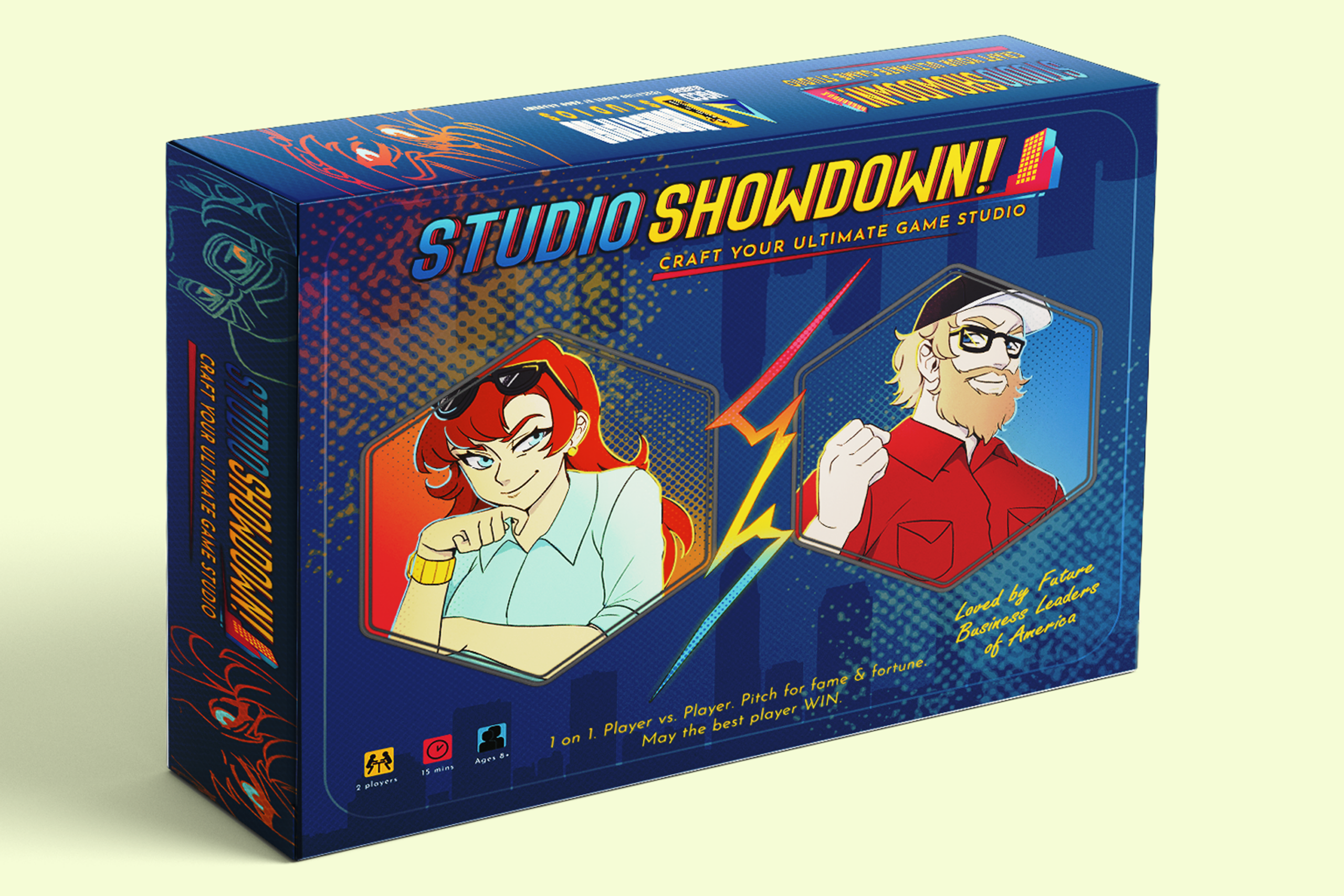
Your resume is paper. Your board game collection is a high-stakes training ground for the boardroom. Most people see a hobby. We see a low-risk laboratory for high-stakes professional decision-making. You’re likely exhausted by digital fatigue and abstract business theories that never stick. It’s time to bridge the gap. Finding board games that teach real world skills isn’t just about entertainment. It’s about building a professional portfolio through tactical play.
Traditional education lacks the hands-on grit required for modern entrepreneurship. We understand that frustration. This 2026 strategy guide promises to transform how you view the tabletop. You’ll discover how a 14.32 billion dollar global market has evolved into a powerhouse for STEM and business curricula. We’ll explore how modern titles, including the Studio Showdown Board Game, provide the visual success and premium experience needed to master finance and leadership. From resource management to cutthroat negotiation, here is your roadmap to tabletop mastery.
Key Takeaways
- Turn your tabletop into a high-stakes laboratory. Master elite decision-making in a low-risk environment.
- Discover why board games that teach real world skills are the ultimate tools for modern entrepreneurship and finance.
- Move beyond basic play to master resource management, budgeting, and the art of the pitch through tactile mechanics.
- Bridge the gap between classroom theory and industry reality. Use Studio Showdown to navigate the full game development lifecycle.
- Elevate your professional portfolio. Learn how to integrate strategy simulations into STEM and business curricula for a competitive edge.
Beyond the Rules: Why Board Games Are Engines for Real-World Success
2026 marks the peak of the Analog Renaissance. We’re seeing a massive pivot in professional development. Digital fatigue has hit the breaking point. Professional training is moving away from sterile, passive digital modules toward something more visceral. People want grit. They want tactile feedback. The tabletop is no longer just for leisure; it’s a high-octane production environment for the modern mind.
Traditional education often fails because it’s static. You watch a video, you forget the content. Strategy board games demand immediate, consequential action. This is the Tabletop Laboratory. It’s a controlled space where you can test aggressive market strategies, manage scarce resources, and fail without losing your venture capital. Finding board games that teach real world skills is the ultimate shortcut to professional dominance. You aren’t just playing; you’re performing a post-mortem on your own decision-making in real-time.
The Cognitive Science of Play-Based Learning
Your brain craves the physical. Moving a weighted piece across a board creates a spatial memory that a mouse click can’t replicate. This tactile engagement triggers executive function and anchors long-term memory. Game-based learning is a neuro-cognitive shortcut for complex logic. It bypasses the boredom of traditional lectures by engaging the reward centers of the brain through constant feedback loops.
Resilience is built through safe failure. In a game, losing is simply a data point. You identify the bottleneck, pivot your strategy, and restart the engine. This is the exact loop used by successful entrepreneurs. It’s about mental stamina. It’s about the grit to outlast the competition when the stakes feel real but the risk is managed.
Developing this level of cognitive flexibility and resilience is most effective when started early. As an example of this approach in practice, you can visit Jumpstart Learning Academy to see how their licensed programs focus on preschool and kindergarten readiness.
Soft Skills vs. Hard Skills on the Tabletop
Amateurs confuse luck with strategy. A true game of skill demands precision, foresight, and adaptability. On the tabletop, you’re mapping social dynamics while simultaneously calculating ROI. You’re reading the room to anticipate a competitor’s move. That’s leadership. You’re quantifying mathematical logic to optimize your next turn. That’s project management.
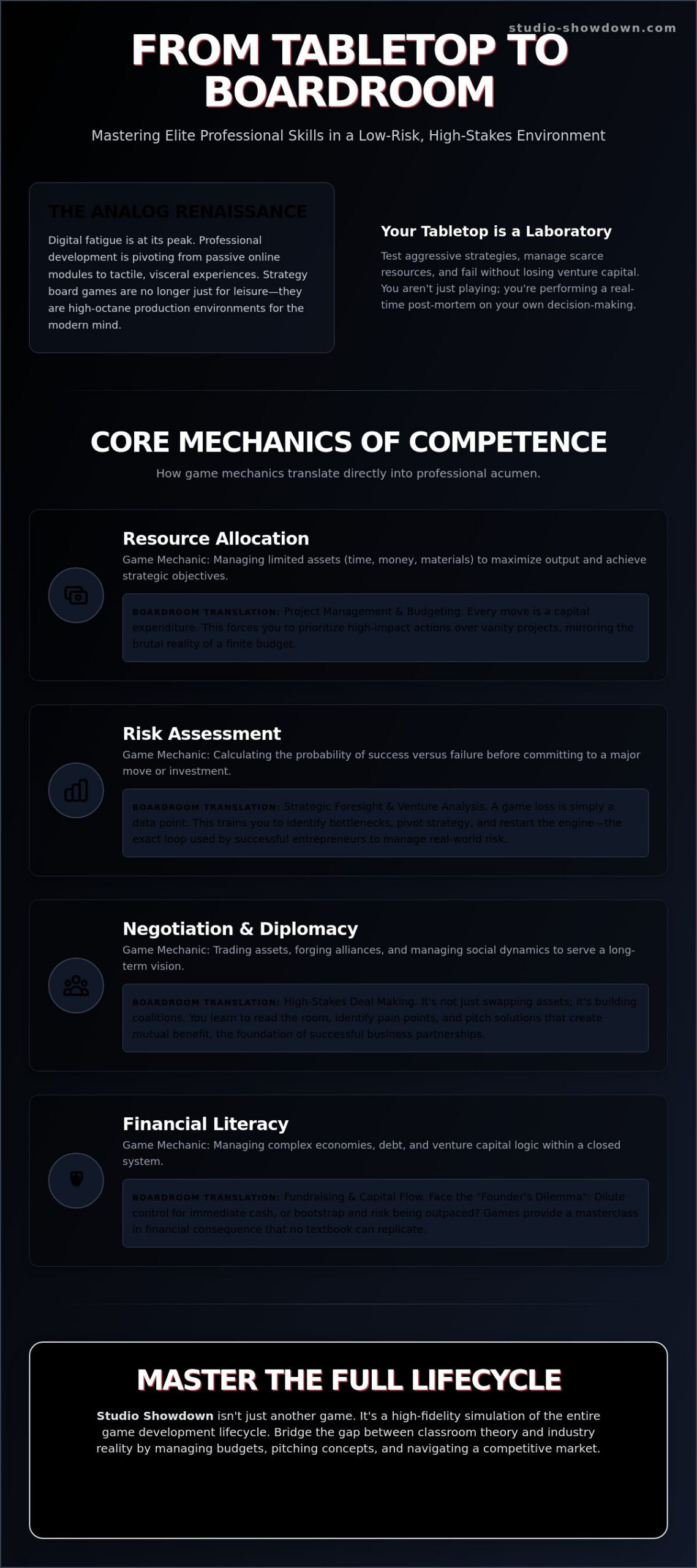
The mechanics of board games that teach real world skills translate directly to the boardroom:
- Resource Allocation: Managing limited assets to maximize output.
- Risk Assessment: Calculating the probability of success before a major investment.
- Diplomacy: Negotiating alliances that serve your long-term vision.
- Market Dominance: Identifying and exploiting gaps in a competitor’s defense.
Soft skills emerge through the friction of play. You’re managing a team, pitching an alliance, and defending your position under pressure. These games turn abstract concepts into muscle memory. Stop consuming. Start mastering the strategy.
The Core Mechanics of Competence: How Strategy Games Build Professional Acumen
Efficiency isn’t a suggestion. It’s survival. Resource management in board games mirrors the brutal reality of project management. You have a finite budget. You have limited time. Every piece you place is a capital expenditure. If you overextend, your project collapses. This is why educational board games are gaining traction in professional circles. They force you to prioritize high-impact moves over vanity projects.
Stop thinking about ‘trading cards’. Start thinking about ‘securing investment’. Negotiation in a competitive setting is about value perception. You aren’t just swapping assets. You’re building a coalition. You’re pitching a vision where your victory also benefits your temporary allies. This is the foundation of high-stakes business deals. Board games that teach real world skills demand that you read the room, identify pain points, and offer solutions that feel like a win for everyone involved. Mastery here translates directly to the boardroom.
Fundraising and Financial Literacy
Capital flow is the heartbeat of any venture. Many strategy board games now incorporate complex debt management and venture capital logic. You face the ‘Founder’s Dilemma’ every turn. Do you dilute your control for immediate cash? Or do you bootstrap and risk being outpaced by better-funded rivals? It’s a masterclass in financial literacy that no textbook can replicate. You learn the weight of a dollar when that dollar is the only thing keeping your studio afloat.
Agile Thinking and Pivot Strategies
Markets shift. Disruptions happen. In the tabletop world, these are ‘Event Cards’. They represent the visual noise of a competitive market where sudden regulation or a rival’s breakthrough can render your current plan obsolete. Professional success requires the ability to pivot. If your initial strategy hits a bottleneck, you don’t double down on failure. You adapt. You reallocate. You find a new path to market dominance. Board games simulate the visual noise of a competitive market by forcing players to filter out distractions and focus on critical path objectives.
Risk assessment is the final piece of the puzzle. You’re calculating ROI under the pressure of a ticking clock. Every turn is a resource. Every move is an opportunity cost. Understanding competitive landscapes and rival maneuvers is what separates a player from a leader. Board games that teach real world skills provide the friction necessary to sharpen these instincts. To truly master these dynamics, you need a simulation that replicates the high-stakes world of production. Explore how Studio Showdown turns the game development lifecycle into a tactical battle for supremacy.
5 Board Games That Teach Real World Skills for Future Leaders
Forget the 1930s relics. Monopoly teaches rent-seeking and blind luck. Real leaders need value creation and strategic grit. Modern board games that teach real world skills are designed as complex simulations. They mirror the volatility of the 2026 market. If you want to master the boardroom, you need to master the tabletop first. These aren’t toys. They’re tactical instruments.
- Studio Showdown: This is the ultimate business simulation. You act as a Studio Founder. You navigate the high-stakes game development lifecycle. From fundraising and pitching to market dominance, it’s a direct proxy for the tech startup world.
- Settlers of Catan (6th Edition): Beyond the wood-for-sheep memes. This game is about diplomatic negotiation and advanced resource trading. It teaches you to build a coalition when resources are scarce. You learn that a trade is only good if it fuels your long-term expansion.
- Chess: The gold standard for tactical foresight. It builds situational awareness. You learn to read three moves ahead while your opponent is still looking at the current turn. It’s about recognizing patterns before they manifest as threats.
- Power Grid: A masterclass in supply chain management. It forces you to deal with market fluctuation logic. You balance infrastructure costs against rising fuel prices in real-time. It’s about timing the market to secure a competitive edge.
- Pandemic: Pure crisis management. It’s a cooperative game. You learn collaborative problem solving under extreme pressure. It’s about team synergy, not just individual victory. If one department fails, the entire organization collapses.
Why Modern Strategy Beats the Classics
The shift is clear. Old games relied on player elimination. Modern strategy focuses on engine building. This better reflects the 2026 gig economy and startup culture. Success isn’t just about bankrupting your neighbor. It’s about building a sustainable system that outlasts the competition. Scientific studies on the benefits of board games confirm that these complex mechanics enhance cognitive flexibility and social intelligence. Studio Showdown acts as the perfect bridge. It moves you from hobbyist play into professional development by simulating the actual production cycles of the creative industry.
Selecting Games for Specific Career Paths
Your game library is a professional resource. Aspiring CFOs should focus on Power Grid for resource allocation and market timing. Creative Directors need the ecosystem-building logic of Studio Showdown to manage talent and vision. Career discovery happens when you’re under pressure. Industry-specific simulations allow you to test your instincts without risking a real-world budget. Don’t just play for fun. Play for your resume. Building a library of board games that teach real world skills is a strategic investment in your own professional trajectory.
From Game Night to Resume: Integrating Strategy into Educational Curricula
Education is shedding its digital skin. By 2026, the most forward-thinking institutions have realized that passive screen-time is a dead end for deep learning. We’re seeing a pivot toward tactical presence. Tactical presence happens when a student sits across from a rival and makes a move that has immediate, visible consequences. Integrating board games that teach real world skills into a curriculum isn’t about taking a break from work. It’s about intensifying the work. It’s about building a professional student portfolio through high-stakes simulation.
A student who masters a complex supply chain maneuver on a game board has a narrative for their first interview. They aren’t just reciting definitions. They’re describing a battle they won. This is how you bridge the gap between abstract business theory and the grit of the production world. We measure success through concrete metrics: financial literacy, resource allocation efficiency, and the ability to navigate the visual noise of a competitive market. These games provide the data points that traditional testing misses.
The Educator’s Strategy for Implementation
Handing out a box isn’t enough. You need a framework. Effective implementation starts with ‘Studio Founder’ workshops. These sessions treat the classroom like a startup incubator. Educators should use the Studio Showdown: Educator Edition to provide a structured, professional-grade learning environment. The game acts as the engine, but the real growth happens during the post-game de-brief. This is where you connect a ‘failed pitch’ at the table to the reality of venture capital logic. You turn a tactical loss into a visceral, lasting lesson in entrepreneurship.
Institutional Benefits and Bulk Licensing
Software is a recurring debt. Physical strategy tools are an asset. Scaling tabletop learning for libraries, schools, and after-school programs is remarkably cost-effective. When you choose classroom bundles, you’re eliminating the need for expensive, glitchy software that requires constant updates. You’re investing in a tactile experience that doesn’t suffer from digital fatigue. It’s a one-time acquisition for a high-impact pedagogical tool that survives the test of time. Professional development for teachers shifts from technical troubleshooting to mastering game-based instruction. Ready to transform your classroom into a creative powerhouse? Secure your Classroom Bundle and start building the leaders of tomorrow.
Studio Showdown: Mastering the Competitive World of Game Development
The transition from player to producer happens at the edge of your seat. Studio Showdown isn’t just a pastime. It’s a high-stakes simulation of the modern creative economy. You step into the role of a Studio Founder. You aren’t just moving pieces. You’re navigating the entire game development lifecycle. This is the ultimate example of board games that teach real world skills through visceral, hands-on experience. You deal with the friction of fundraising. You master the art of the pitch. You fight for market dominance in a landscape that doesn’t forgive mediocrity.
Strategic depth separates this experience from the “Easy Money” games of the past. Amateurs rely on a lucky roll. Professionals rely on industry acumen. Through a collaborative powerhouse involving VGCD Academy and DEMYSTIFIED Studios, we’ve distilled the complexities of the industry into a tactical battleground. You’ll learn to outmaneuver rivals by identifying market gaps and timing your releases for maximum impact. It’s about vision. It’s about execution. It’s about winning the fight for the consumer’s attention.
Inside the Box: Tools for Future Entrepreneurs
Every card in the deck represents a real-world hurdle. You’ll face “crunch” periods where resources are drained. You’ll encounter development bottlenecks that force a total pivot. These aren’t just mechanics; they’re lessons in resilience. Studio Showdown is the definitive business board game for teens because it respects their intelligence. It doesn’t sugarcoat the entrepreneurial struggle. It provides a safe space to build the grit required for a career in the visual arts or tech sectors.
- Fundraising: Secure the capital needed to fuel your creative vision.
- Talent Management: Allocate your team to solve critical production bottlenecks.
- Market Positioning: Analyze rival studios to ensure your project stands above the visual noise.
- Crisis Response: Adapt to sudden market shifts and industry disruptions.
Ready for the Showdown? Next Steps
The board is just the beginning. Mastery at the table prepares you for real-world game dev projects. You’re joining a community of aspiring developers, educators, and creative leaders who refuse to settle for passive learning. We’ve bridged the gap between tabletop play and professional mastery. The skills you sharpen here stay with you long after the box is closed. Don’t leave your career to chance. Build your empire one move at a time. Secure your copy of Studio Showdown today and take command of your professional future.
Master the Tabletop, Command the Boardroom
The Analog Renaissance has arrived. We’ve shown how tactical mechanics turn passive learning into professional dominance. By prioritizing board games that teach real world skills, you bridge the gap between abstract concepts and the high-stakes reality of production. You aren’t just playing. You’re refining your industry acumen, mastering capital flow, and building the grit required to outmaneuver rivals in a competitive market. The tabletop is your laboratory for success.
Winning requires the right tools. Developed by industry experts at VGCD Academy, Studio Showdown is more than entertainment. It’s a proven simulation used in professional development workshops nationwide. Every turn helps build a real-world business portfolio that stands above the visual noise. Stop watching from the sidelines. Take control of the production lifecycle and sharpen your entrepreneurial instincts today. Launch your studio. Get Studio Showdown for your home or classroom. Your next big move starts at the table. Grab your seat and lead with confidence.
Frequently Asked Questions
What are the best board games for teaching financial literacy to teens?
Power Grid and Studio Showdown are the top choices for mastering complex financial logic. Power Grid forces players to manage fluctuating energy costs and infrastructure investments. Studio Showdown teaches the “Founder’s Dilemma” by simulating fundraising and capital allocation. These board games that teach real world skills move beyond simple saving to focus on high-stakes ROI and market timing.
Can board games actually help with career development and resumes?
Yes, they provide concrete examples of strategic decision making for professional portfolios. Employers value candidates who can articulate how they managed limited resources or negotiated alliances under pressure. Describing a successful campaign in a complex simulation demonstrates soft skills like leadership and risk assessment. It turns a hobby into a quantifiable record of professional acumen.
How do I implement board games in a middle school business curriculum?
Start with the Studio Showdown: Educator Edition to create a structured “Studio Founder” workshop. You should integrate play sessions with mandatory de-briefing periods. These de-briefs connect game mechanics to theoretical business concepts like supply and demand. Using a Classroom Bundle ensures every student has a tactile seat at the boardroom table during the lesson.
Is Studio Showdown suitable for people who don’t know how to code?
Absolutely, because the game focuses on the business of development rather than technical execution. You act as a Studio Founder managing talent, funding, and market positioning. Coding knowledge isn’t required to understand the high-stakes logic of production cycles. It’s about the grit of entrepreneurship and the strategy of market dominance.
What real-world skills does Settlers of Catan teach?
Settlers of Catan focuses on diplomatic negotiation and the valuation of scarce resources. You learn to trade based on market demand rather than fixed prices. It teaches you to build alliances that serve your long-term expansion goals while managing a competitive landscape. Mastery of the 6th Edition requires reading your rivals and identifying bottlenecks before they stall your growth.
Why are strategy board games better than digital simulations for learning?
Tactile engagement creates spatial memories that digital interfaces simply can’t replicate. Board games remove the distraction of blue light and focus on the social friction of face-to-face decision making. This physical interaction anchors complex logic in long-term memory. It forces a level of focus and “tactical presence” that passive digital modules often lack.
How can board games reduce screen time while remaining educational?
They provide a high-octane alternative to digital learning that eliminates blue light fatigue. Board games that teach real world skills offer the same strategic depth as professional software without the passive consumption. Students remain intensely engaged through physical mechanics and social interaction. It’s a “Screen-Free” path to mastering the grit of the modern gig economy.
What is the difference between an ‘educational’ game and a ‘strategy’ game?
Educational games often prioritize rote memorization; strategy games prioritize systems thinking and the application of logic. A true strategy game doesn’t just give you facts. It gives you a simulation where your choices have consequences. We focus on games that treat the player as an active producer rather than a passive recipient of information.