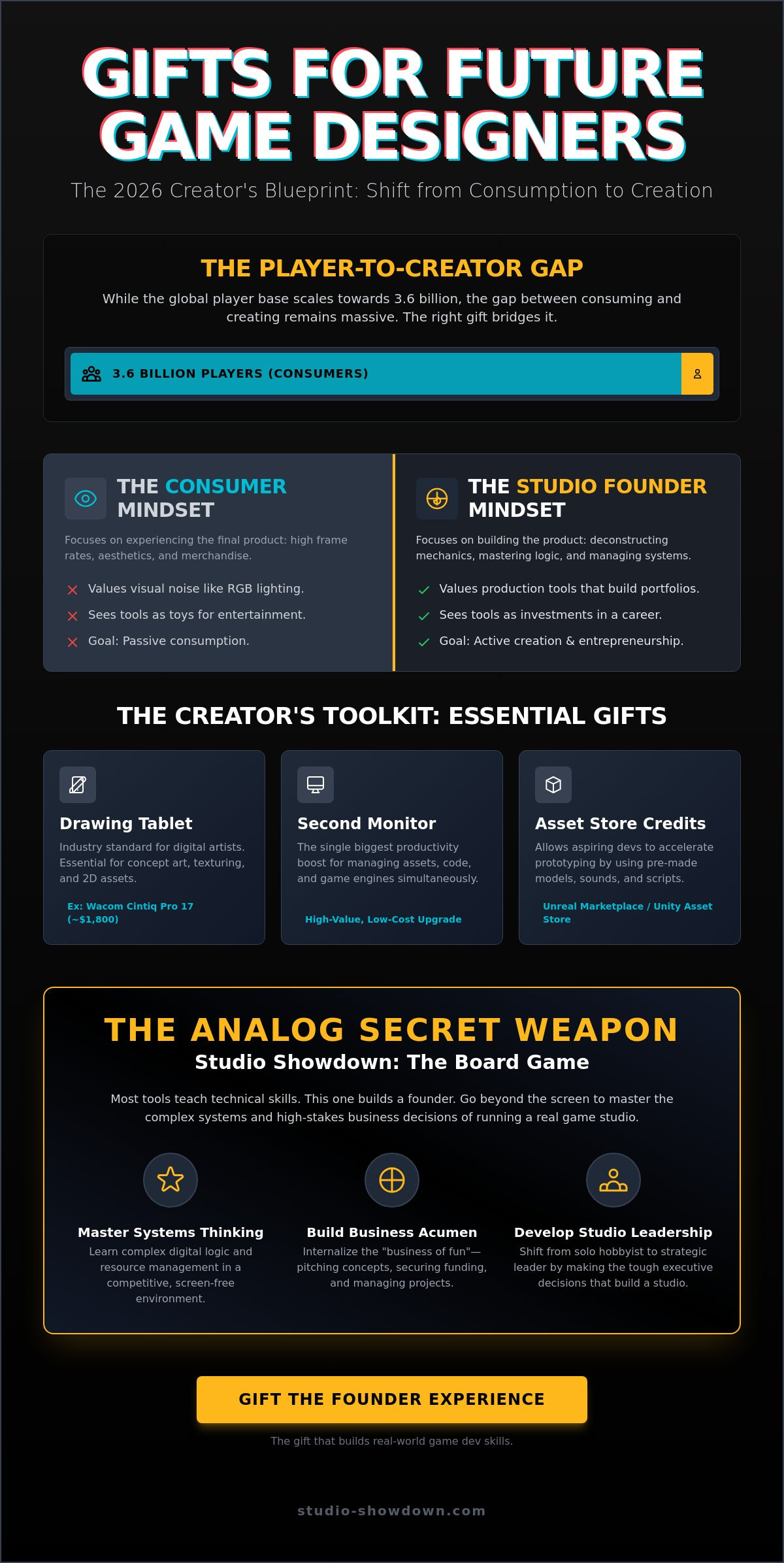
The most impactful gift for a future game designer isn’t a new console or a high-end graphics card. It’s a tool that unlocks their ability to build, not just play. While the global player base scales toward 3.6 billion, the gap between consuming content and creating it remains massive. Finding the right gifts for future video game designers means looking past the visual noise of RGB lighting and generic merchandise. You want to provide something that survives the first week. You want to spark a professional career.
We know the struggle. Staring at technical specs for $2,000 tablets or $3,000 GPUs is exhausting, especially when you aren’t sure if they’ll actually help. It’s easy to feel overwhelmed by jargon like Unreal Engine 5.8 royalties or Unity 6.3 subscription tiers. This guide cuts through the clutter. You’ll discover how to support their journey with tools that build professional portfolios and real-world business acumen.
We’ve curated 15 professional-grade options for 2026. From the precision of a Wacom Cintiq Pro 17 to screen-free systems like the Studio Showdown Board Game, these picks prioritize creativity over consumption. Let’s move beyond the screen and start building the future of play.
Key Takeaways
- Shift the focus from consumption to creation by prioritizing the “Studio Founder” mindset over generic gaming merchandise.
- Identify the technical differences between gamer gear and designer tools to ensure your gift builds a professional-grade portfolio.
- Discover why analog strategy games are the secret weapon for mastering complex digital logic and systems thinking.
- Tailor your search for gifts for future video game designers by matching specific tools to their niche, from narrative design to spatial architecture.
- Learn how the Studio Showdown Board Game bridges the gap between creative passion and the high-stakes business of running a game studio.
Beyond the Controller: Why Future Game Designers Need More Than Merch
Stop buying neon lights. Start building careers. Most gift guides fail because they mistake a passion for play with a passion for production. When you search for gifts for future video game designers, you aren’t just looking for another controller or a themed hoodie. You’re looking for a catalyst. The industry in 2026 is a battlefield of 3.6 billion players and thousands of daily releases. Success requires more than just loving the medium. It requires mastering it.
To truly support an aspiring creator, you must provide tools that bridge the gap between play and production. This means helping them understand the process of video game design from the ground up. It involves deconstructing mechanics, balancing economies, and managing player psychology. We call this the “Studio Founder” mindset. It’s the shift from passive consumer to active architect. The right gift doesn’t just sit on a shelf; it builds a professional portfolio.
The Consumer vs. Creator Gap
Gamers experience the magic. Designers create the trick. A “cool” piece of room decor might look great on a stream, but it doesn’t help an artist overcome the learning curve of 3D modeling or spatial logic. Choosing effective gifts for future video game designers means selecting items that demand interaction. Professional-grade tools, even at the entry level, provide a psychological edge. They signal that this isn’t just a hobby. It’s a career path. When an aspiring developer owns a tool used by the pros, their creative output changes from “messing around” to “building a future.”
Skill-Building Over Aesthetics
Logic is the heartbeat of every legendary title. Whether it’s level design or narrative flow, the best gifts promote active problem-solving. Modern game development is increasingly about entrepreneurship. With the rise of agile micro-studios and AI-assisted workflows, the real competitive advantage lies in understanding the “business of fun.” How do you pitch a concept? How do you fund a project? Understanding these systems is just as vital as knowing how to code. Gifts that teach these underlying structures prepare creators for the high-stakes reality of the 2026 market, where the ability to lead a studio is the ultimate power-up.
The Creator’s Toolkit: Essential Hardware and Software Gifts
High-performance hardware is the backbone of production. While gamers want high frame rates, designers need stability, precision, and screen real estate. Selecting gifts for future video game designers requires a shift in perspective. You aren’t buying a toy. You’re investing in an engine. Every piece of gear should remove a technical barrier and let creativity flow without friction.
Input Devices for Artists and Coders
Precision matters. For aspiring concept artists, a drawing tablet is non-negotiable. Wacom remains the industry standard. As of May 2026, a refurbished Cintiq Pro 17 costs $1,799.95, offering professional-grade color accuracy. Huion provides excellent alternatives for those on a tighter budget. A mechanical keyboard isn’t just for flair; it’s about tactile feedback and durability during long coding sessions. Add a second monitor. It’s the single biggest productivity boost for anyone mastering essential game designer skills like level layout or simultaneous asset management.
Software and Learning Subscriptions
Tools are useless without the knowledge to wield them. Subscriptions to platforms like Masterclass offer inspiration, but specialized platforms provide technical grit. Consider gifting credits for the Unreal Engine Marketplace or Unity Asset Store. These allow developers to skip the “grunt work” and focus on core mechanics. Asset packs are high-value gifts for future video game designers because they accelerate the creation of a playable prototype. They turn ideas into visible progress overnight.
Don’t ignore the business side. A subscription to a project management tool might seem dry, but it teaches professional workflow. It’s about moving from a solo hobbyist to a studio lead mindset. If they’re ready to test their leadership skills in a physical format, a strategy-based studio simulator can bridge the gap between technical work and executive decision-making.
Sound design is the hidden layer of immersion. A high-quality microphone allows for clean foley recording and professional dev-logs. Finally, prioritize ergonomics. A chair with lumbar support and a height-adjustable desk aren’t boring gifts. They’re career longevity tools. Coding and level design require long hours. Comfort is a performance multiplier. It keeps the creator in the zone longer.
Analog Learning in a Digital World: The Power of Strategy Board Games
Every digital titan started as a prototype on a kitchen table. Screen time is a resource, not a lifestyle. In a market where 3.6 billion players demand perfection, the best designers look back to the basics to find an edge. Digital complexity often masks broken mechanics. Board games strip away the visual noise. They reveal the raw systems underneath. Finding the right gifts for future video game designers involves recognizing that the best logic isn’t always digital. It’s physical.
Top-tier developers use strategy board games to sharpen their mental models. When you remove the shaders and the ray-tracing, you’re left with the mechanic. This is where balance is born. Analog play forces a creator to see variables as physical objects. It turns abstract code into tangible choices. These are the gifts for future video game designers that build real mental muscle without the risk of screen fatigue.
Board Games as Prototyping Tools
Code is slow to compile. Cardboard is instant. Physical pieces represent digital states with zero latency. Aspiring developers can iterate on a mechanic in seconds just by moving a token. This speed of failure is vital. It teaches them to kill bad ideas quickly. Tabletop play also builds communication skills. A designer must explain their systems to players without the help of a tutorial screen. It’s the ultimate test of clarity and logic.
The Business of Tabletop Strategy
Game design is a business. Resource management games prepare creators for the high-stakes reality of studio leadership. They teach the value of a turn, the cost of an asset, and the weight of a player’s choice. By engaging with business board games, developers learn to manage risk and reward. They see the financial consequences of their design decisions in real time. This crossover between tabletop loops and video game architecture is where professional instincts are forged. It’s about mastering the “logic of play” before a single line of code is ever written.
Identifying Their Niche: Tailoring the Gift to Their Design Path
Game design isn’t a monolith. It’s a high-speed clash of specialized roles. A narrative lead lives in a world of branching dialogue, while a level architect obsesses over spatial flow. To find the best gifts for future video game designers, you must identify their specific obsession. Generic gear fails because it ignores the unique friction each discipline faces. You need to match the tool to the craft. A storyteller needs a canvas. An engineer needs logic. A founder needs a strategy.
The industry is shifting rapidly. In 2026, versatility is a weapon, but specialization is the winning edge. Whether they’re building assets in Blender 5.1.2 or optimizing complex systems in Unreal Engine 5.8, their toolkit should reflect their daily struggle. Don’t buy a gift for a generic designer. Buy a gift for the professional role they’re destined to fill. This precision shows you don’t just support their hobby; you understand their ambition.
Narrative and Visual Arts
Storytellers are the soul of the experience. They don’t just write dialogue; they build entire ecosystems. High-end notebooks are essential for rapid ideation and character mapping. Software like World Anvil provides the structural integrity needed for professional-grade lore. Don’t overlook art books from major studios. “The Art of…” series isn’t just coffee table decor. These books reveal production pipelines. They show how a thumbnail sketch becomes a high-fidelity 3D asset. They teach visual hierarchy and world-building consistency. They are blueprints for visual success.
Logic and Systems Design
Systems designers are the mechanics of the digital world. They deal in variables, states, and loops. Arduino kits provide the perfect friction for those who want to bridge the gap between physical hardware and digital response. For the programmers, look toward logic puzzles or Zachtronics-style titles. These games turn optimization into a competitive sport. They sharpen the mind for the rigors of technical architecture. It’s also vital to balance this intensity with screen-free activities. Cognitive development thrives when the brain isn’t tethered to a monitor. It allows for deep reflection on complex systems away from the visual noise.
The final path is the most ambitious: the Founder. This role requires a grasp of marketing, fundraising, and pitching. It’s about seeing the whole board. If they’re ready to move from employee to entrepreneur, give them the tools to lead. You can start their journey into studio management here. Empower them to master the business of fun before they launch their first title. Success in 2026 belongs to those who understand the market as well as the mechanics.
Studio Showdown: The Gift That Builds Real-World Game Dev Skills
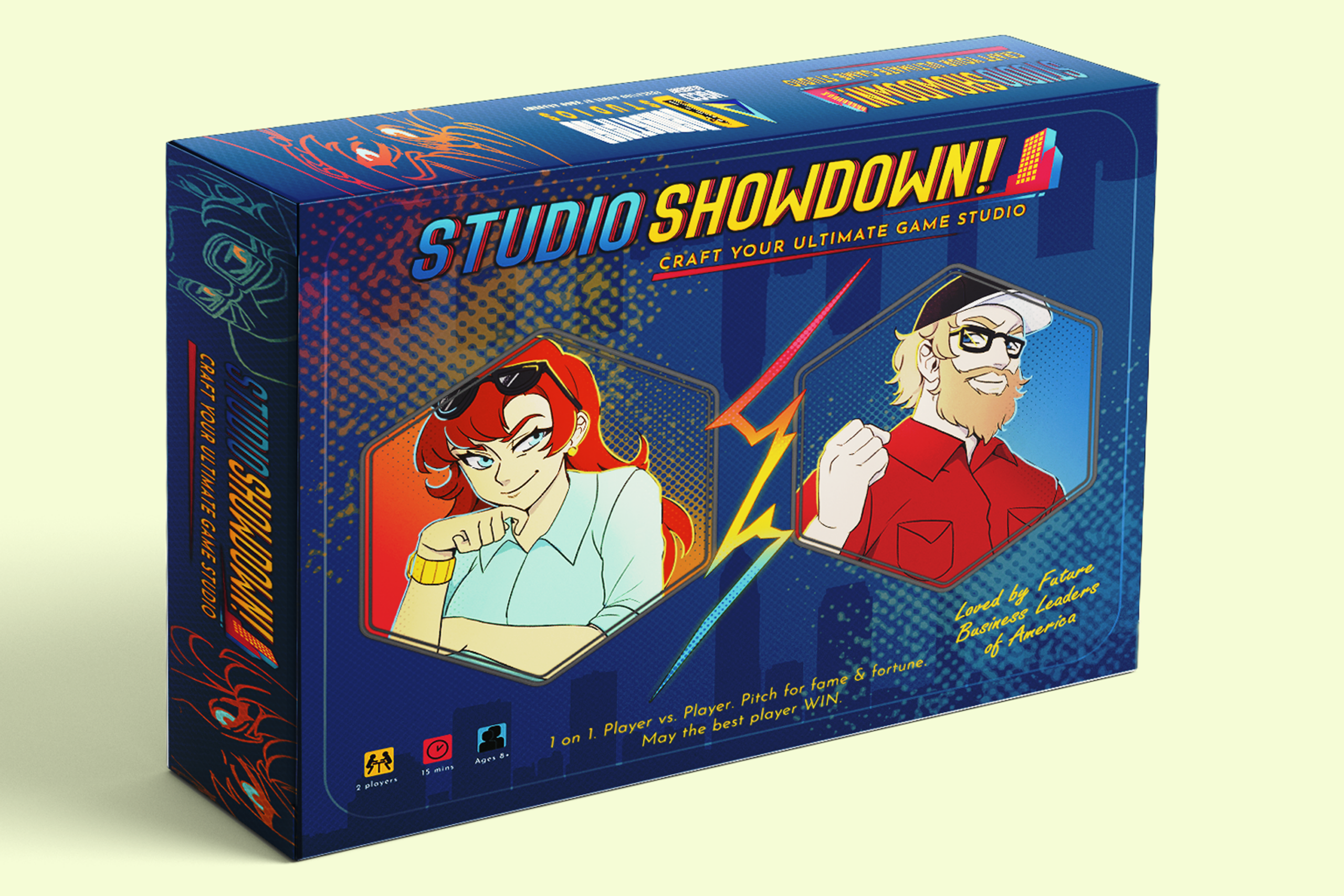
Technical mastery is only half the battle. In a 2026 market projected to exceed $250 billion, the most successful creators are those who understand the machinery of the industry. Most gifts for future video game designers focus on the act of creation, but few prepare them for the act of leadership. Studio Showdown fills this gap. It isn’t just a game; it’s a high-stakes simulation of the modern development landscape. It turns the complex world of fundraising, pitching, and market dominance into a competitive tabletop experience.
Aspiring entrepreneurs need to know how to navigate the visual noise of a crowded marketplace. Studio Showdown provides that friction. It forces players to make the hard choices that real studio leads face every day. Whether they’re choosing between the standard edition for a competitive game night or the Educator Edition for a more structured learning environment, they’re gaining insights that no textbook can provide. This is the ultimate tool for those ready to move beyond the screen and into the boardroom.
From Player to Studio Founder
The core loop of Studio Showdown is about outmaneuvering rivals for market share. It’s a relentless pursuit of visual success. Players don’t just build games; they build companies. They must master the “pitch” to secure resources and stay ahead of the competition. This builds a professional mindset that is vital for any modern developer. It teaches them that a great game is only as good as the strategy behind its release. It’s a perfect way to develop professional instincts while having a pörgős, engaging experience with friends or family.
Why Industry Pros Recommend Studio Showdown
Success in the creative industry requires a blend of artistic vision and business grit. This game is the result of a powerful collaboration between VGCD Academy and DEMYSTIFIED Studios. It represents a premium experience that industry professionals recognize as a valid learning tool. For students, it’s more than a gift; it’s a portfolio-worthy experience that demonstrates an understanding of the production lifecycle. It shows they know how a project moves from a raw concept to a market-dominating success. Don’t settle for another generic toy when you can provide a blueprint for a career. Order Studio Showdown for your future designer today!
Choosing the right gifts for future video game designers is about identifying potential. It’s about providing the tools that turn an interest into an obsession and an obsession into a profession. Studio Showdown is that final piece of the puzzle. It bridges the gap between the art of design and the business of play. Give them the power to lead the next generation of gaming excellence.
Launch Their Career in 2026
The journey from a passionate player to a studio founder requires a tactical arsenal. We’ve explored how professional-grade hardware and specialized software provide the technical baseline for any creator. But true mastery in 2026 demands more than just technical grit. It requires a deep understanding of the systems and business logic that drive the global market. The best gifts for future video game designers bridge the gap between creative intuition and professional execution. Whether it’s through analog prototyping or niche-specific tools, the goal is to build a portfolio that commands attention.
Ready to give them a competitive edge? Developed by industry experts at VGCD Academy, Studio Showdown is a proven tool used in classrooms to build professional portfolios. It teaches high-stakes business skills like fundraising and pitching through immersive, strategic play. It’s the ultimate way to master the “business of fun” away from the screen. Equip the next generation of developers with Studio Showdown and watch them transform from fans into founders. The future of gaming belongs to the architects. Start their journey today.
Frequently Asked Questions
What is the best gift for a teenager who wants to be a game designer?
The best gift for a teenager is a tool that shifts their perspective from player to creator. Look for items that provide immediate creative feedback, such as entry-level drawing tablets or strategy-based board games. These tools encourage the “Studio Founder” mindset by forcing them to think about mechanics and systems rather than just high scores. It’s about providing the friction necessary to build a professional-grade portfolio early.
Should I buy a coding course or a game design tool as a gift?
Prioritize a game design tool over a coding course for beginners. Design is the architecture of the experience, while coding is the construction. Tools like world-building software or asset packs allow for rapid prototyping and immediate visual success. This momentum is vital. Once they understand how to craft a compelling loop, they’ll be more motivated to learn the technical syntax required to build it from scratch.
Are board games actually useful for learning video game design?
Board games are the purest way to study game logic and player psychology. They strip away the visual noise of modern graphics to reveal the raw mechanics underneath. Designers use them to iterate on systems without waiting for code to compile. Playing and deconstructing a complex strategy game teaches balance, resource management, and the “business of fun” in a tangible, physical space.
What hardware do I need to start making video games in 2026?
Stability and screen real estate are more important than raw frame rates. Every designer needs a dual-monitor setup to manage engine windows and asset folders simultaneously. A high-quality mechanical keyboard and an ergonomic chair are also essential for long production sessions. While high-end GPUs are impressive, most learning happens within the editor where multitasking capability is the true performance multiplier.
How can I support my child’s interest in game development without more screen time?
Focus on analog tools that build foundational design skills. High-quality notebooks for level sketching and strategy board games are excellent screen-free options. These gifts for future video game designers allow them to explore complex systems and narrative structures offline. It prevents screen fatigue while sharpening the cognitive skills required for professional development, such as spatial logic and systems thinking.
What is the difference between a game designer and a game developer?
A game designer is the architect who creates the rules, story, and mechanics. They define how the player interacts with the world. A game developer, or programmer, is the engineer who writes the code to make those rules functional. While the roles often overlap in small studios, the designer focuses on the “why” of the experience, while the developer focuses on the “how” of the execution.
Is Studio Showdown suitable for classroom use or just home play?
Studio Showdown is specifically designed for both environments. While the standard edition is perfect for competitive home play, the Educator Edition and Classroom Bundle are tailored for academic settings. These versions help students build professional portfolios by simulating real-world industry challenges. They teach fundraising, pitching, and studio management, making them a staple for modern game design curriculums and workshops.
What are some affordable gifts for aspiring game designers under $50?
High-quality dot-grid notebooks and specialized logic puzzles are fantastic low-cost options. You can also gift credits for the Unreal Engine Marketplace or Unity Asset Store, allowing them to purchase professional assets for their projects. These are highly effective gifts for future video game designers because they provide immediate utility. They help a creator move past the “blank canvas” stage and start building playable prototypes without a massive investment.