Your revenue isn’t hiding in a spreadsheet. It’s locked behind the decisions of people you haven’t met yet. While 86% of companies state that customer segmentation is essential for growth, most business education treats audience targeting like a museum exhibit: static, dusty, and disconnected. You’ve likely sat through lectures that define demographics but leave you clueless when the actual market starts pushing back. It’s time to stop reading definitions. It’s time to start winning the room.
This interactive lesson for customer segmentation replaces passive listening with strategic action. You’ll master the art of identifying high-value targets through a dynamic, game-based approach that mirrors the high-stakes world of modern entrepreneurship. We know that theory without application is just noise. This guide provides a clear framework to isolate the segments that actually fuel your bottom line. You’ll get a practical exercise to sharpen your logic and the confidence to make bold, professional moves. Let’s cut through the visual noise and master the market showdown.
Key Takeaways
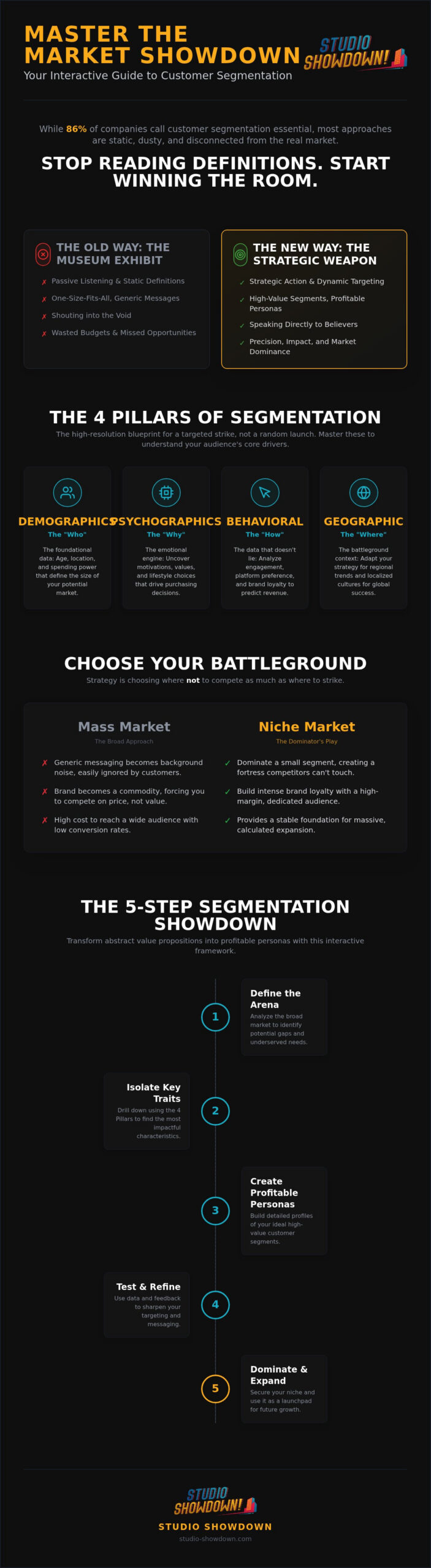
- Treat segmentation as a strategic weapon rather than a static definition to dominate competitive markets.
- Master the four pillars of targeting to understand the specific motivations and spending power driving your audience.
- Choose your battleground by weighing the broad reach of mass markets against the high-margin loyalty of niche segments.
- Apply a 5-step interactive lesson for customer segmentation to transform abstract value propositions into profitable personas.
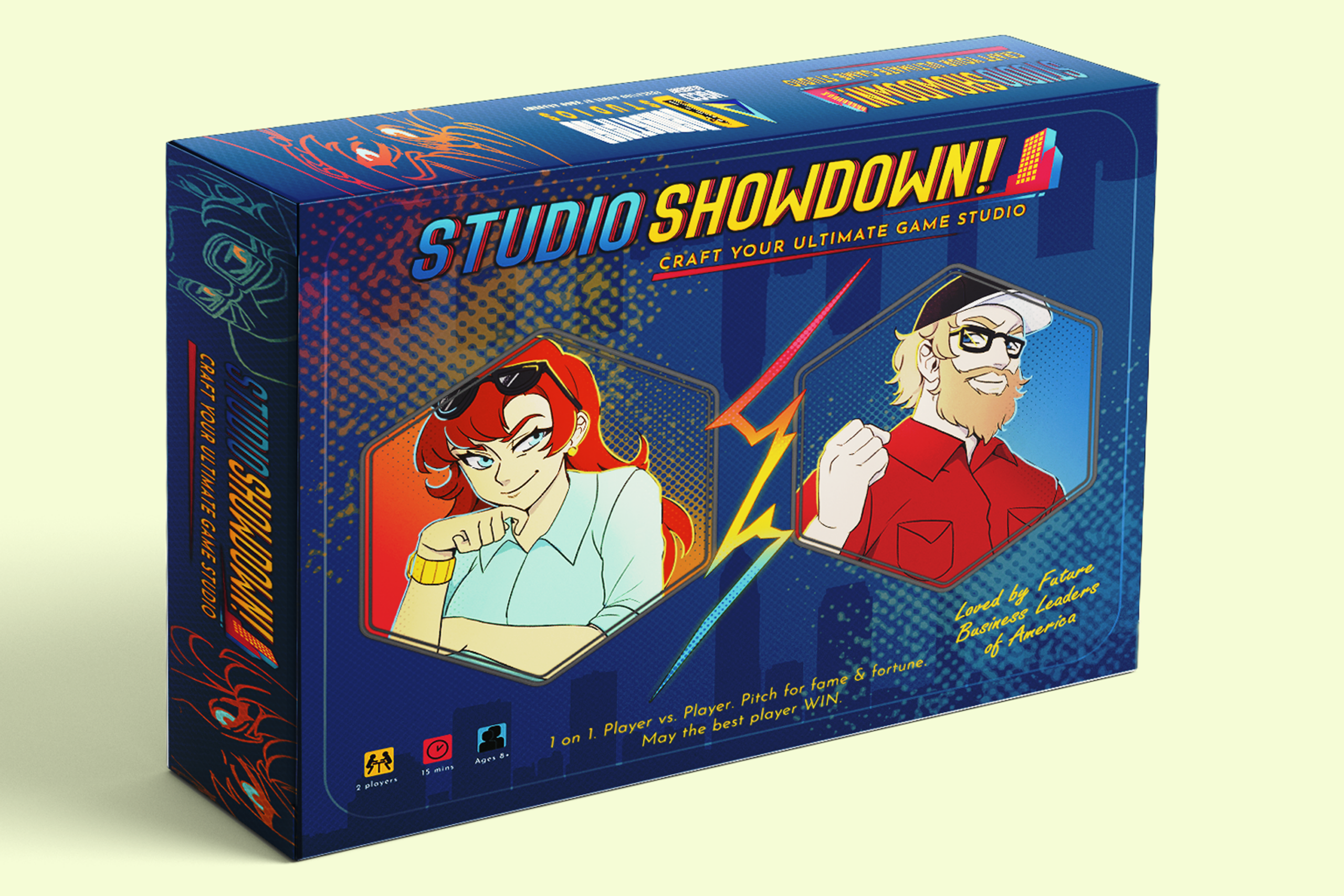
- Use the Studio Showdown Board Game as a high-stakes simulation to bridge the gap between business theory and professional results.
Why Customer Segmentation is Your Secret Weapon in Business
Business isn’t a polite conversation. It’s a high-stakes showdown. In a world saturated with visual noise and endless digital clutter, generic products are invisible. They’re the background static that customers ignore. The traditional definition of market segmentation involves dividing a broad, chaotic audience into precise, manageable groups. But for a creative studio or a growing startup, it’s much more than a definition. It’s the difference between a project that resonates and one that disappears. This is why an interactive lesson for customer segmentation is more than a classroom exercise; it’s a survival manual for the modern entrepreneur.
Strategic focus turns a struggling startup into a market leader. You’ve got limited resources. Your time, your budget, and your creative energy are finite. You can’t afford to guess. By isolating specific groups, you stop shouting into the void and start speaking directly to the people who actually want to buy what you’re building. It’s about precision. It’s about impact. It’s about winning.
The Cost of a One-Size-Fits-All Strategy
Marketing to everyone is marketing to no one. It’s a expensive mistake that drains your development budget and kills your pitching opportunities. When your message is generic, your brand becomes a commodity. You lose your edge. You lose your premium appeal. You’re left fighting over price instead of value. To find your true fans, you have to identify the ‘noise’ in your market and cut it out. Focus. Filter. Refine. Every dollar spent on a segment that doesn’t care about your UVP is a dollar wasted. Don’t build for the masses; build for the believers.
Winning the Market Share Battle
Strategy is as much about choosing where not to compete as it is about where to strike. Large rival studios often leave massive ‘gaps’ in the market because they’re too slow or too broad to serve specific needs. Segmentation allows you to find these openings. You can dominate a small niche, build intense brand loyalty, and create a fortress that competitors can’t touch. This isn’t just a defensive move. Dominating a niche provides the stable foundation you need for massive, calculated expansion. You aren’t just participating in the market. You’re outmaneuvering the competition. This interactive lesson for customer segmentation teaches you to spot those opportunities before your rivals even know they exist. Be bold. Be specific. Be the leader your segment is waiting for.
The 4 Pillars of Segmentation: A Gaming Industry Perspective
To win the market, you need a map. Not a vague sketch, but a high-resolution blueprint. In this interactive lesson for customer segmentation, we break down the four pillars that define every successful studio’s strategy. Understanding these categories is the bedrock of business logic. It’s the difference between a random launch and a targeted strike. While Customer Segmentation: The Ultimate Guide provides a broad foundation, the gaming industry requires a more aggressive, nuanced approach to these four areas:
- Demographics: The “who” of your audience. Age, location, and spending power dictate the size of your potential market.
- Psychographics: The “why” behind the play. This covers motivations, values, and lifestyle choices.
- Behavioral: The “how” of engagement. We look at playtime frequency, platform preference, and brand loyalty.
- Geographic: The “where” of the battle. Regional trends and localized cultures change how a game is received.
Demographics vs. Psychographics in Game Dev
Age tells you their budget; psychographics tell you their favorite genre. While demographics cover the basic facts, they don’t explain the emotional drive. Psychographics are the emotional engine of a segment. They explain why one player spends hours hunting for every trophy while another just wants to explore hidden lore. You must focus on personality types. Are they ‘Achievers’ or ‘Explorers’? If you target an Achiever with a slow-paced narrative experience, you’ve already lost the room. You need to align your core mechanics with their internal motivations to ensure a visual and commercial success.
Behavioral Patterns and Platform Loyalty
Data doesn’t lie. Behavioral segmentation looks at how players actually interact with your product. Do they play for ten minutes on a commute or ten hours on a weekend? Analyzing ‘whales’ versus casual players allows you to predict revenue streams with surgical precision. Your platform choice dictates your entire development roadmap. A mobile-first strategy requires different UI, monetization, and loop design than a hardcore PC title. Even segmenting by tech-savviness matters. It reduces friction in the user experience and keeps players engaged. This interactive lesson for customer segmentation teaches you to spot these patterns before you commit your development budget. For those ready to apply these concepts in a high-stakes environment, the Studio Showdown Board Game offers a perfect simulation of these market dynamics. Master the pillars. Outmaneuver the rivals. Claim your market share.
Niche vs. Mass Market: Choosing Your Battleground
Every market entry is a tactical deployment. You don’t just “launch” a product; you choose a front. In this interactive lesson for customer segmentation, we examine the brutal reality of the market showdown. You have two primary paths: the broad appeal of the mass market or the surgical precision of a niche. While resources like Customer Segmentation: Definition, Examples + How to Do It explain the basic mechanics, the strategic choice is about survival. Mass market strategies require massive funding. They demand broad, generic appeal. They’re a high-stakes gamble where only the giants usually survive. Niche strategies, however, allow for higher pricing and intense brand loyalty. Successful studios often start in the trenches of a niche before attempting a mass market takeover. Evaluate your strengths. Know your limits. Pick the segment you can dominate.
The Power of the Micro-Niche
A dedicated group of 1,000 true fans is better than a million “maybes.” In a micro-niche, you aren’t just another option; you’re the only solution. This focus offers significant advantages for new studios that need to preserve their development runway while building authority. By narrowing your focus, you eliminate the visual noise that distracts larger, more bloated competitors. You aren’t fighting for everyone; you’re fighting for the right ones. This approach yields specific benefits:
- Lower Customer Acquisition Costs (CAC) through targeted community engagement.
- Intense, actionable feedback that drives faster iteration cycles.
- Higher conversion rates because the product perfectly matches the user’s specific pain points.
- Immunity to generic competitors who lack the specialized features your niche demands.
Use this proximity to your audience to polish your mechanics. Refine your vision. Build a fortress of loyalty that a mass-market rival can’t penetrate. When you own the niche, you own the narrative. Focus. Filter. Win. This strategy ensures you don’t waste your creative energy on segments that don’t value your unique artistic vision.
Scaling to the Mass Market
Transitioning from niche to mass is the ultimate test of business acumen. It’s about crossing the “chasm.” To win over the masses, you must simplify without compromising quality. Complex mechanics that a niche audience loves might alienate a broader group. You have to strip back the friction without losing the soul of the product. This requires a professional production mindset. You’re no longer just talking to experts; you’re talking to the world. Analyze the rival studios who have made the jump successfully. They didn’t just spend more on ads; they adapted their messaging. They scaled their production pipelines. They turned a cult classic into a global phenomenon by identifying the universal appeal hidden within their niche success. Scaling isn’t just about getting bigger; it’s about staying relevant while getting louder. This interactive lesson for customer segmentation helps you identify the exact moment to shift gears. Don’t rush the growth. Master the niche, then conquer the world.
Interactive Lesson: The 5-Step Segmentation Showdown
Theory is safe. Execution is dangerous. To truly master audience targeting, you must move beyond the textbook. This interactive lesson for customer segmentation is designed to simulate a real-world market entry. It forces you to make hard choices under pressure. You aren’t just categorizing data; you’re preparing for a tactical strike against your rivals. Follow these five steps to build a strategy that actually converts.
- Step 1: Define your Unique Value Proposition (UVP). Identify the one thing your product does better than anyone else. Is it the visual style? The deep mechanics? The social experience? If you can’t define it in one sentence, your audience won’t find it either.
- Step 2: Brainstorm three distinct personas. Identify three specific types of people who would value your UVP. Don’t be vague. Give them names. Give them lives.
- Step 3: Assign ‘Market Power’ scores. Rank each segment based on its total size and its available budget. A massive segment with zero budget is a trap. A small segment with high spending power is a goldmine.
- Step 4: Draft a specific ‘Pitch’ for each segment. You can’t use the same script for everyone. Adapt your language, your hooks, and your promises to match the internal logic of each group.
- Step 5: Test and refine. Present your strategy to a group. Gather competitive feedback. If your pitch doesn’t land, pivot. Refinement is the path to dominance.
Developing Your Studio Personas
Vague personas lead to generic results. To win, you need characters with depth. Give each persona a name, a primary goal, and a specific frustration that keeps them from reaching it. For example, a Hardcore Strategist persona for a tactical game might be a player who spends hours optimizing builds to shave seconds off a boss fight but hates pay-to-win mechanics that undermine their skill. These details dictate your marketing tactics. If your personas aren’t distinct enough to require different ad copy, they aren’t personas yet. They’re just guesses.
The Pitch Challenge: Segmented Messaging
Now, put your personas to the test. Draft three different 30-second pitches for the same product. One pitch might focus on social fun for a casual segment, while another highlights the competitive edge for your hardcore fans. Practice these pitches in a group setting. Listen to the feedback. Does the messaging resonate with the intended target? Immediate critique is the best way to sharpen your business acumen. This interactive lesson for customer segmentation is most effective when the stakes feel real. For the ultimate simulation, the Studio Showdown Board Game provides a physical environment to test these strategies against live opponents. Don’t just learn. Compete.
Studio Showdown: The Ultimate Simulation for Business Acumen
Reading about a market showdown isn’t the same as winning one. Theory provides the map, but simulation provides the experience. The Studio Showdown Board Game brings abstract business concepts to life on the table. It transforms the interactive lesson for customer segmentation from a mental exercise into a competitive reality. You don’t just identify a target market; you fight to hold it. You don’t just calculate budget; you manage finite resources while rivals try to outmaneuver your every move. Mastering entrepreneurship requires this kind of hands-on pressure. It’s about developing the professional intuition that textbooks can’t provide. Every decision you make on the board mirrors the high-stakes choices of a real creative studio.
Why Analog Strategy Beats Digital Lectures
Passive learning is the enemy of retention. Digital lectures often fail because they lack the visceral weight of a physical choice. Physical games encourage direct social interaction and high-stakes negotiation. You have to look your competitor in the eye. You have to sell your vision. Board games provide a tactile way to visualize market share and resource management that a screen simply cannot replicate. You see the gaps in the market. You feel the loss of a failed pitch. This is where true business acumen is forged. Discover how business simulation games teach real-world skills through social dynamics and strategic play. It’s about turning visual noise into a clear, winning strategy.
Bring the Showdown to Your Classroom
Modern education demands modern tools. The Studio Showdown: Educator Edition is specifically designed to bridge the gap between classroom theory and industry practice. It provides the framework for instructors to lead a high-energy interactive lesson for customer segmentation that students will actually remember. This edition includes specific tools to integrate gameplay into any business or creative production curriculum. For those looking to scale this experience, the Classroom Bundle offers a comprehensive multi-unit set perfect for schools, libraries, and after-school programs. It’s a turn-key solution for teaching market strategy and financial literacy.
Equip your students with the strategic thinking they need to lead in 2026. The Classroom Bundle allows multiple groups to engage in simultaneous simulations, creating a vibrant environment of peer-to-peer learning. Students learn to pivot, adapt, and compete in real-time. Don’t just teach business. Start the showdown. Order your bundle today and elevate your curriculum to a professional, international standard. Every session is a step toward mastering the market.
Claim Your Market Dominance
Strategy is a choice. Execution is a victory. You’ve seen how the four pillars of targeting and a sharp focus on niche markets can elevate a studio above the visual noise. This interactive lesson for customer segmentation isn’t just a guide; it’s a call to action for anyone who refuses to settle for mediocre results. Precision beats volume. Strategic focus turns a startup into a market leader. You now have the framework to isolate the segments that drive revenue and ignore the noise that drains your development budget.
Now it’s time to put these concepts into practice. The Studio Showdown Board Game is designed for students, parents, and future founders who want to develop real-world business acumen through high-stakes gameplay. Used by educators to help students build professional portfolios, our simulation forces you to outmaneuver rivals and claim your territory. Don’t just read about the market; dominate it. Ready for the ultimate market showdown? Get the Studio Showdown Board Game today! Your audience is out there. It’s time to lead the room and win.
Frequently Asked Questions
What is the simplest way to explain customer segmentation?
Customer segmentation is the process of breaking a massive, chaotic market into smaller, focused groups. You group people by shared characteristics like age, behavior, or motivations. It’s about moving from a “one-size-fits-all” approach to a surgical strike. Instead of wasting your budget on everyone, you focus on the people most likely to buy. It turns a generic product into a tailored solution that resonates with a specific audience.
Can customer segmentation be used for small startups or only large corporations?
Startups actually need segmentation more than large corporations do. When your resources are finite, you can’t afford to miss the mark. Large firms can absorb the cost of a failed broad campaign; you can’t. By focusing on a specific niche, you maximize every dollar of your development and marketing budget. It’s the most efficient way to build a loyal foundation before you try to scale your studio.
How do I know if I have segmented my market correctly?
You know your segmentation is working when your conversion rates climb and your messaging resonates. If one group responds significantly better to a specific pitch than others, you’ve found a valid segment. Look at your data. If your cost per acquisition drops and brand loyalty increases, your logic is sound. It’s about seeing a clear, measurable difference in how different groups interact with your studio’s offerings and visual content.
Is demographic segmentation still relevant in 2026?
Demographic data is the baseline for any interactive lesson for customer segmentation in 2026. Age and location still dictate spending power and physical access. However, demographics alone aren’t enough to win the market. You have to layer them with psychographics and behavioral data to see the full picture. Knowing someone is 25 is a start; knowing they’re an “Achiever” who prefers mobile gaming is a real business strategy.
What is the difference between a target market and a customer segment?
A target market is the entire stadium; a customer segment is a specific section of the crowd. Your target market is the broad audience you want to reach, like “US tabletop gamers.” A segment is a precise group within that market, like “strategy enthusiasts in major US tech hubs who value financial literacy.” Targeting the whole market is expensive and vague. Targeting a segment is precise, cost-effective, and much more likely to result in a commercial victory.
How can a board game help teach complex business concepts like segmentation?
Board games like Studio Showdown turn abstract theory into a physical, high-stakes experience. You aren’t just reading about market share; you’re fighting for it. A game provides a safe simulation where you can test different strategies and see the consequences of your choices in real-time. It’s a hands-on interactive lesson for customer segmentation that builds professional intuition. You learn by doing, negotiating, and outmaneuvering your rivals on the board.
What are the most common mistakes in customer segmentation?
The biggest mistake is being too broad and trying to please everyone. This results in generic messaging that lacks impact. Another common error is relying solely on demographics while ignoring why people actually buy. If you don’t understand the emotional drive behind a purchase, your segment is just a number. Finally, many studios fail to update their segments as the market evolves, leaving them stuck with outdated and ineffective strategies.
How often should a business re-evaluate its customer segments?
You should re-evaluate your segments at least once a year or whenever you see a major shift in market behavior. Customer preferences aren’t static. New competitors, tech changes, and economic shifts can all redefine who your best customers are. If your engagement starts to dip or your acquisition costs rise, it’s time for a deep dive. Stay agile. The best studios are always refining their target to stay ahead of the visual noise.