By 2026, the gap between a hobby project and a sustainable business will be wider than ever. Industry data shows that nearly 90% of new ventures collapse within twenty four months because they lacked a commercial strategy. If you want to survive, you need to know exactly how to start an indie game studio that treats its business model with the same intensity as its game mechanics. It isn’t just about the art anymore; it’s about the win.
You probably feel the weight of the legal maze or the fear of your runway hitting zero before the alpha build is even ready. We get it. This guide is your tactical advantage for the 2026 strategic showdown. You will master the business of game development through a comprehensive roadmap to founding, funding, and scaling your indie studio. We’re diving into the grit of tax requirements, team management, and the high stakes art of pitching to publishers. Your vision deserves more than a quiet release; it deserves a victory.
Key Takeaways
- Define a bulletproof vision statement to navigate the high-stakes development cycle and transform your creative spark into a professional powerhouse.
- Learn exactly how to start an indie game studio by securing your IP rights and selecting the optimal legal structure to protect your production assets.
- Assemble a “Core Four” dream team and leverage global talent networks to build a production pipeline that cuts through the visual noise.
- Master the high-stakes pitch with a 10-slide deck strategy designed to capture the attention of VCs, angel investors, and elite publishers.
- Execute a “Pulse” launch strategy to build community momentum and ensure market dominance long before your game hits the storefront.
Defining Your Vision: The Strategic Foundation of Your Studio
Starting a studio is a declaration of war against mediocrity. It’s a business entity dedicated to the independent production and publishing of digital experiences. In the 2026 market, simply “making a game” isn’t enough. You’re building a brand. You’re creating a legacy. Learning how to start an indie game studio begins with a cold, hard look in the mirror. You must define what you stand for before the first line of code is written.
Your Vision Statement is your most valuable asset during the inevitable development crunch. It’s the North Star. When the team is exhausted at 2:00 AM, the vision dictates the path forward. It ensures every mechanic and every pixel serves a singular purpose. Without it, your project will drift into the “grey zone” of forgotten titles. An independent video game (indie game) succeeds because it has a soul that AAA giants often lose in committee meetings.
Identifying your niche is the next tactical move. You cannot be everything to everyone. You must choose your weapon:
- Narrative-driven: Deep stories that haunt players long after the credits roll.
- Mechanical-first: Precision gameplay that demands mastery and “one more try.”
- Experimental art: Visual triumphs that push the boundaries of the medium.
Market Gap Analysis is your reconnaissance. In 2023, Steam saw 14,535 new releases. That’s visual noise. To rise above it, you must find the silence. Look for the player demographics that are being ignored. Analyze the genres that have grown stagnant. Your goal isn’t to follow a trend; it’s to start a new one.
The “Showdown” Mentality: Market Positioning
View your studio as a competitor in a global arena. This is a showdown. Analyze rival studios not just to see what they do, but to find what they miss. If they focus on high-fidelity graphics, you focus on visceral, lo-fi style. Craft a Unique Selling Proposition (USP) that resonates with publishers. They don’t want “another platformer.” They want a visual victory that commands attention. When you master how to start an indie game studio, you aren’t just making a game; you’re building a premium experience.
Setting Long-Term Production Goals
Define success early. Is your goal a viral hit like Vampire Survivors or a sustainable, mid-sized studio like Supergiant Games? Create a 3-year roadmap. Year one is for the prototype and vertical slice. Year two is for the production grind. Year three is the launch and post-launch support. Balance your artistic bravery with commercial viability. You need a hit to stay in the game, but you need a vision to make that hit matter. Don’t settle for the middle ground. Aim for the top.
The Backbone: Legal and Financial Infrastructure
Vision requires a vessel. Learning how to start an indie game studio begins with a cold, hard look at your legal framework. Passion doesn’t pay the bills; structure does. You’re building a production powerhouse, not a hobbyist collective. This stage is about survival and scalability. It’s about ensuring that when your game hits the charts in 2026, you actually own the ground you’re standing on.
Choose your entity with precision. An LLC is the standard for most indie startups because it shields your personal assets from business liabilities. If your roadmap involves heavy venture capital or an eventual exit, a C-Corp is the preferred architecture for investors. Before you commit to a name or a logo, consult the official 10-step guide to starting a business to align your setup with federal standards. It’s a necessary blueprint for any serious creator.
Modern accounting in 2026 requires more than a spreadsheet. Use cloud-based systems like QuickBooks or Xero to track every cent. Professional banking separates your creative life from your personal survival. It’s clean. It’s professional. It’s the only way to prove your studio’s value when seeking a premium creative concept or a publishing deal.
Protecting Your Creative Assets
Your code, art, and music are your currency. Secure them. Every contractor you hire must sign a Work-for-Hire agreement. Without this, they may legally retain rights to their contributions, creating a nightmare during acquisition talks. Trademark your studio name and flagship title early. Avoid the 22% of startups that fail due to preventable legal disputes over intellectual property. Don’t let a naming conflict sink your launch before the first trailer drops.
Financial Risk Management
Cash flow is the pulse of your production. Calculate your burn rate by totaling your monthly expenses, including software subscriptions, cloud hosting, and salaries. Runway is the number of months your studio can survive without revenue. Aim for a minimum of 18 months of runway to account for the inevitable delays in game development. Explore regional tax credits; many jurisdictions offer 25% to 35% back on qualified labor costs. These credits aren’t just bonuses. They’re the lifelines that allow for a final polish or an extra marketing push.
- LLC: Protection and flexibility.
- C-Corp: Investor-ready and scalable.
- IP Rights: Non-negotiable ownership.
- Burn Rate: The cost of your creative engine.
Success in this industry isn’t just about the code. It’s about the grit to handle the paperwork. Build a fortress around your vision. Protect your team. Ensure your studio is ready for the showdown.

Building Your Dream Team and Production Pipeline
Understanding how to start an indie game studio in 2026 begins with a tactical assembly of the “Core Four” roles: Design, Programming, Art, and Business. These pillars provide the structural integrity your project needs to survive the initial development crunch. While 45% of solo developers struggle with burnout, teams that balance technical precision with creative intuition see a 30% higher completion rate. Your studio is a production house, not a hobby. Treat it that way.
Location is no longer a barrier. Building a global talent network allows you to hire the best minds from Tokyo to Berlin. By 2026, remote-first workflows have become the industry standard for agile teams. You aren’t just hiring employees; you’re recruiting allies for a creative showdown. Your tech stack defines your battlefield. Unreal Engine 5.5 offers unmatched visual fidelity for high-end productions, while Unity 6 remains the king of rapid iteration and mobile deployment. Proprietary engines are a high-risk, high-reward gamble reserved for the 2% of developers with specific architectural needs.
Success demands a “Can-Do” culture. You must reward innovation and rapid iteration. Stagnation is the enemy of the indie spirit. Encourage your team to experiment with emerging tech, like AI-assisted asset generation, which can cut production time by 25% if managed correctly. A studio that prizes bold moves over safe, repetitive choices will always rise above the visual noise of the marketplace.
Recruiting for Visual Victory
You can’t outspend AAA giants, so you must out-inspire them. Attracting top-tier talent requires a vision that cuts through the noise. When evaluating portfolios, look for creative intuition over raw technical skill. A 2025 industry report highlighted that 68% of indie leads value “artistic voice” more than software certifications. Use equity and profit-sharing models to align your team’s goals with the studio’s success. Offering a 5% to 10% equity pool for early hires creates a sense of ownership that a flat salary never can. This is how you win the war for talent.
Streamlining the Creative Process
Efficiency is your sharpest weapon. Most successful studios adopt an Agile framework to keep momentum high. This allows for rapid prototyping and constant feedback loops. You must establish a culture that rewards “killing your darlings” when a mechanic doesn’t land. Integrating Quality Assurance (QA) from day one is non-negotiable. Don’t wait for a beta to find bugs. Following a structured guide like the Ten Steps to Starting an Indie Studio is essential for anyone figuring out how to start an indie game studio with a professional edge. Early testing cycles reduce post-launch patching by up to 40%, keeping your brand’s reputation for premium quality intact.
Mastering the Pitch: Fundraising as a High-Stakes Game
Fundraising is your studio’s first major boss fight. You aren’t just selling a game; you’re selling a future. When learning how to start an indie game studio, your ability to secure capital determines your survival. It’s a calculated showdown where your vision meets the cold reality of ROI.
Your Pitch Deck is your primary weapon. It must be a lean, high-impact sequence of 10 essential slides. Start with the Title and a killer Hook. Move to the Problem: the gap in the current market. Present your Solution: the core gameplay loop. Detail the Market Size with data-backed projections. Show your Competition and why you’ll beat them. Introduce the Team. Highlight Traction through prototypes or wishlists. Lay out the Roadmap to Gold. End with the Ask: exactly how much you need and what it buys.
Distill your vision into a 30-second elevator pitch. Impact over explanation. If you can’t spark interest in the time it takes to load a level, you’ve lost the room. Identifying the right source is critical. VCs want massive scale and exit potential. Angels want passion and early-stage growth. Publishers want a proven hook and a clear path to distribution. Negotiating term sheets requires a cold heart. Protect your IP. Limit board seats. Keep control of your creative soul.
Securing Early-Stage Capital
Crowdfunding in 2026 has evolved. It’s no longer just about pre-orders; it’s about community equity. Platforms like Kickstarter now require a 30% day-one funding commitment to trigger the algorithm. Government grants remain the safest fuel. Programs like the UK Games Fund or Creative Europe offer non-dilutive cash that keeps your equity intact. Treat friends and family rounds with professional rigor. Use legal contracts. Set boundaries early to avoid personal friction during production crunches.
Winning the Publisher Showdown
Publishers look for three pillars: Metrics, Team, and Hook. They want to see Day 1 retention rates above 35% in early playtests. Your team’s pedigree often carries more weight than your concept’s art style. Handle rejection as a data point. If five publishers say the same thing, change your strategy. A successful pitch focuses 40% on the game and 60% on the business plan. This ratio proves you’re a professional studio, not just a group of hobbyists with a dream.
Launch Strategy and Market Dominance
A successful launch isn’t a single day on a calendar. It’s a calculated offensive. If you are learning how to start an indie game studio, you must accept that the “build it and they will come” mentality died years ago. By 2026, market saturation demands a 12-month lead time for community building. Your Discord server should be humming with activity before your first playable alpha even drops. This early engagement creates a core group of evangelists who will carry your game through the critical first 48 hours of release.
The “Pulse” launch strategy coordinates every asset for maximum impact. You need to sync your PR outreach, influencer keys, and storefront visibility into a 72-hour window. Data from 2025 indie releases shows that games with synchronized influencer coverage saw a 300% higher conversion rate on Steam wishlists compared to staggered campaigns. Once the game is live, the battle shifts. You transition from a development house to a live-service provider. Managing day-one patches and community feedback determines whether your studio survives its first month or fades into the digital abyss.
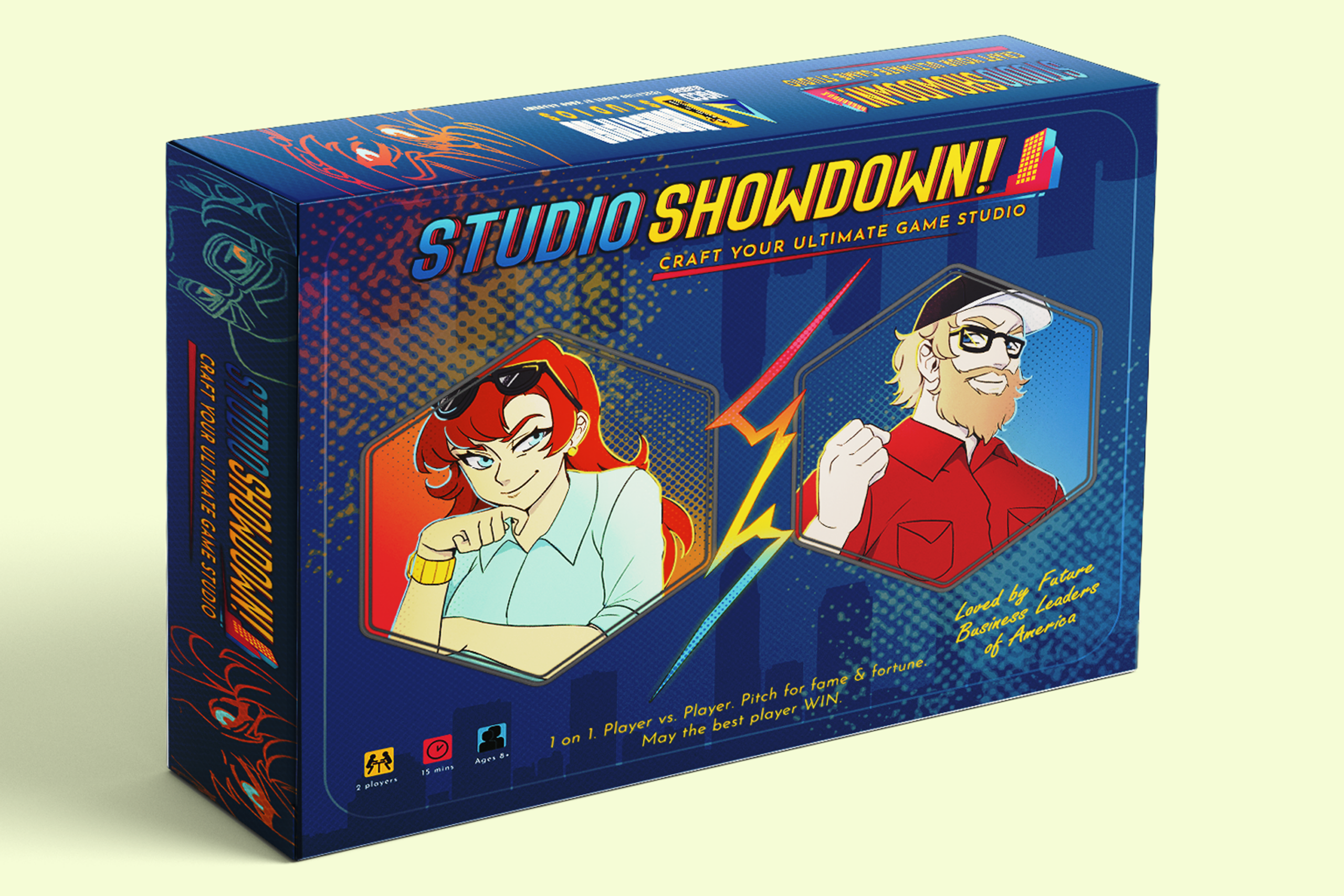
The Studio Showdown board game simulates these high-stakes business pressures. It forces you to balance limited resources against aggressive market rivals. You don’t just learn theory; you experience the tension of a launch window where every decision carries a price. It’s a tactical rehearsal for the real-world showdown of the gaming industry.
Creating Visual Noise in a Crowded Market
Your trailer is more important than your first 10 levels. Most players decide to buy or skip within the first six seconds of a video. In 2026, vertical video on TikTok and YouTube Shorts drives over 55% of organic discovery for indie titles. Focus on “visual hooks” that stop the scroll. This is the Showdown effect: outperforming rivals through superior engagement rather than just raw budget. High-quality production value in your marketing assets suggests a high-quality game experience. Never compromise on your visual first impression.
Scaling Your Studio Post-Success
Success brings a new set of problems. You must decide between a sequel, DLC, or a fresh IP. Industry reports indicate that studios reinvesting at least 40% of their initial profits into production quality see a 2.5x increase in revenue for their second title. Level up your tech stack. Hire specialists to replace generalists. The transition from a small team to a scalable business requires a shift in mindset from “making a game” to “building a brand.”
Ready to turn your vision into a visual victory? Take the first step toward industry leadership today. Master the business of games with the Studio Showdown Board Game and learn how to start an indie game studio that actually lasts.
Claim Your Victory in the 2026 Indie Arena
The 2026 gaming landscape demands more than just a good idea. It requires a battle-hardened strategy. You’ve seen the blueprint. From securing a legal and financial infrastructure to mastering the high-stakes pitch, the path is clear. Success isn’t a gamble. It’s a calculated series of moves. Understanding how to start an indie game studio means balancing creative vision with raw business acumen. You need to build a production pipeline that survives the pressure of a global launch.
Don’t leave your studio’s survival to chance. Experience the pressure before the first dollar is even spent. Developed by VGCD Academy experts, Studio Showdown provides an immersive simulation of real-world studio challenges. It’s the same tool currently used by leading global educators to teach entrepreneurship to the next generation of developers. This isn’t just a game. It’s a training ground for the industry’s elite. Take the lead. Refine your tactics. Win the market.
Level up your business acumen with Studio Showdown
Your vision deserves a victory. Start building your legacy today.
Frequently Asked Questions
How much money do I need to start an indie game studio?
You need between $10,000 and $150,000 to cover your first year of operations. Solo developers often start at the lower end by using existing hardware and free engines like Godot or Unreal. Small teams require higher capital to manage payroll, legal incorporations, and marketing assets. Secure at least 12 months of runway before you commit to full-time production.
Can I start an indie game studio as a solo developer?
You can definitely launch a studio alone. Success stories like Eric Barone with Stardew Valley prove that a single vision can achieve massive market dominance. It’s a grueling path that demands mastery over code, art, and sound. You own the entire creative process, but you also carry every risk. It’s the ultimate test of discipline.
Do I need a business degree to run a game studio?
A business degree isn’t necessary to lead a successful team. The 2024 State of the Game Industry report indicates that over 60% of indie founders come from purely technical or artistic backgrounds. You need a sharp eye for project management and a basic understanding of contracts. Focus on your product quality; the business mechanics can be learned through experience and mentorship.
What is the best legal structure for a new game studio?
An LLC is the most effective choice for protecting your personal assets from professional liabilities. It creates a shield between your bank account and your studio’s debts. This structure also makes it easier to manage intellectual property rights when you’re ready to sign distribution deals. It’s a clean, professional setup that signals you’re a serious player in the industry.
How do I find a publisher for my indie game?
Securing a publisher requires a high-quality vertical slice and a pitch deck that highlights your unique selling points. Target publishers like Devolver Digital or Raw Fury that specialize in your specific genre. Part of learning how to start an indie game studio is understanding that networking at events like GDC is vital. Show them a project that’s already gaining traction on social media.
What are the most common mistakes new indie studios make?
Scope creep is the most frequent studio killer. Around 80% of indie projects fail because developers try to build a massive open world on a shoestring budget. They lose focus on the core gameplay loop and run out of cash before the finish line. Stick to your vision, cut the unnecessary features, and ship a polished experience that works.
How can a board game help me learn to start a game studio?
Board games are the fastest way to prototype complex systems and economy balancing. They force you to strip a game down to its raw logic without the distraction of graphics or code. Testing a physical version of your mechanics can save you over 300 hours of development time. It’s a tactical shortcut to finding the fun in your design.
Is 2026 a good year to enter the indie game market?
2026 is an ideal entry point for new studios. Market analysts project the global gaming industry will surpass $250 billion by late 2025, creating a massive appetite for fresh content. New generative tools are also reducing production timelines by up to 40%. When you learn how to start an indie game studio now, you’re positioning yourself for a visual victory in a booming era.