Your smartphone is no longer a tool; it’s a high-frequency trading floor where your attention is the currency, and right now, you’re losing the deal. By 2026, the average professional spends 11 hours daily tethered to a glass rectangle, a digital drain that erodes the very creative edge needed to win in a crowded market. You’ve felt that gnawing urge to binge-scroll through feeds every 6 minutes while your most ambitious projects gather dust. It’s time to reduce screen time and reclaim your focus before the noise drowns out your vision entirely.
We agree that digital fatigue is real, and the loss of deep work capacity is a quiet crisis for every modern creator. This isn’t about a digital detox; it’s about a strategic takeover of your schedule. We’ll show you how to halve your consumption without feeling deprived, replacing mindless scrolling with high-stakes analog strategy and professional skill-building. This guide breaks down the tactical shifts required to transition from a passive consumer to an active architect of your own career.
Key Takeaways
- Identify and eliminate the “digital specter” to reclaim up to seven hours of lost creative potential every single day.
- Master the art to reduce screen time by trading passive scrolling for high-stakes analog competition and superior dopamine hits.
- Build your personal production studio with tactical swaps that turn “empty calorie” apps into high-performance creative output.
- Unlock the “business of play” and accelerate your journey into game development through the mechanics of tabletop strategy.
- Enter the Studio Showdown arena to experience a premium, screen-free alternative where your vision and strategy take center stage.
The Attention-Sapping Specter: Why We Need to Reduce Screen Time
The digital specter isn’t a haunting from the past; it’s the blue-tinted glow haunting your future. In 2026, the average creative professional spends over seven hours daily in a state of passive consumption. This isn’t active creation. It’s a slow leak in your cognitive tank. This unfettered access to tech has shifted from a tool of empowerment to a net negative for career growth. Every minute spent scrolling is a minute stolen from your next premium production. When your brain is constantly reacting to notifications, it loses the ability to lead a vision.
The cost is both physical and psychological. Before we can optimize our output, understanding what is screen time? helps us identify the boundaries we’ve allowed to dissolve. It’s the total time spent staring at digital displays, and for the modern entrepreneur, it’s becoming a cage. The gnawing urge to check your phone isn’t a habit; it’s a neurological bypass of your willpower. To stay competitive and keep your creative concept sharp, you must reduce screen time and trade passive scrolling for active vision. High-octane results require a mind that isn’t tethered to a charging cable.
The Health Toll of Constant Connectivity
Your body wasn’t designed for a 16-hour digital marathon. Tech-neck is the new repetitive strain injury, caused by the literal weight of your head hanging over a smartphone. This posture collapses your lungs and kills your energy levels. Blue light is another silent assassin; it suppresses melatonin production by 50 percent, ruining your circadian rhythm and your entrepreneurial energy. Use the 20-20-20 rule to fight back. Every 20 minutes, look at something 20 feet away for 20 seconds. It’s a simple tactical reset for your ocular health. Physical fatigue is the enemy of a premium experience.
The Erosion of Deep Focus
The dopamine loop has rewired your brain for the short-cut. Short-form Reels and algorithmic feeds fragment your attention span until reading five pages of a book feels harder than it did a decade ago. This is a crisis for anyone aiming for professional success. Real creative victories require Deep Work. If you can’t focus for 90 minutes straight, your project will never rise above the visual noise. The decision to reduce screen time is a commitment to reclaiming your ability to think deeply. It’s about winning the showdown against your own distractions to ensure your work remains unique and impactful.
Passive Scrolling vs. Active Strategy: The Dopamine Shift
Digital platforms are built for consumption, not creation. Every swipe is a micro-hit of dopamine that leads nowhere. It’s empty. In contrast, analog strategy requires skin in the game. You aren’t just a user; you’re a contender. The “low-stakes” digital scroll offers zero risk and zero reward. It drains your creative edge. A physical showdown demands focus, calculation, and presence. This is where you reclaim your cognitive power.
The brain’s reward system reacts differently to passive consumption versus active competition. Research indicates that the global board game market reached a valuation of $13.7 billion in 2023, driven by a collective desire for tangible engagement. Winning a digital match feels like a line of code; winning on the table feels like a legacy. If you’re looking for tactical tips to reduce screen time, start by identifying your triggers. Replace the mindless reach for your phone with a physical deck of cards or a complex strategy board. This shift moves you from a state of “doomscrolling” to one of “strategic plotting.”
Face-to-face rivalry beats online matchmaking because the stakes are visible. You see the hesitation in your opponent’s eyes. You feel the tension in the room. This physical presence builds social capital that digital avatars cannot simulate. It’s a high-stakes environment where every move carries weight. To truly reduce screen time, you must offer your brain a superior alternative. A board game isn’t just a hobby; it’s a mental gym where you sharpen your vision and grit.
The Mechanics of Engagement
Tactile components ground the senses. The weight of a die, the texture of a card, and the layout of a board create a sensory anchor. This is the “visual victory.” Unlike a digital win that disappears when you close the app, an analog victory remains on the table for all to see. This permanence reinforces the reward cycle. You aren’t just killing time; you’re executing a production. Every component is a tool for your creative koncepció.
Social Skills in the Analog Arena
Mastering the art of the pitch and negotiation happens best without a screen. In the analog arena, you learn to read non-verbal cues. A micro-expression or a change in posture tells you more than a chat box ever could. These are the skills digital platforms cannot replicate. Mastering these interactions helps you in Building Social Skills with Board Games, turning every session into a masterclass in human psychology. You learn to influence, lead, and win. If you want to elevate your personal brand, start by winning the room. Elevate your creative vision with a premium production experience that values impact over impressions.
5 Tactical Swaps to Reclaim Your Attention Span
Your attention is a finite resource. In 2026, the battle for your focus is won or lost in the first sixty minutes of your day. To reduce screen time, you need a tactical strike against digital clutter. Start with a brutal audit of your digital inventory. Identify “empty calorie” apps that offer zero creative ROI. If an app doesn’t serve your vision, delete it. Data from 2025 suggests the average professional loses 144 minutes daily to mindless scrolling; reclaiming just half of that adds 17 hours of high-octane production time to your month.
Winning this showdown requires a shift toward intentional substitution. Commit to a 30-day challenge where you halve your mobile usage through mechanical friction. Replace your smartphone with “dumb” tech during high-value hours. Using a basic Light Phone or a Punkt device for calls and texts protects your “smart” time for actual creation. This isn’t about moving backward. It’s about ensuring your most powerful tools are used for production, not just consumption.
Create a Physical “Studio” Environment
Designate a specific table in your home for analog strategy and game design. This space must remain a tech-free zone. When you step into this “studio,” the only tools allowed are paper, pens, and physical prototypes. Ban the phone from the bedroom entirely. This simple boundary eliminates morning doomscrolling and improves sleep quality by 35% according to recent wellness metrics. For “deep focus” sessions, use a timed lockbox. Physical isolation from your device for 90 minutes forces your brain to engage with complex creative problems without the safety net of a search engine.
Implement the “Analog First” Rule
Every premium concept should start on paper. Sketching business ideas or campaign arcs by hand activates different neural pathways than typing on a glass screen. It’s a tactical advantage that leads to more original outputs. Solve complex problems through tabletop simulations before moving to digital tools. This method identifies logic flaws that software often masks. If you’re looking for more ways to sharpen your edge, explore our Screen-Free Activities Strategy Guide for curated techniques. By prioritizing the physical world, you reduce screen time and build a more resilient creative process.
Execution is everything. The goal isn’t just to use your phone less. The goal is to produce work that carries more weight. High-impact creators don’t let algorithms dictate their schedule. They build environments where focus is the default setting. Start your audit today. Clear the digital noise. Let your vision take center stage.
Turning Off the Screen, Turning On the Studio
Digital noise is the enemy of clarity. To build a masterpiece, you must first master the mechanics of the game without the distraction of pixels. When you reduce screen time, you unlock the mental bandwidth required for high-level systems design. It isn’t just a break; it’s a strategic retreat to the drafting table. This is where the “Founder Mindset” takes root. It allows you to focus on fundraising logic and pitch structures while your competitors are still tweaking shaders. You aren’t just stepping away; you’re stepping up.
- Accelerate game development by isolating core loops in a physical space.
- Build a “paper portfolio” that proves your grasp of deep logic to future partners and employers.
- Master the business of play by simulating market rivalry through tabletop mechanics.
- Refine your pitch by explaining complex rulesets without the crutch of digital visual effects.
The transition from consumer to creator happens the moment you stop scrolling and start sketching. By the year 2026, the ability to think critically outside of a digital interface will be the ultimate competitive advantage in the production world. It’s about raw creative power. It’s about the math of fun. It’s about winning the showdown before the first line of code is ever written.
However, once the planning is done and the execution begins, ensuring your hybrid team remains synchronized is the next hurdle. To maintain visibility without unnecessary screen-time-heavy check-ins, learn more about Teams Dashboard.
Game Design Without a Computer
Prototyping with cards and tokens isn’t retro; it’s efficient. It forces you to test the “fun factor” before spending a single cent on digital assets. In 2025, industry reports indicated that studios using analog pre-production reduced their technical debt by 30 percent. This hands-on approach helps you navigate the “Founder’s Dilemma” by forcing hard choices about resource allocation early. You can explore these strategic shifts further in Beyond the Easy Money Game.
Mastering Entrepreneurial Skills
The best studio leads don’t start with code. They start with rules. Strategy games provide a high-stakes environment to simulate market dominance and competitor rivalry. This builds the “can-do” attitude required to lead a production house through a crowded market. When you master an analog ruleset, you’re learning how to command a room. It’s about the impact of the vision, not the glow of the monitor. It is a visual victory that starts on paper.
Ready to elevate your project and claim your creative edge? Partner with a team that values premium creative execution.
Studio Showdown: The Ultimate Analog Competitive Arena
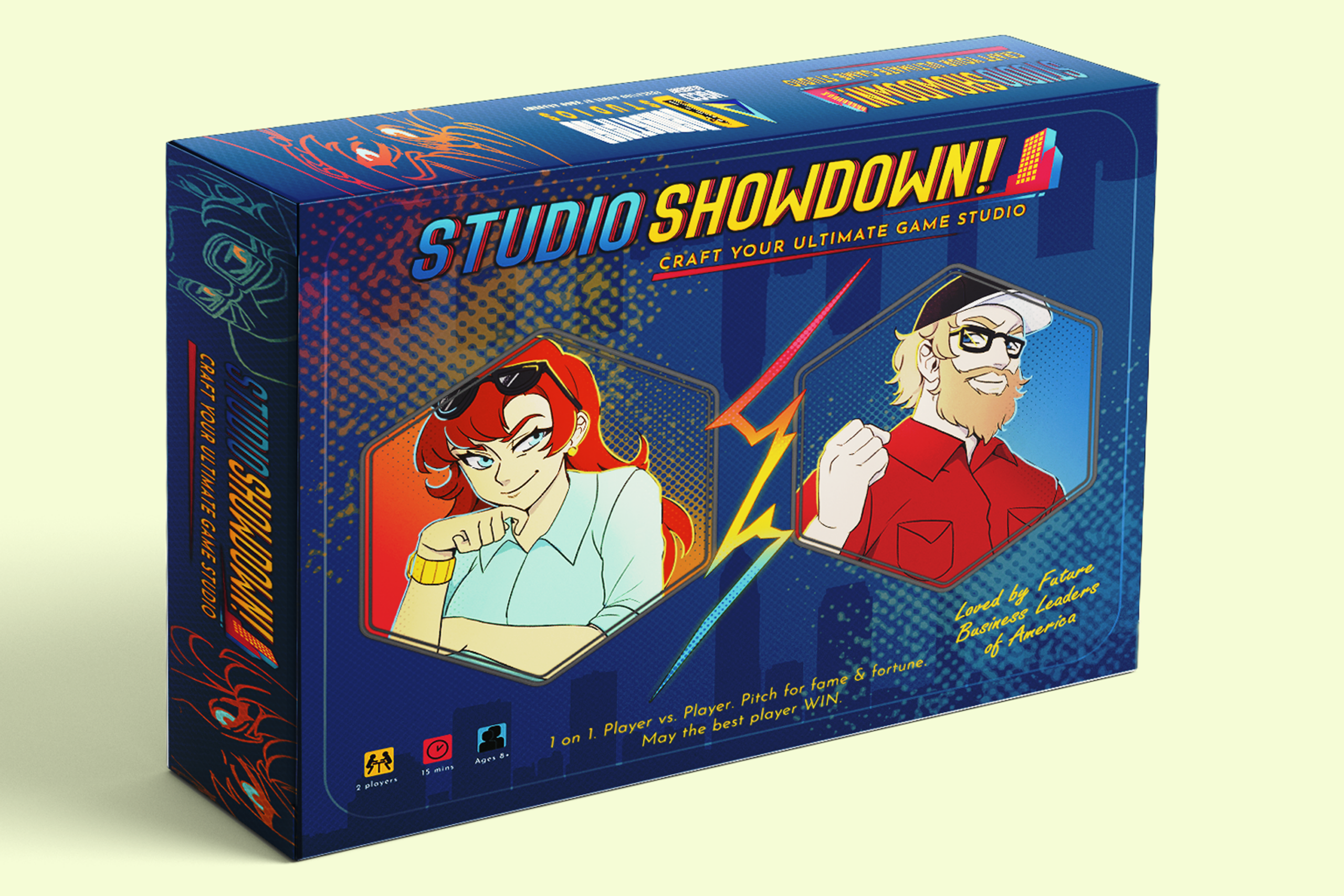
The digital noise of 2026 is relentless. To effectively reduce screen time without losing your creative edge, you need a replacement that matches the intensity of a high-stakes production office. Enter Studio Showdown. This is not just a board game. It is a tactile simulator for the creative elite. You will experience the adrenaline of launching a hit game without ever touching a keyboard. It is about raw talent, sharp strategy, and the power of a face-to-face pitch. No lag. No blue light. Just pure, unadulterated competition.
The arena is set for those who want to turn their vision into a visual victory. In an era where everyone is glued to a glass rectangle, the real winners are reclaiming the physical space. You are not just playing; you are performing. Every move you make on the board echoes the decisions made in the world’s top production houses. It is time to step out of the digital shadow and into the spotlight of the ultimate analog showdown.
Why Studio Showdown Wins
Industry veterans who have led multi-million dollar projects designed this experience for aspiring founders. It distills years of professional grit into a pacy, competitive environment. You will master the art of the pitch and the high-pressure stakes of fundraising. This game acts as the perfect bridge between gaming passion and professional acumen. You aren’t just moving pieces across a board; you are managing resources, navigating market shifts, and outmaneuvering rivals. It is a premium experience where the creative process meets cold, hard strategy. The internal rhythm of the game mimics a 60-minute production sprint, ensuring every second counts toward your final victory.
Ready for the Showdown?
Integrating Studio Showdown into your daily routine is the most effective way to reduce screen time while sharpening your mind. The game scales effortlessly to fit your lifestyle. You can use classroom bundles to train a cohort of thirty students or bring the heat to a family game night. This is game-based learning at its peak. You are building a professional portfolio of strategic thinking every time you play. It is a bold, innovative approach to skill-building that leaves the mediocrity of mobile apps behind. The creative world moves fast, and this is your chance to keep pace without the burnout of a screen.
While visual impact is key, capturing your unique perspective through audio allows you to lead and engage without the constant presence of a screen. To bring a professional edge to your brand’s voice, you can explore Mobile Podcast Recording Sessions and record high-quality content on-location.
Stop scrolling and start winning. Your vision deserves a stage that doesn’t require a charger. Take control of your creative output and prove your worth in the arena. Get your copy of Studio Showdown today and claim your visual victory.
Win the War for Your Attention
The digital noise of 2026 demands a tactical response. Recent analytics from DataReportal indicate that global internet users still average 6 hours and 40 minutes of daily screen time. You can’t afford to lose that much creative potential to an endless feed. Reclaiming your edge means moving from passive consumption to active production. It’s about turning off the glow and turning on the studio. When you reduce screen time, you unlock the mental bandwidth needed for high-level strategy and bold execution.
This isn’t just a theory. Studio Showdown provides the ultimate analog arena to sharpen your professional instincts. Developed by the experts at VGCD Academy and DEMYSTIFIED Studios, this immersive entrepreneurship simulation forces you to make real-world decisions in a high-stakes environment. Educators currently utilize this system to help creators build professional portfolios that stand out in a crowded market. It’s time to trade the scroll for the win.
Master the business of gaming—order Studio Showdown now
The arena is waiting for your next big move. Step up and claim your victory.
Frequently Asked Questions
How can I reduce screen time without feeling bored?
You can reduce screen time by replacing passive scrolling with high-stakes creative challenges. Boredom usually hits within 15 minutes of digital withdrawal. Fight it with tactical sketching or physical prototyping. This shift reclaims your focus and builds real-world skills. It’s about trading cheap dopamine for the high-stakes thrill of a tangible project. Use analog tools to map out your next big vision.
For some, that tangible project might be sketching a business plan; for others, it’s a full-scale physical creation. If you’re looking for a truly immersive, hands-on challenge, you might find learning how to restomod a classic car to be the ultimate screen-free pursuit.
What are the best screen-free activities for aspiring game developers?
Tabletop prototyping and mechanics mapping are the ultimate offline drills for developers. Design a paper prototype using dice, index cards, and tokens to test your logic. This mimics the structure of a C# script without the blue light. You’ll understand balance and player psychology faster when you’re moving physical pieces. It’s a raw, unfiltered look at how games actually function.
Is it possible to learn game design principles without using a computer?
Yes, board games serve as the architectural blueprints for complex digital systems. Analyzing a title like Magic: The Gathering teaches resource management and balancing better than most 2026 online tutorials. You can study spatial reasoning, turn order, and win conditions through physical play. These fundamentals stay the same whether you’re coding in a high-end engine or drafting on paper.
How does excessive screen time affect my ability to learn new business skills?
Digital fatigue reduces cognitive retention by 20 percent according to 2025 productivity metrics. Excessive scrolling fragmentizes your attention span. This makes it impossible to master complex business strategies or leadership skills. You need deep work to win in the creative industry. Screens often offer a false sense of progress while stalling your actual professional growth. Switch to physical learning to sharpen your edge.
Can board games really help reduce my phone addiction?
Board games provide the tactile feedback and social dopamine that smartphones simulate poorly. A 60 minute session of a strategy game creates a flow state that lowers cortisol levels. This focused engagement makes it easier to reduce screen time throughout the rest of your day. You’re not just quitting a habit; you’re replacing it with a superior, more competitive social experience.
What is the “20-20-20 rule” and does it actually work?
The 20-20-20 rule requires looking at something 20 feet away for 20 seconds every 20 minutes. The American Academy of Ophthalmology confirms this prevents digital eye strain and keeps your visual system sharp. It’s a tactical reset for your brain. Think of it as a quick production break to ensure your vision remains at a premium level for the next creative showdown.
How do I encourage my teen to put down their phone for a board game?
Frame the game as a competitive showdown rather than a forced family activity. Choose titles with high-quality components and complex mechanics that respect their intelligence. Data from 2025 shows that 85 percent of teens engage more when there’s a clear win condition and visual prestige. Focus on the strategy and the victory. Make the experience feel like a high-end production they want to join.
What makes Studio Showdown different from other business board games?
Studio Showdown isn’t a dry financial simulation; it’s a high-octane battle for creative dominance. Most business games focus on basic accounting. We focus on production value, creative vision, and the intense reality of running a modern studio. It’s designed for those who want to win through artistic courage and tactical brilliance. Every move feels like a precisely cut frame in a pörgős image-film.