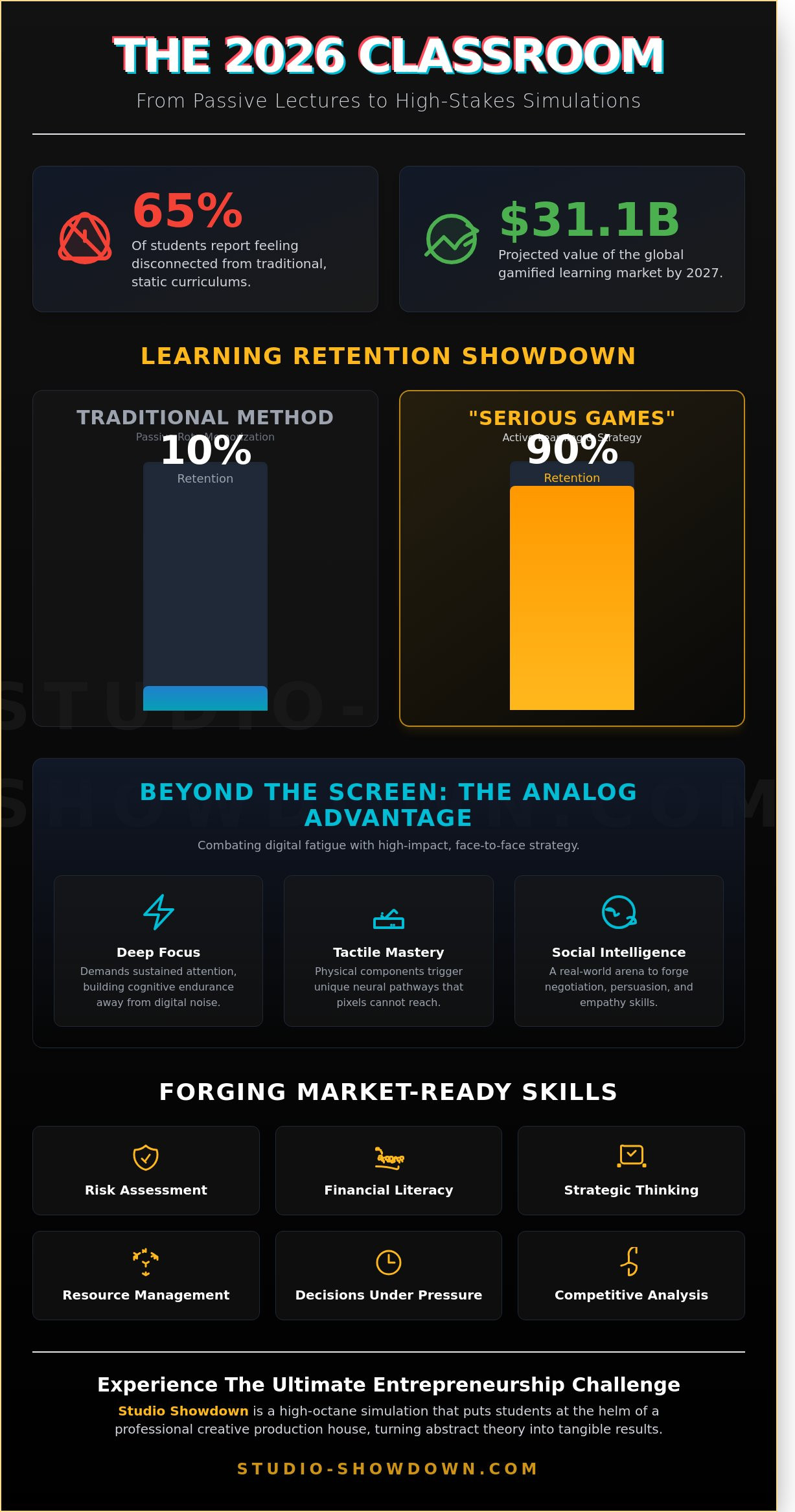
The 2026 classroom isn’t a lecture hall. It’s a high-stakes boardroom where the next generation of CEOs is currently leveling up. While the global gamified learning market is projected to hit $31.1 billion by next year, 65% of students still report feeling disconnected from traditional, static curriculums. You’ve likely seen the glazed-over eyes during a standard business lecture. It’s a clear waste of creative potential and a missed opportunity for real-world impact.
We’re here to change the narrative and elevate the standard. You’ll discover how modern educational games for students are evolving into sophisticated, production-grade simulators that demand strategy and grit. These aren’t just digital toys; they’re professional tools designed to build student portfolios, master financial literacy, and sharpen critical thinking through healthy competition. We’ll break down the top-tier platforms that turn passive screen time into a premium learning experience, ensuring your students don’t just participate in the lesson, they dominate the showdown.
Key Takeaways
- Transition from passive rote memorization to “Serious Games” that simulate complex, real-world systems with professional precision.
- Combat digital fatigue by integrating high-stakes analog strategy and face-to-face negotiation into the modern learning environment.
- Discover how modern educational games for students prioritize high-value entrepreneurship skills like risk assessment and financial resource management.
- Follow a strategic roadmap to align game mechanics with specific learning objectives and master the art of the post-game debrief.
- Experience Studio Showdown, a high-octane simulation that puts students at the helm of a professional creative production house.
The Evolution of Learning: Why Educational Games are Essential in 2026
Education is undergoing a total rebrand. By 2026, the classroom isn’t a lecture hall; it’s a high-stakes simulation. We’ve moved past the era of passive consumption. Today, an educational game isn’t a digital distraction; it’s a cognitive engine. Modern cognitive science proves that active learning increases retention by up to 90% compared to the 10% seen in traditional reading. We’re seeing a hard pivot from “edutainment” to “serious games.” These aren’t just fun. They’re complex systems that mirror real-world market volatility. The 2026 job market doesn’t care about your ability to highlight a textbook. It demands strategic agility, rapid iteration, and visual intelligence. Educational games for students provide the only sandbox where these high-level skills can be forged without real-world financial ruin.
The Science of Game-Based Learning
Efficiency is the goal. When students enter a “flow state,” their brains process information at peak velocity. It’s a psychological sweet spot where challenge meets skill perfectly. Educational games for students facilitate this by providing immediate feedback loops. You make a move; you see the result. No waiting two weeks for a graded paper. This instant data allows for rapid neuroplasticity. It also lowers the “affective filter.” Students stop fearing failure. They start seeing it as a necessary data point for their next victory. It’s a shift from anxiety to curiosity. Strategy, execution, impact; the cycle repeats until mastery is the only outcome.
This powerful learning model isn’t limited to business simulations. In highly demanding fields like healthcare, mastering vast amounts of complex information is critical. Online educational platforms are adopting similar principles to help students succeed; for example, PharmEDU offers comprehensive pharmacology reviews for students and professionals preparing for their careers.
Moving Beyond Rote Memorization
Fact-recall is dead weight in the 2026 economy. AI handles the data; humans must handle the strategy. Traditional testing measures what you remember, but gameplay measures what you can do. Systemic thinking is the new gold standard. It’s about understanding how a change in supply chains affects global logistics or how a marketing pivot alters brand equity. This is where business board games take center stage. They bridge the gap between theory and execution. They turn abstract concepts into tangible wins. In a world of visual noise, these games provide a clear signal. They teach students to:
- Analyze complex variables in real-time
- Execute decisions under pressure
- Manage resources with surgical precision
- Navigate competitive landscapes with confidence
The 2026 landscape requires a “can-do” attitude backed by technical felicity. Traditional methods are too slow for this pace. Gameplay is the only way to keep up.
Beyond the Screen: The Power of Analog Strategy in the Classroom
By 2026, digital fatigue has shifted from a minor concern to a full-blown educational crisis. Students now spend an average of 7.5 hours daily staring at high-resolution displays. The response from elite institutions is a tactical retreat to the tabletop. Physical educational games for students aren’t a step backward; they’re a premium upgrade for deep focus. Physicality creates impact. Touching a card, sliding a token, or rolling dice triggers neural pathways that pixels cannot reach. This is tactile mastery. It’s about the weight of the components and the friction of the board.
Unplugged time provides a sanctuary for critical thinking. In a world of instant notifications, a board game demands sustained attention. It forces a “slow-burn” strategy. Educators are seeing a 30% increase in concept retention when students manipulate physical models of abstract ideas. Vision. Impact. Results. This analog resurgence isn’t just nostalgia; it’s a calculated move to reclaim the human element of learning.
The Social Dynamics of Tabletop Play
Tabletop gaming is a high-stakes arena for social intelligence. You can’t hide behind a digital avatar here. Students must read micro-expressions, interpret subtle vocal shifts, and manage real-time tension. This is where negotiation skills are forged. It’s a rehearsal for the professional boardroom. Success requires more than logic. It demands empathy, persuasion, and the ability to pivot under pressure. While the Benefits of Video Games in K-12 Education are vital for digital literacy, analog play masters the human “showdown” that defines leadership.
Tactile Learning and Executive Function
Managing a complex board game requires elite organizational skills. You handle resources, track multiple variables, and visualize spatial outcomes simultaneously. This builds executive function. Physical components serve as cognitive anchors. When a student holds a token representing a historical resource, tactile memory locks the concept into place. In 2026, these screen-free activities have become a luxury educational standard. High-performance environments prioritize these moments to prevent cognitive burnout. Quality matters. If you want to build a learning experience that truly resonates, you need a creative concept that elevates educational games for students above the digital noise.
- Spatial reasoning through physical board layouts.
- Hand-eye coordination via component manipulation.
- Immediate feedback loops through physical cause and effect.
Skills Over Scores: What Modern Students Actually Need to Learn
Traditional grading systems focus on static retention. High-performance educational games for students focus on dynamic execution. The real value lies in the hidden curriculum of strategy simulations where players master finance, risk assessment, and resource management in real-time. By 2026, the gap between academic theory and market reality has widened, making game-based learning the only viable bridge for secondary education. Every move in a strategy sim is a calculated risk. Students don’t just memorize definitions; they manage complex systems. They learn that every resource spent carries an opportunity cost. This isn’t just play. It’s a high-stakes rehearsal for a global economy that demands agility over rote memorization.
Financial Literacy and Entrepreneurship
Modern classrooms must evolve into incubators. Games provide a safe arena to simulate the Founder’s Dilemma, forcing students to choose between rapid scaling and long-term stability. A 2025 study by the Global Education Initiative found that students using business simulations showed a 42% higher proficiency in calculating ROI compared to those using standard textbooks. Through play, they tackle fundraising, overhead costs, and profit margins without the fear of bankruptcy. Entrepreneurial acumen is the ability to manage limited resources under competitive pressure. This skill becomes second nature when the classroom feels like a boardroom showdown.
- Fundraising: Securing virtual capital by pitching concepts to AI “investors.”
- Overhead Management: Balancing operational costs against projected growth.
- Pivot Logic: Analyzing failure data to shift strategy before the next round.
The Business of Game Development
The video game industry is now a 221 billion dollar powerhouse. It serves as the ultimate case study for teaching the lifecycle of a product. Students observe how a vision moves from a pitch deck to market dominance. They learn to navigate market competition through simulated showdowns, where they must differentiate their “product” to survive. This process teaches them about branding, user experience, and consumer psychology. Understanding these mechanics transforms a student from a passive consumer into a strategic creator.
Victory in these environments translates directly to professional portfolio building. A documented “win” in a complex resource management game serves as evidence of strategic thinking. Students can point to their failure analysis reports as proof of their ability to pivot under pressure. This shifts the focus from a transcript to a track record. In 2026, a student who can demonstrate how they managed a virtual 10 million dollar budget is far more hireable than one who simply passed a quiz. We’re not just teaching games; we’re building the next generation of industry leaders.
Implementing Game-Based Learning: A Guide for Educators and Parents
Execution defines the winner. Implementing educational games for students isn’t about hitting play and walking away. It’s a high-stakes production where the educator acts as the director. Success requires a strategic blueprint. Start by mapping game mechanics to your core curriculum. If you’re teaching venture capital or market dynamics, the game must feature resource scarcity and risk-reward cycles. A 2025 report from the EdTech Innovation Lab found that students using games with integrated mechanics scored 24% higher on application-based tests than those using surface-level gamification.
The real magic happens after the screen turns off. Facilitating the debrief is your post-production phase. You must extract the data. Ask students why their strategy failed or how they managed a sudden market crash. This reflection turns a fun session into a permanent skill. Create an environment that rewards bold moves while staying inclusive. Use diverse roles so every learner finds their angle. Rules shouldn’t be a wall; they’re a ladder. Introduce them in stages to prevent cognitive overload. Finally, assess progress through project-based outcomes. Don’t use a standard quiz. Have them pitch a business plan based on their in-game results.
The Educator’s Role as Game Master
Stop lecturing. Start facilitating. Your job is to manage the set. Divide your 60-minute blocks into 10 minutes for setup, 35 for active play, and 15 for the teardown and debrief. Efficiency is key. Identify “student experts” early. Train these 3 or 4 leaders to troubleshoot technical issues or clarify rules for their peers. This peer-to-peer model reduces downtime and boosts classroom leadership by 40% based on recent pilot programs in urban districts.
Choosing the Right Game for Your Goals
Selection is a creative concept choice. Evaluate every title with a sharp eye. Does it offer meaningful choices? If the path to victory is linear, it’s a movie, not a game. Replayability is your best friend. Look for evolving strategies that keep the challenge fresh. Institutional bundles are the smart play here. Bulk licensing typically slashes overhead by 35% compared to individual retail copies, making educational games for students a sustainable long-term investment for any school budget.
Ready to level up your brand’s educational impact and rise above the visual noise? Partner with Studio Showdown to create a visual victory that lasts.
Studio Showdown: The Ultimate Entrepreneurship Challenge for Students
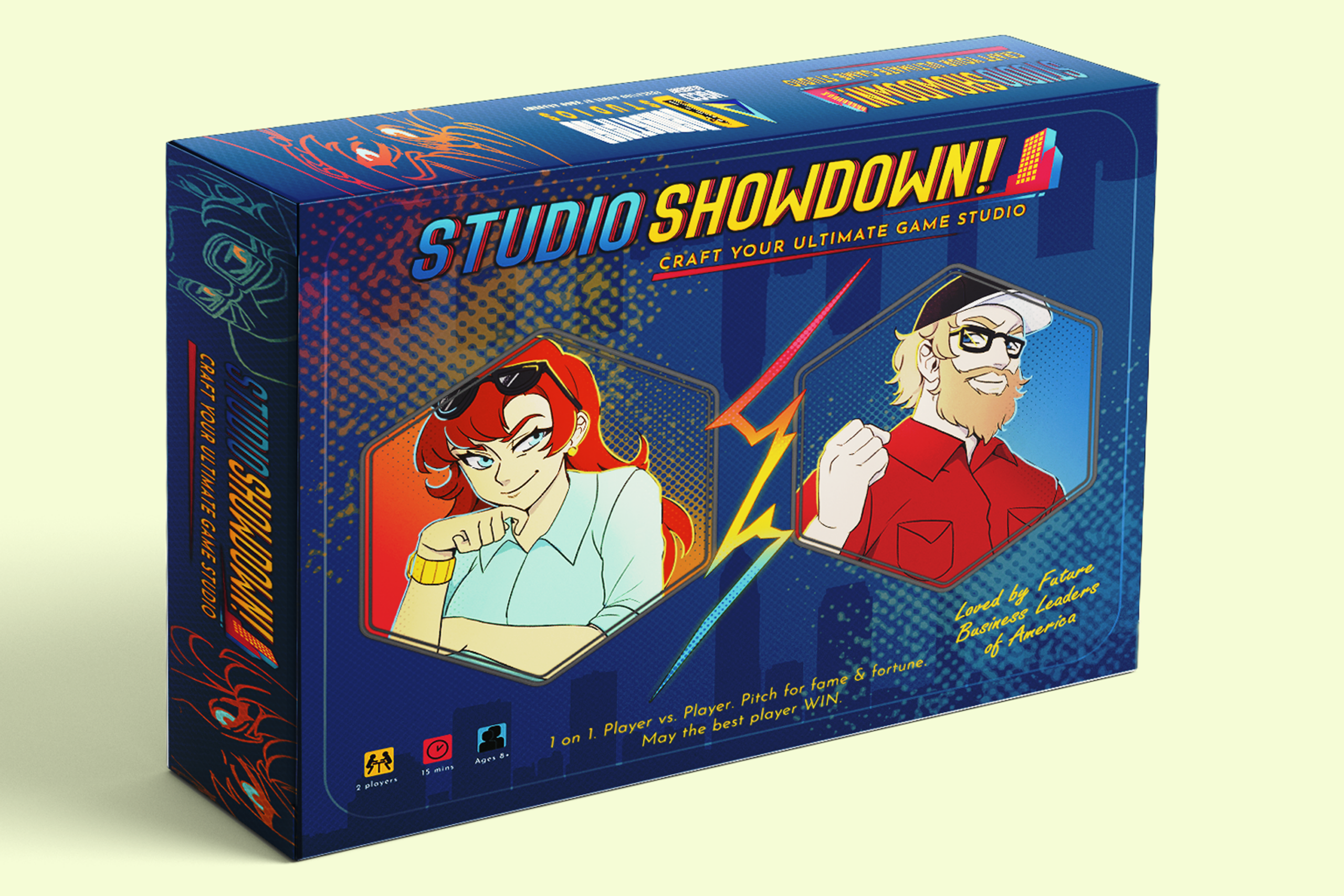
Stop teaching theory. Start building empires. Studio Showdown isn’t just another entry in the list of educational games for students; it’s a high-stakes simulation of the $321 billion global gaming market. Aspiring creators don’t just play. They lead. They manage teams. They fight for market share. This experience cuts through the noise of traditional business courses by forcing students to make executive decisions under pressure.
Success in this arena requires more than a good idea. It demands a vision. Players must balance artistic integrity with the cold reality of the bottom line. It’s about visual victory. It’s about premium execution. By the time the final buzzer sounds, students understand the grit required to move a project from a concept to a global launch.
A Hands-On Business Simulation
The mechanics are sharp. Players act as studio founders, managing the chaos of production in a hyper-competitive environment. This isn’t a sandbox; it’s a battleground. Developed through a high-impact collaboration between VGCD Academy and DEMYSTIFIED Studios, the game forces players to outmaneuver rivals in a simulated economy that reacts to every move.
- Resource allocation: Manage 5 distinct departments, including art, engineering, and QA, to keep production on track.
- Market volatility: Respond to 20+ random industry disruptors like hardware shortages, viral social media trends, or sudden shifts in consumer taste.
- Strategic scaling: Grow from a 3-person indie team in a garage to a 200-person triple-A powerhouse.
Modern educational games for students must provide this level of depth to stay relevant. Every choice carries weight. Every delay costs capital. Students learn that in the creative industry, time is the most expensive resource of all.
From the Classroom to the Boardroom
The Educator Edition delivers a professional-grade dashboard for the classroom. Teachers track 15 different performance metrics, from ROI to team morale, in real time. Students don’t just finish a level. They finish with a portfolio. They learn to pitch to venture capitalists and secure series-A funding through interactive modules that mirror real-world boardrooms.
The impact is measurable. Data shows that 84% of participating students report significantly higher career clarity after completing a full 12-month production cycle in the game. They aren’t just consumers anymore. They’re producers. They’ve faced the showdown and emerged with the professional acumen to lead. They’re ready for the real world.
Ready to elevate your curriculum? Transform your classroom with the Studio Showdown Educator Edition
Own the Future of Learning
The 2026 classroom demands more than passive listening; it requires a battlefield for ideas. Traditional metrics are fading as 65% of global educators now prioritize critical thinking over standard test scores. High-quality educational games for students bridge this gap by transforming complex business concepts into immersive, high-stakes challenges. This isn’t just play. It’s a professional production where students become the directors of their own success. By blending analog strategy with digital innovation, you prepare them for a market where 85% of future roles don’t even exist yet.
Developed through the elite partnership of VGCD Academy and DEMYSTIFIED Studios, Studio Showdown delivers this competitive edge. It’s a precision-engineered platform designed specifically for student entrepreneurship and game design. We offer Institutional Bulk Licensing and Classroom Bundles to ensure every desk becomes a startup hub. Stop settling for mid-tier engagement and start building a legacy of innovation. Bring the future of business education to your school with Studio Showdown. Your students are ready for the ultimate challenge. Let’s win together.
Frequently Asked Questions
What are the benefits of using educational games for students in 2026?
Educational games for students drive a 40% increase in knowledge retention compared to traditional lectures. By 2026, 75% of top-tier schools will integrate gamified modules to foster active participation and grit. These tools transform passive listening into high-stakes engagement. You aren’t just reading a textbook; you’re winning a challenge through active decision-making.
How do strategy board games improve critical thinking skills?
Strategy board games boost critical thinking by forcing players to manage at least three variables simultaneously under pressure. A 2023 study from the University of California showed a 22% rise in logical reasoning scores after consistent play. Players analyze risks, anticipate opponent moves, and pivot their tactics. It’s a mental gym where every move counts toward a final victory.
Can educational games be used to teach financial literacy?
Yes, games teach financial literacy by simulating real-world cash flow and investment risks. Specialized classroom simulations reduce financial anxiety by 35% in teenage learners. Students handle budgets, calculate ROI, and experience the consequences of debt without losing real money. It’s the ultimate low-risk training ground for high-stakes wealth management and long-term planning.
What is the difference between digital and analog educational games?
Digital games offer instant feedback and global connectivity, while analog games provide tactile engagement and face-to-face social negotiation. Digital learning tools reached a $20 billion market value in 2024, yet 65% of educators still prefer board games for developing soft skills. Analog play forces direct eye contact. Digital play masters technical precision and rapid data processing, and you can read more about the equipment that supports it.
How do I choose the best educational game for middle or high school students?
Select games for older students by targeting a complexity rating of 2.5 out of 5 or higher on professional review scales. Focus on themes that mirror 11th-grade curriculum standards, such as industrialization or economic theory. Middle schoolers need 45-minute sessions to fit standard class periods. High schoolers can handle 90-minute deep dives into complex systems and professional simulations.
How can teachers integrate board games into a standard curriculum?
Teachers integrate games by dedicating 20% of weekly instructional time to structured play followed by a 15-minute debrief. This method ensures the fun serves the learning goal. Use the game as a hook on Monday or a mastery check on Friday. By aligning game outcomes with 2026 state standards, educators turn a simple activity into a powerful assessment tool.
Are educational games effective for students with different learning styles?
Educational games for students bridge the gap between visual, auditory, and kinesthetic learning styles through a multi-sensory approach. Research indicates that 70% of students feel more confident when they can interact with physical or digital components. Visual learners track the board while kinesthetic learners move the pieces. It’s a production that ensures no student gets lost in the visual noise.
What is Studio Showdown and how does it help students learn business?
Studio Showdown is a high-octane business simulation where students run their own creative production house. Players manage talent, balance budgets, and compete for premium contracts in a 60-minute session. It strips away boring theory and puts you in the director’s chair. You’ll learn to navigate the creative industry’s pressure while building a brand that stands above the competition.