Most educational tools are failing. They teach kids how to follow instructions, not how to lead a revolution. While the global video game industry is projected to pass $210 billion by 2028, most students remain stuck as passive consumers rather than creators. You’ve likely felt the frustration of watching your teen sink hours into mindless screen time that lacks real-world stakes. It’s difficult to find social, collaborative learning that prepares them for the cutthroat reality of modern business. We understand that you want more than just a distraction; you want a launchpad for their career.
If you’re searching for high-impact educational games San Ramon families can trust, it’s time to look beyond the digital noise. This article explores how modern strategy games transform players into confident business founders and creative leaders. You’ll discover how to foster financial literacy and build professional portfolios through analog play. We’re diving into the tools that replace passive scrolling with strategic outmaneuvering, proving that the best training for a future entrepreneur doesn’t always happen behind a screen.
Key Takeaways
- Master the shift from passive consumption to strategic creation. Traditional models are failing; active play is the new standard for leadership.
- Build entrepreneurial logic. Use game mechanics as a rigorous framework for high-stakes decision-making and professional portfolio development.
- Leverage the analog advantage. Physical components improve memory encoding and reduce digital fatigue better than standard educational games San Ramon typically provides.
- Implement a project-based playbook. Align game mechanics with STEM standards to transform classroom sessions into competitive business simulations.
- Act as a studio founder. Master the business of game dev through fundraising, pitching, and strategic outmaneuvering of rivals.
The Evolution of Play: Why Educational Games Matter in 2026
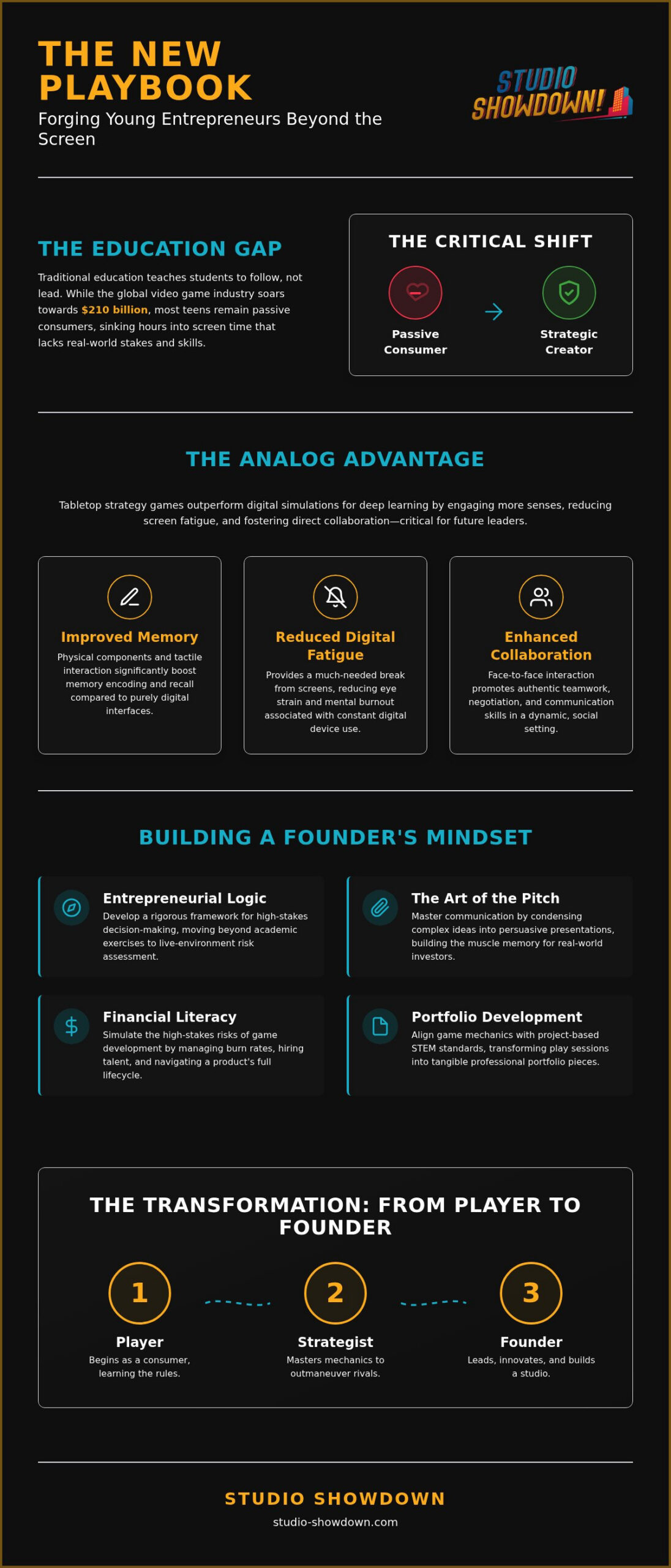
Education isn’t a lecture anymore. It’s a battleground. Traditional models are struggling. They’re too slow. The tech world moves fast. Static textbooks can’t reach the soft skills needed for leadership. High-quality design is the hook. It creates visual success. It ensures students stay engaged. Retention depends on the quality of the experience. Passive consumption is a liability in a world where the video game industry exceeds $180 billion. Students need active, strategic creation to survive.
Textbooks are silent on negotiation. They can’t teach the gut instinct required for a market pivot. Modern business simulation games fill this void. They force players to manage resources, people, and time under pressure. This is the new pedagogy. It’s about building a professional portfolio while others are still taking notes. If you want results from educational games San Ramon programs offer, you have to look for tools that demand leadership, not just participation. It’s time to stop playing and start producing.
Bridging the Gap Between Hobby and Career
Coding is a tool. Business is the objective. Many local programs treat technology as a technical hobby. That’s a mistake. We move beyond “fun” to functional learning. Real-world marketplace stakes are high. Professional-grade tools belong in the classroom. Students should feel the weight of their decisions. They aren’t just learning a language. They’re building a brand. They’re launching a studio. The transition from player to founder requires tools that mirror the actual industry. We don’t just teach skills. We build careers.
The Psychology of Competitive Learning
Dominance is a powerful motivator. We harness the natural drive for market success to fuel education. Showdown scenarios aren’t just for entertainment. They prepare students for the intensity of a real-world business pitch. Resilience is built in the trenches. Failure in a simulation is a lesson. It’s a strategic pivot. It’s the moment a student stops being a player and starts being a founder. Competition breeds excellence. It forces students to outmaneuver rivals, manage risk, and refine their vision until they win. This is how you create leaders.
Strategic Depth: The Mechanics of High-Impact Learning
Game mechanics serve as a high-octane engine for leadership. They provide a rigorous framework for decision-making and risk assessment that traditional methods often ignore. We aren’t just teaching rules. We’re teaching the logic of survival. High-impact learning requires students to weigh consequences in a live environment. It’s about the pressure of a ticking clock and a shrinking budget. Experts have analyzed the potential of transforming education with video games for years, but the real shift happens when these mechanics mirror a real boardroom. When the stakes feel real, the lesson becomes permanent.
Entrepreneurial logic is the missing variable in most STEM curricula. Coding is a vital skill, but it’s only half the story. By 2026, the core subjects have expanded to include fundraising, pitching, and aggressive market analysis. Students must learn to read the room as effectively as they read a line of code. Complex mechanics foster critical thinking by forcing players into long-term planning. You can’t just react to the current turn. You have to anticipate your rival’s move three turns from now. This level of sophistication is exactly what parents expect from the educational games San Ramon families choose for their future founders.
Mastering the Art of the Pitch
Communication is the ultimate capital. If a founder can’t articulate value under pressure, the entire studio collapses. We treat the Pitch Mechanic as a dedicated tool for building public speaking confidence. It forces students to condense complex technical ideas into persuasive, high-energy presentations. Securing imaginary capital in a competitive setting builds the muscle memory needed for real-world investors. It’s about clarity, conviction, and timing. While many educational games San Ramon offers focus on technical execution, we prioritize the ability to lead the conversation.
Resource Management and Financial Literacy
Financial literacy shouldn’t be a dry lecture. We simulate the high-stakes risks of game development without the real-world loss of capital. Students navigate the entire lifecycle of a product, from the initial concept to a global market hit. They manage burn rates, hire talent, and decide when to pivot. This hands-on approach explains why strategy wins in 2026. It isn’t about luck; it’s about outmaneuvering the competition through superior resource allocation. If you’re ready to see these mechanics in action, the Studio Showdown Board Game provides the perfect entry point for aspiring founders.
Analog Superiority: Why Tabletop Games Outperform Digital Simulations
Digital saturation has reached a breaking point. While many programs for educational games San Ramon relies on are purely screen-based, the real world of business happens face-to-face. The global tabletop games market is projected to reach USD 17.57 Billion by 2026 for a reason. Tactile components provide a massive advantage. Physical cards, tokens, and boards lead to better memory encoding. Your brain remembers what your hands touch. This tactile feedback creates a lasting impression that a mouse click simply cannot match. Screen-free focus isn’t just about resting the eyes; it’s about deepening engagement through physical presence.
Negotiation is the heartbeat of entrepreneurship. You can’t read body language through a digital avatar. In a tabletop setting, students must look their rivals in the eye. They analyze micro-expressions. They detect hesitation. They learn the subtle art of the deal. Tabletop games act as a social engine. They force collaboration in a way that isolated coding never will. Business isn’t just about technical skill; it’s about people. Mastering these human elements is what separates a developer from a founder.
Collaborative vs. Competitive Dynamics
Solo coding is a hobby. Running a studio is a war. We move beyond the “everyone wins” mentality of typical classroom exercises. Studio vs. Studio dynamics create a realistic business environment. You must outmaneuver rivals to achieve market dominance. This competitive edge drives students to refine their strategies and sharpen their pitches. It’s about more than just points; it’s about survival in a simulated marketplace. For more ways to engage your family without a Wi-Fi connection, check out our screen-free activities guide. We believe the most valuable lessons happen when the power is off.
Portability and Accessibility in Education
Deploying board games is efficient. There are no software updates. No hardware requirements. No crashing servers. The logic is in the box. This makes high-level strategy accessible in libraries, schools, and homes across San Ramon. Physical games foster inclusive learning. They bridge the gap between students with different levels of tech access. Everyone starts on a level playing field. The focus remains on the strategy, the math, and the negotiation. It’s a premium educational experience that doesn’t require a $500 headset or a high-speed connection. Just a table, a few players, and the drive to win.
The Educator’s Playbook: Implementing Strategy Games in the Classroom
Education requires a tactical shift. It’s not enough to provide activities without a professional roadmap. If you’re looking for the most effective educational games San Ramon has available, you must demand a curriculum that is rigorous. We’ve built a four-step framework to turn a tabletop session into a professional incubator. First, align the mechanics. Map the game’s fundraising and resource management directly to California business or STEM standards. Second, treat the game as a recurring project-based learning anchor. It’s the central hub for your semester.
Third, facilitate the post-game analysis. This isn’t a casual chat. It’s a debrief. Analyze why a specific studio maneuver failed or succeeded. Fourth, demand evidence. Have students build professional portfolios based on their in-game studio decisions. They aren’t just playing. They’re documenting a startup’s lifecycle. This process ensures that every hour spent at the table contributes to a tangible, professional outcome. We don’t settle for “participation.” We aim for mastery.
Institutional Integration and Bulk Licensing
Bringing high-level strategy to an entire district requires logistics. We provide cost-effective multi-unit Classroom Bundles designed for scale. These aren’t just boxes of components. They include the Studio Showdown: Educator Edition, which bridges the gap between play and pedagogy. Professional development is key. We train the trainers. We ensure teachers feel confident leading a business laboratory rather than just supervising a game. This approach turns any classroom into a hub for future tech founders. High-quality educational games San Ramon educators implement should always come with this level of institutional support.
Building a Professional Portfolio
A strategy game acts as a business laboratory for teens where they can experiment with high-stakes decisions without financial ruin. These experiences translate into real-world business case studies. A student who successfully navigated a market crash in-game has a story for their college application. They can document their studio’s growth, their strategic pivots, and their pitching success. This is how you bridge the gap between a classroom activity and a career-ready resume. Every decision becomes a proof point for their future leadership potential.
If you’re ready to upgrade your curriculum with professional-grade tools, explore our Classroom Bundle options today.
Studio Showdown: Mastering the Business of Game Development
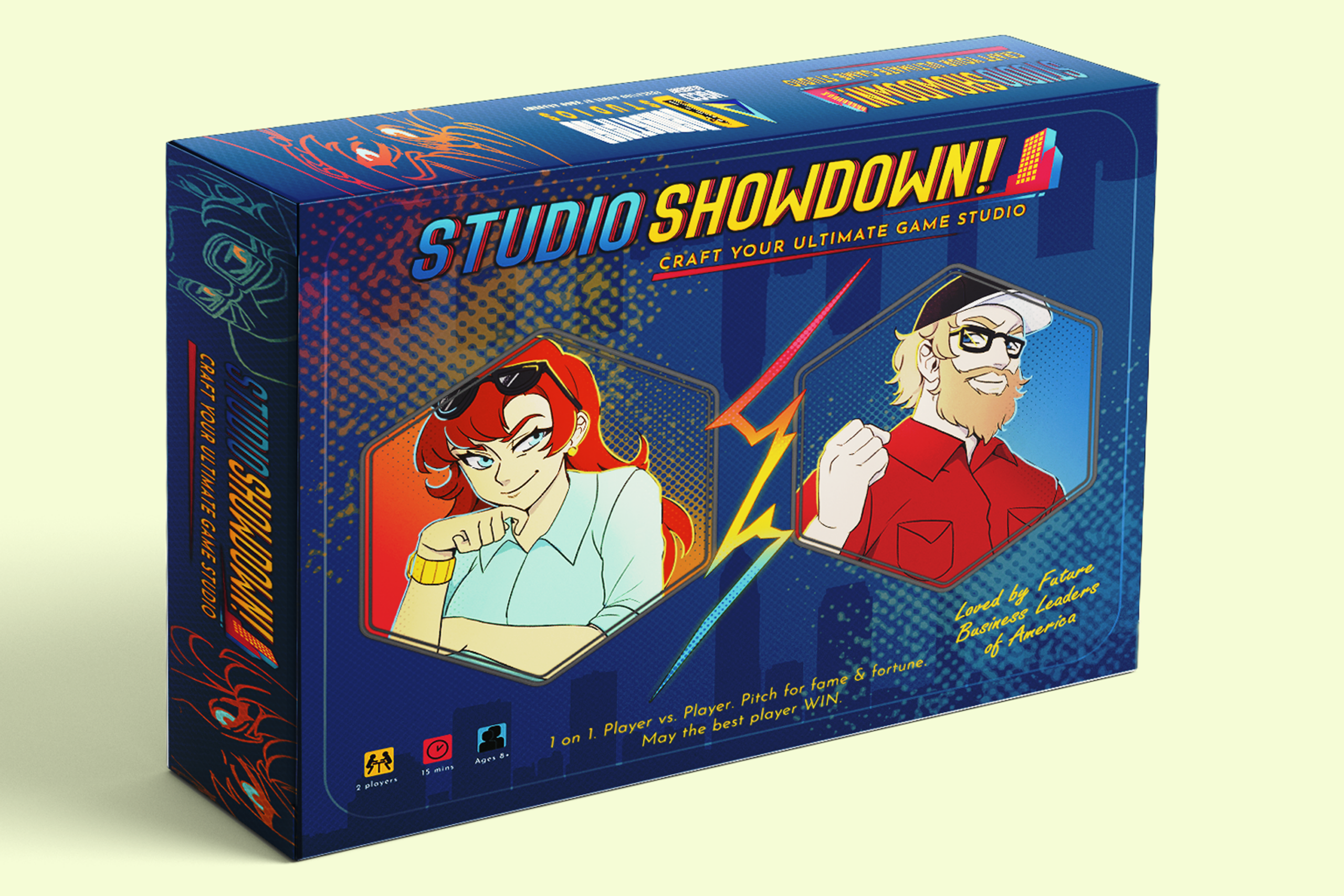
The search for the most effective educational games San Ramon has to offer ends here. Studio Showdown isn’t just a board game. It’s a high-stakes simulation of the global tech industry. This is the premier strategy tool for aspiring founders who want to move past the visual noise of mindless apps. Born from a unique collaboration between VGCD Academy and DEMYSTIFIED Studios, it brings professional production standards to the tabletop. We’ve stripped away the fluff. We’ve kept the grit. This is where students learn the brutal reality of launching a hit game in a competitive market.
Immersive gameplay demands more than just luck. It requires vision. Players navigate the complex challenges of fundraising, talent acquisition, and market shifts. It’s a fast-paced battle for industry dominance. For teachers, the Studio Showdown: Educator Edition provides specialized tools to maintain classroom dominance. It turns a standard lesson into a high-energy production environment. You don’t just teach business. You run a studio. Every session is an opportunity to outmaneuver rivals and refine a professional-grade strategy.
Act as a Studio Founder
Step into the shoes of a leader. Feel the thrill of creating a virtual hit while managing real-world business constraints. You’ll deal with limited budgets, aggressive rivals, and shifting consumer trends. Strategic outmaneuvering is the only way to win. Superior planning beats raw speed every time. This isn’t a hobby; it’s a career launchpad. If you want to understand the depth of this experience, read our guide on the ultimate business board game pillar. Success in the market isn’t accidental. It’s engineered through discipline and creative bravery.
Get Started with Your Classroom Bundle
Scaling excellence shouldn’t be difficult. Securing the Educator Edition for your institution is the first step toward a strategy-first curriculum. We offer the Classroom Bundle to ensure every student has a seat at the founder’s table. This is a long-term investment in their leadership potential and financial literacy. In a landscape crowded with generic educational games San Ramon parents see daily, Studio Showdown stands alone. It’s professional. It’s bold. It’s the edge your students need to rise above the noise and build a portfolio that matters.
Elevate your classroom today. Don’t settle for mediocre tools that lack real-world stakes. Choose the simulation that builds real-world portfolios and creative leaders. The showdown is waiting. It’s time to see who has the vision to lead the next generation of tech giants.
Forge the Next Generation of Creative Leaders
The future belongs to those who can pivot, pitch, and produce. We’ve explored how high-impact mechanics transform passive players into confident founders. Tabletop play offers a tactile advantage that digital simulations simply cannot touch. It’s about face-to-face negotiation and high-stakes resource management. If you want the most impactful educational games San Ramon families and schools can provide, the choice is clear. It’s time to bridge the gap between classroom theory and industry reality.
Studio Showdown is more than a game; it’s a business laboratory. Designed by industry experts at VGCD Academy, this immersive entrepreneurship simulation is used by educators nationwide to build professional student portfolios. It forces players to think like studio founders, not just consumers. Don’t let your students settle for mindless screen time. Give them the tools to outmaneuver the competition and master the market.
Master the business of game development with Studio Showdown today.
The showdown is ready. Your students have the potential to rise above the noise. Start building their legacy now.
Frequently Asked Questions
How do educational games help with financial literacy?
Players manage limited capital to launch products and hire talent. They learn to track burn rates and calculate return on investment in real-time. This hands-on approach makes abstract concepts like cash flow feel personal. It’s about surviving a simulated market crash, not just passing a test. By making financial decisions with immediate consequences, students develop a gut instinct for money management.
Can strategy board games be used for STEM credit?
Strategy games often meet California standards for technology and business management. Educators use them as project-based learning anchors to teach the logic side of STEM. When students document their studio decisions, they build a professional portfolio that justifies academic credit. This is a common practice for high-level educational games San Ramon schools implement to bridge the gap between theory and industry reality.
What age group is Studio Showdown designed for?
Studio Showdown is tailored for teens and young adults ready to master complex systems. The mechanics are sophisticated enough for high school students and aspiring entrepreneurs. It challenges players to think like founders, making it ideal for ages 12 and up. Younger players can join with guidance, but the strategic depth is built for a mature, competitive mindset.
Are there specific educator editions for classroom use?
The Studio Showdown: Educator Edition is designed specifically for institutional settings. It includes specialized tools and guides to help teachers align gameplay with academic standards. We also offer Classroom Bundles to help schools scale this experience across entire grade levels. These resources ensure that the transition from play to pedagogy is seamless, professional, and outcome-oriented.
How does game-based learning compare to traditional coding courses?
Coding courses focus on how to build, while game-based learning focuses on how to lead. Technical skills are important, but they don’t teach you how to pitch an investor or outmaneuver a rival. Strategy games provide the business logic that coding classes often miss. It’s the difference between being a developer and being a studio founder who understands the entire marketplace.
What soft skills do students learn from business simulation games?
Students master negotiation, public speaking, and resilience. They learn to read body language during face-to-face pitches and pivot when a strategy fails. These games act as a social engine for collaboration. Students don’t just learn facts; they learn how to influence people and manage high-pressure situations with confidence. These are the skills that textbooks cannot reach.
Is Studio Showdown suitable for after-school programs?
Studio Showdown is an excellent fit for after-school clubs, libraries, and enrichment centers. It provides a structured yet competitive environment that keeps students engaged without the need for screens. Programs looking for educational games San Ramon families value often choose this for its mix of social interaction and career-ready skill building. It turns a casual club into a professional incubator for future leaders.
How can parents support entrepreneurship learning at home?
Parents should engage in active play and facilitate post-game discussions. Ask your teen why they made a specific strategic pivot or how they managed their budget during a losing streak. Use the game to simulate real-world business scenarios. This turns a family game night into a masterclass in entrepreneurship and financial literacy, proving that the best lessons often happen off-screen.