Your kids don’t want a “fun activity.” They want a challenge that respects their intelligence. Digital fatigue is real, but the solution isn’t another generic list of board games that haven’t changed since the nineties. If your teens are mastering complex digital worlds, basic trivia won’t cut it. You’re competing with high-definition adrenaline. To win, you must find high-stakes strategy games for families that rival the complexity of their favorite screens. It’s time to bring that same level of strategic depth to the dining table.
We know the struggle of trying to unplug a generation raised on instant feedback and complex systems. You want meaningful social interaction that doesn’t feel forced or boring. This article promises to help you bridge the gap between digital entertainment and real-world connection. We’ve curated the top unplugged activities for 2026 that deliver the same rush as a successful digital product launch. You’ll discover how to turn family night into a professional-grade showdown where every move matters and every decision builds a legacy. Get ready to elevate your game.
Key Takeaways
- Reclaim cognitive focus by shifting from passive scrolling to the analog deep work found in complex offline challenges.
- Replace shallow, luck-based entertainment with high-stakes strategy games for families that challenge intelligence and reward critical thinking.
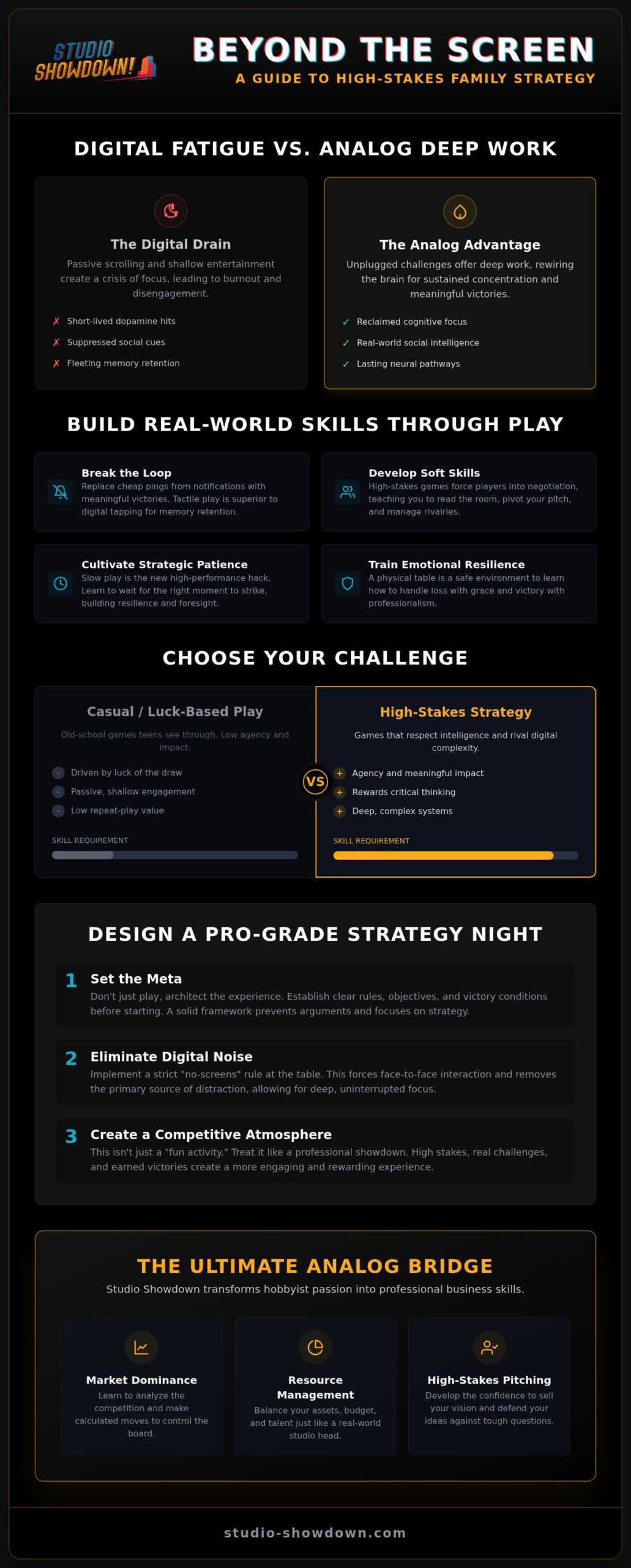
- Design a professional-grade game night by setting the Meta. Establish clear rules, eliminate digital noise, and create a competitive atmosphere.
- Bridge the gap between gaming and reality with tools like Studio Showdown. Transform hobbyist passion into professional business skills through high-stakes simulation.
Why Unplugged Family Activities Matter in 2026
Digital fatigue isn’t just a trend. It’s a crisis of focus. By 2026, the novelty of the glowing screen has worn thin, leaving families searching for something with more substance. Unplugged play is the answer. It’s not just the absence of a tablet. It’s a calculated move toward active engagement. When you understand what are strategy games, you see they offer a level of depth that scrolling simply can’t match. They demand presence. They require skin in the game. These strategy games for families provide the perfect arena to reclaim cognitive focus. Unplugged activities act as a catalyst for real-world social intelligence.
The Science of Screen-Free Engagement
Tactile play is superior to digital tapping. When you physically move a game piece, your brain maps the action with precision. Memory retention spikes. Digital interfaces are fleeting, but analog deep work creates lasting neural pathways. Slow play is the new high-performance hack. It builds strategic patience. It teaches kids to wait for the right moment to strike rather than hunting for the next dopamine hit from a notification. Focused tabletop play breaks the loop. It replaces cheap pings with meaningful victories. You aren’t just playing; you’re rewiring the brain for sustained concentration. It’s about quality over quantity.
Building Professional Soft Skills via Play
Screens often suppress the nuances of human interaction. They hide the subtle tells and verbal cues that define successful leaders. High-stakes strategy games for families force players into the heat of negotiation. You have to read the room. You have to pivot your pitch. Managing a rivalry across a physical table teaches emotional resilience in a safe environment. You learn to handle loss with grace and victory with professionalism. This isn’t just entertainment. It’s about bridging the gap between a weekend hobby and career-ready business acumen. Every move at the table is a lesson in market dominance, resource management, and calculated risk. You’re training the next generation of founders before the game even ends.
Creative Activities That Speak a Gamer’s Language
Gamers thrive on progression, rewards, and complex systems. You can’t replace a high-octane video game with a “relaxing” walk. You need to gamify the household. Turn chores into IRL quests. Assign gold values to dishes. Set experience points for organized rooms. It’s about speaking their language. When you introduce strategy games for families, you’re offering a system they already understand. Tabletop mechanics mirror the complexity of modern video game systems by forcing players to balance resources and calculate odds in real-time. It’s a professional-grade approach to domestic life that respects their desire for a challenge.
The Paper-and-Pencil Game Studio
Skip the screen. Hand them a stack of paper and a handful of dice. Creating a “Paper-and-Pencil Game Studio” allows kids to draft maps and character builds from scratch. They’ll learn about balance and fairness through physical testing. If a rule is broken or a character is too powerful, they have to fix the exploit. This process builds a deep understanding of logic. They aren’t just consumers; they’re architects. Lore building through creative writing adds another layer of depth to your family game nights. It turns a simple session into an epic saga. This type of play helps encourage healthy development by fostering social skills and emotional regulation through collaborative creation. It’s about building worlds, not just playing in them.
High-Stakes Family Pitch Competitions
Take it a step further with the Founder Challenge. Ask your kids to pitch imaginary business ideas to a family panel. This isn’t just “pretend.” It’s a high-stakes competition. They need to explain fundraising. They need to justify resource management. They have to defend their “market dominance” against tough questions. This develops the confidence to speak in a competitive environment. They learn how to sell an idea to an audience that’s actually listening. It mirrors the real-world pressure of a professional studio environment. They’ll learn to pivot when the “market” rejects their first draft. If they love the thrill of the pitch and the rush of closing a deal, they might be ready for the intense business simulation of Studio Showdown. It’s the ultimate test of their ability to turn a creative vision into a profitable reality.
Strategy Games vs. Casual Play: Choosing the Right Bridge
Old-school board games are dying. Today’s teens see through the illusion of luck. They want agency. They want impact. If a game relies on a single dice roll to determine success, they’re out. This is why casual party games fail to bridge the digital gap. You need a hierarchy of play. Start with entry-level tactics. Move toward deep business simulations. Match the mechanics to their digital habits. If they love real-time strategy (RTS) games, provide territory control and unit management. If they spend hours in life simulators, offer them engine-building and economic growth. This alignment makes the transition from screen to table seamless. It respects their existing expertise. Explore more on this shift in our article, Beyond the Easy Money Game: Why Strategy Wins in 2026.
Defining Strategic Depth
Strategic depth isn’t about complexity. It’s about meaningful choice. Luck is a variable, not a master. Savvy teens prefer games where skill dictates the outcome. They want to manage resources. They want to balance trade-offs. They want to win because they outplayed the competition, not because they got lucky. Asymmetrical play takes this further. It gives every player a unique power and a different path to victory. It’s a showdown of wits where no two players are doing the same thing. Choosing the right strategy games for families means finding this balance. It’s about moving from passive participation to active dominance. These sessions encourage healthy development by sharpening reasoning and academic skills through high-stakes social interaction. It’s the ultimate upgrade for your weekly routine.
The ROI of Strategic Board Games
What’s the return on investment for a game night? It’s not just memories. It’s skill acquisition. Modern titles offer a high fun-to-learning ratio. They prepare students for the cutthroat world of entrepreneurship. They build the logic required for STEM careers. You aren’t just rolling dice; you’re simulating market reality. Every decision is a data point. Every loss is a post-mortem for their next big move. Strategic play builds the mental muscle needed for the 2026 economy. It teaches students to analyze risk, manage limited capital, and outmaneuver competitors. These aren’t just games. They are low-risk simulations for high-stakes futures. Dive deeper into this transition with our Mastering the Board: The 2026 Guide to Strategy Board Games. This is where the hobby becomes a career foundation.
How to Design a Successful Screen-Free Strategy Night
A successful night doesn’t happen by accident. It’s produced. You need to set the Meta. This means establishing a zero-tolerance policy for digital noise. No phones. No pings. No scrolling. You’re creating a vacuum for focus. Transitioning from the high-frequency buzz of digital life into a Showdown mindset requires a clean break. It’s about shifting gears. Effective strategy games for families demand 100% presence. Without it, the depth of the game is lost. If you’re looking for more ways to engage, check out our Screen-Free Activities for Teens and Families: The 2026 Strategy Guide. Don’t just sit down; prepare for battle.
Fueling the brain is part of the production. The Snack Strategy isn’t about junk. It’s about high-level competition. Think sustained energy. Protein. Hydration. You’re powering a cognitive engine for three hours of intense decision-making. If the blood sugar drops, the strategy fails. Treat it like a high-stakes board meeting. Every detail matters when you’re aiming for market dominance. Success requires a sharp mind and a steady hand.
Curating the Environment
Your dining table is now a war room. Lighting should be focused and sharp. Seating must be ergonomic. You’re in this for the long haul. Background music isn’t just filler; it’s the score to your victory. Use ambient, low-tempo tracks to maintain a creative flow. Remove every digital distraction. Clear the visual noise. When the environment is right, the players commit. They stop looking at their watches. They start looking at the board. This is how you elevate a hobby into a premium experience.
Facilitating Competitive Spirit
Competition builds character, but only if it’s managed. Teach sportsmanship through action. Winners shouldn’t gloat; they should analyze. Losers shouldn’t sulk; they should pivot. Rotate the Game Master role to give everyone a taste of leadership. It forces them to understand the rules from the inside out. Create a family leaderboard. Track the wins. Turn a single night into a season of strategic dominance. This ongoing narrative keeps the stakes high and the engagement consistent. Ready to take the first step toward a legendary game night? Secure your copy of Studio Showdown and start building your family’s legacy.
Studio Showdown: The Ultimate Analog Bridge for Gamers
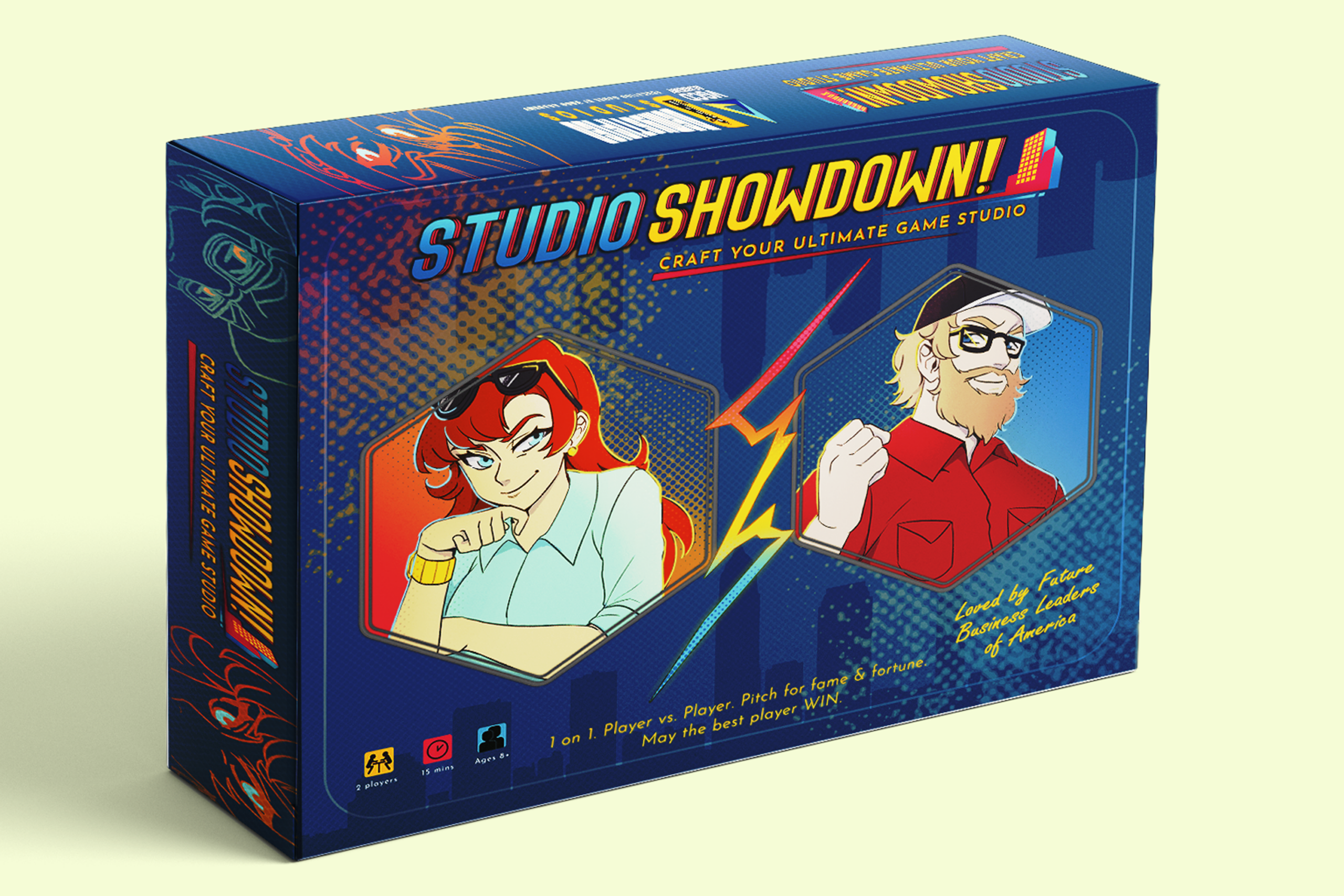
Most strategy games for families stop at resource management. They offer abstract goals that feel disconnected from the modern world. Studio Showdown changes the narrative. It’s a high-stakes battle for market dominance where players step into the shoes of studio founders. You aren’t just moving pieces on a board; you’re navigating the cutthroat reality of the video game industry. This isn’t a casual pastime. It’s a professional-grade simulation designed to capture the attention of digital natives. By leveraging a theme they already live and breathe, you turn a screen-free evening into a masterclass in business acumen.
The journey from a raw idea to a global hit is a gauntlet. You’ll master fundraising, perfect your pitch, and manage tight budgets. It’s a showdown of wits. Every decision carries weight. If you fail to secure capital, your project dies. If you misread the market, your rivals will crush you. This intensity is exactly what’s missing from generic activity lists. It provides the same rush as a digital victory but adds the layer of real-world social intelligence. Discover why this is The Ultimate Business Board Game: Master Entrepreneurship in 2026. You’re building more than a studio; you’re building a future.
Mastering the Game Studio World
Success in Studio Showdown requires more than luck. You must strategically outmaneuver rivals to launch the next hit game. The mechanics force you to build a professional portfolio through every move. You’ll learn to pivot when a launch fails and double down when a trend hits. For those in structured learning environments, the Studio Showdown: Educator Edition brings this business reality into the classroom or home school. It turns curriculum into competition. It’s about teaching students to think like founders before they even graduate. The game doesn’t just simulate a career; it prepares you to dominate one.
Get Started with the Showdown
The Studio Showdown Board Game is the definitive centerpiece for any unplugged night. It’s the bridge that finally connects the digital world to the dining table. If you’re managing a larger group, the Classroom Bundle offers the perfect setup for institutional or large-group play. It scales the competition, allowing multiple studios to clash for industry supremacy. Don’t settle for another night of passive entertainment. Choose a challenge that respects your family’s intelligence. It’s time to settle the score. Bring the ultimate strategy battle to your table with Studio Showdown and see who has what it takes to rule the market.
Dominating the Analog Arena
The digital noise of 2026 is constant. To cut through it, you need more than a simple distraction. You need a challenge. Moving beyond casual play means choosing strategy games for families that respect the intelligence of a gaming generation. You’ve learned how to curate a war room environment, gamify domestic life, and bridge the gap between hobbyist passion and professional business acumen. It’s about shifting from passive consumption to active market dominance. Every session is a chance to sharpen real-world skills in a high-stakes, social environment.
Studio Showdown is the definitive tool for this transition. Developed by industry experts at VGCD Academy, this experience focuses on critical fundraising and pitching skills. It’s built for the long haul with durable, high-quality components that survive every intense rivalry. It’s time to stop scrolling and start building your legacy. Order the Studio Showdown Board Game and master the business of gaming today. Success isn’t just about the win; it’s about the strategy that gets you there. Your next great venture starts at the dining table.
Frequently Asked Questions
What are the best unplugged activities for tech-obsessed teenagers?
Tech-obsessed teens need activities that respect their intelligence and mimic the complexity of their digital worlds. High-stakes strategy games for families are the most effective bridge. These aren’t simple luck-based games; they require deep logic and planning. You can also try analog world-building or character drafting on paper. The key is to provide a challenge that rivals the adrenaline of a digital victory. If the game feels like a professional simulation, they’ll stay engaged.
How do board games help with career skills like entrepreneurship?
Modern board games simulate real-world economic pressures. They force players to manage limited resources, calculate risks, and pivot when the market shifts. Studio Showdown specifically targets entrepreneurship by requiring players to master fundraising and pitching. These are the core skills of any successful founder. By navigating these challenges in a safe, physical environment, students build the confidence and business acumen needed for professional success. It’s a low-risk way to learn high-stakes business reality.
Can strategy games actually reduce screen time long-term?
Strategy games reduce screen time by offering a more satisfying form of engagement. Digital fatigue is often the result of passive scrolling, but tabletop play provides active, social stimulation. When a family commits to a regular strategy night, it creates a new habit of analog deep work. The social interaction and tactical depth provide a dopamine hit that rivals digital apps. Over time, the table becomes the preferred arena for competition, making the phone feel like a distraction.
Is Studio Showdown suitable for classroom environments?
Studio Showdown is built for the classroom. We offer a specific Studio Showdown: Educator Edition and a Classroom Bundle designed for institutional use. These versions allow teachers to integrate business and STEM concepts directly into their curriculum. The game serves as a hands-on tool for teaching professional portfolio building and market dynamics. It’s an ideal resource for after-school programs, libraries, or home-school environments where students need to master complex systems in a collaborative setting.
How do I introduce a new strategy game to a skeptical family?
Start by setting the right environment. Clear the table, remove digital noise, and frame the game as a high-stakes challenge rather than a “fun activity.” Choose a theme that resonates with your family’s interests, like the video game industry. Focus on the agency the players have. Explain that their choices actually matter and that luck won’t dictate the winner. When skeptical teens realize they can outmaneuver their parents through superior logic, the skepticism turns into intense competitive spirit.
What is the difference between Studio Showdown and a standard business game?
Most business games rely on generic real estate or broad trading mechanics. Studio Showdown is different because it’s a deep dive into the video game industry. Developed by experts at VGCD Academy and DEMYSTIFIED Studios, it focuses on specific professional skills like fundraising and pitching. You aren’t just collecting money; you’re acting as a studio founder navigating a specialized market. The durable components and industry-specific logic provide a premium experience that generic business simulations simply can’t match.
What are some analog ways to teach video game design?
Teaching design doesn’t require a computer. You can start by drafting game maps on paper or building character stat blocks with dice. Encourage kids to create their own rules and test them for balance. If a mechanic is too powerful, they have to redesign it. This analog approach teaches the core logic of systems and fairness. Using strategy games for families as a reference point helps them see how different mechanics interact to create a compelling, balanced experience.